
The average content creator in 2026 earns $61,980 per year. Those working in high‑paying niches such as education, fitness, finance, and entertainment often exceed this benchmark by a wide margin.
Many creators still struggle to convert their content into a reliable, full‑time income. Earnings can range from hobby‑level to six‑figure annual revenue, depending on platform choice, audience size, engagement, and the number of monetisation streams they employ.
Uscreen has empowered more than 4,000 creators to generate over $210 million in annual revenue together. We specialise in launching and scaling sustainable video‑membership businesses, so we understand the steps needed to build lasting success.
Instead of placing all bets on a single platform, most top creators diversify across multiple income sources. Uscreen’s 2025 Video Membership Report shows that subscribers who access content on both web and mobile apps stay engaged up to 43 % longer, underscoring the value of a multi‑channel presence and direct audience relationships.
This guide explains the key factors that shape content‑creator income and offers actionable tactics to increase earnings in 2026. It covers smarter monetisation, smarter platform selection, and scalable, diversified revenue models.
Platform‑Based Earnings Overview
Creator income varies dramatically by platform because each uses a distinct payout model and offers different revenue opportunities. Understanding these nuances helps set realistic expectations and choose the right monetisation strategy.
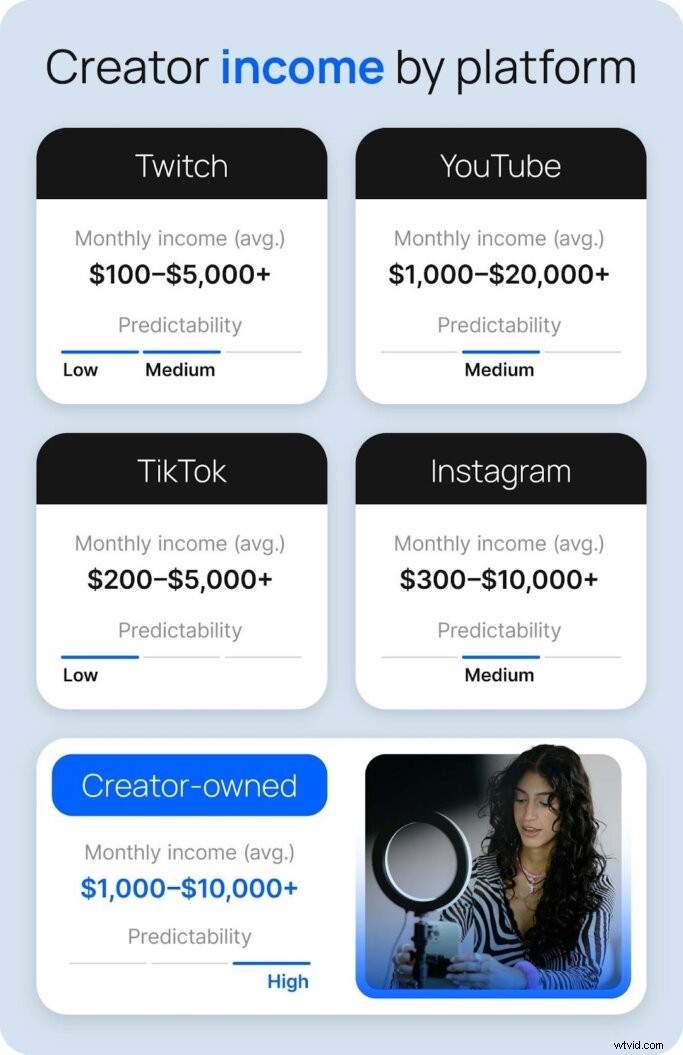
Twitch
Typical monthly range: $1,000 – $5,000
Twitch creators generate revenue mainly through subscriptions, ads, and donations. Earnings fluctuate with audience size and engagement. Ad CPMs on Twitch usually fall between $4–$10, varying by region and season.
Affiliates receive a 50/50 split, while Partners can secure higher visibility and a 70/30 split on subscriptions. Mid‑tier streamers typically earn $1,000–$5,000 per month, while top performers can reach tens of thousands per month through a combination of subscriptions, ads, and sponsorships. For example, Kai Cenant reportedly earned $4.8 million in a single week from subscriptions.
YouTube
Typical monthly range: $1,000 – $15,000
Over the past five years, YouTube has paid creators more than $70 billion, primarily via AdSense. Most creators earn a revenue per thousand views (RPM) of $3 or more, depending on niche, audience location, and content type.
A channel with ~100,000 subscribers might generate $1,000–$3,000 per month, while one with 500,000 subscribers can earn $5,000–$15,000. Channels exceeding one million subscribers often surpass $20,000 monthly before adding sponsorships or product sales. Markiplier, for instance, earned $30 million from his 37 million+ subscriber base.
TikTok
Typical monthly range: $150 – $10 000
TikTok’s Creator Fund historically offered modest payouts per view, but the newer Creativity Program improves revenue for longer‑form content. Most TikTok creators rely on sponsorships and external monetisation for meaningful income.
Micro‑influencers with 10 k–50 k followers earn $150–$500 per post. Macro‑influencers with 500 k–1 million followers can command $5 k–$10 k. Khaby Lame, for example, earned up to $400 k on a single sponsored post.
Even smaller creators earn a few hundred dollars monthly, but many use TikTok as a funnel to drive traffic and revenue on other platforms.
Typical monthly range: $34 – $52 per 1,000 likes
Instagram creators mainly earn through sponsorships, affiliate marketing, and branded content. For instance, a fitness creator with 10 k followers can charge $34–$52 per 1,000 likes.
With the Reels bonus program discontinued, most income now comes from brand deals and product partnerships. Small creators may earn a few hundred dollars monthly, while established influencers can surpass $10 000 per month. Charlie D’Amelio, for example, earns $160 k–$200 k per post with 42.1 million followers.
Creator‑Owned Platforms
Typical monthly range: $1 000 – $10 000+
Creator‑owned platforms, like Uscreen, shift the revenue model to ownership and recurring revenue. Creators retain a larger share of subscription fees and can scale earnings predictably.
Many creators earn $1 000–$10 000+ monthly through subscriptions, pay‑per‑view, and product sales. Top creators generate six‑ or seven‑figure annual revenue by centralising their business. The Bloom Method, for example, grew a niche fitness membership to $1 million+ annual recurring revenue by focusing on long‑term subscriptions and high engagement.
Direct audience relationships and selling videos online, rather than relying solely on algorithms, enable creators to scale faster.
Key Factors That Shape Income
When you scroll through YouTube, you’ll find creators sharing monthly revenue breakdowns—ads, sponsorships, memberships, product sales. The data reveal a clear pattern: income follows smart business decisions, not luck.
Control over the following elements is crucial:
- Platform choice: Different platforms pay differently and offer varying control over revenue.
- Niche & content type: High‑CPM topics or strong sponsor demand boost earnings.
- Audience size & engagement: Active audiences drive higher retention and recurring revenue.
- Access model: Offering both web and app access strengthens community engagement.
- Revenue mix: Diversifying across ads, sponsorships, memberships, and products yields steadier income.
Creators who diversify across multiple streams tend to earn more consistently than those relying on a single source. For example, Big Picture Skiing used memberships and a mobile app to smooth seasonal demand and grow year‑round revenue, while ClayShare centralised live classes and community on one platform to improve retention.
Strategies to Boost Earnings
Reliable income typically comes from a mix of short‑term revenue (ads, sponsorships) and long‑term streams (subscriptions, memberships) that deepen audience relationships.
Ad Revenue
Earned per view or impression, usually measured as CPM (cost per thousand views). On YouTube, RPM can vary widely by niche, audience location, season, and advertiser demand, making ad revenue unpredictable.
Sponsorships
Brands pay creators to promote products or services through dedicated videos, posts, or integrations. Rates scale with audience size, engagement, and niche, ranging from a few hundred dollars for micro‑creators to five‑figure deals for high‑trust creators. A robust media kit helps communicate value and attract higher‑paying partners.

Fan Support vs. Memberships
Fan support, via Patreon, Twitch subscriptions, or one‑off donations, reflects loyalty. Members subscribe for recurring, structured value—exclusive courses, live classes, curated content, or community features. Membership sites offer greater stability and scalability because they deliver consistent experiences.
- Fan support: Contribution‑based, driven by loyalty.
- Memberships: Value‑based, recurring, structured offerings.
Merchandise & Digital Products
Direct sales of physical goods, eBooks, courses, coaching, or premium content provide higher profit margins and full control over pricing and branding. Ali Abdaal, for example, generates the bulk of his income from cohort‑based courses on YouTube productivity.
Long‑Term Benefits of Creator‑Owned Platforms
Owning your platform means owning your revenue, audience, and brand experience. You can:
- Generate predictable, recurring revenue through subscriptions.
- Launch pay‑per‑view content, courses, and live events.
- Sell merchandise directly.
- Build a branded app experience that strengthens loyalty.
- Collect first‑party data and communicate without algorithm barriers.
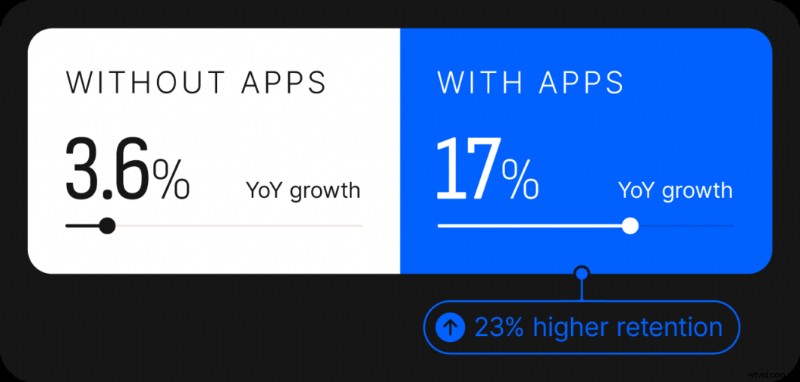
Uscreen data shows that subscriptions offering apps retain 23 % more users after 12 months and grew 17 % year over year, compared to only 3.6 % growth for subscriptions without apps.
Means TV demonstrates the impact: by building a proprietary streaming platform and branded apps, they reduced friction between content and membership, scaling to over $40 000 in monthly recurring revenue.
Maximise Your Income with Uscreen
Content‑creator income ranges from side‑project earnings to six‑figure, full‑time revenue, depending on platform choices and monetisation strategies. Diversifying streams and building a loyal community stabilises growth in 2026 and beyond.
Platforms like Uscreen simplify the transition from engaged viewers to predictable, scalable revenue, while preserving full control over pricing, branding, and customer relationships.
Ready to elevate your income? Explore Uscreen’s creator monetisation platform or start building your own membership site today.

Content Creator Income FAQ
How much do content creators make?
Income varies widely: beginners earn $0–$100/month, growing creators $100–$1 000/month, established creators $1 000–$10 000+, and top creators can achieve six‑ or seven‑figure annual revenue through diversified streams.
How do content creators generate income?
Revenue comes from ad revenue, sponsorships, affiliate marketing, memberships or subscriptions, digital products, merchandise, and fan support. Diversification and direct audience relationships consistently lead to higher, more reliable earnings.
Who is the highest‑paid YouTuber?
MrBeast (Jimmy Donaldson) is widely reported as the highest‑paid YouTuber, earning hundreds of millions annually through ads, brand deals, merchandise, and multiple creator‑led businesses. His success is an outlier built on massive scale and diversification.
Is content creation a good career choice?
Yes—when creators diversify income streams and focus on predictable revenue such as memberships or subscriptions, content creation can become a sustainable, full‑time career. Building direct audience relationships reduces reliance on ads and algorithmic volatility, supporting long‑term stability.