
💡 Key takeaways:
- Pay‑per‑use is a low‑barrier, transactional model ideal for high‑value, one‑off events or creators who publish irregularly.
- Subscriptions provide predictable, recurring revenue for creators with consistent content libraries and engaged communities.
- Hybrid models blend both approaches, establishing a stable baseline while maximizing earnings through premium add‑ons.
Choosing between pay‑per‑use and subscription can be daunting, but each model offers distinct benefits that align with specific content types, business objectives, and audience expectations. A clear understanding of how each structure operates empowers creators to select the most profitable strategy for their brand.
While pay‑per‑use captures casual viewers with a flexible, on‑demand price, subscriptions deliver a reliable revenue stream and foster deeper community ties. Recent creator‑economy studies show subscriptions outperform one‑time models by an average of 100% in monthly earnings.
Below we dissect each monetization approach—including hybrid variations—so you can match the model that best fits your content pipeline and audience behavior.
| Model | How It Works | Best For | Revenue Potential (per user/month) |
| Pay‑Per‑Use | Customers pay only for the content they consume. | Irregular or unpredictable consumption. | $5–$50 depending on usage. |
| Subscription | Recurring fee for continuous access. | Consistent or frequent engagement. | $20–$100+ depending on plan. |
| Hybrid | Subscription fee plus additional charges per transaction. | Mixed usage patterns. | $15–$75 base + $5–$50 usage. |
| *Figures are averages; actual revenue depends on your content type and its perceived value. |
Pay‑Per‑Use (Pay‑Per‑View) Model
A pay‑per‑use strategy lets users pay for individual pieces of content—such as a single video, live stream, or digital product—without a long‑term commitment. This model is attractive to new fans because the entry cost is lower than a full membership, yet it can generate steady revenue for high‑production specials, certifications, or events.
While pay‑per‑use can supplement a creator’s income and attract occasional viewers, it often lacks the predictable cash flow of a subscription. Brands like Fittest Core use pay‑per‑view workouts to allow potential subscribers to try before they commit, blending one‑off sales with a pathway to recurring membership.
Pros
- Single‑content revenue: One item can continue to generate income without new uploads.
- Low barrier to entry: Lower upfront cost eases conversion of new followers.
- High‑value specials: Ideal for premium events that justify a one‑off price.
- Clear value exchange: Customers pay precisely for what they receive.
Cons
- Inconsistent income: Earnings can fluctuate with marketing pushes or content release schedules.
- Higher acquisition cost: Continuous outreach is required to attract new buyers.
- Limited community: Transaction‑based interactions can hinder deep engagement.
Revenue Potential
Typical pay‑per‑use earnings range from $5 to $50 per transaction, depending on content type:
- Live‑stream classes: $10–$20 per session.
- PVOD rentals: $5–$15 per view.
- Online courses or workshops: $30–$50 per purchase.
Subscription Model
Subscriptions are the backbone of many digital creators, offering recurring monthly or annual access to a curated library or tiered content. This model suits creators who produce fresh material regularly—such as weekly workouts, tutorial series, or serialized stories—because it emphasizes long‑term value and loyalty.
Platforms like Eternal Family demonstrate how predictable subscription revenue fuels strategic growth: after relaunch, they achieved a 350% increase in subscribers and a 25% engagement rate, underscoring the stability that subscription income can provide.
Pros
- Predictable MRR: Forecast revenue month‑to‑month for better budgeting.
- Higher LTV: A subscriber who stays for a year at $20/month yields more income than a one‑time $50 buyer.
- Automation: Passive revenue flows as long as content remains valuable.
- Community building: Exclusive spaces deepen loyalty and retention.
Cons
- Content demands: Consistent output is essential to justify recurring fees.
- Higher commitment hurdle: Convincing users to commit to recurring payments can be harder than a one‑off purchase.
- Churn risk: Subscribers may cancel if they feel the value has eroded.
Revenue Potential
Subscriptions can generate $20–$100+ per month per user, depending on niche and pricing structure. Tiered plans allow you to capture varying willingness to pay, while freemium options can attract a broader audience and upsell them later.
Hybrid Approach
A hybrid model blends a recurring subscription with one‑off purchases, offering the stability of MRR while preserving the high‑margin potential of pay‑per‑use. This approach is especially effective for creators who have a mix of evergreen content and premium, event‑based offerings.
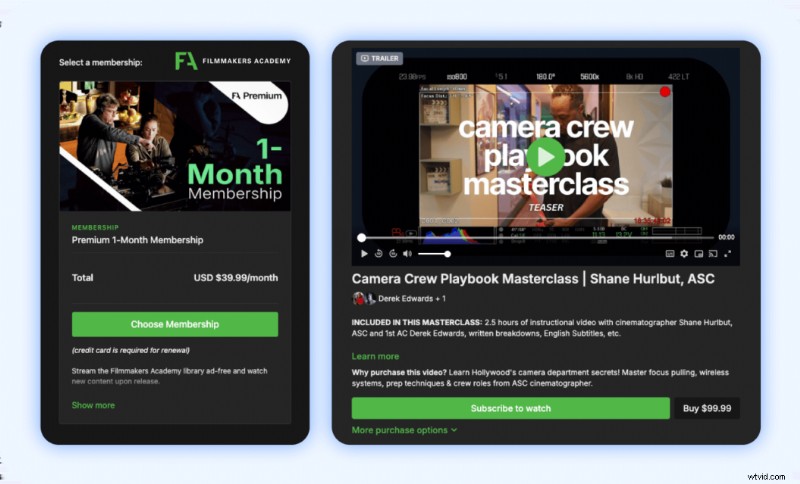
Many successful brands, such as Filmmakers Academy, employ hybrid structures: subscribers gain full access to a course library, while non‑members can buy individual masterclasses or special events at a premium.
Why It Works
Hybrid pricing maximizes average revenue per user (ARPU) by catering to casual users with one‑off tickets, rewarding loyal subscribers with a steady income, and opening upsell opportunities for premium add‑ons.
Revenue Potential
Potential earnings per user: $15–$75 base subscription plus $5–$50 per use. Clarity around what is included in the base price versus add‑on costs encourages conversion to the subscription tier.
Choosing the Right Strategy for Your Brand
Selecting a monetization model hinges on your content’s DNA and your audience’s purchasing behavior. Consider these three pillars:
- Audience behavior: Do viewers return regularly or respond mainly to new releases?
- Content volume: Is your library extensive or comprised of a few high‑value pieces?
- Revenue goals: Are you chasing steady monthly income or rapid, one‑off sales?
Typical model alignments:
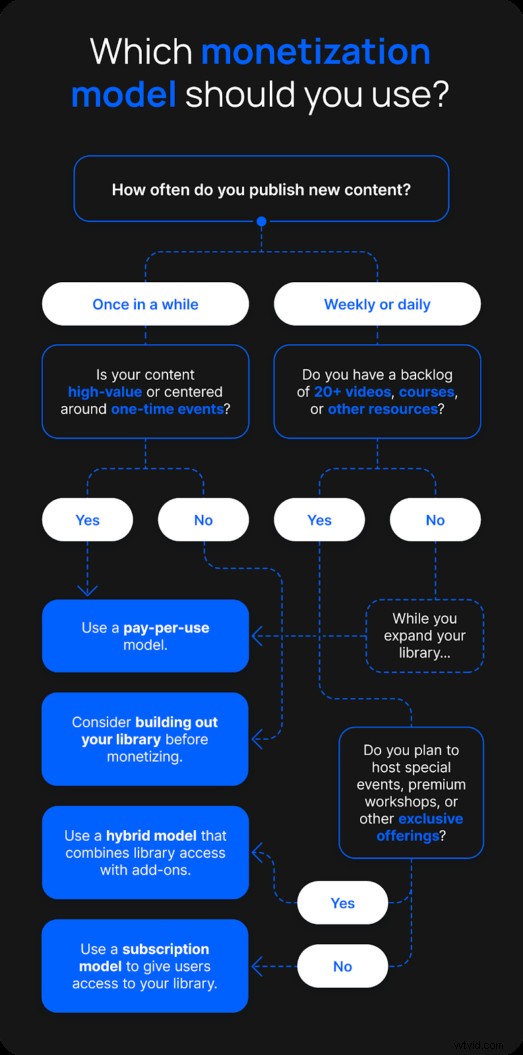
- Pay‑per‑use: Infrequent but high‑value events (e.g., live concerts, certification workshops).
- Subscription: Continuous content streams (e.g., weekly fitness routines, cooking tutorials).
- Hybrid: Core library plus premium add‑ons (e.g., annual summit, masterclass series).
Use analytics to track where users drop off and what they ask for. Start with the model that matches your current output, then iterate as your library grows. Flexibility—whether you lean toward pay‑per‑use, subscription, or hybrid—ensures you can pivot as your audience evolves.
Manage Your Monetization with Uscreen
Uscreen offers a unified platform that supports pay‑per‑use, subscription, and hybrid revenue streams, enabling creators to adapt their pricing strategy as their brand matures. With robust analytics, automated billing, and community‑building tools, Uscreen helps you convert viewers into long‑term subscribers while monetizing premium content.
Ready to elevate your video business? Explore Uscreen’s features today and start building a sustainable profit model.

FAQs
What is the key difference between pay‑per‑use and subscription?
Pay‑per‑use is a transactional, flexible model; subscription is a recurring commitment that offers continuous access and predictable revenue.
What are the three types of subscriptions?
- Flat‑rate: Unlimited access for a single price.
- Tiered: Multiple price points based on features or content volume.
- Freemium: Basic content free, premium unlocked behind a subscription.
Can I combine pay‑per‑use and subscription?
Yes—hybrid models let creators monetize both evergreen libraries and high‑value events, maximizing revenue across audience segments.
How do I price pay‑per‑use content?
Price based on production value, uniqueness, and market demand. Benchmark competitors and test willingness to pay to ensure a premium feel.