
If you began shooting video within the last five to eight years, it's quite likely that you rode the "5D Mark II wave." Maybe you didn't own a 5D, and still don't, but that camera revolutionized the world of video production forever. Not only did that camera enable many "budget" filmmakers to make top notch content, it inspired almost every manufacturer to begin shoving video into every camera they could. No longer was it necessary to buy a dedicated video camera to create motion pictures. While I will certainly credit Canon with originally bringing professional video capability to the masses, I have to hand it to Sony for rocketing "DLSR video" to another level entirely.
The Standout Feature: A Complete System
Sony makes a lot of cameras. Canon is likely the only manufacturer with a catalog as large as theirs. Here's the cool thing for video shooters, from the $950 RX100IV, to the mind-blowing A7SII, to the min-numbingly priced F55, they all have the magical gamma curve that is S-Log. Why in the world does that matter? The way that S-Log flattens your histogram is crazy. In fact, the footage looks disgusting straight out of camera. Since your histogram in all bunched up together and (if exposed correctly) you have zero clipped shadows or highlights. From what I can tell, a proper grade will bring this footage close to the dynamic range of the infamous RED/Arri cinema cameras (at a fraction of the price mind you). Because almost all of their cameras have S-Log, you can have a camera for every occasion that is recording in the same format (XAVC or XAVCS depending on the camera) and gamma curve, making for easy assembly of a multi-camera production. How cool would it be to shoot a three camera interview setup and copy paste your grade between your a6300, A7Sii, and FS7?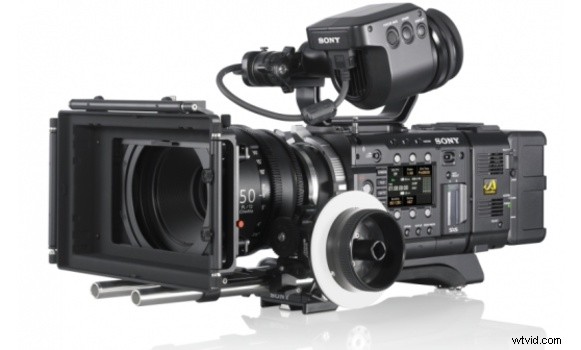
Time-lapse App
I know, Nikon has it built in, some Canons do, and you can find a time-lapse remote for any other body. Sony's time-lapse app (available through the Play Memories Store on your camera) allows you to program a time-lapse all in camera with some brilliant added features to boot. There is the standard interval and number of frames selection, but there is also the ability to have the camera merge the images into a video in camera, just give you raws, or both. You can even tell it whether or not the camera should track exposure (bulb-ramping) for day-to-night/night-to-day time-lapse footage. But wait, there's more. It tells you how long your footage will be in either 24p or 30p, how long it will take to shoot, gives you an option to shoot the stills in 16:9 as opposed to 3:2, and the programming of various other features to keep your post production workflow as simple as possible.
There's even more. Somewhat recently, they added an extra for the time-lapse app called the "angle shift add-on." This neat piece of software allows you to take the time-lapse that you just created and add pan, tilt, zoom, or a combination of those through automated cropping. The stills are either 12, 24, or 42 megapixels, 1080p footage is 2.5mp max, so there's a lot of room to move around the frame. Pretty cool huh?
Price Points
The RX100IV, as stated, is $950. The only problem with this camera is the tiny sensor. The A7xII cameras are wildly capable for their price point (to me, more so than Canon options but we may see that change if the 5D Mark IV comes to fruition). Slow motion? You got it. Unbeatable low light performance? Yours. Every major input aside from SDI and XLR? You betcha. You could rig an A7Sii with a Rode Videomic, some headphones, a light, a monitor, and throw it on a gimbal ready to go. From there, the prices go up but you get higher frame rates, less compression, SDI and XLR built into the cameras, and mad street cred. 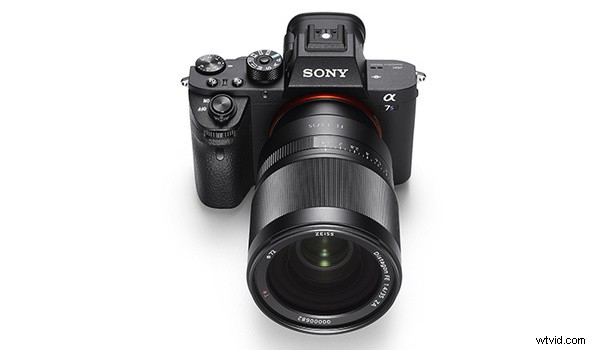
A Camera for Everybody
Sort of the same thing with the price point option, but the distinction doesn't end there. Each camera is capable of something the others aren't. The A7Sii has amazingly low noise at virtually any ISO, the A7Rii will shoot enormous time lapse footage so you can crop to your hearts content, the RX100IV is pocket-sized, the FS7 will slow down motion that confuses human eyesight, etc. No matter what you're shooting, Sony offers a camera for you.