
Just like every photography niche, the best camera for sports photography is the camera you have with you — but sometimes it’s worth planning ahead to make sure you’re equipped with the best of the best. This is particularly important with the fast-paced world of sports photography. From soccer to basketball to tennis, athletes move in and out of the frame quickly, and that calls for a particular set of features.
For one, a good sports photography camera will be quick with autofocusing. It will detect and hone in on a subject in an instant, ensuring each snap is clear, crisp, and focused. Additionally, cameras with high shutter speeds are essential — think faster than 1/1000 — as are high frame rates, such as 10 frames per second. These essentials work in tandem to capture the action as it happens. Versatility in low-light conditions, as well as a high resolution (ideal for cropping in) are additional perks for any sports-photography camera. So, with all of that:
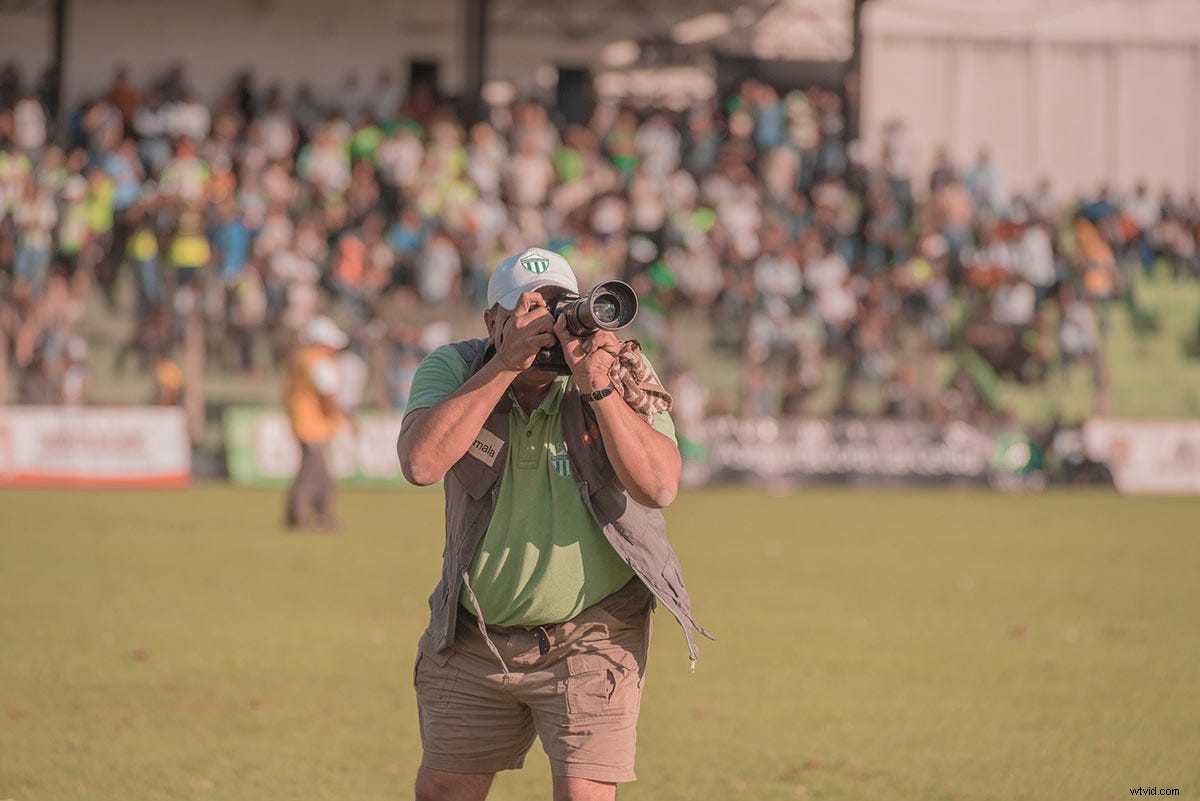
What’s the Best Camera for Sports Photography?
Whether you’re a seasoned sports photographer with years of on-field work under your belt, or you’re a budding creator hoping to break into the field, here are ten of the best cameras for sports photography with the best features to help you get the job done.
Sony Alpha a9 II Mirrorless Digital Camera Body
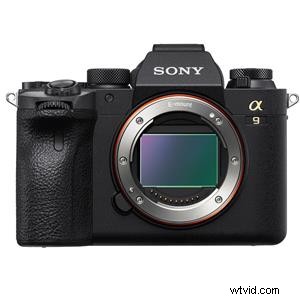
The Sony Alpha A9II has long been the standard when it comes to sports photography cameras. This camera, with its 24.2-megapixel sensor, is impressively speedy with up to 20 frames-per-second blackout-free shooting. It also has a high-speed 1/32000-second anti-distortion shutter to ensure each shot is crystal clear. Additionally, this high-end camera boasts an ISO of up to 51,200, not to mention a stellar autofocus with AF/AE calculations up to 60 times per second. The Sony A9 II doesn’t mess around when it comes to sports photography; that’s why photographers swear by this powerhouse of a camera.
Key Features:
- Resolution: 24.2 MP
- Shutter speed: up to 1/32000
- Continuous shooting: up to 20 fps
Sony Alpha 1 Mirrorless Digital Camera
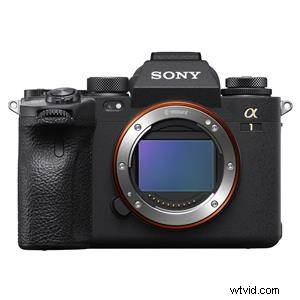
The Sony Alpha 1 is another workhorse of a camera with a whopping 50.1-megapixel full-frame stacked Exmor RS image sensor that boasts up to 30 frames per second of continuous shooting. This high-end camera offers up to 120 AF/AE calculations per second — ultimately ensuring your speedy frames aren’t just fast, they’re focused. And, when sports photographers need to alternate between photo and video, they can rest assured the Sony Alpha 1 is ready for both jobs, with an up to 8k resolution at 30p. Check out our hands-on review of the A1 with photographer Mahesh Thapa.
Key Features:
- Resolution: 50.1 MP
- Shutter speed: up to 1/32000
- Continuous shooting: up to 30 fps
Nikon Z 9 Mirrorless Digital Camera Body
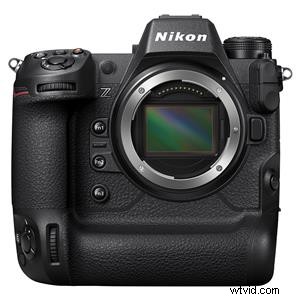
With a 45.7-megapixel sensor and Nikon’s Expeed 7 processor, the Nikon Z9 Mirrorless Camera is undoubtedly one of the best cameras for sports photography. Just check out how sports photographer Rod Mar used it to photographer tennis players in a hands-on review of the Z9. This workhorse of a camera features up to 20 frames-per-second burst shooting, with an electronic shutter that delivers readout speeds of 1/270. Add the Z9’s astonishing shutter speeds of 1/32000 of a second — and the camera’s ability to capture images at roughly 11MP when shooting at 120 frames per second — and it’s obvious why even the most high-end sports photographers rely on the Z9 from Nikon.
Key Features:
- Resolution: 45.7 MP
- Shutter speed: up to 1/32000
- Continuous shooting: up to 120 fps
Nikon D6 FX-Format Digital SLR Camera Body
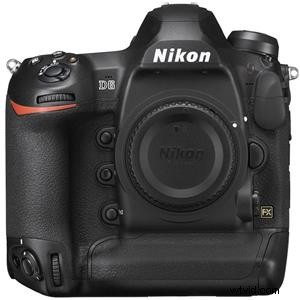
Another great Nikon camera for sports photographers is the Nikon D6. This speedy camera, with its 20.8-megapixel sensor and EXPEED 6 image processor, delivers gorgeous, high-sensitivity images that virtually pop off the screen. The camera offers a continuous shooting rate of 14 frames per second with up to 200 continuous shots. And, equally great for sports photographers, it comes with a Multi-CAM 37K autofocus system — Nikon’s most powerful AF system yet. The D6 is as good for photos as it is for video, with 4K footage at 30, 25, and 24 frames per second.
Key Features:
- Resolution: 20.8 MP
- Shutter speed: up to 1/8000
- Continuous shooting: up to 14 fps
Canon EOS R5 Mirrorless Digital Camera Body
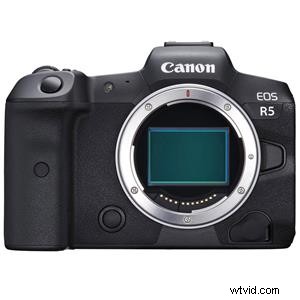
Canon’s EOS R5 Mirrorless Digital Camera has all the makings of a top camera for sports photography. Its massive 45-megapixel sensor delivers gorgeous snaps, and the shooting speeds of up to 12 frames per second (mechanical) and 20 frames per second (electronic) ensure photographers will never miss a pivotal moment. Additionally, the brand packed autofocus features into the EOS R5, with 1,053 automatic AF zones, plus eye detection AF.
Key Features:
- Resolution: 45 MP
- Shutter speed: up to 1/8000
- Continuous shooting: up to 20 fps
Canon EOS 5D Mark IV DSLR Body
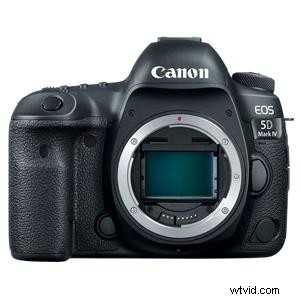
The EOS 5D Mark IV continues Canon’s action-camera legacy. This all-purpose camera boasts a 30.4-megapixel full-frame sensor, a reliable 61-point AF system with Canon’s Dual Pixel CMOS AF, and continuous shooting at up to seven frames per second. Additionally, the camera’s intuitive touch-panel LCD screen makes it easy to adjust settings and navigate between frames. The versatile ISO range of 100 to 32,000 also guarantees this camera will do its job, both on the field and in the gym.
Key Features:
- Resolution: 30.4 MP
- Shutter speed: up to 1/8000
- Continuous shooting: up to 7 fps
Olympus OM-D E-M1X Mirrorless Digital Camera Body
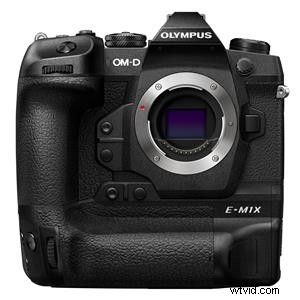
The quick, precise, and reliable Olympic OM-D E-M1X Mirrorless Digital Camera offers everything a sports photographer pines for in a camera. First, the 20.4-megapixel sensor guarantees images are high quality and ready for print. Meanwhile, the continuous shooting of up to 60 frames per second promises photographers will capture every second of the game. The ISO range of 25,600 ensures creators can capture the action, no matter the setting. And, the camera’s revolutionary image stabilization promises crisp, blur-free snaps.
Key Features:
- Resolution: 20.4 MP
- Shutter speed: up to 1/32000
- Continuous shooting: 60 fps
Olympus OM-D E-M1 Mark III Mirrorless Digital Camera Body
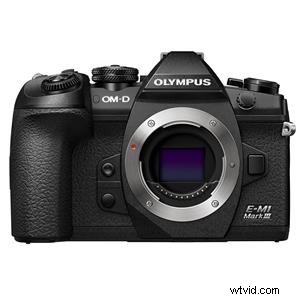
Another one of Olympus’ best cameras for sports photographers is the Olympus OM-D E-M1 Mark III. This high-end yet lightweight camera features a high-resolution 20 megapixel live MOS sensor with an in-body five-axis image stabilization that ensures each snap is crisp and clear. The dustproof, freezeproof, and slashproof construction is ideal for outdoor and action sports, such as snowboarding or cross-country skiing.
Key Features:
- Resolution: 20 MP
- Shutter speed: up to 1/32000
- Continuous shooting: up to 15 fps
Panasonic Lumix DC-GH5 Mirrorless Camera Body
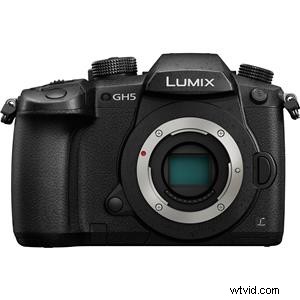
The Panasonic Lumix DC-GH5 Mirrorless Camera is another top-notch camera for sports photography. Capture winter sports, adventure feats, and even team sports thanks to the camera’s versatile array of features. First, the camera’s build was designed for all conditions. It’s splash and dust-proof — not to mention lightweight. It also captures quick snaps with a shutter of up to 1/16000. And, the 20.3-megapixel sensor delivers stunning, high-detail photos that are perfect for print or online galleries.
Key Features:
- Resolution: 20.3 MP
- Shutter speed: up to 1/16000
- Continuous shooting: up to 12 fps
Panasonic Lumix DC-S1H Mirrorless Digital Camera Body
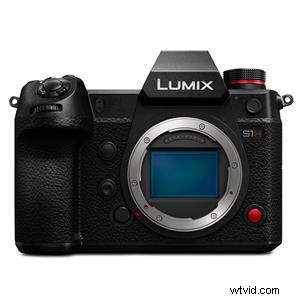
Few cameras provide as much power, stamina, and precision as the Panasonic Lumix DC-S1H, another unbeatable sports-photography camera. This camera features a host of high-end video features — think 4K timelapse and 6K full-frame footage. But it’s just as much a sports photographer’s camera as it is a videographer’s; take its 24 megapixel resolution, ISO range of up 51,200, and 1/8000 shutter as proof.
Key Features:
- Resolution: 24 MP
- Shutter speed: 1/8000
- Continuous shooting: up to 9fps
Sports Photography Camera Buying Guide [Essential Features]
We’ve presented a few of the best sports photography cameras on the scene, but what if you had your eye on another camera, or you need your model to work for sports, action, and other types of photography? Regardless of which camera you choose, it helps to look for a few key features if you intend to create stunning sports action photographs.
What’s the best camera for sports photography? Any camera will do as long as you know which settings to change, and how to use the camera to the best of its ability.
As you shop for new sports cameras, pay attention to these features to make sure the model you have in mind can capture the types of sports pictures you’d like to create. We’ll go through each setting, why it’s important, and what you can hope to achieve by using it.
Continuous Shooting Mode
Also called burst mode, continuous shooting mode is a setting photographers use to take lots of pictures in a short period of time. With continuous shot cameras, if you press and hold the shutter button, you’ll take not just one image, but a series. As soon as the shutter closes on one exposure, it opens again to begin the next.
Continuous shot cameras are particularly helpful for sports action photographs, because you can follow the range of motion and have plenty of shots to choose from later. Imagine being able to capture not just a single photograph of a batter swinging at a baseball, but ten in sequence. You’re that much more likely to capture that magic moment when the bat and ball connect.
Burst or continuous shooting are a must-have setting for sports cameras.
ISO Sensitivity Range
When you shop for a camera, you’ll often see the term ISO Sensitivity Range. This represents the maximum and minimum ISOs available to you. Typically you’ll want a range of at least 100-25,000, but it’s also important to check out the quality of the images taken at the high end of the ISO sensitivity range. Some cameras can shoot at very high ISOs, but the photos are so noisy they aren’t very usable.
Why does ISO sensitivity matter for sports photography? Well, you’ll want to capture the action regardless of available light. But you also need to keep your shutter speed fast to freeze the action. ISO range gives you some wiggle room, so you can let in more light and still get your shot — even in dim gymnasiums or at night games.
Image Processors
Your camera’s image processor is one of the most important components, yet we often take these vital units for granted. When you click the shutter, the image processor evaluates the scene, capturing everything within it. The processor then translates the image into digital code for storage on a memory card.
With every image taken, your camera works hard. It works even harder if it’s a quick-shooting camera or a continuous-shot camera. If your camera records 20+ MP images and you take 12 photos per second in burst mode, you’re asking the image processor to record a large amount of data in a short period of time.
Slow image processors will lag behind and your camera won’t let you take any more photos until it’s finished processing. That’s why a fast processor is vital in quick shooting cameras. You want to finish your shot and keep going.
Image Stabilization
When you’re shooting in low light, image stabilization can make the difference between getting your shot and completely missing it. Most in-camera image stabilization systems give you an extra 2-3 stops of light. That means your shutter speed can be 2-3 stops slower than you’re normally willing to shoot — yet still capture a sharp image.
If you’re lucky enough to find a sports camera with a serious image stabilization system and it’s in your budget, you’re on the right track to creating great action photography.
Eye AF Tracking & Sophisticated AF Tracking
Eye AF Tracking refers to an autofocus system that can lock on to a person’s eye. The system ensures that the eye remains in focus regardless of the subject’s movement. This technology is especially useful in certain types of sports photography where you care most about keeping the subject’s face in focus.
Other sophisticated autofocus tracking systems let you shoot a subject in burst or pan mode while keeping them tack-sharp throughout their range of motion.
If you’ve ever tried to focus on a subject and missed the moment, while your camera’s autofocus system searched ineffectively for something to lock on to, you’ll understand why the right AF system is vital in sports photography.
Feature photo by Joshua Hanson on Unsplash