
Looking for the best cameras for beginners? Look no further than this list! Choosing the best camera for beginners will help you find the right camera body that will swap lenses quickly, is easy to use, and can grow as you develop.
Check out our tips to start learning photography, join one of these top free online photography classes, grab your new camera, and start creating.
If you’re looking to buy a new camera, put this lineup in your field of focus. Loved by enthusiasts and professionals globally, Canon, Nikon, Sony, Fujifilm, and Olympus, and Panasonic offer many types of cameras that are portable and compact. You’re guaranteed the freedom to create with these lightweight, easy-to-use models that deliver the image quality you want.
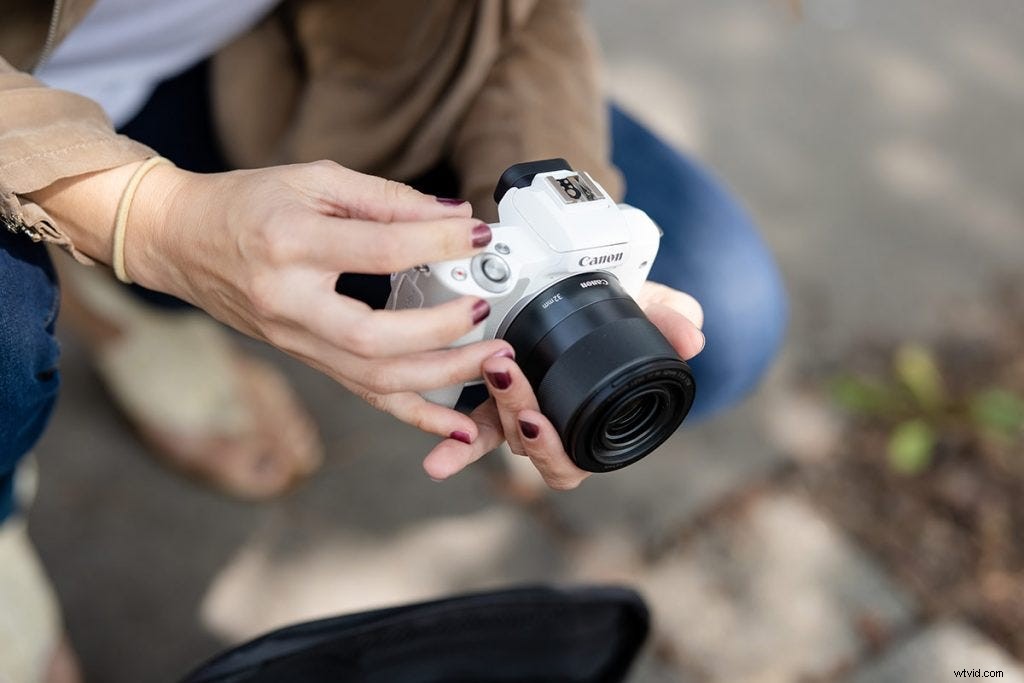
How to Choose the Best Camera for Beginners
Sensor size
The size of the sensor dictates the level of detail and color accuracy of the camera. Whether you choose landscape, commercial, or portrait photography, the quality of your photographs makes the difference between an amateur and professional portfolio. A full-frame sensor is often favored over ASP-C sensors because they are larger.
Dynamic range
Before deciding on a camera, consider the lighting conditions of your usual photo setup. A camera with a wide dynamic range provides better contrast and detail. Also, it allows you to take pictures in low lighting conditions. For example, you will use artificial light for studio portrait photos, and the camera has to cope with this and produce sharp images and natural-looking skin tones.
Built-in image stabilization
When you handheld the camera, the risk of shaking it and blurring your photos is high. Especially when you use telephoto lenses, as is often the case in portrait photography, you can’t afford any camera movement. And because you can’t use a tripod all the time, having a camera with built-in image stabilization is a big help.
Image format
One of the best photography tips for beginners is to shoot in RAW format, rather than JPEG. It allows you to capture the finest details and colors and lets you edit your images and fix mistakes. The RAW format gives you a lot of editing flexibility. But to use it, you have to have a camera that supports the RAW file format.
Portability
A performing camera means nothing if it doesn’t fit your workflow. You may want to take portrait photos both in a studio and on location. You may want to carry the camera all day long to capture the best landscape photos. Or you may want a discrete and silent camera for street photography. Portability and usability are crucial features.
Connectivity
The camera is just one link in the chain. Your images need culling, editing, and distribution. Connectivity features allow you to take tethered pictures (e.g., for studio portrait photography), store images in the cloud (e.g., for seeing them on multiple devices), or share your photographs directly from the camera (e.g., for posting on social media).
Best Camera for Beginners
Canon EOS RP
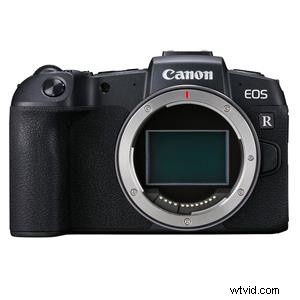
- Type: Mirrorless
- Sensor: Full Frame CMOS
- Megapixels: 26.2 MP
- Lens bundle: 24-105mm STM
- LCD: 3” articulating touch screen 1.04 million dots
- Maximum continuous shooting speed: 5fps
- Max video resolution: 4K
- User level: Beginner/Enthusiast
As the most affordable Canon full frame mirrorless option on the market, the Canon RP is a smart choice for beginners who want professional level gear specifications without draining their bank accounts. The user interface is simple, there are plenty of available lenses for the Canon EOS RP to expand your photography kit. The mirrorless technology makes it easier than ever to shoot in a variety of settings and situations.
Nikon Z50
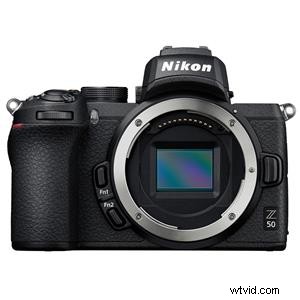
- Type: Mirrorless
- Sensor: DX CMOS (crop sensor)
- Megapixels: 20.9 MP
- Lens bundles: 16-50mm f/3.5-6.3 VR, 16-50mm Creator’s Kit, 16-50mm and 50-250mm f/4.5-6.3 VR
- LCD: 3.2” tilting touch screen, 1.04 million dots
- Maximum continuous shooting speed: 11 fps
- Max video resolution: 4K UHD
- User level: Beginner/Enthusiast
One of the smallest mirrorless Nikons on the market, the Z50 actually features the widest lens mount of any comparable camera system, letting you make the most of even the smallest amount of light. Shoot stills and video with no issue thanks to intuitive menus, easy-to-use eye AF systems for humans and animals, and an ultra-high resolution electronic viewfinder. Connect your camera to your phone for sharing and photo editing on-the-go!
Sony ZV-1
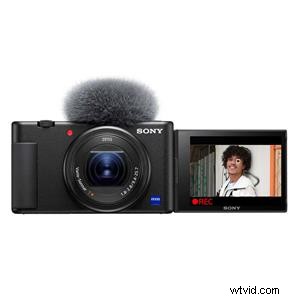
- Type: Mirrorless
- Sensor: Exmor RS CMOS sensor
- Megapixels: 20.1 MP
- Lens bundles: 16-50mm f/3.5-6.3 VR, 16-50mm Creator’s Kit, 16-50mm and 50-250mm f/4.5-6.3 VR
- LCD: 3.0” tilting touch screen, 921,600 dots
- Maximum continuous shooting speed: 24 fps
- Max video resolution: 4K UHD
- User level: Beginner/Enthusiast
The Sony ZV-1 is a good camera for beginners aiming to do portrait photography. It creates natural skin tones and even provides options for skin retouching. The ZV-1 thought about selfies too and features a flip-out LCD screen and ergonomic grip. The camera has a 20.1MP CMOS sensor, phase-detection focus, focus tracking, image stabilization, and optimized auto-exposure for faces.
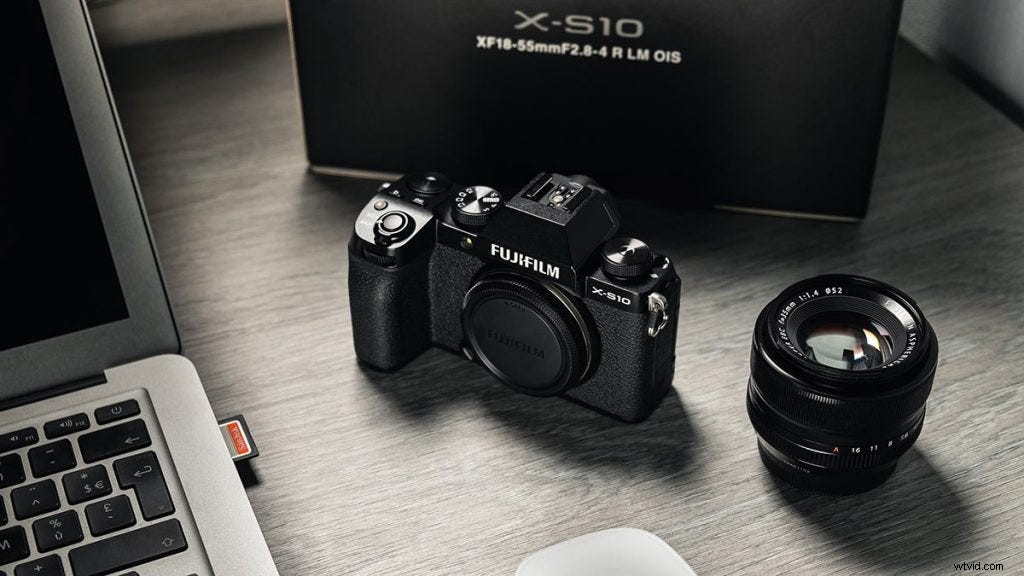
Fujifilm X-S10
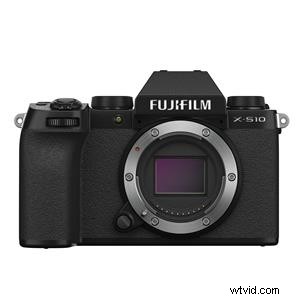
- Type: Mirrorless
- Sensor: APS-C
- Megapixels: 24.2MP
- Lens bundles: XF 18-55mm f/2.8-4 R Lens, XF 16-80mm f/4 R OIS WR Lens
- LCD: approx. 1.04 millions dots touch screen color monitor
- User level: Beginner/Enthusiast
With an articulating touch screen and a faster continuous shooting speed than other cameras in this class, the Fujifilm X-S10 demonstrates that a best camera for beginners can boast great features and advanced technology. This model also features a slim profile that help make it an instant classic.
Panasonic Lumix GH5 II
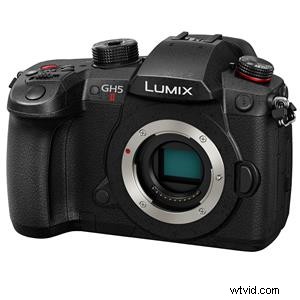
- Type: Mirrorless
- Sensor: Micro Four Thirds Live MOS sensor
- Megapixels: 20.3 MP
- Lens bundle: Leica 12-60mm f/2.8-4.0 Lens, 12-35mm F/2.8 Lens
- LCD: 3-inch articulating touch screen 1.84 million dots
- Max video resolution: 6K 30fps
- User level: Beginner/Enthusiast
Capable of wireless live streaming on social media, GH5 II is a mirrorless camera with exquisite video capabilities. It features a 20.3MP sensor, autofocus, image stabilization, a wide range of file formats, and a dust, splash, and freeze-resistant body. GH5 II also includes photo style presets to edit your photos while still in the camera.
Olympus OM-D E-M10 Mark IV
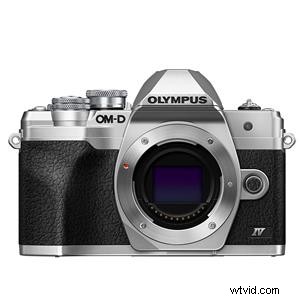
- Type: DSLR
- Sensor: Micro Four Thirds
- Megapixels: 20.3 MP
- Lens bundle: 14-42 f/3.5-5.6 EZ Lens, 14-42mm II R Lens
- LCD: 3” 1.04 million tilt touch screen
- Maximum continuous shooting speed: 8.6ps
- Max video resolution: 4K
- User level: Beginner/Enthusiast
Small, powerful, and trendy, Olympus cameras cater to every skill level and taste. With its iconic design and modern features, Olympus offers some of the most affordable cameras for beginners on the market.
The OM-D E-M10 Mark IV is a solidly-built, ultra-compact camera with plenty of features that beginners will love. With high-powered moving subject AF, you can effectively eliminate motion blur, while face and eye detection make it easier to capture sharper portraits than ever. Try out Olympus’ Scene Mode to take advantage of automatic settings that make shooting even easier for beginner photographers.
Nikon Z fc
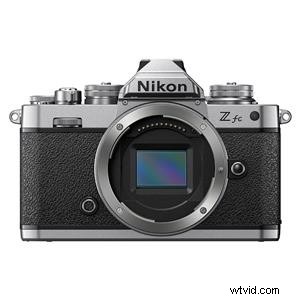
- Type: Mirrorless
- Sensor: DX CMOS (crop sensor)
- Megapixels: 20.9 MP
- Lens bundles: DX 16-50mm f/3.5-6.3 VR Lens, 28mm f/2.8 (SE) Lens, DX 16-50mm Silver & 50-250mm Lens, 28mm f/2.8 (SE) & 50-250mm Lens, Z DX 18-140mm f/3.5-6.3 VR Lens
- LCD: 3.0-inch tilting touch screen
- Maximum continuous shooting speed: 11 fps
- Max video resolution: 4K UHD
- User level: Beginner/Enthusiast
The Nikon Z fc is a good camera choice for beginners because it is small, compact, and versatile. It fits any photography type, including videography. Therefore, you can experiment and find your artistic voice. Z fc is a mirrorless camera that provides a 20.9MP CMOS sensor, a wide dynamic range, autofocus, wireless image transfers, and a solid body.
Check out our first look of the Nikon Z fc with Seth Miranda to see the camera in action.
Fujifilm X-T30 II
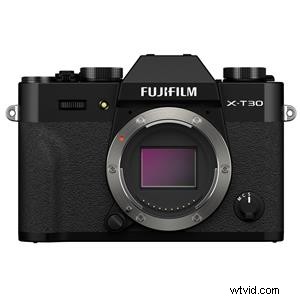
- Type: Mirrorless
- Sensor: APS-C X-Trans CMOS 4
- Megapixels: 26.1 MP
- Lens bundles: XC 15-45mm f/3.5 Lens, XF 18-55mm f/2.8 Lens
- LCD: 3.0″ tilt-type touch screen color monitor
- User level: Beginner/Enthusiast
The Fujifilm X-T30 II’s quad core X-Processor 4 provides photographers with fantastic quality stills and video in a compact and portable package. With eye detection, face detection, low light autofocus, and autofocus tracking, you’ll easily capture tack-sharp images of any subject even in low light. Helpful manual setting control knobs let you make quick adjustments without hunting through a menu.
Sony A6000
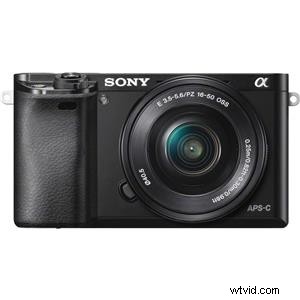
- Type: Mirrorless
- Sensor: APS-C CMOS
- Megapixels: 24.3MP
- Lens bundle: 16-50mm f/3.5-5.6 OSS Zoom Lens
- LCD: 3” tilting 921k dots
- Maximum continuous shooting speed: 11fps
- Max video resolution: Full HD
- User level: Beginner/Enthusiast
Sony has developed cameras suited to every photographer’s style, and many are available at entry-level prices. If you’re looking to push your skills without taxing your budget, then Sony is a low-noise investment.
The Sony A6000 is so compact it will easily fit into your day bag or pocket, so the most casual photographers will appreciate its portability. Whether traveling on vacation or sticking close to home, you can take advantage of great features like 179 AF tracking points, 11 frames per second of continuous shooting, and smartphone remote control. Choose from fully-manual and automatic shooting modes to make the most of your creative opportunities.
Panasonic Lumix GX85
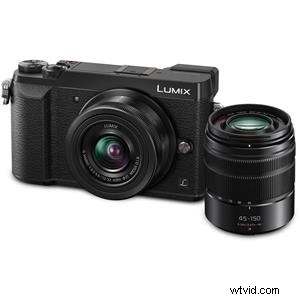
- Type: Mirrorless
- Sensor: Micro Four Thirds
- Megapixels: 16MP
- Lens bundle: 12-32mm f/3.5-5.6 & 45-150mm F4.0-5.6 Lenses
- LCD: 3” tilting touch screen, 1.04 million dots
- Maximum continuous shooting speed: 8fps
- Max video resolution: 4K
- User level: Beginner/Enthusiast
Creating competition in the camera market, Panasonic offers a series of portable compact cameras that pack a punch. Equally capable of recording videos and stills, Panasonic cameras boast 4K resolution and Micro Four Thirds sensors that have become the brand’s specialty.
Panasonic’s Lumix GX85 is the perfect camera for beginners looking for a great compact camera with a solid line of interchangeable lenses. Perhaps most impressive is the 5-axis in body sensor stabilizer, which works seamlessly with Lumix stabilized lenses to ensure perfect image sharpness in any lighting condition. With a streamlined electronic viewfinder and a collection of customizable buttons, photographers can quickly change settings and preview how their images will look without dealing with unnecessary menus.
Sony Alpha a6100
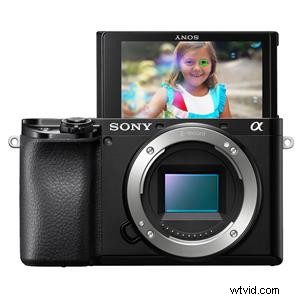
- Type: Mirrorless
- Sensor: APS-C CMOS Crop Sensor
- Megapixels: 24.2MP
- Lens bundle: 16-50mm Lens, 16-50mm and 55-210mm Lenses
- LCD: 3” 180 degree tilting touchscreen LCD 921k dots
- Maximum continuous shooting speed: 11 fps
- Max video resolution: UHD 4K
- User level: Beginner/Enthusiast
With Real-time Tracking Autofocus, Sony makes focusing a breeze for beginning photographers. Subjects can move in virtually any direction and still appear sharp in high resolution. With 425 AF points, and Real-time Eye AF for humans and animals, perfecting focus is no longer a concern. Content creators and vloggers who serve as their own camera operators will love the 180° tilting screen, so they can watch their footage as they shoot. It’s an all-around robust camera at an affordable price.
Pentax K-70
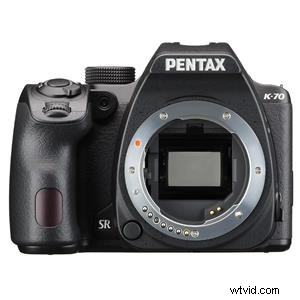
- Type: DSLR
- Sensor: APS-C
- Megapixels: 24.2MP
- Lens: 18-135mm f/3.5-5.6 ED AL CD WR Lens, 18-55mm f/3.5-5.6 AL WR Lens
- LCD: 3”, 921k dots
- Maximum continuous shooting speed: 6fps
- Max video resolution: Full HD
- User level: Beginner/Enthusiast
If you’re hunting for a camera that’s robust and durable, then the Pentax range is worth an unfiltered look. You can be assured that this user-friendly brand of cameras delivers competitive value and maximum performance.
Designed for high-impact use during any adventure, the Pentax K-70 keeps dust and water at bay while you shoot. The K-70 offers an expanded ISO range to help with astrophotography, an impressive multiple exposure option capable of combining up to 2,000 shots, and an internal interval timer for time lapse shooting. Even at a low price, the build and sensor are impressively competitive. View, edit, and share your photos on-the-go with built in Wi-Fi designed for fast image transfer to any smartphone.
Canon 90D
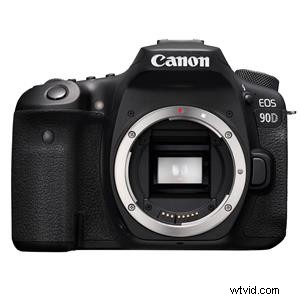
- Type: DSLR
- Sensor: APS-C
- Megapixels: 32.5MP
- Lens bundle: EF-S 18-135mm f/3.5-5.6 IS USM
- LCD: 3” vari-angle touch screen, 1.04 million dots
- Maximum continuous shooting speed: 11fps
- Max video resolution: 4k
- User level: Beginner/Enthusiast
With plenty of automatic modes, designed to help you find the best settings for each shot and subject, beginners will have an easier time learning the ins and outs of photography with the Canon 90D. This camera for beginners is easy enough to operate while also offering a competitive resolution, frames per second, and other useful features.
Canon EOS Rebel SL3
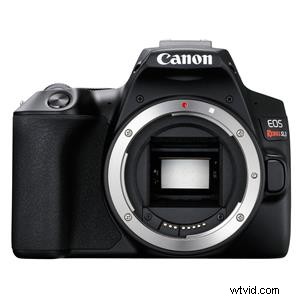
- Type: DSLR
- Sensor: APS-C
- Megapixels: 24MP
- Lens bundle: EF-S 18-55mm f/4-5.6 IS STM Lens
- LCD: 3” vari-angle 1.04 million dots
- Maximum continuous shooting speed: 5fps
- Max video resolution: 4K
- User level: Beginner/Enthusiast
The Canon EOS Rebel SL3 is very similar to the Rebel T7i with the important exception of the maximum video resolution. This camera is capable of shooting in 4K, making it a great option for beginner photographers and videographers. Vloggers and content creators can take advantage of the improved resolution to give their videos a more professional look and quality.
Nikon D3500
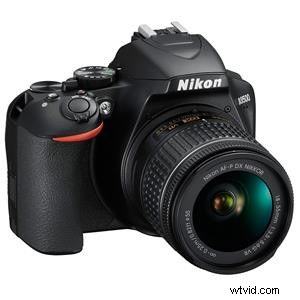
- Type: DSLR
- Sensor: APS-C
- Megapixels: 24.2MP
- Lens bundles: AF-P DX NIKKOR 18-55mm f/3.5-5.6G VR Lens, AF-P DX NIKKOR 70-300mm f/4.5-6.3G ED Lens
- LCD: 3” vari-angle touch screen, 921k dots
- Maximum continuous shooting speed: 5fps
- Max video resolution: 1080p Full HD
- User level: Beginner/Enthusiast
The Nikon D3500 is a great starter camera. Comparable to models in the Canon Rebel series, this camera provides a great starting point for resolution, frames per second, and other features for new photographers. Lens and accessory bundles help make this a great pick for those who want a little help assembling their camera kit.
Canon M50 Mark II
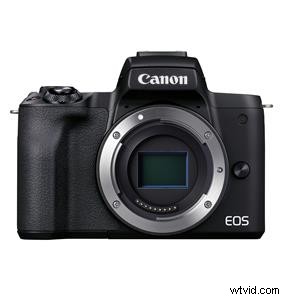
- Type: Mirrorless
- Sensor: APS-C
- Megapixels: 24.1 MP
- Lens bundle: EF-M 15-45mm f/3.5-6.3 IS STM, 15-45mm Content Creator Kit, 15-45mm and EF-M 55-200mm f/4.5-6.3 IS STM Bundle
- LCD: 3” articulating touchscreen LCD with 1.04 million dots
- Maximum continuous shooting speed: 10 fps in Raw
- Max video resolution: UHD 4K
- User level: Beginner/Enthusiast
The Canon EOS M50 Mark II is ideal for photographers and content creators hunting for an affordable camera with plenty of opportunities for accessories and lens expansion. The specifications are solid, offering high resolution images and video thanks to Canon’s fast processors and reliable sensor. With built-in Wi-Fi, Bluetooth, a 3.5mm microphone input, and an HDMI input, using audio and video accessories is easier than ever. This camera is an all-around great option for beginners.
Canon EOS M6 Mark II
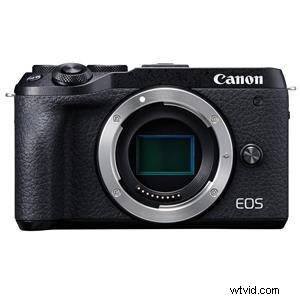
- Type: Mirrorless
- Sensor: APS-C
- Megapixels: 32.5 MP
- Lens bundle: EF-M 15-45mm IS STM and EVF-DC2 Viewfinder, EF-M 18-150mm IS STM and EVF-DC2 Viewfinder
- LCD: 3” 180 degree tilting touchscreen with 1.04 million dots
- Maximum continuous shooting speed: 30 fps in Raw Burst Mode with Pre-Shooting
- Max video resolution: UHD 4K
- User level: Beginner/Enthusiast
The Canon EOS M6 Mark II is a big camera in a small package. With an impressive megapixel count, a Digit 8 processor, Eye Detection, over 5,000 manually selectable AF positions, and an expansive ISO range, content creators can make the most of any environment or lighting condition. Add an electronic viewfinder for expanded shooting options and choose from a robust collection of available lenses to guarantee your shots look how you imagine them every time.
Nikon D5600
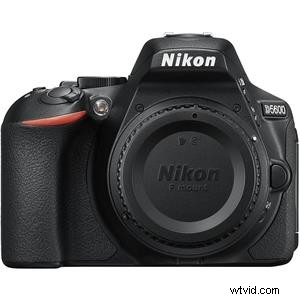
The Nikon D5600 is a great starter camera. Comparable to models in the Canon Rebel series, this camera provides a great starting point for resolution, frames per second, and other features for new photographers. Lens and accessory bundles help make this a great pick for those who want a little help assembling their camera kit.
- Type: DSLR
- Sensor: APS-C
- Megapixels: 24.2MP
- Lens bundles: AF-S DX NIKKOR 18-140mm f/3.5-5.6G ED VR Lens, AF-P DX NIKKOR 18-55mm f/3.5-5.6G VR Lens, AF-P DX 70-300mm f/4.5-6.3G ED Lens
- LCD: 3.2” vari-angle touch screen, 1.04 million dots
- Maximum continuous shooting speed: 5fps
- Max video resolution: 1080p Full HD
- User level:Beginner/Enthusiast
While the Nikon D5600 may seem quite similar in specifications to the D3500, this model is slightly heavier and offers a much more robust auto-focus system. With 39 auto-focus points, even the least experienced photographers can achieve tack-sharp focus for moving or still subjects.
Nikon Z5
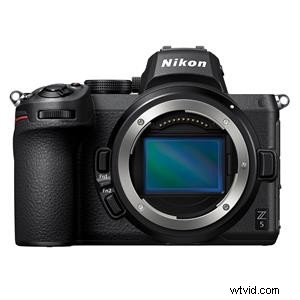
- Type: Mirrorless
- Sensor: FX CMOS (full frame)
- Megapixels: 24.3 MP
- Lens bundles: 24-50mm f/4-6.3 Zoom, 24-70mm f/4 S, 24-200mm f/4-6.3 VR Zoom
- LCD: 3.2” tilting touch screen, 1.04 million dots
- Maximum continuous shooting speed: 4.5 fps
- Max video resolution: 4K UHD
- User level:Beginner/Enthusiast
With the Z5, Nikon offers all of their impressive full frame mirrorless technology at a price point beginners will appreciate. The camera is making a name for itself in the content creation community, too, thanks to the wide selection of available lenses, the fabulous resolution and detail, the fast image processing offered by the EXPEED 6 processor chip, and an impressive in-camera image stabilization system. And with dual UHS-II SD card slots, you can back up your images as you shoot, or guarantee that you never have to stop to change cards. What’s not to love?
Which Camera Brand is Better for Beginners?
Many budding photographers wonder which camera system fits best for learning the basics of photography. The honest answer is that any camera brand offers cameras that work well for beginners. The same way one brand of car isn’t preferable over another for new drivers, most cameras can be used easily by photographers of any skill level.
Because Canon, Nikon, Sony, Panasonic, Fujifilm, and Olympus are such commonly-used and well-loved brands, there’s plenty of instructional content out there for new photographers to learn from. You can easily find tutorials, instructional videos, and menu walkthroughs for most contemporary models. Learning how to change settings and take better photos is only an internet search away.
If you’re not sure which camera system to choose, ask your photographer friends what they use. Buying a similar system will make it easy for them to answer your questions about settings, features, and menu navigation, and maybe even lend you gear to try out.
Should You Get a Camera with a Kit Lens?
If the kit lens fits your purpose or you haven’t yet decided on a photography genre, you may get the camera with a kit lens. A kit lens is usually a general-purpose zoom lens like an 18-55mm, or a 24-70mm zoom lens. It is versatile and helps you learn to use the camera and practice composition.
However, if you already know what types of photographs you want to create, choose a lens that fits your goal. For example, the kit lens may be too wide for portrait photography or may not have the high magnification for macro photography
The Best Camera for Beginners: What Else You Need to Know
Don’t wade into photography—jump into the deep end!
When choosing a beginner camera, it’s a good idea to future-proof your purchase. You won’t be a beginner forever, and outgrowing a camera’s capabilities is frustrating. Rather than selecting a basic model that feels safe, try a prosumer model with some extra features and manual settings.
Beginner cameras also have some practical setbacks to consider. Many models aimed at the introductory market contain plastic components and cut corners with their technical specifications. It’s never a bad idea to choose a more durable camera body built with metal alloys and top-of-the-line technology.
When you’re no longer a beginner, your camera will still be more than capable of taking the shots you want. In fact, learning on a slightly more sophisticated system with more manual controls and features will help you learn and improve your photography skills faster.
Want more options? Shop our entire line of cameras here.