
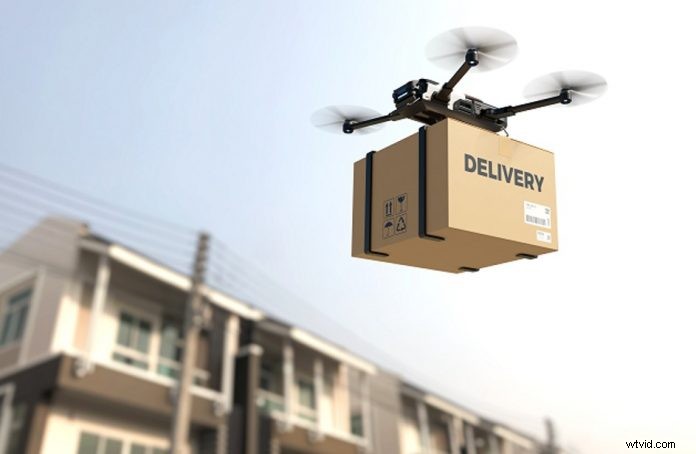
In 2013 Amazon announced its ambitious plan to deliver packages via drones, sparking imagination worldwide. A decade later, the vision has yet to materialize on a mass‑scale level. The reality is that drone delivery faces a web of regulatory, technical, safety, and societal challenges that have kept fleets grounded.
Despite significant investment, the technology still struggles to meet the rigorous demands of commercial logistics. This article breaks down the core reasons drone delivery has not taken off, and highlights the sectors where it may finally prove viable.
Legal Barriers: Technology Outpacing Regulation
Air traffic is among the most heavily regulated industries because of safety stakes. Drones, though lighter and lower‑flying, were treated as “unmanned aircraft” under the U.S. Federal Aviation Administration (FAA) until 2016. The introduction of Part 107 provided a framework, but it was designed for hobbyists, not commercial carriers.
Part 107 imposes a “line‑of‑sight” requirement, limiting drones to visual contact with an operator. For truly autonomous, long‑range delivery, this rule forces a network of human pilots, making large‑scale operations impractical. Companies seeking broader autonomy must apply for Part 135 certification—an expensive, time‑consuming process that mirrors the hurdles of traditional airline certification.
Part 135: The Bureaucratic Gauntlet
Part 135 is the same regulatory track used by small cargo aircraft operators. The approval process involves rigorous safety audits, training documentation, and operational compliance. For most businesses, the cost and delay outweigh the potential benefits unless they have deep capital reserves and a long‑term runway for experimentation.
Infrastructure Gaps: Uncharted Airspace
Even with regulatory clearance, the skies lack a dedicated traffic management system for unmanned aircraft. The FAA is collaborating with industry partners to develop a “Drone Traffic Management” platform, but large‑scale deployment is still years away. Without such infrastructure, drones face collision risks with other UAVs, birds, and static obstacles—especially in dense urban environments where demand is highest.
Safety Concerns: The Cost of a Failure
Commercial delivery drones weigh up to 11 lb (Wing) or more for larger payloads. A fall from a few hundred feet can cause serious injury or property damage. While regulators set a “one‑in‑a‑billion” failure rate for commercial airliners, drones operate under a less stringent but still demanding standard. Current off‑the‑shelf models exhibit frequent failures from signal loss, battery depletion, or weather interference, underscoring the need for robust mechanical design and fail‑safe protocols.
Public Acceptance: Noise, Privacy, and Perception
Even if safety and regulation were resolved, residents may resist the constant low‑altitude presence of drones. The high‑pitched whirring and frequent overpasses could become a nuisance, especially during quiet hours. Privacy fears also loom—though many services avoid high‑resolution cameras, the mere notion of a hovering drone raises concerns about surveillance.
Security Risks: Theft and Hijacking
Drone delivery introduces new avenues for theft. With no driver on the ground to hand over packages, items become vulnerable mid‑flight or upon landing. Existing security protocols rely on GPS‑based geofencing and tamper‑evident seals, but the risk of in‑air theft or hacking remains higher than with traditional delivery vehicles.
Wildlife Interactions: An Unforeseen Variable
Birds of prey and even domestic pets have been known to attack or collide with drones. These incidents add another layer of unpredictability, particularly in rural or semi‑urban settings where wildlife activity is higher.
Current Players and Pilot Programs
Despite obstacles, several firms are pursuing drone delivery on a limited scale, gathering data for future expansion.
Google’s Wing
Operating in Australia and select U.S. regions, Wing focuses on rural and suburban routes to minimize airspace conflicts.
Amazon Prime Air
Amazon continues small‑scale testing in controlled environments, leveraging its extensive logistics network.
UPS and Others
UPS has piloted drone deliveries for urgent medical supplies, where speed justifies the higher cost.
These pilots remain exploratory; they are not yet commercial solutions but provide critical insights into feasibility.
Future Opportunities: Targeted Use Cases
While urban drone delivery faces significant hurdles, specialized applications offer clearer value:
- Rural logistics where road access is limited.
- Emergency medical transport where time is critical.
- Remote industrial sites where drones navigate terrain better than ground vehicles.
In such contexts, the benefits outweigh the risks, and deployment is more manageable.
Conclusion: Grounded, Yet Not Gone
Drone delivery is not dead—it is simply delayed by regulatory, technical, safety, and public trust challenges. Traditional logistics will remain dominant for the foreseeable future, but with continued innovation and infrastructure development, drones may carve out a niche in high‑value, low‑density scenarios. Until then, keep your emergency supplies ready.