
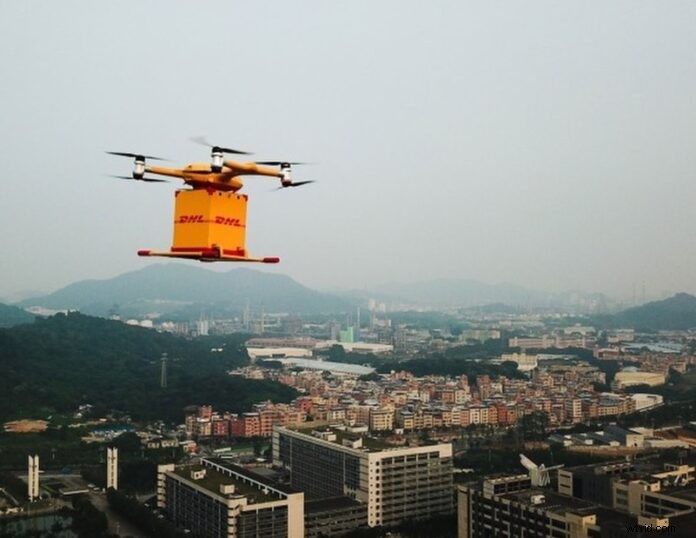
In 2013, Jeff Bezos announced Amazon’s ambition to deliver packages within 30 minutes using drones, sparking global fascination.
The announcement ignited the imagination, painting a picture of skies peppered with autonomous aircraft ferrying everything from books to birthday cakes.
India, a country that has always embraced technological breakthroughs, saw a surge of drone startups eager to turn that vision into reality.
Fast‑forward to 2024: Amazon and other tech giants are still testing drone prototypes in the U.S., yet India remains devoid of buzzing fleets or drones delivering samosas and smartphones. What halted the dream of drone delivery in Indian cities?
Understanding why this technology has not taken off requires unpacking a blend of economic, regulatory, infrastructural, and societal hurdles that are uniquely Indian.
This article examines those complexities and explains why drone delivery has stayed grounded in the country.
1. The Promise Behind Drone Delivery
The original pitch was simple: customers crave faster, cheaper deliveries, while traditional logistics choke on traffic, warehousing costs, and rising shipping fees. Drones promised a sleek alternative that could bypass these terrestrial bottlenecks.
In the U.S., where average delivery times in 2013 ranged from 2 to 5 days and shipping costs hovered around $4–6 per order, drones were seen as a game‑changer. Replacing costly human‑driven vehicles with autonomous drones could dramatically cut expenses and delight consumers with near‑instant deliveries.
India’s traffic congestion and logistical challenges seemed like the perfect setting for a leapfrog into drone logistics. Entrepreneurs envisioned a solution that could sidestep crumbling infrastructure and bring efficiency from the skies.
But several critical barriers emerged.
2. Economics: Low‑Cost Labor vs. Drone Investment
The most fundamental obstacle is financial. In India, the economics of drone delivery simply do not add up.
Low‑Cost Human Labor
Unlike the U.S., where delivery jobs earn decent wages, India’s logistics industry thrives on extremely low‑cost labor. The average cost to deliver a parcel in the U.S. is about $5–6; in India it is roughly ₹40–50, or $0.50–0.60.
That figure has dropped even further with the rise of quick commerce. Platforms such as Zepto use dark stores—mini‑warehouses located 1–3 km from residential areas—allowing riders to complete orders in as little as 4 minutes and sometimes for just ₹20 per delivery.
The Quick Commerce Shift
Quick commerce flips the script: delivery speed and cost become competitive advantages rather than pain points. This hyper‑local model erodes the need for high‑capital drone technology. Why deploy expensive drones when a human fleet can deliver faster and cheaper?
Thus, while drones may be economically viable in high‑wage economies, they face stiff—and arguably unfair—competition in India, where affordability trumps automation.
3. The Regulatory Maze: India’s Airspace Isn’t Drone‑Friendly
If economics weren’t enough to ground drones, regulatory constraints definitely were.
Safety, Security, and Sovereignty
Drones are more than toys; they can crash, be hijacked, or breach privacy. The Indian government, rightly concerned about national security and public safety, has historically imposed strict bans on drone use.
Only in 2021 did regulations ease slightly. The Directorate General of Civil Aviation (DGCA) introduced an airspace map that divides India into green, yellow, and red zones:
- Red Zones: No‑fly areas, typically around strategic or densely populated centers.
- Yellow Zones: Require government clearance.
- Green Zones: Free for drone operation—but such zones are scarce in urban areas.
Take Bengaluru, for instance. Most of the city falls into red or yellow zones, leaving virtually no room for free drone operations in major Indian cities.
Slow Bureaucratic Momentum
Even where permissions theoretically exist, red tape, ambiguous policies, and sluggish bureaucracy make drone operations a logistical and legal nightmare. Scaling drone delivery demands navigating a minefield of approvals and compliance protocols.
4. The Human Factor: Jobs, Politics, and Public Perception
Technology does not exist in a vacuum. In a labor‑rich country like India, drone delivery confronts a profound socio‑economic dilemma.
Employment Concerns
India’s logistics and e‑commerce sector employs 1.5 to 2 million delivery workers, with projections of a three‑fold increase by 2030. For a government under pressure to create jobs, automating millions of positions with flying robots sends a negative signal.
This stance is not new. Union Minister Nitin Gadkari famously rejected self‑driving cars in India, citing potential job losses. The government’s clear message: technology should not come at the cost of livelihoods.
5. The Urban Reality: Why Indian Cities Are Challenging for Drones
Even if drones were cost‑effective, approved, and politically acceptable, urban infrastructure poses a monumental hurdle.
Congestion and Chaos
Unlike the grid‑like layouts of some Western cities, Indian metropolises are dense, unstructured, and chaotic. Rooftops are cluttered, power lines tangle the skyline, and open landing zones are scarce. Narrow lanes, high‑rises, and informal settlements further complicate drone navigation.
Flying a drone in Phoenix or Berlin is one thing; doing so in Mumbai’s Dharavi or Delhi’s Chandni Chowk is a different story entirely.
Unpredictable Weather and Pollution
India’s volatile climate—monsoons, dust storms, and extreme heat—makes consistent drone operation unreliable. Coupled with high pollution levels that can interfere with sensors and navigation, the environment is far from drone‑friendly.
6. Enterprise Use vs. Consumer Hype: Drones Still Have a Role
Drones have not failed entirely in India; they simply haven’t delivered food or phones to doorsteps.
In fact, drones are increasingly deployed for:
- Agriculture: crop monitoring and pesticide spraying.
- Disaster relief: delivering aid to remote or flood‑affected areas.
- Healthcare logistics: transporting vaccines and medical supplies in rural regions.
- Surveillance and security: crowd management and border patrol.
These enterprise and government‑backed use cases are far more viable because they:
- Operate outside congested city cores.
- Are confined to green zones.
- Receive regulatory and financial support.
In short, drones are succeeding in India—just not in the way Bezos imagined.
Conclusion: A Dream Deferred, Not Dead
Drone delivery in India isn’t an outright failure; it’s a misfit given the current economic, regulatory, and societal context. The vision of flying couriers hasn’t died—it has been postponed, repurposed, and refocused.
For consumer drone delivery to become a reality, several conditions must align:
- Technology must become significantly cheaper.
- Regulations must evolve to accommodate urban complexities.
- Urban planning must incorporate aerial logistics.
- Society must reconcile low‑skill employment with technological efficiency.
Until then, your groceries will likely keep arriving on scooters rather than from the sky.