
Sony has long been at the forefront of consumer electronics, and its impact on digital imaging is unrivaled. From redefining still‑image capture in the early 1980s to establishing mirrorless dominance in the 2020s, Sony consistently pushes the boundaries of photography. Today, the brand is synonymous with cutting‑edge innovation, uncompromising speed, and exceptional image quality—qualities that serve both professionals and enthusiasts. This article chronicles Sony’s camera milestones, starting with the flagship Alpha 1 II and tracing back through the devices that forged the company’s legacy.
Sony Alpha 1 II (2024): The Flagship
The Sony Alpha 1 II, launched in early 2024, epitomizes Sony’s mirrorless mastery. A full‑frame 60.1‑MP stacked CMOS sensor delivers unrivaled resolution and stellar low‑light performance. Coupled with AI‑powered autofocus tracking, a 30 fps burst mode, and 8K 60p video capture, it serves both photographers and filmmakers who demand flawless performance in any environment.
Its versatility stems from a host of engineering breakthroughs: the refined BIONZ XR processor, advanced heat‑management that extends continuous shooting, and dual CFexpress Type A + SD UHS‑II card slots for rapid data transfer. Real‑time eye‑tracking that recognises humans, animals, and birds, together with a 9.44‑million‑dot OLED EVF at 240 Hz, delivers an immersive shooting experience that confirms the Alpha 1 II as Sony’s definitive flagship.
Sony Mavica (1981): The Origin of Digital Imaging
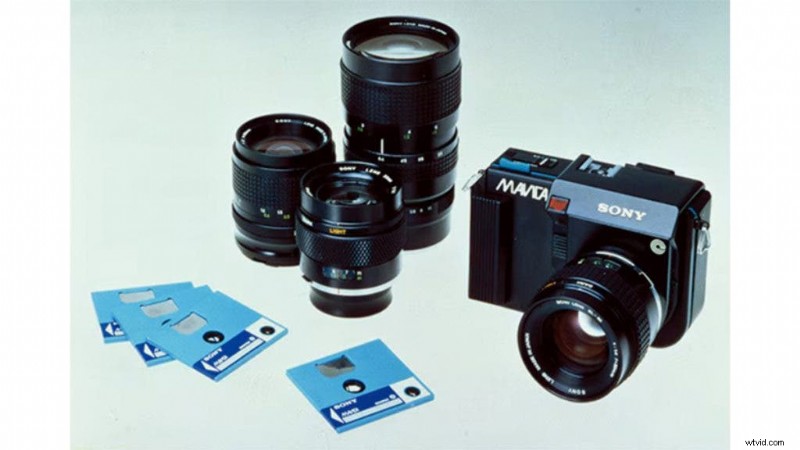
In 1981, Sony entered the camera arena with the Mavica (Magnetic Video Camera). Though it predated true digital imaging, the Mavica broke new ground by storing stills on 2.0‑inch floppy disks—Mavipaks—capturing images as analog video signals. Each disk accommodated up to 50 frames, viewable on a standard television through a dedicated playback unit.
Although the original Mavica never reached retail shelves, its press‑conference debut stunned the photographic community and foreshadowed the digital revolution. By pioneering electronic image capture, playback, and storage, Sony signaled a bold shift away from film. Over the 1990s, Sony refined the Mavica line, culminating in a fully digital system by 1997. The Mavica’s forward‑thinking philosophy laid the groundwork for the emergence of consumer digital cameras.
Sony Cyber‑shot DSC‑F1 (1996): The First True Digital Camera
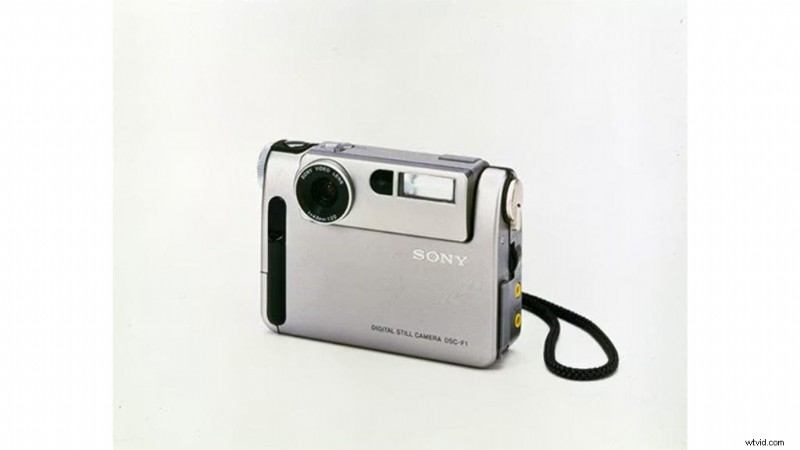
In 1996, Sony introduced the Cyber‑Shot DSC‑F1, the first truly consumer‑grade digital camera. Featuring a 0.3‑MP CCD sensor, onboard memory, and a rotating lens barrel that enabled versatile shooting angles—including early “selfie” capability—this compact device democratized photography. A 1.8‑inch LCD allowed instant preview and deletion, eliminating the anxiety of wasted film and redefining user expectations.
By eliminating film and enabling instant image review, the DSC‑F1 reshaped consumer photography. Its intuitive interface, compact size, and PC connectivity made digital capture accessible to the mainstream, setting the stage for Cyber‑Shot’s dominance throughout the next decade.
Sony NEX‑5 (2010): Leading the Mirrorless Movement
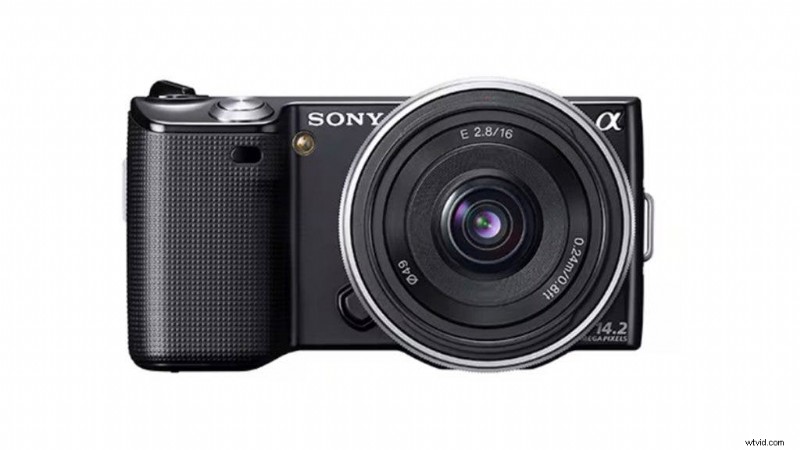
In 2010, Sony launched the NEX‑5, one of the first mirrorless interchangeable‑lens cameras equipped with an APS‑C sensor. The new E‑mount lens system—designed for compact bodies while supporting high‑resolution sensors—combined DSLR‑level image quality with a point‑and‑shoot form factor. The 14.2‑MP Exmor APS‑C HD CMOS sensor delivered fast autofocus, 1080p full‑HD video, and a tiltable LCD, all housed in a lightweight magnesium‑alloy chassis.
The NEX‑5’s success validated Sony’s mirrorless strategy, positioning the brand as a serious contender against established DSLR manufacturers. By offering a larger sensor and proprietary E‑mount, Sony set the foundation for the Alpha mirrorless line, now the industry standard.
Sony Alpha 7 (2013): The First Full‑Frame Mirrorless Camera
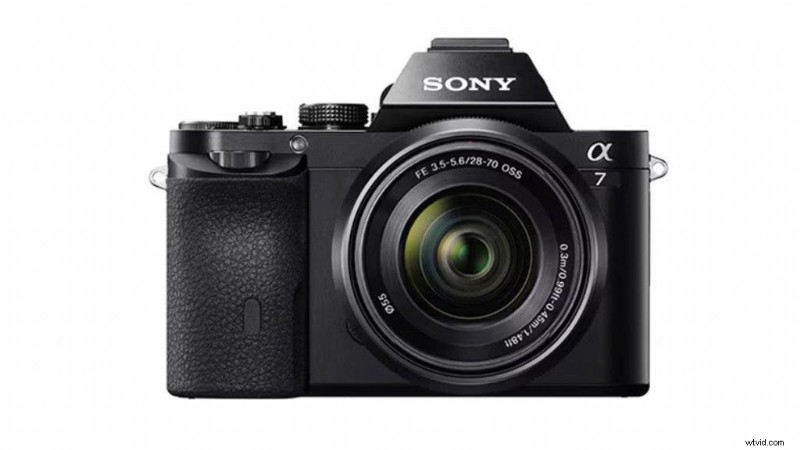
2013 marked another breakthrough with the launch of the Alpha 7 and Alpha 7R, the world’s first full‑frame mirrorless interchangeable‑lens cameras. The A7’s 24.3‑MP CMOS sensor and the A7R’s 36.4‑MP sensor—both free of optical low‑pass filters—delivered studio‑grade resolution in a compact package. Fast hybrid autofocus, full‑HD video, Wi‑Fi/NFC connectivity, and weather‑sealed construction made these models the first choice for professionals hesitant to abandon DSLRs.
The Alpha 7 series spurred Sony’s expansion into specialized models—low‑light A7S, high‑resolution A7R, and balanced A7 III—while compelling Canon and Nikon to launch their own mirrorless systems. The A7’s introduction effectively rewrote the narrative of camera design for the 21st century.
Sony Alpha 1 (2021): The All‑in‑One Powerhouse
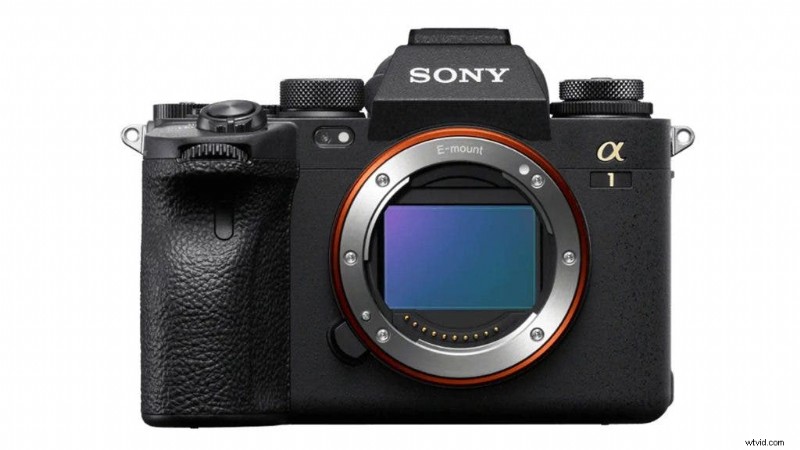
In 2021, Sony unveiled the Alpha 1, a hybrid powerhouse that fused the high resolution of the A7R, the speed of the A9, and the video prowess of the A7S into a single body. Featuring a 50.1‑MP full‑frame sensor, 30 fps blackout‑free electronic shutter, 8K 30p video, and Real‑Time Eye‑AF for humans, animals, and birds, the Alpha 1 set a new benchmark for versatility.
The camera’s 9.44‑million‑dot OLED EVF at 240 Hz, dual CFexpress Type A slots, and 16‑bit RAW output over HDMI exemplify Sony’s commitment to uncompromising performance. Silent operation, high burst rate, and an anti‑distortion shutter make the Alpha 1 ideal for sports, wildlife, and photojournalism, solidifying its status as a flagship and a blueprint for future professional imaging.
Sony’s Enduring Impact on Photography

From the magnetic Mavipaks of the Mavica to the AI‑driven autofocus of the Alpha 1 II, Sony has continually reshaped how moments are captured. At each pivotal juncture—whether pioneering mirrorless technology, advancing full‑frame innovation, or integrating hybrid shooting capabilities—Sony has not merely adapted but led, setting industry standards and inspiring competitors.
Sony’s imaging philosophy centers on anticipating the next needs of photographers and videographers. Whether it’s the portability of the Cyber‑Shot, the modularity of the NEX series, or the high‑performance specs of the Alpha 1 II, each product is engineered for speed, flexibility, and uncompromising quality.
With ongoing investment in sensor design, AI, and real‑time computing, Sony shows no sign of slowing. Its legacy lives not only in the technology it delivers but also in the countless memories, stories, and creative visions it empowers—transforming photography into an accessible, expressive, and boundless medium for everyone.

Amy Touchette
Amy Touchette is a photographer based in Brooklyn, who specializes in street portraits. Trained at the International Center of Photography, where she now teaches, her photographs have exhibited internationally, including the National Portrait Gallery in London and the MoMA‑Moscow, and have been published in Women Street Photographers (Prestel, 2021) and The New York Times. Described by Buzzfeed as a “master of street photography in the busiest of concrete jungles, New York City,” Touchette’s second monograph, Personal Ties: Bed‑Stuy, Brooklyn (Schilt Publishing, 2022), was short‑listed for the Lucie Photo Book Award and garnered a Critical Mass 2021 Top 50. She’s represented by Clamp in NYC and Little Big Galerie in Paris, France.