
The latest chapter in the low‑light photography saga comes from Sony.
By Stan Horaczek | Published Oct 26, 2015 10:32 PM EDT
We may earn revenue from the products available on this page and participate in affiliate programs. Learn more »

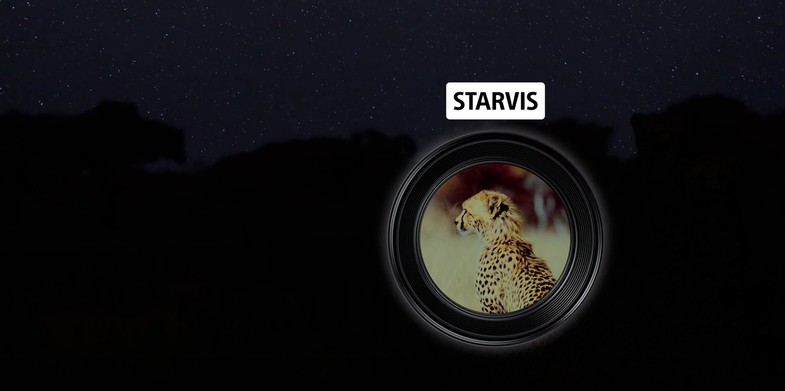
Earlier this year, Canon unveiled sensors boasting ISO settings exceeding four million and showcased technology capable of capturing images in almost total darkness. Sony now introduces its own breakthrough: the Starvis sensor, engineered for ultra‑dark surveillance scenarios and poised to filter into consumer photography in the near future.
While Sony has long been a leader in high‑ISO performance—illustrated by the A7S II’s stellar low‑light capabilities—this new sensor represents a distinct leap forward.
According to Sony’s technical brief, the Starvis sensor delivers a sensitivity of at least 2000 mV per 1 µm² (color product) when imaging with a 706 cd/m² light source, equivalent to an F5.6 lens in a one‑second exposure. It achieves high‑quality imagery across visible and near‑infrared wavelengths.
In simpler terms, the sensor can “see” beyond what the human eye can, extending its reach across a broader spectrum of light.
I have long argued that the low‑light performance battle has become the new megapixel contest—and this heightened sensitivity adds even more value to the evolving camera landscape.
