
Reading Time: 6 minutes
Published: November 26, 2025 | Last Updated: December 5, 2025

What Is a Film Colorist? Definition & Role
A film colorist is a post‑production specialist who refines footage’s color, exposure, and contrast after editing is locked. They correct technical issues, apply a tonal palette that reflects the story’s mood, and maintain visual consistency across every shot.
Colorists typically work after the edit is finalized, but on larger productions they may collaborate during pre‑production to test camera settings, lighting, and costume colors, or to craft custom LUTs that guide on‑set look. Their goal is to translate the director’s vision into a cohesive visual language that supports narrative intent.
Correction vs Grading
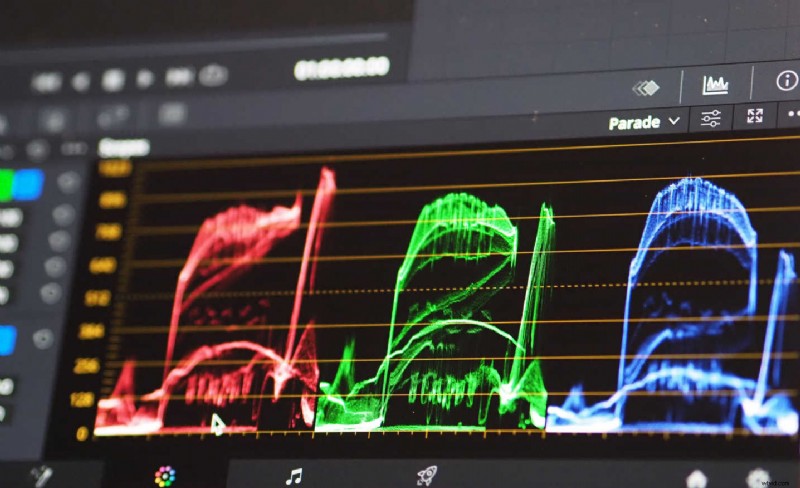 The RGB parade separates the red, green, and blue channels to help colorists balance exposure and prevent color clipping. Each waveform shows where highlights, midtones, and shadows land within the frame.
The colorist’s workflow is split into two distinct phases: technical correction and creative grading.
Color Correction
During correction, the colorist fixes issues inherent in the raw footage—warmer or colder tones, uneven lighting, or mismatched shots from different cameras. Adjustments to exposure, white balance, contrast, and hue bring each frame to a natural, visually coherent baseline, ensuring that scenes filmed under varied conditions appear seamless.
Color Grading
After establishing a neutral foundation, the colorist crafts a unified aesthetic that amplifies the film’s emotional beats. By shifting shadows to cooler hues, dialing back saturation, or highlighting warmer tones, they create visual cues that reinforce tension, nostalgia, or intimacy. This creative layer supports the narrative structure and deepens character arcs.
 In The Matrix (1999), a pervasive green tint separates the simulated world from reality, visually underscoring the artificiality of the Matrix. Image Credit: Warner Bros.
Colorists can isolate portions of an image using masks and tracking. This precision allows them to brighten a subject’s face, alter a wall’s hue, or desaturate a background without affecting the surrounding frame.
Read more on the difference between color correction and grading.
How Color Supports Storytelling
Color grading is a narrative tool: subtle shifts in hue or contrast can convey fear, calm, or safety. Tone changes can mirror character development or signal a transition in time or place.
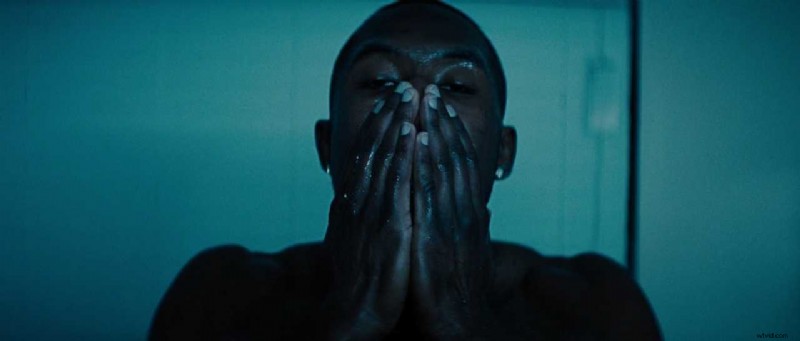 In Moonlight (2016), the cool cyan lighting of a bathroom scene underscores Chiron’s emotional withdrawal. Desaturated blue tones and deep shadows visually isolate him, reinforcing internal conflict. Image Credit: A24
Throughout the film, blue‑toned palettes recur in water scenes and introspective moments, reflecting vulnerability and identity. As the character matures and faces societal pressure, the grading shifts—sometimes colder, sometimes warmer, sometimes saturated—creating a dynamic visual journey that mirrors his internal evolution.
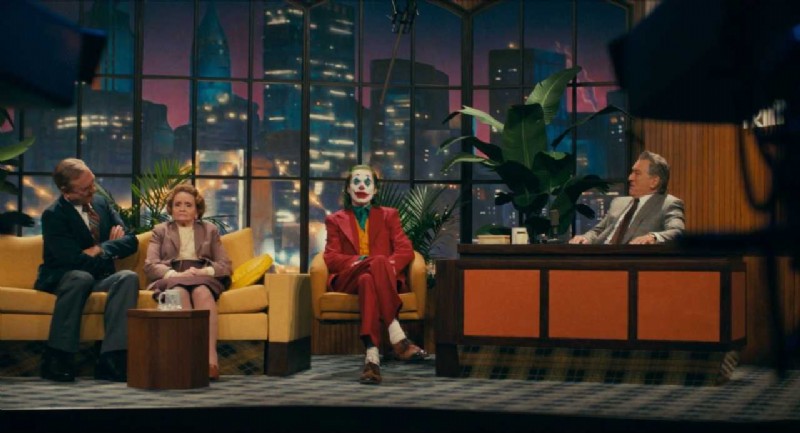 In Joker (2019), deep reds, bright yellows, and a synthetic sunset backdrop heighten the surreal tone of Arthur’s TV appearance. The exaggerated palette clashes with polished set design, illustrating Arthur’s detachment from reality. Image Credit: Warner Bros.
Color palettes in early scenes use cool, blue‑toned hues to convey alienation and despair. As the character’s emotional state shifts, selective boosts in saturation, reds, and clashing costume colors signal internal chaos and transformation. See Lawrence Sher’s breakdown of his lighting colors in the film.
Read more on color psychology in film.
Colorist Workflow: From Prep to Delivery
Colorists typically join a project after the edit is locked, but on larger productions they may help evaluate camera setups, lighting, and costume materials in pre‑production, or craft custom LUTs to guide on‑set look. Some colorists grade dailies so the team can monitor contrast, color balance, and lighting consistency during shooting.
Once the edit is complete, the colorist performs final grading. They then prepare the film for multiple delivery formats—theatrical DCP, streaming HDR/SDR, or TV Rec. 709 broadcast masters—each with specific brightness, contrast, and color‑space requirements. The colorist guarantees that every version retains the intended look, avoiding tone or saturation drift across platforms.
They also integrate subtitles, VFX elements, and title cards into the final grade, ensuring a seamless visual experience regardless of the viewing medium.
Tools, Formats, and Workflows
 This vectorscope display shows color saturation and hue plotted inside the Rec.709 color space. Colorists use this tool to confirm that skin tones fall along the expected axis and to avoid illegal color values during grading.
Colorists rely on calibrated monitors and measurement tools to refine every detail. Common software includes:
- DaVinci Resolve – the industry standard for film grading
- Adobe Premiere Pro – widely used in commercial and indie workflows
- Final Cut Pro – often chosen for smaller sets or rapid turnaround projects
Waveform monitors assess exposure, while vectorscopes verify color accuracy. Human skin tones—regardless of ethnicity—fall along a diagonal line on the vectorscope; the colorist uses this reference to maintain natural skin appearance, even under unconventional lighting.
Colorists also manage complex file formats such as BRAW, ProRes, or R3D, and work within color‑managed systems like ACES (Academy Color Encoding System). ACES ensures color consistency across editing, grading, and VFX, even when footage originates from multiple cameras. For HDR releases, the colorist carefully balances shadows and highlights to preserve contrast while sustaining mood.
Working with Directors and DPs
The colorist collaborates closely with the director, cinematographer (DP), editor, and occasionally the production designer. The DP may explain how a practical light source shaped a scene, while the director might request cooler tones for a confrontation or warmer hues for a nostalgic flashback. The colorist translates these directives into precise adjustments, delivering a visual identity that aligns with the creative vision.
Read more on Color Theory.
They also coordinate with VFX artists and post supervisors to maintain color stability when effects or overlays are added later. This role demands both technical precision and creative communication, ensuring every image element supports the film’s intent.
A Brief History: From Color Timing to Digital Grading
Before digital post‑production, color was handled in labs through “color timing,” where technicians adjusted printer lights to alter exposure and tint during film printing—a slow, limited process. Today, digital colorists wield full control: they isolate shadows, push highlights, soften skin tones by reducing contrast, and balance color zones frame by frame. Modern colorists blend image science, software precision, and visual storytelling in every shot.
Summing Up
A colorist addresses color problems, balances shots, and grades each scene to align with the film’s emotional tone and structure. Using scopes, LUTs, and calibrated monitors, they craft a visual identity that endures across cinema screens, streaming devices, and smartphones.
Read Next: Ready to level up your color work?
Start with our main Post‑Production hub to see how editing, sound, and color come together to build the final cut.
Then explore the full Color Grading section for guides on color theory, contrast, LUTs, scopes, and practical workflows you can use in DaVinci Resolve.