
Reading Time: 14 minutes
Published: February 12, 2024 | Last Updated: July 1, 2026

Overview
Definition: A metaphor declares one thing is another, letting the second’s traits illuminate the first. The comparison stays implicit, so the visual image conveys the meaning.
When a character describes a feeling as a tangible object—like calling Harvey Dent Gotham’s “white knight” in The Dark Knight (2008)—the audience instantly grasps the intended image.
Why it matters: A crisp metaphor gives a scene a shared visual shorthand. Dialogue, performance, blocking, and design all reinforce the same idea, while a muddled metaphor creates competing images and dilutes the message.
- Key takeaway 1: Ensure the metaphor is concrete enough to evoke a single, vivid image.
- Key takeaway 2: Keep the metaphor consistent within the scene so its meaning remains clear.
- Key takeaway 3: Test the metaphor by asking how it shifts a character’s goal, attitude, or choices.
Below we explore metaphors in film, how they differ from similes, symbols, and motifs, and provide practical tools to spot, craft, and avoid mixed metaphors.
What Is a Metaphor in Film?
A metaphor is a figure of speech that equates one thing with another to highlight a shared feature. In cinema, it often manifests as a recurring image, object, sound, or location that surfaces at key moments, turning an abstract concept into a tangible visual cue. For instance, a cracked mirror can symbolize a fractured self‑image, while a storm can foreshadow escalating conflict.
Metaphors are powerful because they can operate beneath the surface of dialogue. A repeated visual pattern can carry subtext, letting the audience grasp a character’s unspoken thoughts without explicit explanation.
Everyday Metaphor Examples
Metaphors pervade everyday language, converting abstract ideas into quick mental images:
- “Her ideas were fireworks.” – Bright, surprising, attention‑grabbing.
- “He has a heart of stone.” – Emotionally closed off.
- “That meeting was a marathon.” – Long, draining, requiring endurance.
- “The city is a jungle.” – Chaotic, competitive, survival‑focused.
In film, these metaphors often appear visually—a recurring object, color, or sound can signal grief, freedom, corruption, or identity without verbal explanation.
Metaphor vs. Simile
Both compare two things, but their wording differs. A metaphor asserts identity (“Fear is a cage”), whereas a simile uses “like” or “as” (“Fear is like a cage”). Metaphors feel more absolute and work well in intense moments or hard‑spoken characters; similes lend a more conversational tone suitable for casual dialogue or humor.
Film tip: You can mimic a simile visually by juxtaposing two images that suggest “this is like that.” A true visual metaphor typically builds through repetition, framing, and contextual layering across scenes.
Metaphor vs. Symbol vs. Motif
Quick Definitions
- Motif – A repeated pattern (image, object, sound, color, action) that reappears throughout a film.
- Symbol – A stand‑in that points beyond itself to a broader concept (e.g., a flag representing a nation).
- Metaphor – A meaning link that connects two ideas so one behaves like another through context.
Practical Test While Watching
- Repetition? If an element repeats noticeably, it’s likely a motif.
- Immediate meaning? If it points to a broad concept with minimal context, it leans toward symbol.
- Constructed equivalence? If the film builds an “A = B” relationship through staging, framing, or editing, it functions as a metaphor.
Why Overlap Happens
Overlap occurs when an element is both repeated and loaded with meaning. A motif can become symbolic as audiences learn its significance; a symbol can work metaphorically when the film emphasizes a specific comparison through context.
Illustrative Examples
- A repeated ticking sound across tense scenes becomes a motif that also hints at a metaphor about pressure and time.
- A wedding ring shown once can still read as a symbol of commitment.
- A character framed behind glass across key beats can become a metaphor for separation, as the film trains viewers to see the pattern.
Visual Metaphors in Film
The Green Light in The Great Gatsby (2013)
The green light on Daisy’s dock serves as a recurring motif that evolves into a visual metaphor for Gatsby’s hope and obsession. Its distance turns desire into a visible gap, and its persistent presence across scenes underscores the unattainable dream.

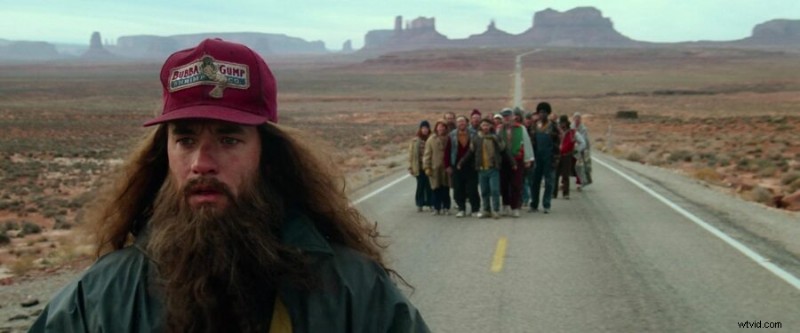
Forrest Gump’s Long Run (1994)
Forrest’s continuous running, unbound by a destination, becomes a metaphor for life’s unpredictable journey. The film tracks his movement through varied landscapes, letting the act of running symbolize change, chance, and persistence.
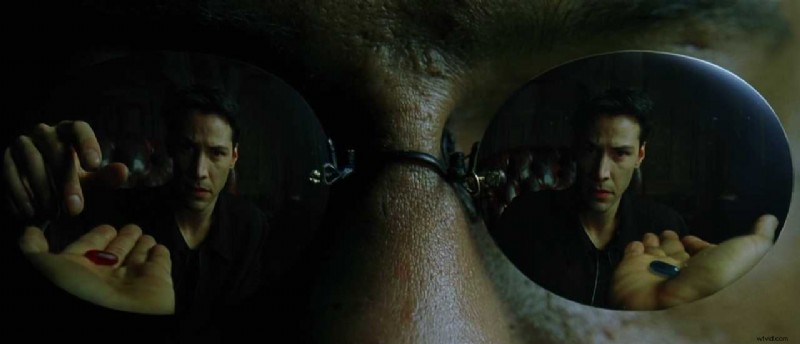
The Red and Blue Pills in The Matrix (1999)
Neo’s choice between the red and blue pills acts as a clear metaphor for truth versus comfort. The visual split—two pills reflected side by side—signals a fork in the road, making the decision’s consequence immediately tangible.
WALL·E’s Trash‑Covered Earth (2008)
WALL·E’s daily cleaning routine serves as a metaphor for unchecked consumption. The barren, waste‑filled planet visually communicates environmental degradation, while the discovery of a living plant shifts the narrative into a hopeful mission.
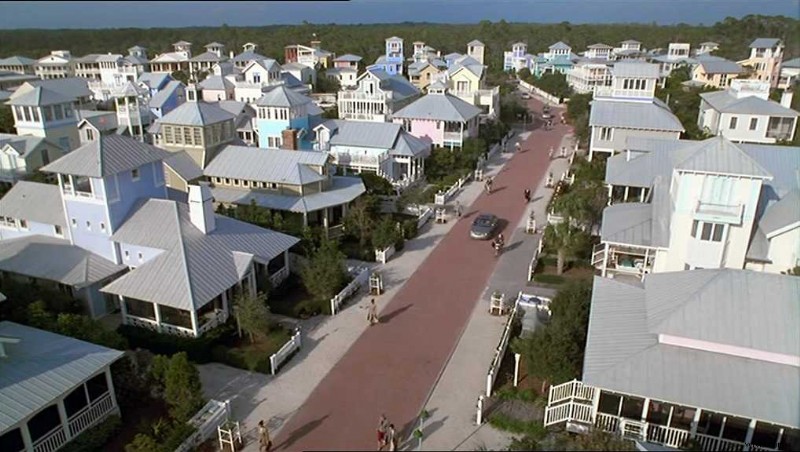
The Truman Show’s Seahaven (1998)
Seahaven’s immaculate streets and rehearsed inhabitants form a metaphor for a controlled media world. The town’s perfection, coupled with constant product placement, subtly critiques the commodification of reality.
Scene Breakdowns: Building a Visual Metaphor
1. Get Out (2017): The Sunken Place
Through a repeated action and distinct sound cue, the film teaches that the Sunken Place represents lost agency. The perspective shift makes the character a passive observer, and the framing underscores separation.
2. Parasite (2019): Stairs and Vertical Space
Stairs recur at turning points, mapping class onto geography. Elevated positions signal power, while lower frames imply subservience, turning social hierarchy into a physical journey.
3. Black Swan (2010): Mirrors and Doubles
Mirrors appear during moments of intense pressure, forcing viewers to question authenticity. The repeated doubling of the protagonist’s image signals a split identity that escalates with her stress.
Mini‑Checklist for Visual Metaphors
- Does the element surface at key emotional or structural beats?
- Is it emphasized through framing or editing beyond normal props?
- Does its meaning shift across scenes due to changing context?
- Does it translate an abstract idea into a tangible visual?
Types of Metaphors in Literature (and Film Translation)
- Extended Metaphor – Spanning multiple scenes or an entire narrative, often becoming a motif.
- Implied Metaphor – Suggested without explicit statement, relying on visual or contextual cues.
- Mixed Metaphor – Unintended blend of incompatible images, confusing the audience.
- Dead Metaphor – Overused phrase that feels flat unless used with clear intent.
- Visual Metaphor – Conveyed primarily through imagery, camera work, and design.
- Allegory – A story-level metaphor that reflects broader political, moral, or philosophical ideas.
Famous Metaphors in Literature
- “All the world’s a stage.” – William Shakespeare (life as performance)
- “Hope” is the thing with feathers – Emily Dickinson (fragility and persistence)
- “I wandered lonely as a cloud” – William Wordsworth (loneliness as drifting)
- “Two roads diverged in a yellow wood” – Robert Frost (choice as path)
- Animal Farm – George Orwell (political allegory)
Role of Metaphor in Creative Writing
Metaphors make abstract emotions concrete, reveal character, set tone, unify themes, and reduce exposition. For example, anxiety can become a storm; grief a weight.
How to Write Effective Metaphors
- Identify the concrete idea you want to express (e.g., jealousy).
- Choose a key feature to highlight (e.g., consuming).
- Select an image that naturally embodies that feature (e.g., fire).
- Draft the metaphor and test for commonality; specific images feel fresher.
- Check clarity and tone: Does it fit the character, genre, and scene?
Avoiding Mixed Metaphors
Mixed metaphors confuse the audience. Keep one visual framework throughout the line or scene. For instance, instead of “hit the ground running and steer this ship across the finish line,” choose either the running or ship metaphor and stay consistent.
Frequently Asked Questions
What is a metaphor in simple terms?
A figure of speech that describes one thing as if it were another, without “like” or “as,” to create a vivid image.
What is an example of a metaphor?
“Time is a thief.” In film, a caged bird can be a visual metaphor for a trapped character.
What is the difference between a metaphor and a simile?
Similes use “like” or “as”; metaphors state the comparison directly.
What are the types of metaphor?
Standard, extended, implied, dead, visual, and allegorical.
What is a visual metaphor in film?
An image that stands in for an idea—e.g., a storm for inner turmoil.
What is a mixed metaphor?
A clumsy blend of incompatible images.
Summing Up
Metaphors translate abstract concepts into concrete images, linking two ideas so the shared feature creates meaning. In film, they thrive through repetition, framing, and context, allowing objects, sounds, or actions to carry narrative weight without explicit dialogue.
Read Next: Curious how film theory shapes the way we watch movies? Start with the Film Theory section to break down realism, formalism, structuralism, and more—complete with iconic film examples. If you want to study film theory, we recommend beginning with The FilmDaft overview and then exploring the full Film History, Theory & Genre collection to see how movements, styles, and storytelling traditions have evolved. Whether you’re into Soviet montage or 2000s genre mashups, there’s something here to sharpen your understanding.