Budget Breakdown: What You’ll Actually Spend {#budget-breakdown}
Let’s cut through the noise. Here’s what travel vlogging gear actually costs in 2025:
Beginner Setup: $500-800
Perfect for your first trip or testing if vlogging is for you.
- Camera: $400-600
- Audio: $50-100
- Stabilization: $30-50
- Accessories: $50-100
Intermediate Setup: $1500-2500
For creators ready to upgrade quality without breaking the bank.
- Camera: $800-1500
- Audio: $200-350
- Stabilization: $200-400
- Lenses: $200-500
- Accessories: $150-300
Professional Setup: $3000+
Filmmaker-quality gear for serious content creators.
- Camera: $1500-3000
- Multiple Lenses: $1000-2000
- Pro Audio: $400-600
- Gimbal: $300-600
- Accessories: $400-800
The reality from 7 years of travel filmmaking: Start with beginner gear. Upgrade only what you actually use. I’ve seen $5000 setups collect dust while creators with $800 kits build six-figure channels.
 Peek At This is a participant in the Amazon Services LLC Associates Program, an affiliate advertising program designed to provide a means for sites to earn advertising fees by advertising and linking to Amazon.com
Best Cameras for Travel Vlogging (2025 Rankings) {#best-cameras}
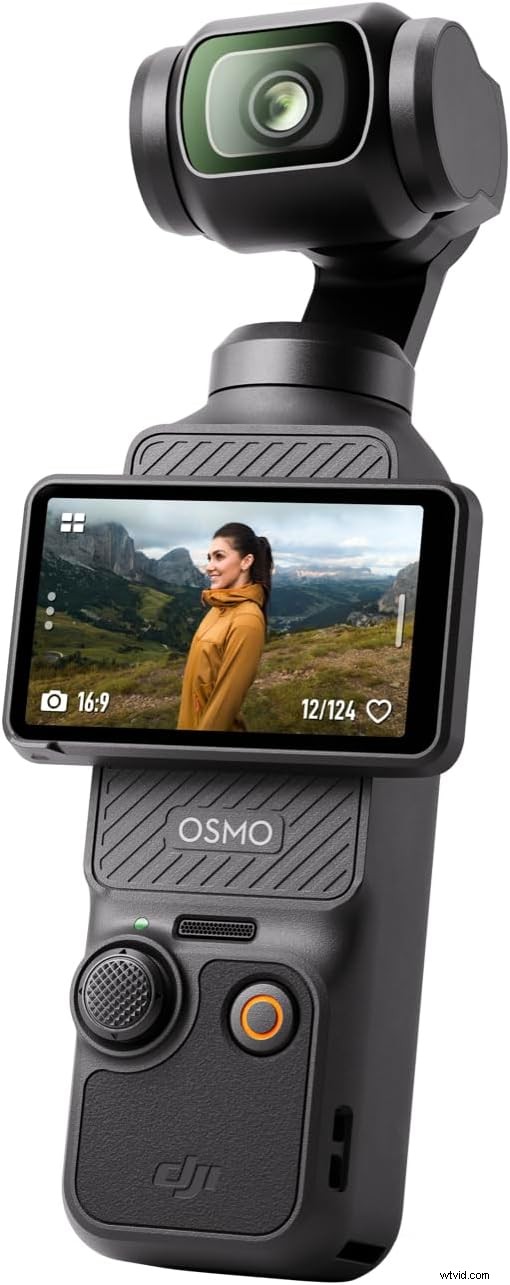 Photo by DJI Official (dji.com)
🏆 Best Overall: DJI Osmo Pocket 3
Price: $520-800 (varies with tariffs)
Best For: Solo vloggers prioritizing portability and stabilization
Why it dominates:
- Fits in your actual pocket (seriously)
- 3-axis gimbal stabilization built-in
- 1-inch sensor with 4K/120fps
- 2-inch rotatable touchscreen
- ActiveTrack 6.0 keeps you centered
- No separate gimbal needed
The catch: Fixed lens limits creative control. No interchangeable lenses means you’re locked into one focal length.
Real-world use: I’ve shot entire travel documentaries with this. The stabilization is genuinely game-changing. But when I need shallow depth-of-field or telephoto reach, it can’t deliver.
BUY NOW ON DJI
Photo by Canon Inc. (canon.com)🥈 Best Budget Mirrorless: Canon EOS R50 V
Price: $649 body only, $849 with kit lens
Best For: Beginners wanting room to grow with lenses
Specs:
- 24MP APS-C sensor
- 4K video with C-Log 3
- Flip screen for selfie mode
- Dual Pixel autofocus
- EVF included (rare at this price)
Why I recommend it: This is Canon’s direct answer to Sony’s vlogging cameras, but $350 cheaper. The mechanical shutter means better photos than Sony’s electronic-only models. The RF-S lens mount gives you growth potential.
The downside: No in-body stabilization. You’ll need a gimbal or very steady hands.
BUY NOW ON CANON
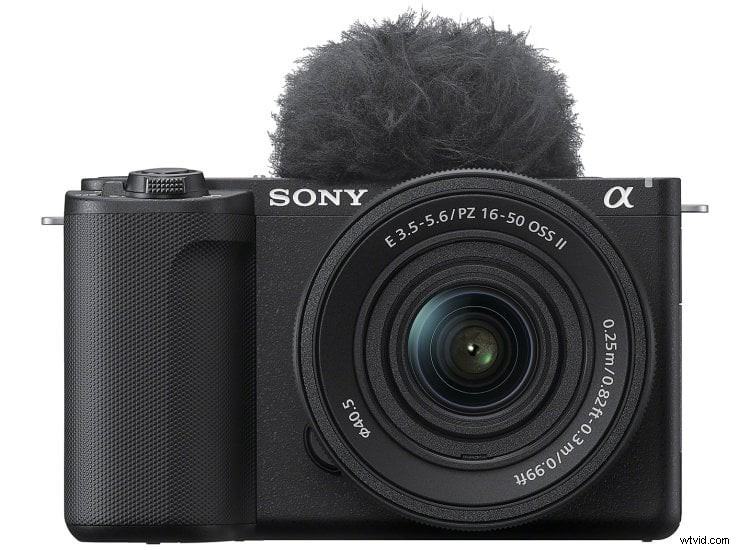 Photo by Sony Corporation (sony.com)
🥉 Best Mid-Range: Sony ZV-E10 II
Price: $999 body only
Best For: Serious vloggers who prioritize autofocus and Sony ecosystem
Features:
- 26MP APS-C sensor
- Product showcase mode
- Built-in directional microphone
- Background defocus button
- Sony’s legendary autofocus
Why Sony wins hearts: The autofocus is genuinely better than Canon’s. Product showcase mode (auto-focus switching between you and objects you hold up) is perfect for gear reviews.
Why I didn’t buy it: At $999, it’s $350 more than Canon’s R50 V with nearly identical specs. You’re paying for the Sony name and slightly better autofocus. Worth it if you already own Sony lenses.
BUY NOW ON AMAZON
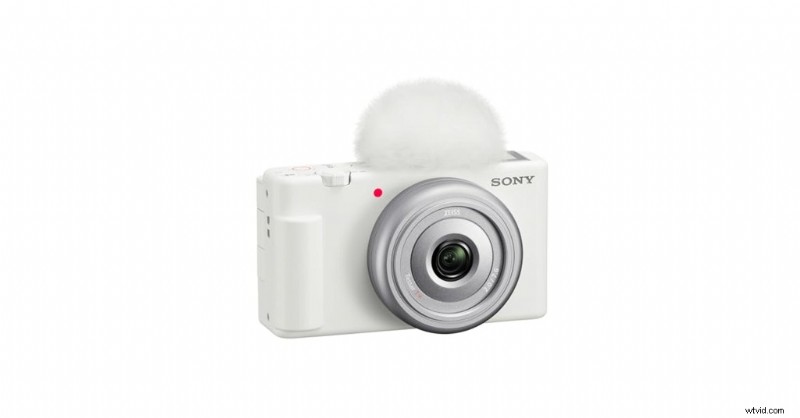 Photo by Sony Corporation (sony.com)
Best Compact: Sony ZV-1 / ZV-1F
Price: $500-750
Best For: Pocket-sized quality without gimbal bulk
Two versions:
- ZV-1: 24-70mm equivalent zoom, $750
- ZV-1F: 20mm ultra-wide fixed, $500
The appeal: 1-inch sensor in a truly pocket-sized body. Built-in ND filter. Great built-in mic. Face priority autofocus.
Why I skip it: The DJI Pocket 3 offers better stabilization and a larger sensor for similar money. But if you hate gimbal-style cameras, the ZV-1 feels more “camera-like.”
BUY NOW ON AMAZON
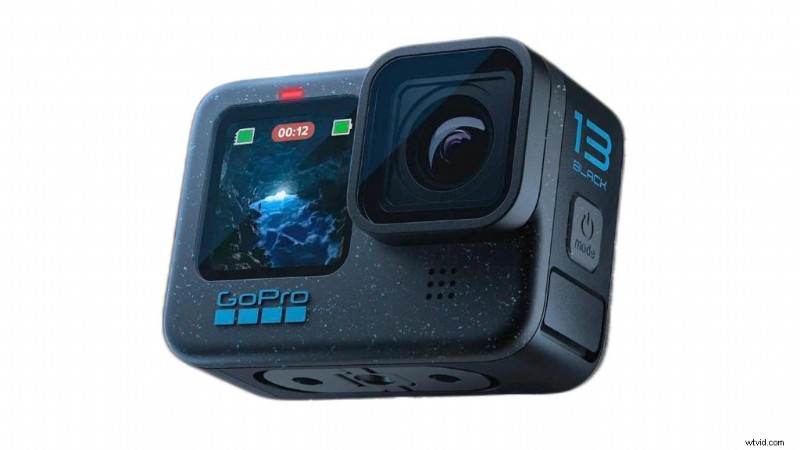 Photo by GoPro, Inc. (gopro.com)
Best Budget Action Cam: GoPro Hero 12/13
Price: $300-500
Best For: Adventure vloggers needing extreme durability
Strengths:
- Hypersmooth 6.0 stabilization
- Waterproof without housing
- Mounts to everything
- 5.3K video
Limitations: Small sensor struggles in low light. Tiny screen makes framing difficult. Fixed ultra-wide lens not flattering for talking-head shots.
When it shines: Mounting to bikes, helmets, cars. Underwater footage. Anything where a “real” camera would break or get wet.
BUY NOW ON GOPRO
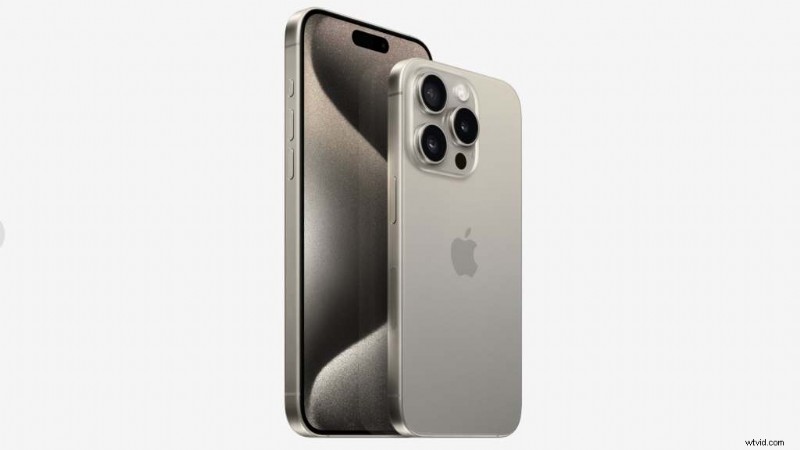 Photo by Apple Inc. (apple.com)
Best Smartphone Setup: iPhone 15 Pro + Accessories
Price: $200-400 in accessories (assuming you own the phone)
Best For: Absolute beginners testing the waters
The setup:
- iPhone 15 Pro or newer
- Moment lenses ($100-150)
- FilmicPro app ($15)
- Rode VideoMic Me ($40)
- Small tripod/grip ($30)
Why this works: Modern iPhones shoot legitimate 4K with great computational photography. FilmicPro unlocks manual controls. Moment lenses add versatility.
My honest take: I’ve edited smartphone footage on LumaFusion (iPad app) and published it. Nobody complained about quality. But once you’ve used a “real” camera, the phone feels limiting.
BUY NOW ON AMAZON
| Camera | Price | Sensor Size | Stabilization | Best For | Weight |
|---|---|---|---|---|---|
| DJI Pocket 3 | $520-800 | 1″ | Gimbal (built-in) | Solo vloggers | 179g |
| Canon R50 V | $649 | APS-C | None | Budget mirrorless | 375g |
| Sony ZV-E10 II | $999 | APS-C | None | Sony ecosystem | 377g |
| Sony ZV-1F | $500 | 1″ | Digital | Pocket compact | 229g |
| GoPro 13 | $400 | 1/1.9″ | Hypersmooth | Action/adventure | 159g |
| iPhone 15 Pro | $200 (accessories) | 1/1.3″ | Sensor-shift | Beginners | 221g |
Essential Audio Gear (Don’t Skip This Section) {#audio-gear}
Wind noise ruined my first 10 travel vlogs. Good audio isn’t optional—it’s the difference between watchable and unwatchable.
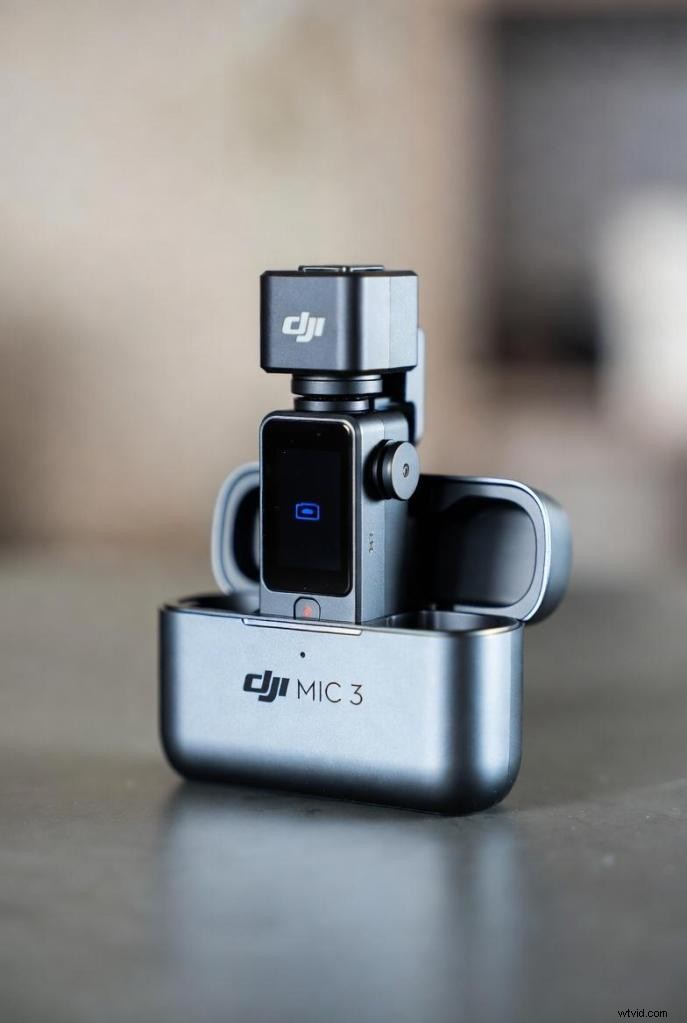
🏆 Best Overall: DJI Mic 3
Price: $349 for dual transmitter set
Why it wins: Intelligent noise cancellation, 32-bit float recording, magnetic attachment, 250m range
The reality: This is expensive for beginners. But it works flawlessly with both DJI cameras and any camera with a 3.5mm input. The internal recording (it records to the transmitter as backup) has saved me multiple times.
BUY NOW ON DJI
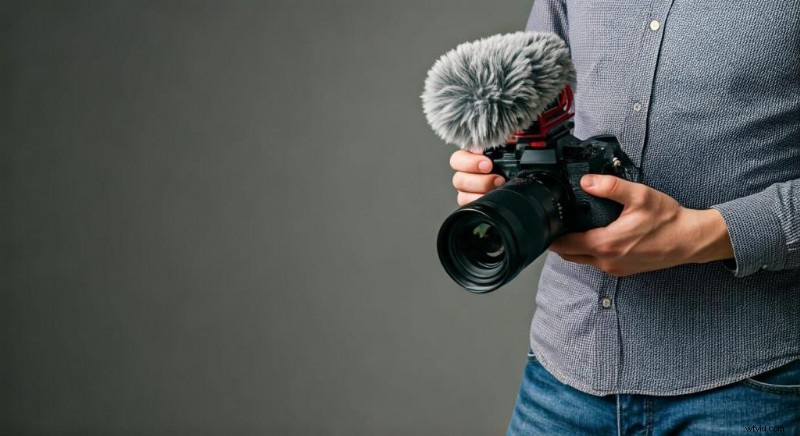
Best Budget: Rode VideoMic GO II
Price: $99
Type: On-camera shotgun mic
Why it’s perfect for beginners: Plug-and-play. No batteries needed (uses camera power or USB-C). Integrated shock mount. Decent windscreen included.
Limitations: Only captures sound in front of the camera. You need to be close. Wind protection is okay, not great.
BUY NOW ON AMAZON
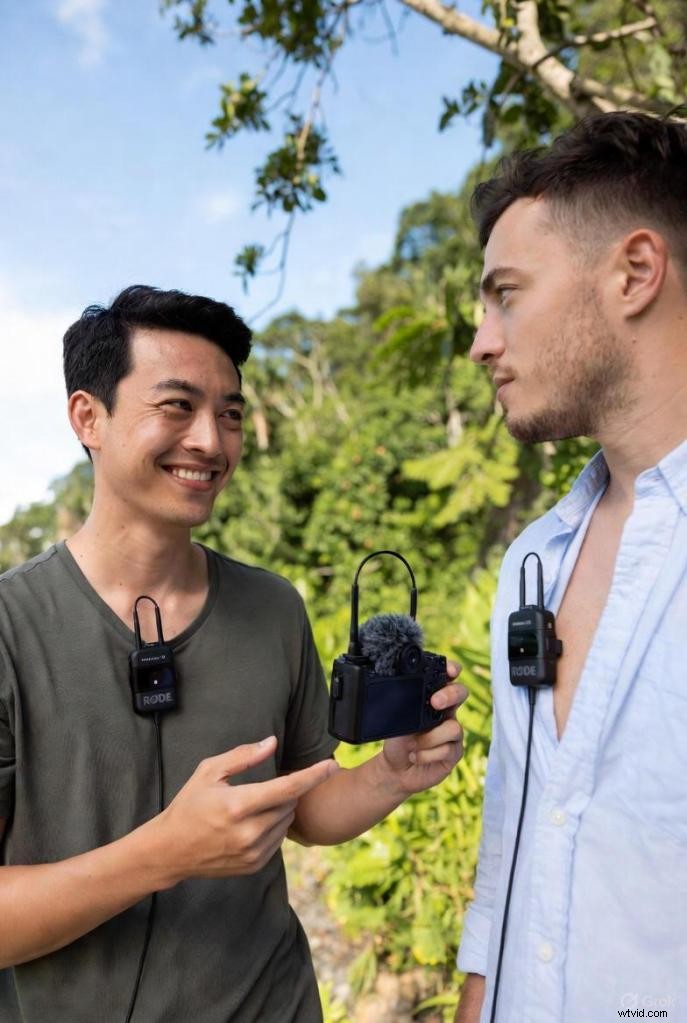
Best Lavalier: Rode Wireless GO II
Price: $299
Why I use it: Two transmitters means I can mic myself AND an interview subject. Onboard recording backup if wireless cuts out.
BUY NOW ON AMAZON
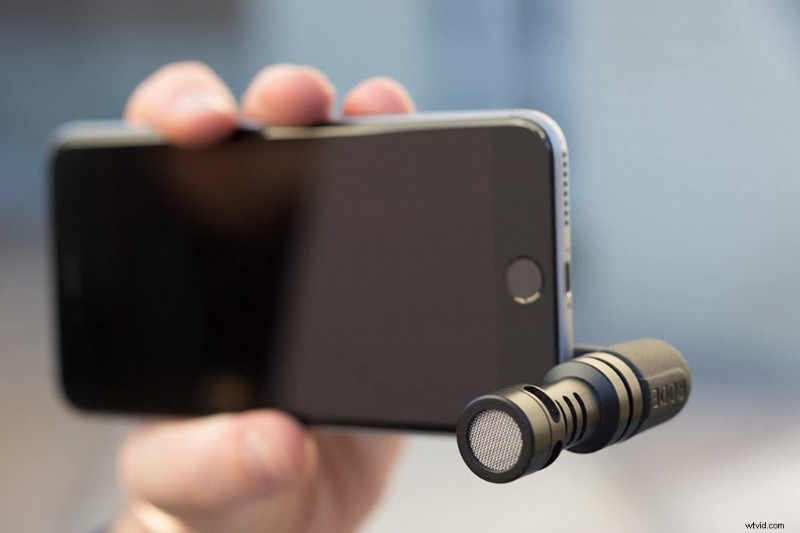
Smartphone Audio Solution: Rode VideoMic Me-L
Price: $79
Connects to: Lightning or USB-C (get the right version)
The trick everyone misses: Use your smartphone as a separate audio recorder even if you’re filming on a camera. Sync in post. This gives you a backup AND better positioned audio.
BUY NOW ON AMAZON
Stabilization Equipment {#stabilization}
Shaky footage = amateur hour. Here’s how to keep it smooth.
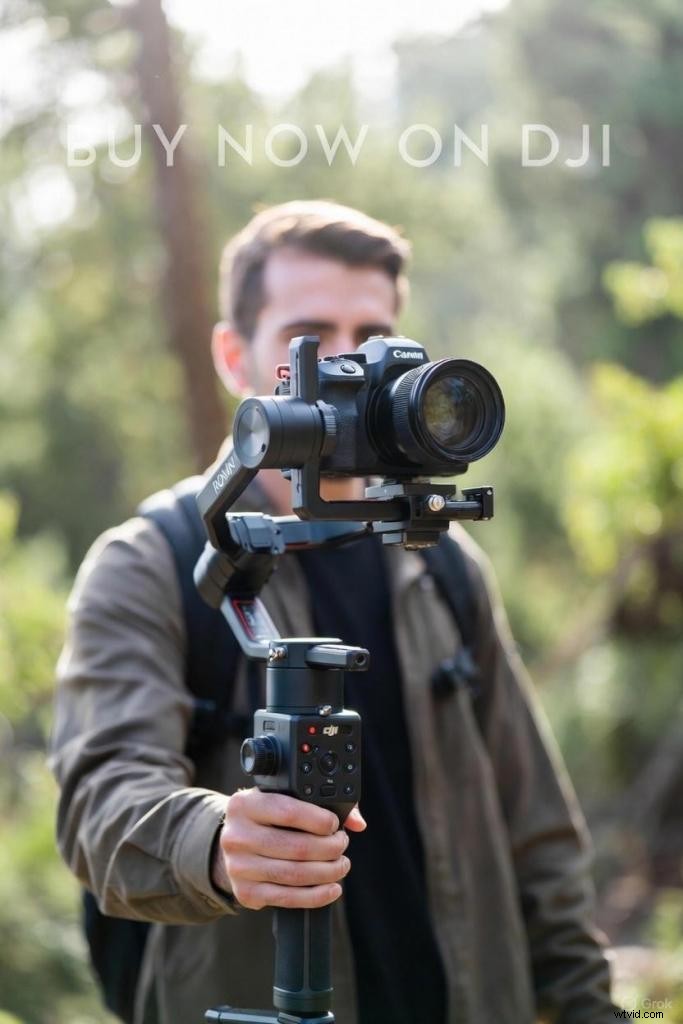
Best Gimbal for Mirrorless: DJI Ronin RS4 MINI
Price: $309
Payload: Up to 2kg
Battery: 13 hours
Why this one: Affordable. Lightweight. Supports Canon R50, Sony ZV-E10, and most APS-C cameras. ActiveTrack built-in.
The alternative: DJI RS 4 PRO ($799) if you need more payload for heavier lenses.
BUY NOW ON DJI
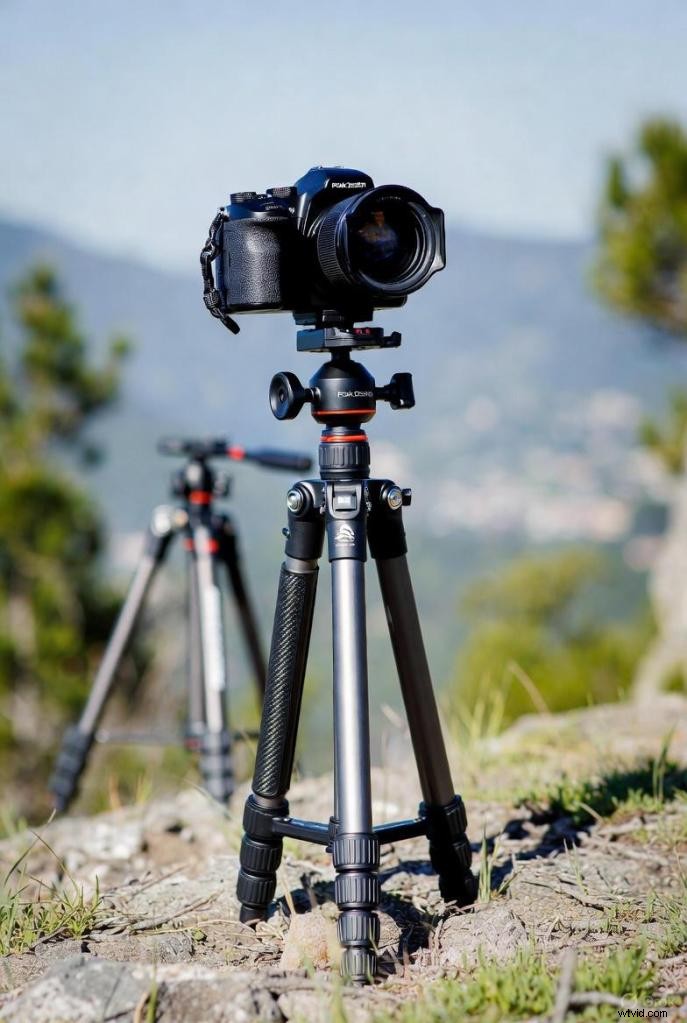
Best Travel Tripod: Peak Design Travel Tripod
Price: $380 (aluminum), $600 (carbon fiber)
Packed size: 39cm (15.5″)
Why it’s worth it: Packs down to water-bottle size. Holds up to 9kg. Built-in phone mount. Doubles as a monopod.
Budget alternative: Manfrotto BeFree Advanced ($180). Heavier, bulkier, but 1/3 the price.
BUY NOW ON PEAKDESIGN
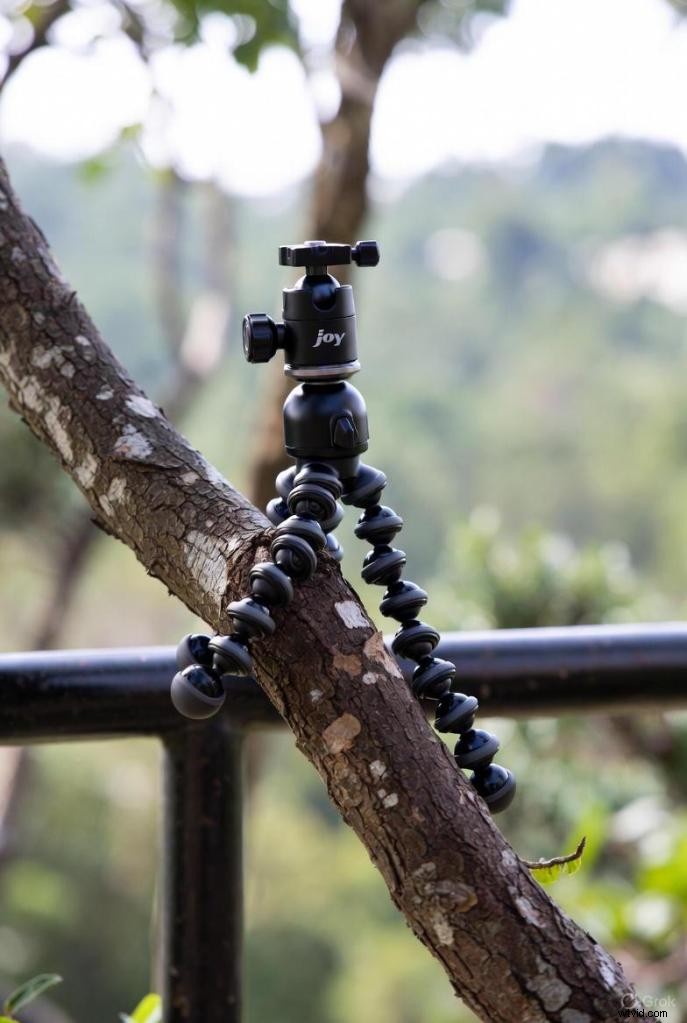
Best Compact Option: Joby GorillaPod 3K Kit
Price: $50
Why it works: Wraps around poles, tree branches, railings. Built-in ball head. Holds up to 3kg.
The catch: Not great for smooth video panning. But unbeatable for quick static setups and weird angles.
BUY NOW ON AMAZON
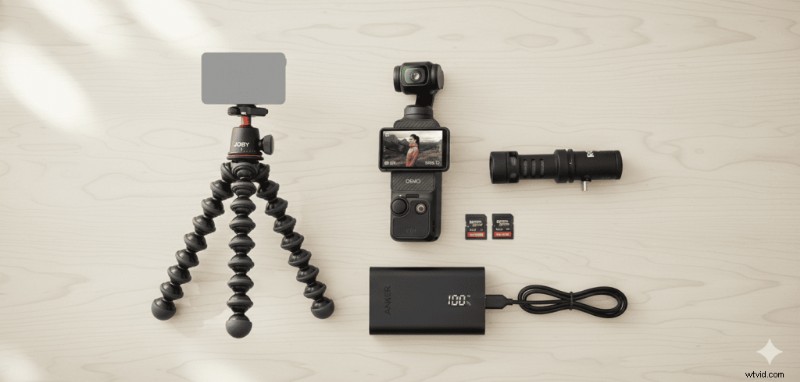
Complete Beginner Setup ($500-800) {#beginner-setup}
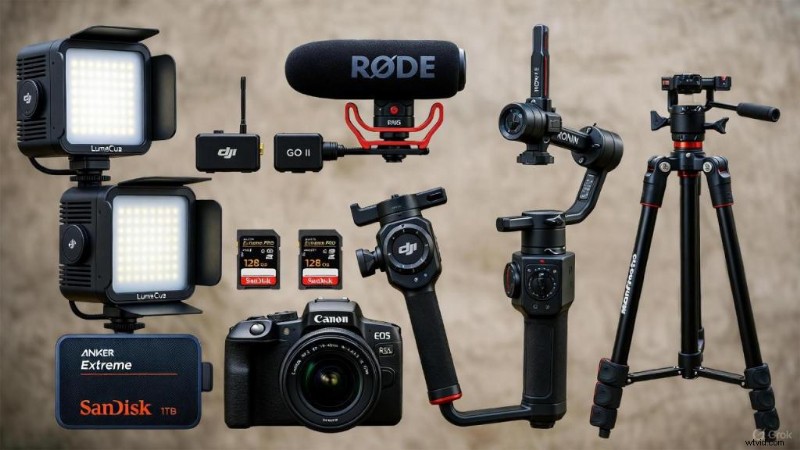
Total: From $680
- Camera: DJI Osmo Pocket 3 ($520)
- Audio: Rode VideoMic Me ($40)
- Mini Tripod: Joby GorillaPod ($50)
- Storage: 2x 128GB microSD cards ($40)
- Power: Anker 10,000mAh battery bank ($30)
Why this setup works: Everything fits in a small camera bag. The Pocket 3’s built-in gimbal means no separate stabilizer. Audio is covered. You can shoot for hours with the battery bank.
What you’re missing: Interchangeable lenses. Manual exposure control. But honestly? Start here. Upgrade only after you’ve maxed out this gear.
Smart Packing Strategies {#packing-strategies}
Lima’s airport security. 2:00 AM. My checked bag with my DJI drone? Somewhere over the Pacific. I never saw it again.
That night taught me everything about travel vlogging: if you can’t carry it on, don’t pack it.
The One-Bag Philosophy
After seven years filming across continents, my rule is simple: everything must fit in carry-on luggage.
Why this matters:
- Airlines lose 26 million bags annually
- Your gear is worth more than everything else combined
- Checked bag fees add up ($300-500 per trip)
- Mobility through train stations, hostels, and tight spaces
- You land and go—no waiting for baggage claim
The Carry-On Size Sweet Spot
Airlines vary, but aim for:
- Backpacks: 40-45 liters
- Wheeled luggage: 22″ x 16″ x 8″
My setup: I use the Nomatic Travel Pack (40L) for camera gear and essentials, plus a Peak Design Everyday Backpack (20L) as my “personal item” under the seat.
Pack Clothing Like a Vlogger, Not a Tourist
Most beginners pack wrong: too many clothes, not enough gear.
Performance fabrics change everything:
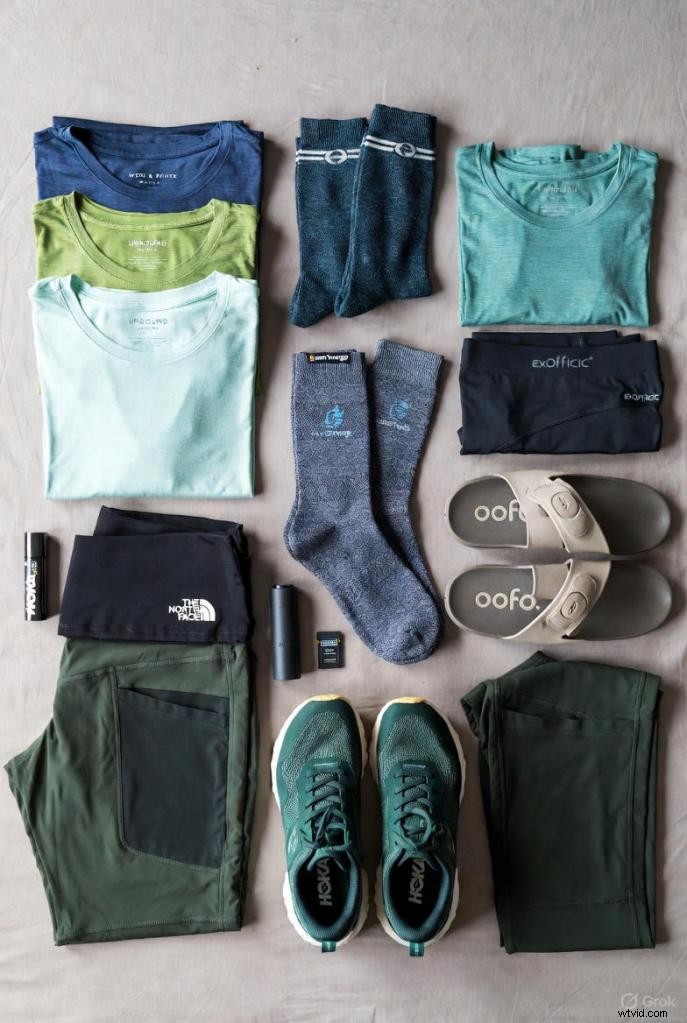
Merino wool isn’t just for hikers. One Unbound Merino V-neck shirt can replace three cotton tees. I’ve worn the same shirt for a week in humid climates without washing. The antimicrobial properties actually work.
What to pack:
- 2-3 Merino wool shirts (Unbound Merino, Wool & Prince)
- 2 pairs Merino socks (Smartwool, Darn Tough)
- Quick-dry underwear (ExOfficio, Unbound)
- Convertible pants with deep pockets (North Face Paramount)
- Light windbreaker (Patagonia Houdini)
- Comfortable walking shoes (Hoka Arahi series)
- Recovery sandals (Oofos Original)
The cargo pants hack: Deep pockets aren’t for style—they’re for survival. When you’re switching locations, you need instant access to batteries, SD cards, phone. My North Face convertibles have saved shoots by keeping essentials within reach.
Yoga pants revelation: For casual shoots, yoga pants with side pockets work surprisingly well. Phone, keys, small accessories—all secure while you move.
Camera Bag Organization
Never check camera equipment. Ever.
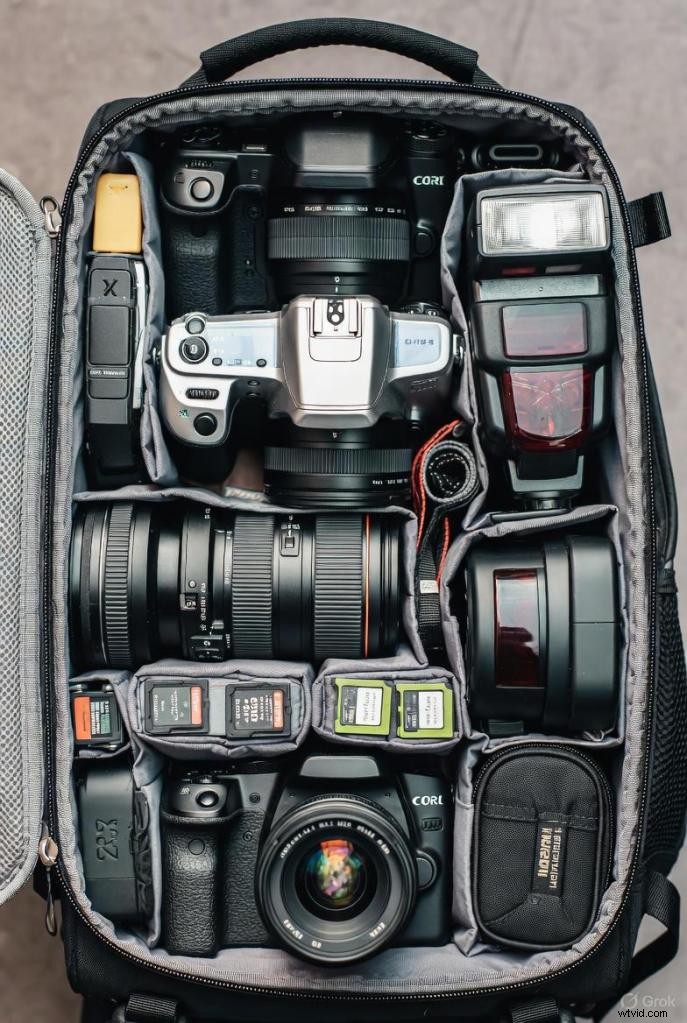
Your camera bag should:
- Open from the front (suitcase-style)
- Have quick-access external pockets
- Include a dedicated padded laptop compartment
- Weigh under 3 lbs empty
- Feature YKK zippers (industry standard durability)
Recommended brands:
- Nomatic McKinnon 35L ($280)
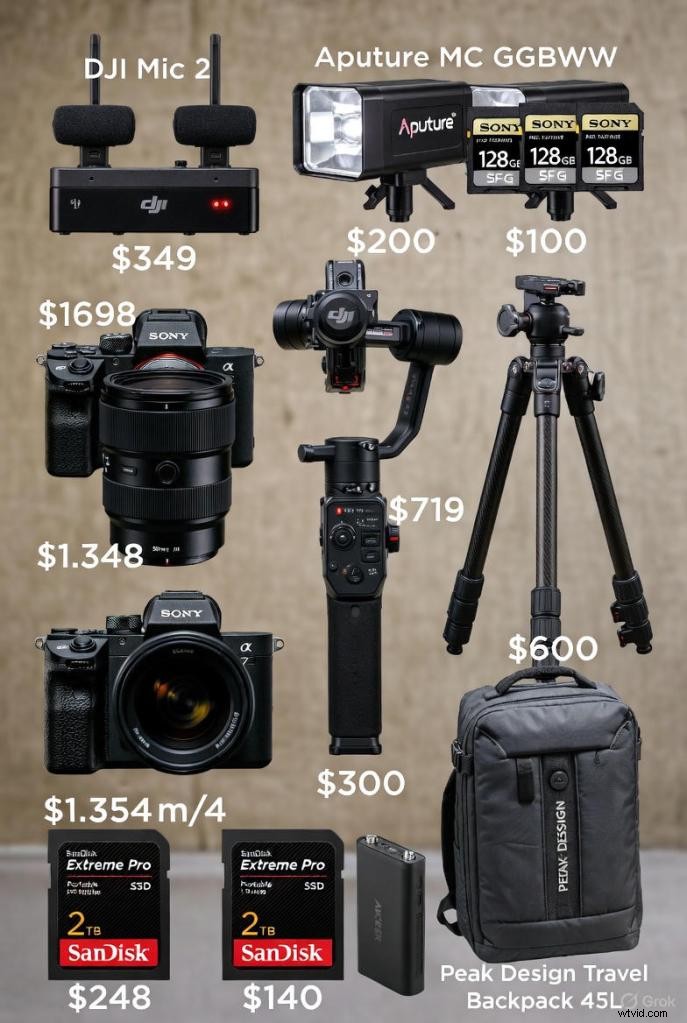
- Peak Design Travel Backpack 45L ($300)
- Lowepro ProTactic BP 450 AW II ($220)
For maximum protection: Pelican camera cases with backpack straps. Bombproof, weatherproof, TSA-friendly. Worth every penny when your gear is worth thousands.
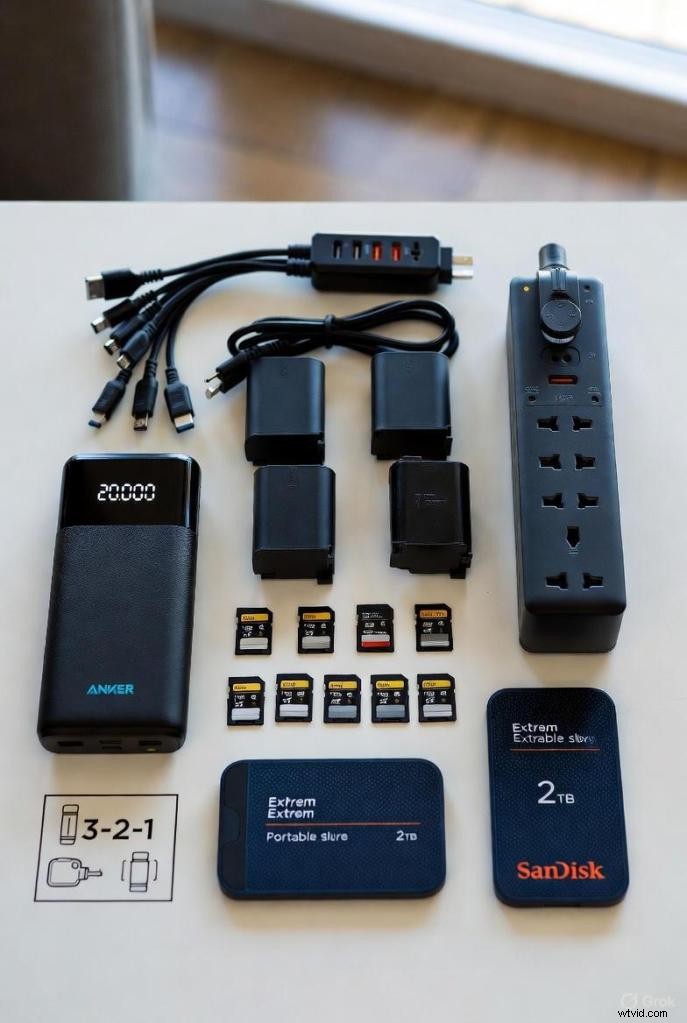
The Sacred Accessory Kit
These aren’t afterthoughts—they’re shoot-savers:
Power Management:
- Anker 20,000 mAh power bank (day-long charging)
- 3+ camera batteries (never scrimp here)
- Retractable multi-cable (all port types in one)
- Universal travel adapter with 4+ USB ports
- Compact power strip (hostel dorms have limited outlets)
Storage Strategy (Critical):
- Multiple high-speed SD cards (one per shooting day)
- Two 2TB SSD drives (working files + backup)
- Cloud backup when WiFi available
- The 3-2-1 rule: 3 copies, 2 different media types, 1 off-site
Memory cards are cheap. Lost footage is not. Carry way more capacity than you think you need.
Why two SSDs: SanDisk Extreme Portable SSDs are compact, rugged, and prohibited in checked luggage (lithium battery). One for working, one for immediate backup. If one gets stolen or corrupted, you’re not starting over.
Small Essentials That Save Shoots
- Microfiber cloths (lens cleaning)
- Carbon cleaning pen (stubborn smudges)
- Dust blower (sensor particles)
- Hair ties/bandanas (keep hair out of straps)
- Headlamp (light dark scenes, find toilets)
- Biodegradable wipes (everything from hygiene to lens emergency cleaning)
- Reef-safe sunscreen (Kokua Sun Care, Raw Love)
- Collapsible water bottle
- Instant oatmeal packets (hotel coffee makers = hot water)
- Power bars (shoot through meals)
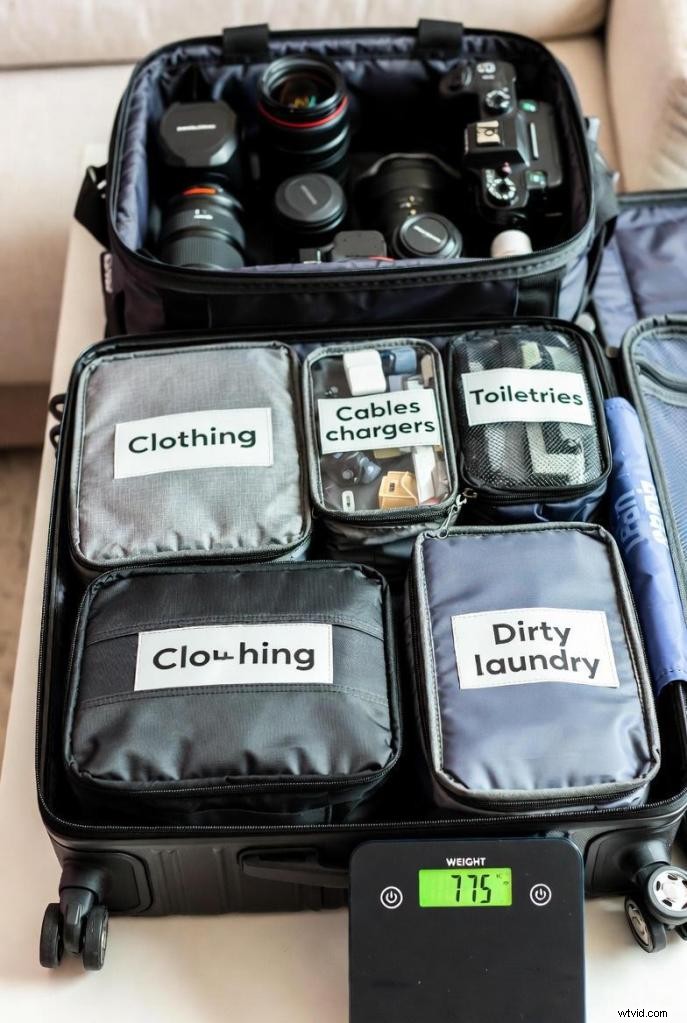
The Packing Cube System
Packing cubes aren’t optional for vloggers—they’re essential for organization.
My system:
- Large cube: Clothing
- Medium cube: Cables, chargers, batteries
- Small cube: Toiletries
- Compression cube: Dirty laundry
- Camera bag: All gear (obviously)
Travel scale: Weight your bag before heading to the airport. Avoid surprise overweight fees. Most airlines have 7kg (15 lb) carry-on limits.
Advanced Gear (For Specific Situations)
Lighting Solutions
Most vloggers skip lights. Bad move. Even great low-light cameras benefit from a little fill.
Best Portable LEDs:
- LumeCube Panel Mini ($100 each): Pocket-sized, brightness control, 6+ hour battery
- Aputure MC RGBWW ($89): Color temperature control, creative RGB effects
- Strategy: Buy 2-3 of these instead of one expensive light
Why small lights matter: You can fit three in your bag and suddenly you have a 3-point lighting setup. Key, fill, back light. Professional-looking footage from $300 in lights.
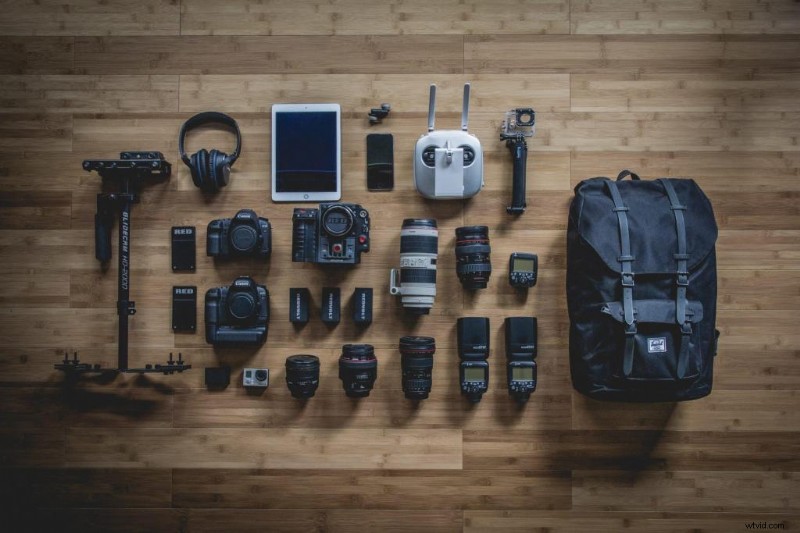
Lenses for Mirrorless Cameras
If you’re using Canon R50 V or Sony ZV-E10 II, here’s your lens strategy:
Start with one wide lens: 16mm or 24mm equivalent. This handles 80% of vlogging situations. Wide enough for selfie mode in tight spaces, environmental storytelling, and immersive shots.
Add a normal lens: 35mm or 50mm. More natural perspective. Better for interviews, street scenes, isolating subjects.
Long lens (optional): 70-200mm or similar. For wildlife, distant subjects, compression effects.
Canon RF-S mount budget options:
- RF-S 16mm f/2.8 ($200) ← START HERE
- RF-S 18-150mm f/3.5-6.3 ($500) – all-in-one
- RF 50mm f/1.8 STM ($130) – portraits
Sony E-mount budget options:
- Sigma 16mm f/1.4 ($400)
- Sony E 20mm f/2.8 ($350)
- Sigma 30mm f/1.4 ($340)
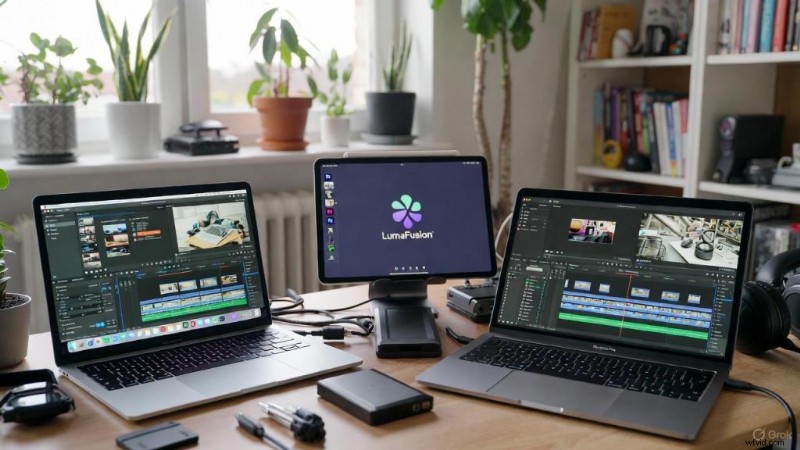
Storage and Editing Workflow
Laptop choices:
- MacBook Air M3 ($1,099): Great battery life, handles 4K editing, lightweight
- MacBook Pro 14″ M3 ($1,599): If you render heavy timelines daily
- iPad Pro + LumaFusion ($30 app): Shockingly capable mobile editing
Editing software:
- Adobe Premiere Pro (industry standard, $55/month)
- Final Cut Pro (Mac only, $300 one-time)
- DaVinci Resolve (free version is powerful)
- LumaFusion (iOS/Android, $30 – best mobile option)
Real-World Vlogging Scenarios
Let me show you how this gear performs in actual situations I’ve faced:
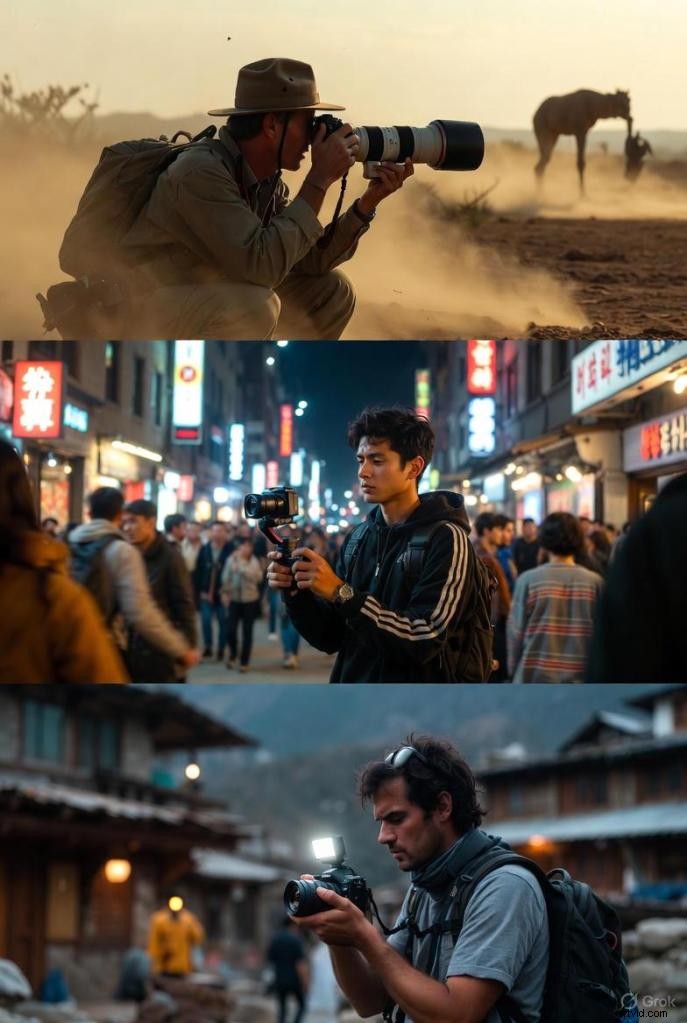
Scenario 1: Himalayan Village Homestay
The challenge: No electricity for 48 hours. Limited packing space. Needed to document daily life.
What worked:
- DJI Pocket 3 (small, built-in stabilization, great battery)
- Rode Wireless GO clipped to shirt (locals uncomfortable with visible mic)
- Anker power bank kept everything charged
- Natural light only (no room for LED panels)
What I learned: Compact gear opens doors that big cameras close. Villagers treated me like a guest, not a film crew.
Scenario 2: Seoul Night Market
The challenge: Low light. Crowds. Fast-moving action. Needed great footage without drawing attention.
What worked:
- Sony A7 III with 35mm f/1.8 (low-light beast)
- DJI RS3 Mini gimbal (smooth tracking through crowds)
- Rode VideoMic NTG (directional audio cut through market noise)
What failed: I brought the 70-200mm. Never used it. Too conspicuous, too slow to focus in low light.
Scenario 3: Remote Safari
The challenge: Dust. Distance from subjects. Golden hour timing critical.
What worked:
- Canon R50 with 100-400mm lens (reach without disturbing animals)
- Monopod instead of tripod (faster setup)
- Multiple SD cards (shot 6000+ photos in one day)
What I wish I’d brought: Better lens cleaning kit. Dust got EVERYWHERE.
FAQ: Your Travel Vlogging Questions Answered {#faq}
What equipment do I need for travel vlogging?
Absolute essentials:
- Camera (smartphone, compact, or mirrorless)
- External microphone (on-camera or lavalier)
- Stabilization (gimbal, tripod, or camera with built-in)
- Sufficient storage (SD cards and backup drive)
- Power solutions (extra batteries, power bank)
Start with: Smartphone + Rode VideoMic Me + small tripod ($150 total). Upgrade only after you’ve maxed this out.
What is the best camera for travel vlogging?
It depends on your priority:
For portability: DJI Osmo Pocket 3 ($520-800) – fits in your pocket, built-in gimbal, excellent image quality
For versatility: Canon EOS R50 V ($649) – interchangeable lenses, great autofocus, affordable
For autofocus: Sony ZV-E10 II ($999) – best face tracking, product showcase mode
For adventure: GoPro Hero 13 ($400) – waterproof, mounts everywhere, nearly indestructible
Truth bomb: The best camera is the one you’ll actually carry and use. I’ve seen stunning content from iPhones and mediocre vlogs from $5,000 setups.
Can I start vlogging with just my phone?
Yes. And you probably should.
Modern iPhones (13 Pro and newer) and flagship Android phones shoot legitimate 4K video with impressive computational photography.
The upgrade path:
- Start with phone + cheap tripod
- Add external mic ($40-100)
- Add Moment lenses for versatility ($100-150)
- Use FilmicPro for manual controls ($15)
- Edit on LumaFusion (iPad, $30)
When to upgrade: When you’ve consistently created content for 3+ months and feel limited by the phone. Most beginners quit before then—don’t invest thousands until you’re committed.
How much does travel vlogging gear cost?
Budget tier: $500-800
- Entry-level camera or smartphone setup
- Basic microphone
- Simple stabilization
- Essential accessories
Intermediate tier: $1,500-2,500
- Quality mirrorless camera
- Professional audio system
- Gimbal stabilization
- Extra lenses
- Portable lighting
Professional tier: $3,000-6,000+
- Full-frame camera system
- Multiple high-quality lenses
- Advanced audio gear
- Professional lighting
- Premium accessories and backup systems
My advice: Start small. Your first $800 setup will teach you what you actually need. I spent $4,000 on gear I barely use and $600 on equipment I use daily.
What is the 5-4-3-2-1 packing rule?
The 5-4-3-2-1 packing method is a minimalist approach to travel clothing:
- 5 shirts/tops
- 4 bottoms (pants/shorts)
- 3 underwear/base layers
- 2 pairs of shoes
- 1 hat/accessory
For vloggers, I modify this:
- 5 shirts (3 Merino, 2 quick-dry)
- 3 bottoms (1 convertible pants, 1 shorts, 1 backup)
- 4 underwear (rotate, wash in sink)
- 2 footwear (walking shoes + recovery sandals)
- 1 light jacket
The vlogger twist: Prioritize performance fabrics that you can wear multiple times. This frees up luggage space for camera gear.
What should I pack for light travel?
Clothing strategy:
- Merino wool (wear multiple times, naturally antimicrobial)
- Quick-dry fabrics (wash in sink, dry overnight)
- Wrinkle-resistant materials
- Deep-pocket pants (for batteries, SD cards, phone)
- Convertible pants (adapt to weather)
Gear essentials:
- Packing cubes (organization is efficiency)
- Collapsible items (water bottle, toiletry bags)
- Multi-function tools (universal adapters, retractable cables)
- Travel-size versions of everything
The golden rule: If you haven’t used it on previous trips, don’t pack it.
What is the 1-2-3-4-5-6 packing rule?
The 1-2-3-4-5-6 rule is a variation for longer trips:
- 1 hat
- 2 pairs of shoes
- 3 bottoms
- 4 tops
- 5 pairs of socks
- 6 pairs of underwear
Why this works: Covers a week with laundry. Combines with performance fabrics to minimize luggage weight while maximizing camera gear space.
Should I check my camera equipment?
NEVER. EVER.
Airlines lose 26 million bags per year. Many travel vloggers carry insurance for their gear whether at home or abroad, with adventure travel insurance covering theft, lost or damaged gear.
Always carry on:
- Camera bodies
- All lenses
- Audio equipment
- SSD drives (prohibited in checked luggage anyway)
- Laptop/iPad
- Batteries (required in carry-on)
Why I’m adamant: I lost a DJI drone to checked baggage in Peru. Never saw it again. Every filmmaker I know has a similar horror story.
What about power adapters and voltage?
Universal travel adapter with USB ports is essential. Look for models with 4+ USB ports so you can charge multiple devices from one outlet.
Voltage: Most modern camera gear and laptops handle 110-220V automatically. Check your device labels. Older equipment might need a voltage converter, but most vloggers just use the local voltage.
My go-to: Tessan Universal Travel Adapter ($30) – 6 devices at once, compact, works in 200+ countries
How do I protect my gear while traveling?
Three-layer protection strategy:
Layer 1: Physical Protection
- Pelican cases for maximum security
- Padded camera backpacks (Peak Design, Nomatic)
- Never check equipment
Layer 2: Insurance
- World Nomads covers gear theft/damage ($300-500/year)
- Homeowner’s insurance extensions (check coverage limits)
- Equipment lists (carnets) for professional shoots crossing borders
Layer 3: Behavior
- Keep gear in sight on buses/trains
- Don’t display expensive equipment unnecessarily
- Use hotel safes for gear you’re not using
- Split equipment between bags if traveling with someone
The Mindset Shift That Actually Matters
Here’s what nobody tells you about travel vlogging gear:
Audiences don’t care about your camera specs. They care about your story.
I’ve shot 100,000-view videos on an iPhone 11. I’ve seen $6,000 camera setups produce content nobody watches.
The best gear is what you:
- Can comfortably carry all day without fatigue
- Understand so well that technical concerns disappear
- Will actually use (not leave in the hotel)
Start minimal. Add only what you miss.
Most vloggers work backward—starting with too much gear and trying to cut down. That’s harder and wastes money.
Test Before Departure
- Know your camera menu in the dark
- Understand your mic’s limitations
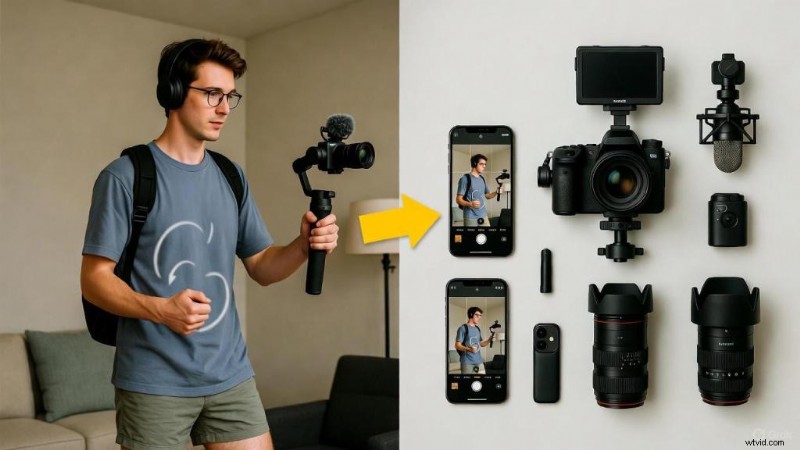
- Practice gimbal moves at home
- Master your editing software basics
Technical problems solved at home don’t become creative roadblocks abroad.
From Someone Who’s Been There
Seven years ago, I would have brought twice this gear. Experience teaches subtraction, not addition.
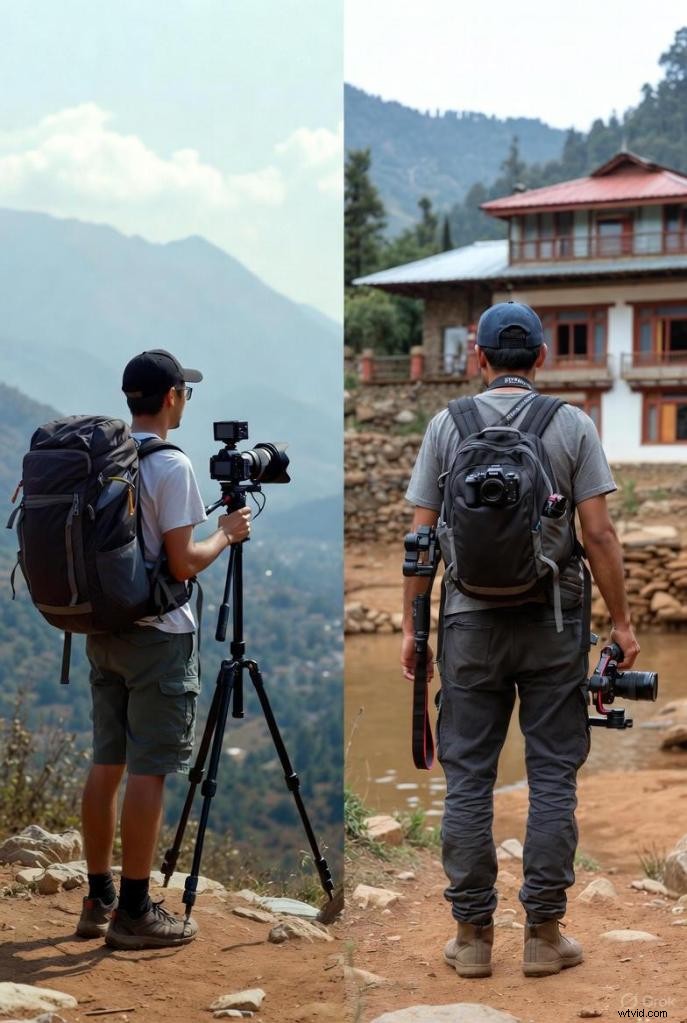
The projects I’m proudest of—”Going Home,” the Gurung homestay series, remote village documentation—happened because I was mobile enough to go where stories lived. Heavy gear would have kept me at overlooks instead of inside homes.
Your gear should enable adventure, not prevent it.
Every piece of advice here comes from actual experience: lost equipment, failed shoots, lessons learned the expensive way. I’ve tried the $500 setups and the $5,000 setups.
The truth? Great vloggers make great content with average gear. Average vloggers make average content with great gear.
Pack light. Shoot smart. Tell stories that matter. The gear is just a tool to get you there.