
While the exact dates of the rut vary across regions, the fall months consistently offer the best window for photographing red deer. Native to Europe and Denmark’s largest wildlife spectacle, red deer also roam parts of Asia and North America. Their brief breeding season is ripe for dynamic action shots and narrative storytelling. If you miss the red deer rut, the following fallow deer rut provides a close substitute. Understanding these seasonal rhythms guarantees you’ll always have compelling subjects to capture. Let’s now explore the essential dos and don’ts for photographing the red deer rut.
\nWhat to Do When Photographing Red Deer Rut
\nShow up and hope for a good shot rarely yields success. Wildlife photography demands meticulous planning, reliable logistics, the right equipment, and proven camera settings. Guessing your way through a fleeting event like the red deer rut can leave you with subpar images at best. Below are distilled guidelines drawn from years of on‑field experience.
\nDo Your Research
\nWhile reading up on red deer might feel tedious, it pays dividends. Familiarizing yourself with their typical behaviors lets you set realistic expectations, choose optimal camera settings, and design an effective shooting plan.
\nResearch also guides your choice of location. Scout the site ahead of time to understand the terrain and identify hotspots where deer congregate. Just arriving at a spot based on anecdotal reports rarely yields smooth results. I’ve found that repeated visits to the same location, combined with intimate knowledge of the area, produce the best images.
\nDuring the research phase, gather lighting data. Use tools that provide sunrise and sunset times, sun direction, and detailed weather forecasts. Such information is invaluable for timing your shots under optimal lighting conditions.
\nMove Slowly and Quietly
\nRed deer are easily startled. Keeping a low profile, using natural cover, and moving quietly are essential. Avoid sudden movements—moving objects are more noticeable than stationary ones. Minimize noise by muting camera and phone alerts, wearing muted clothing, and pre‑setting gear such as mounting your camera on a tripod in advance.
\n \n
\nPrioritize Safety and Welfare
\nLike any wildlife shoot, the well‑being of the deer and your own safety must come first. Red deer are the most dangerous deer species in Denmark. During the rut, stags exhibit heightened aggression fueled by testosterone, and can be unpredictable. While attacks are rare, vigilance is crucial.
\nKeep the Minimum Distance
\nThere are minimum distance guidelines you should observe. In parks, stay at least 40 m away; in the wild, keep an even larger buffer. The British Deer Society recommends extending this to 100 m when photographing a rutting stag. Knowing these distances in advance is essential for a responsible shoot.
\nTime Your Visit Wisely
\nOptimal photographic moments hinge on timing. Red deer are most active during dawn and dusk. Schedule your outings for early morning light and late afternoon twilight to capture their most expressive behavior.
\nWeather conditions can dramatically influence your images. Cold, clear nights followed by misty mornings create a dramatic atmosphere that can elevate the mood of your shots. Imagine capturing a stag’s breath swirling in the crisp morning air—such scenes epitomize wildlife photography.
\nFocus on Behavioral Moments
\nWhile portraits are striking, the real storytelling moments emerge from dynamic behaviors: a stag roaring, a scraping or wallowing ground, parallel walking to display dominance, or antler locking in combat. Don’t overlook the hinds—their reactions add depth to the narrative.
\nBacklighting can add dramatic rim light and enhance the visual impact of your shots.
\nUse a Telephoto Lens
\nTo maintain the required distance while still capturing detail, a telephoto lens is indispensable. In my experience, a 400 mm or longer focal length is essential for red deer rut photography, allowing you to frame subjects cleanly without post‑processing cropping.
\nUse Fast Shutter Speeds
\nFast shutter speeds are crucial to freeze action. When deer are fighting, walking, or running, aim for at least 1/1000 s or faster. For bellowing, slower speeds can suffice. If twilight light is insufficient, increase ISO rather than opening the aperture; a wide aperture narrows depth of field and complicates focusing.
\n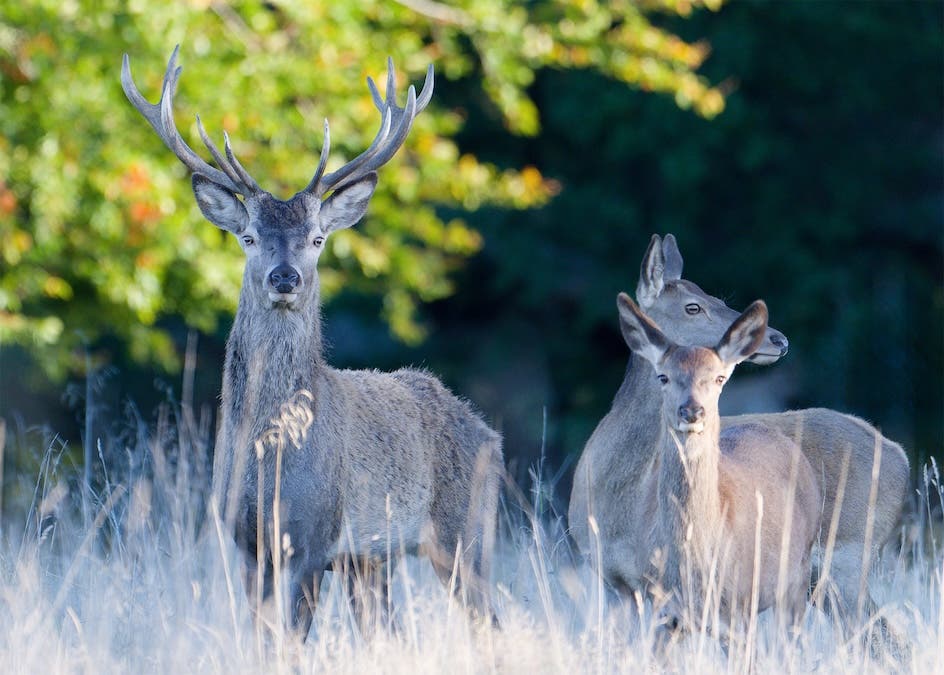 \n
\nWhat Not to Do when Photographing Red Deer Rut
\nDo NOT Assume Deer Are Tame (Even in Parks)
\nRed deer are wild by nature, even in public parks. Their rutting stags, driven by high testosterone, can be more aggressive toward conspecifics and visitors alike. Treat them with caution.
\nDo NOT Move or Wave If a Stag Approaches
\nIf a rutting stag approaches or shows signs of agitation—such as parallel walking and eye contact—avoid shouting or waving. Instead, back away slowly and quietly. Remember a stag can weigh 200 kg, sport antlers up to 1 m long and 15 kg, and sprint up to 70 km/h.
\n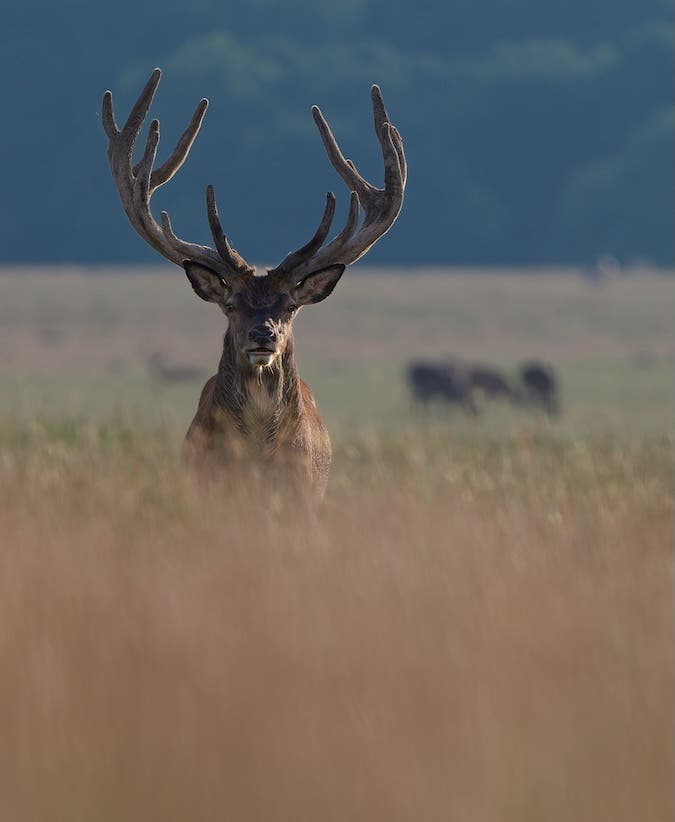 \n
\nDo NOT Approach Too Closely
\nNever encroach on a deer’s ‘fear circle’. Adhere to the minimum safe distance; invest in a longer telephoto if needed, but never compromise safety.
\nDo NOT Get Between Deer
\nEven while maintaining distance, position yourself so you do not sit between a dominant stag and his harem or between two competing stags. Obstructing their interaction can provoke conflict.
\nI once violated this rule in a park. While photographing a dominant stag, I failed to notice a challenger behind me. The stag turned, saw both myself and the rival, and moved toward me. I reduced my profile and retreated slowly, avoiding sudden movements. The stag eventually redirected his attention to the other stag, and both animals moved away.
\nDo NOT Be Disruptive to Others
\nIn populated parks, your presence may impact other visitors. Respect fellow photographers and observers, and maintain a respectful distance to avoid disturbing both wildlife and human guests.
\nFinal Thoughts
\nCapturing the red deer rut is an exhilarating experience that lasts only a few months each year. By preparing meticulously, respecting animal welfare, prioritizing safety, focusing on narrative, and showing courtesy to others, you can produce stunning images while fully enjoying this natural spectacle.
\n
Peter Dam
\nPeter Dam is a professional nature photographer with more than a decade of experience in wildlife, corporate photography, and videography. He shares extensive tips and stories on his website and YouTube channel.
\n