
I quietly closed the camper van door, careful not to disturb my sleeping family. Today’s hike, short and focused, took me to the Hokitika River where I aimed to capture its deep blue tones. A mistake from yesterday—using an unnecessarily long shutter speed—had turned a powerful waterfall into a featureless white blur. That loss was irretrievable, so I approached this gorge with renewed determination to get the texture right.
Just a minute after leaving the van, a sandfly bit me. I fumbled for my mosquito hat—something I had hoped to do without. It reminded me how important a clear view is when photographing, especially when the scene is alive with movement.
Why Longer Exposure Can Reduce Detail
During a ten‑week South Island tour, I photographed mountains, rivers, lakes, and waterfalls. We moved slowly to savor every detail, yet in photography, letting the camera capture more time can blur motion, especially in water. The longer the shutter stays open, the more movement can smear the image, diminishing clarity.
Water as a Storytelling Tool
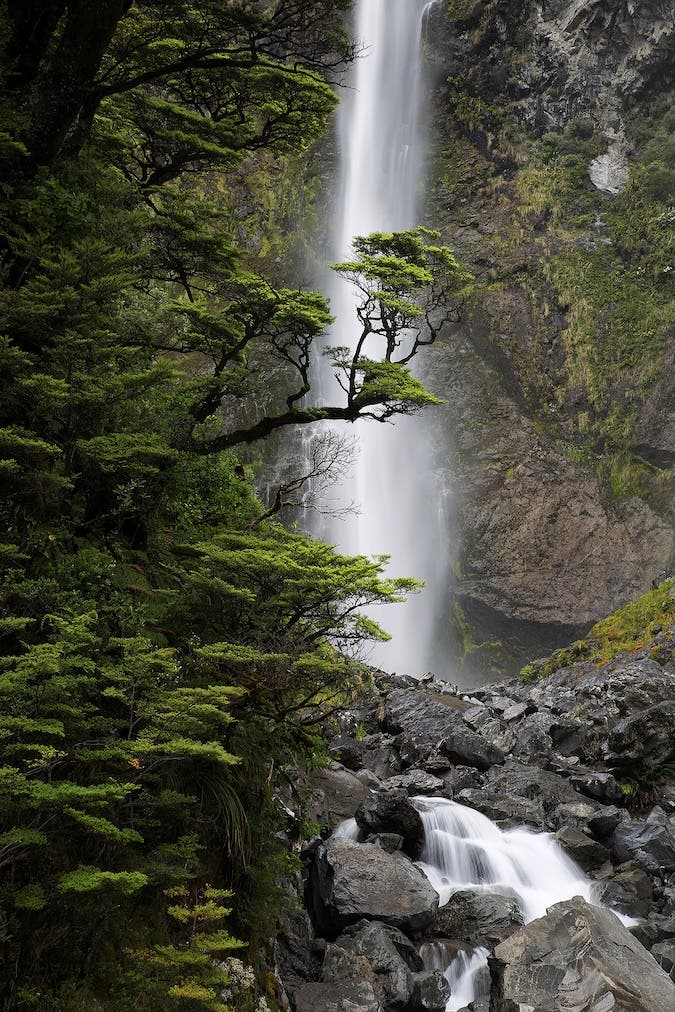
Every body of water offers three distinct aesthetic options: Silky Smooth, Cotton‑Candy, or Frozen. Choosing between them requires clarity about the desired look and the technique to achieve it.
- Silky Smooth – conveys serenity, abstraction, and the passage of time.
- Cotton‑Candy – captures power, rhythm, and the physical reality of the location.
- Frozen – highlights violence, energy, and a stop‑motion appreciation of nature’s chaos.
While some argue that freezing every frame is the only way to capture water, prolonged exposure with neutral density filters can reveal textures that would otherwise be lost.
How We See Water in Real Life
When we look at a waterfall, we perceive the rush, splash, and splash‑down. It is a dynamic, continuous flow, not a frozen moment. To convey that, we often let the water move through the frame, capturing texture while preserving motion.
Choosing the Right Shutter Speed
Many landscape photographers experiment with 10‑stop ND filters to achieve long exposures. However, overusing filters can lead to clichéd images. Instead, you can often capture compelling movement without them.
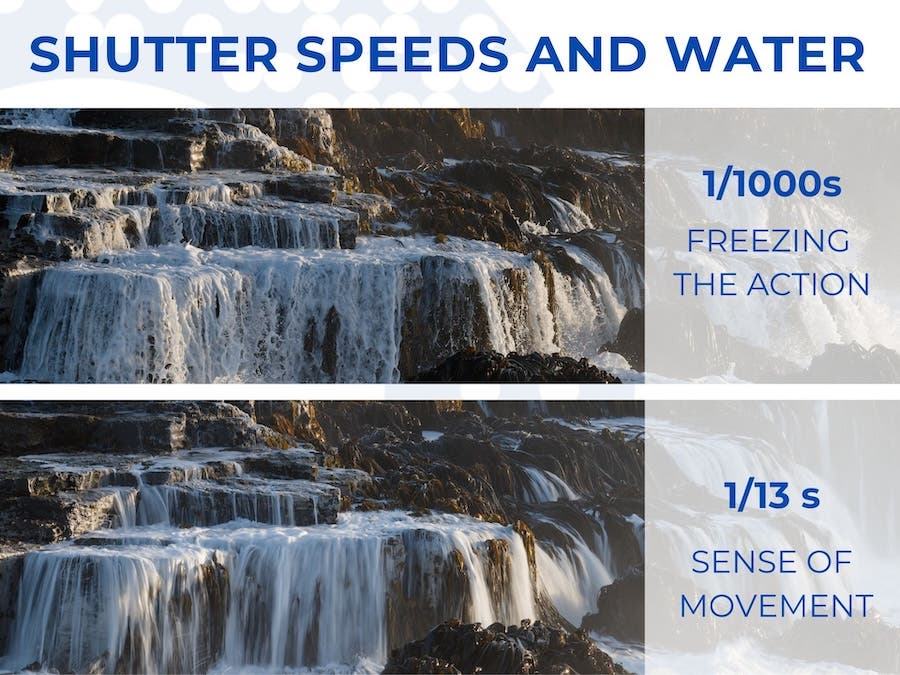
A common pitfall is aiming for the cotton‑candy look but ending up with silky smoothness because the shutter speed is too long. At that point, the water’s movement washes out, erasing the sense of motion.
Finding the Sweet Spot
While traveling through the Catlins, I captured waves crashing off sea stacks 15 m from shore. I used a 200 mm lens, which required a faster shutter speed to freeze the motion compared to a 16 mm lens. The lesson: the longer the focal length, the faster the shutter speed needed to preserve detail.
Balancing Detail and Blur at Purakaunui Falls
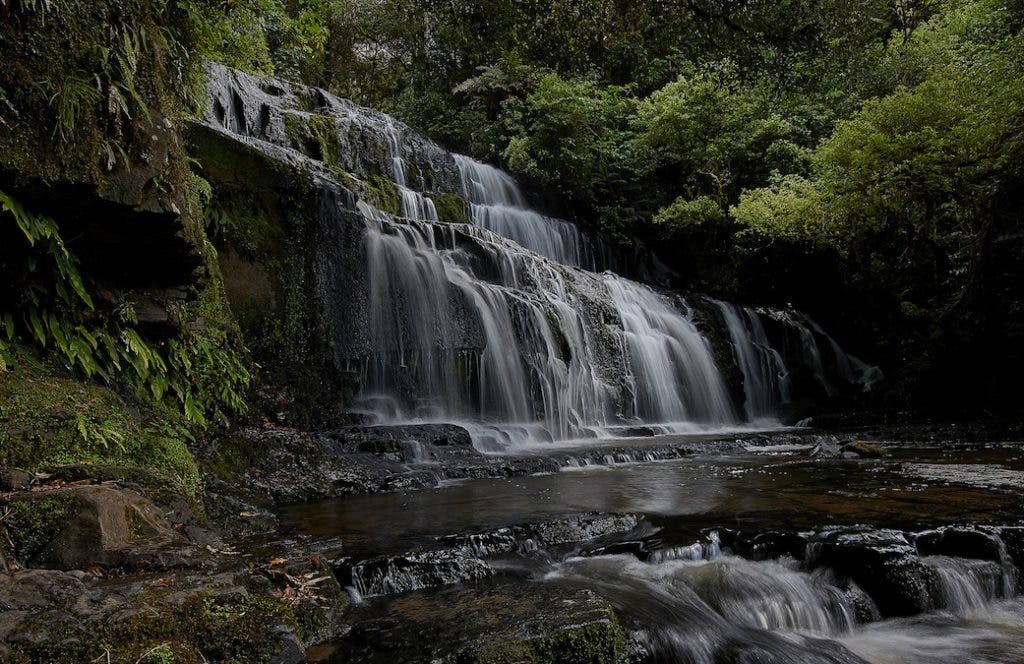
Purakaunui Falls, surrounded by temperate rainforest, offered soft light and a gentle flow. I experimented with three shutter speeds and found that a 1/3‑second exposure often strikes a good balance between detail and subtle motion blur.
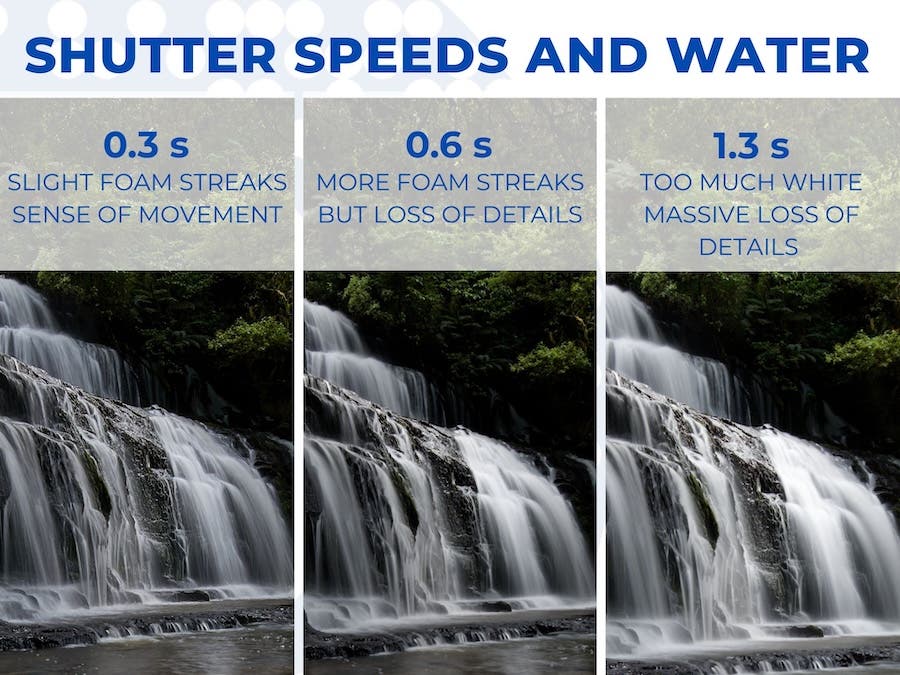
Using a long exposure can create a silky surface that masks the water’s power. It also risks overexposure and can reveal foam as a textureless white wall.
Recommended Starting Point
Start with a 1/3‑second shutter speed for most waterfalls. Adjust: slow down if the water looks static; speed up if detail is lost or highlights blow out.
Pro Tip: Bracket and Blend
If unsure, bracket shots at intervals that bracket the ideal exposure. Later, blend the best two exposures to maintain low noise while avoiding excessive blur.
Movement in Calm Waters
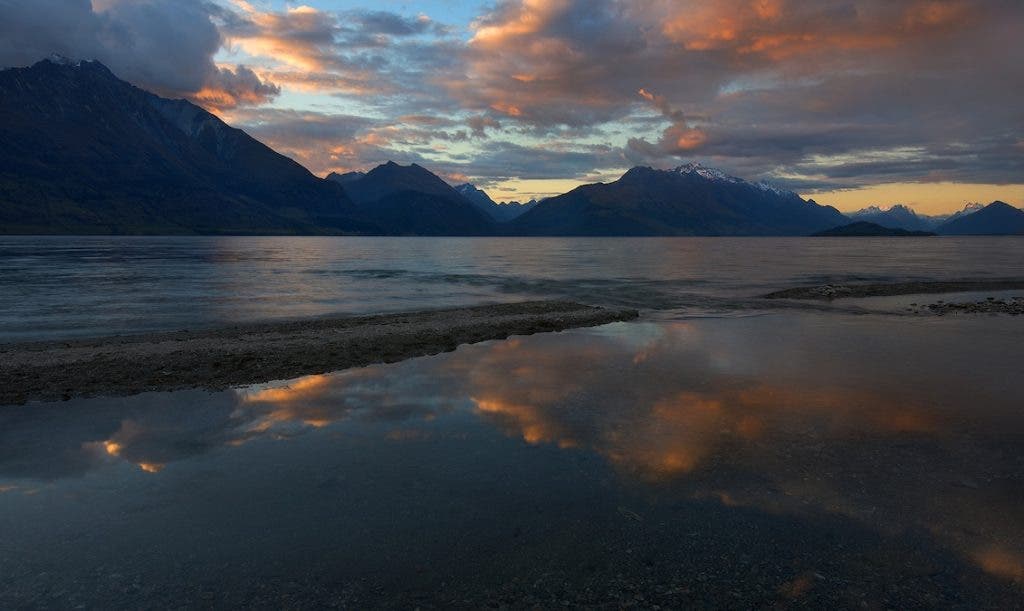
At Lake Wakatipu near Queenstown, I chose to capture reflections rather than a long, surreal blur. Even calm lakes can have ripples from subtle breezes, and a longer exposure will blur those reflections.
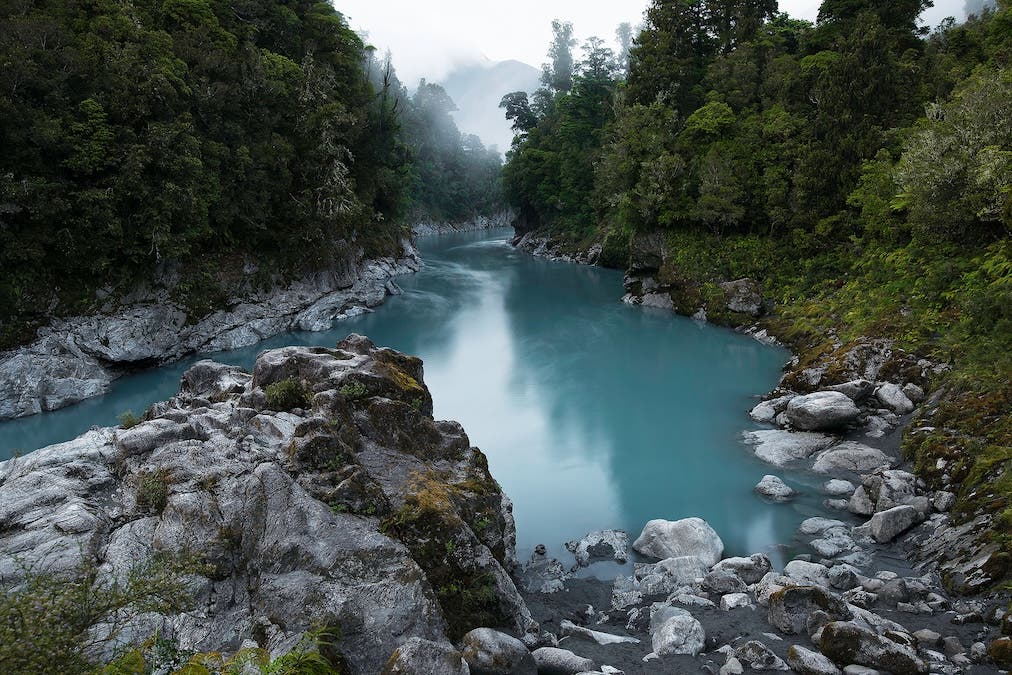
Slow Flow at Hokitika Gorge
Back at the gorge, I captured the river’s slow flow. The shot feels flat, but the water’s texture, sky color, and a rolling mist add depth. Getting the shutter speed right is crucial for a balanced composition.

Peter Dam
Peter Dam is a professional nature photographer with over ten years of experience in nature photography, corporate photography, and videography. He shares a wide range of nature photography tips and stories on his website and YouTube channel.