
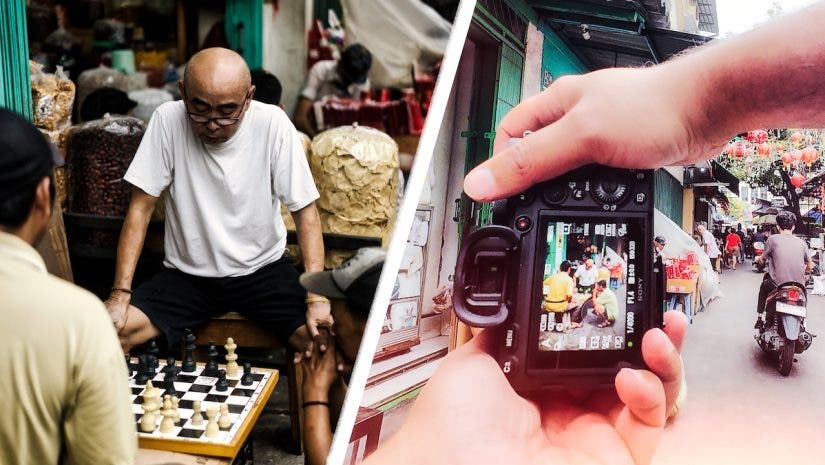
While navigating the crowded streets of Jakarta’s Petak Sembilan district, I found myself surrounded by strangers, cameras dangling around my neck like ornaments. The bustling traffic, bright neon signs, and the river of people made me feel like the most conspicuous tourist in the crowd. I wondered how I could capture compelling visual stories in such an unfamiliar environment without feeling overwhelmed.
Feeling a nervous flutter as I spotted potential moments, I was hesitant to approach strangers, fearing rejection or cultural missteps. This scenario is familiar to many aspiring street photographers: the transition from camera‑shy tourist to confident street shooter. The solution lies in building authentic connections while mastering essential techniques. With deliberate practice and thoughtful engagement, anyone can learn to tell engaging visual stories from the city.
Building Confidence
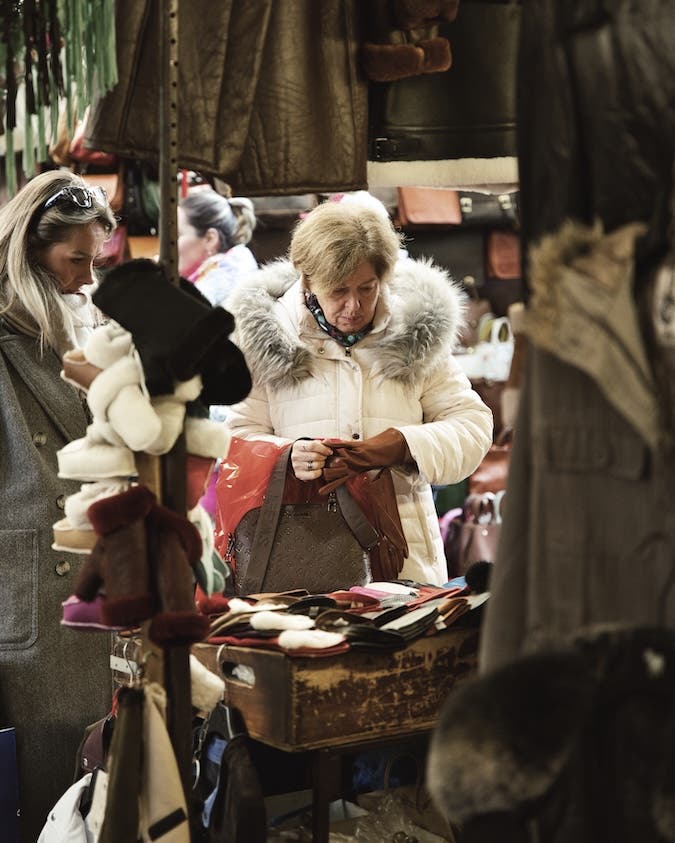 Captured from afar with a 24‑70mm lens, this photo shows how to stay discreet while composing.
 For most photographers, the biggest hurdle isn’t technical knowledge—it’s the mental barrier of photographing strangers. Below are practical steps to develop confidence:
- Start with a zoom lens (24‑70mm or 70‑200mm) to practice composition and timing from a distance, keeping your presence subtle.
- Gradually reduce the distance as you become more comfortable.
- Maintain a friendly, approachable demeanor; a smile and a warm greeting can break the ice.
- When you do approach, make eye contact, smile, and ask for permission before shooting.
Consistency is key. Over time, you’ll move from hesitant observer to confident street photographer.
Gracefully Handling Rejection
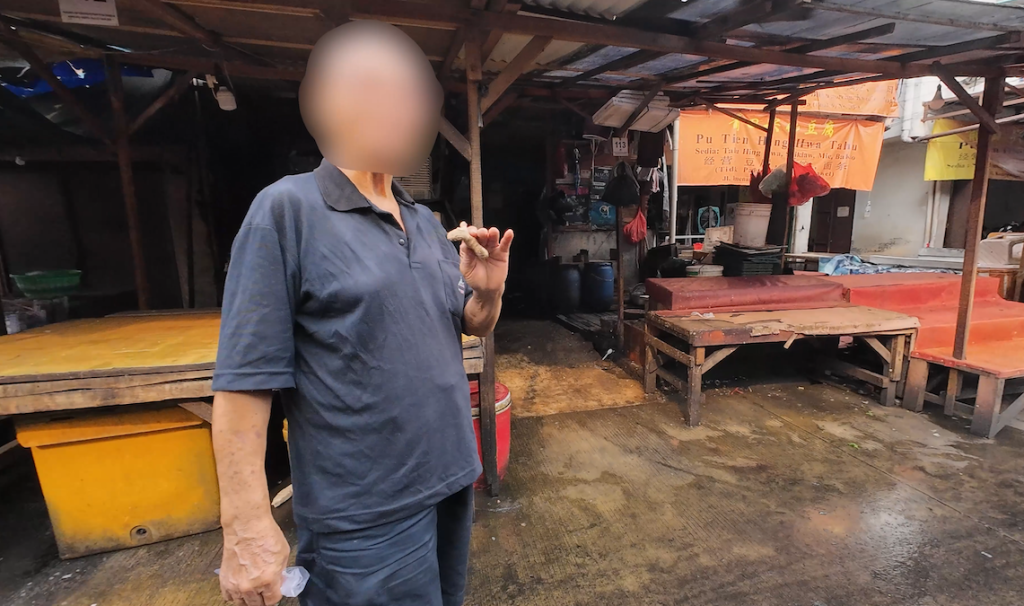 I was politely declined before even taking a shot.
 Rejection is part of street photography, but how you respond determines your growth. Treat each “no” as a learning moment:
- Thank the person for their time, regardless of the answer.
- Don’t abruptly end the conversation; a brief polite exit keeps the interaction respectful.
- Use the “30‑second reset”: pause, breathe, and refocus before moving on.
- Walk to a different spot—cross the street, find a new angle—to reset your mindset.
- Remember that a refusal often reflects cultural norms, privacy concerns, or personal circumstances, not your skill.
- Use each rejection to sharpen your observational skills and improve future requests.
Approaching refusals with grace can lead to genuine connections and, sometimes, to a change of mind.
Capturing a Variety of Perspectives
Street photography tells richer stories when you vary your compositions and viewpoints. Different shot types together create a textured narrative.
- Environmental portraits that place the subject within their surroundings.
- Macro shots of hands, tools, or the activity itself.
- Traditional portraits that capture personality and character.
- Candid moments that reveal spontaneous emotion or interaction.
- Wide‑angle shots that establish location and mood.
- Close‑up crops that emphasize specific expressions or details.
Mixing these approaches provides flexibility during editing and storytelling.
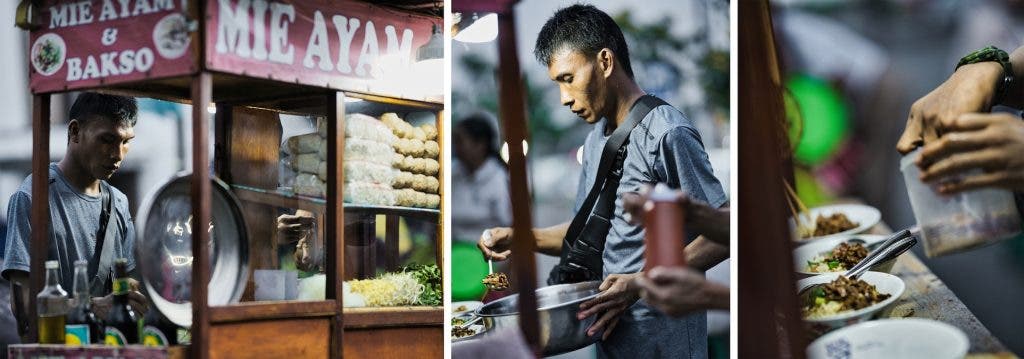 Series of images from multiple angles—Jakarta, Indonesia.
 Technical Mastery for Street Success
The gear you choose can make or break a street session. Prime lenses, especially 50mm and 85mm, push you to be deliberate about composition.
Key technical tips:
- Choose prime lenses to practice “foot‑zoom” and sharpen compositional discipline.
- Raise ISO to capture faster shutter speeds in low light or changing conditions.
- Use aperture‑priority mode to control depth of field while maintaining exposure.
- Carry a secondary camera or lens kit to avoid missing moments while swapping gear.
- Take both horizontal and vertical shots of the same scene for maximum flexibility.
- Experiment with unconventional angles to add dynamism.
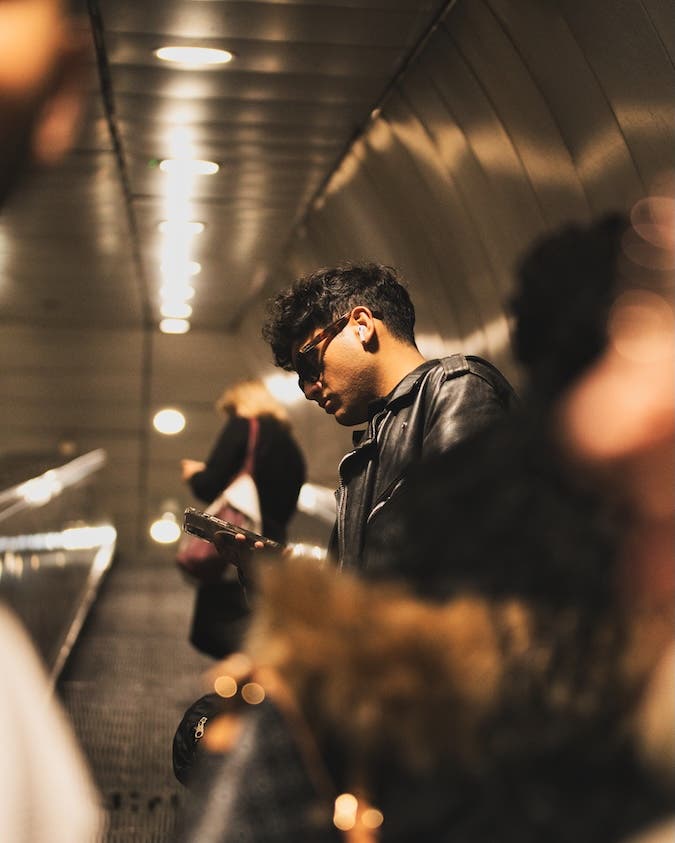 Portrait taken at ISO 4000 in a dimly lit subway station—Rome, Italy.
 Technical proficiency supports creative vision, but the human element remains the core of compelling street photography.
Creating Meaningful Human Connections
Powerful street images arise from genuine interactions. Technology can help bridge language gaps and foster rapport.
Tips for building rapport:
- Learn a few key phrases in the local language or use translation apps.
- Ask for permission before photographing someone directly.
- Engage in brief conversation to learn the subject’s story.
- Show sincere interest in the subject’s work, culture, or daily life.
- Share the experience with your subjects—talk about the camera, the composition.
- Consider gifting a printed photo; an Instax Mini is handy for on‑the‑spot prints.
These exchanges turn subjects into collaborators, producing images that resonate.
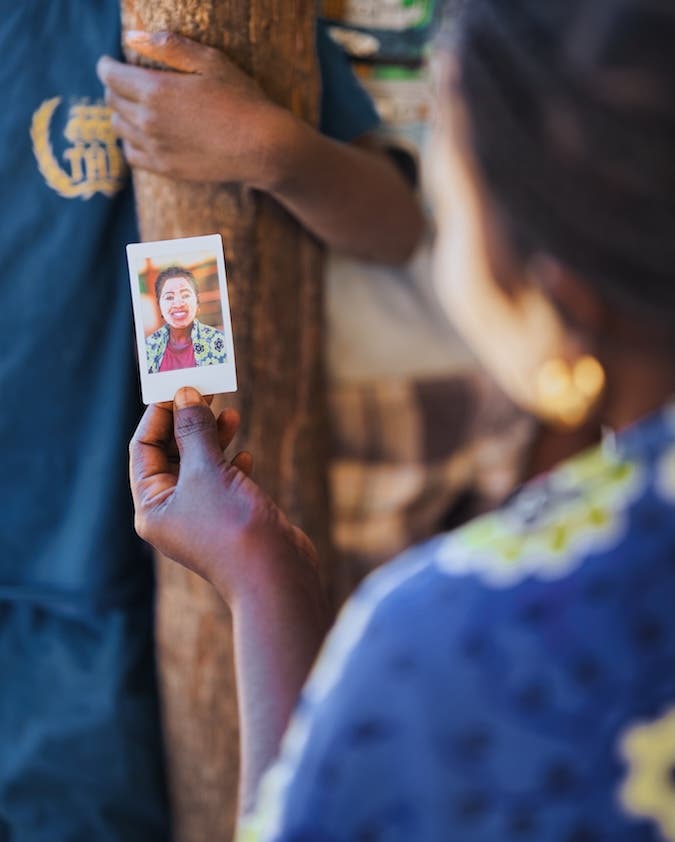 Printed a portrait for a Malagasy woman with an Instax Mini.
 Respecting Subjects and Communities
Street photographers act as ambassadors for the broader community. Ethical conduct and courtesy protect both individuals and the photographer’s reputation.
Ethical guidelines:
- Prioritize subject dignity over chasing the perfect shot.
- Delete or refrain from sharing images that feel exploitative.
- Represent photography positively through mindful interactions.
- Avoid exploiting vulnerable individuals or tense situations.
- Share benefits when possible—printed photos, small donations, or credits.
- Stay aware of cultural sensitivities, especially when photographing women or children in conservative regions.
Practicing these principles keeps street photography welcoming across cultures.
Weather and Adaptability
Unpredictable weather can generate the most memorable images—and test your adaptability. Rain, shifting light, or spontaneous events often create unique opportunities.
Preparation & adaptation:
- Carry weather protection for yourself and your gear.
- View challenging conditions as creative catalysts rather than obstacles.
- Use environmental changes to craft dynamic compositions.
- Remain flexible; adjust shooting plans as conditions evolve.
- Protect equipment while staying ready for sudden moments.
Experienced street photographers embrace unpredictability. One of my favorite shots—captured in a Florentine rain—captures a tender, almost romantic moment between a couple on a rainy street.
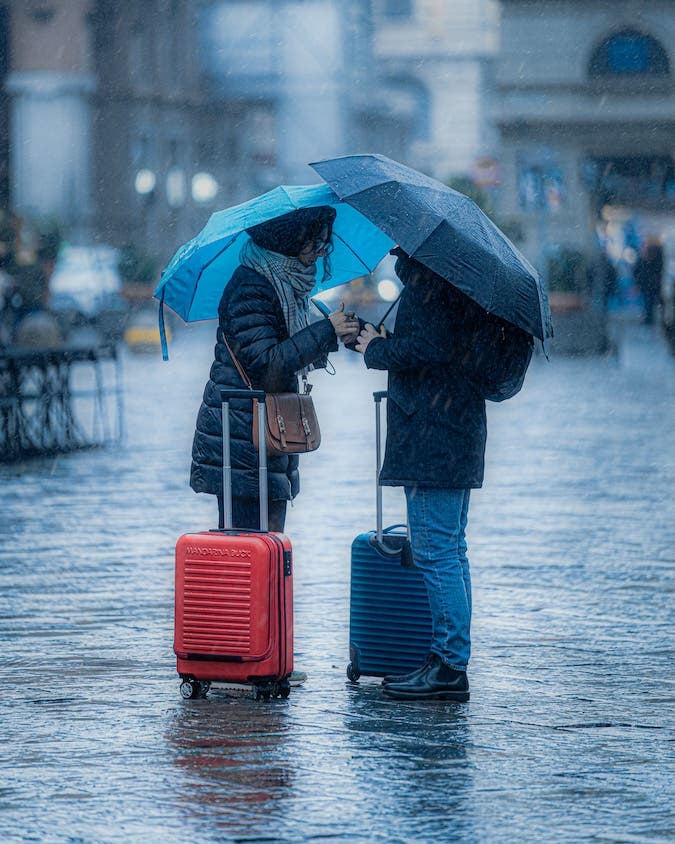 Love travels: a couple in the romantic, rain‑soaked streets of Florence.
 Conclusion
Achieving excellence in street photography requires balancing technical skill with genuine human connection. The journey from uncertain tourist to confident photographer demands patience, deliberate practice, and respect for the people you photograph.
Success isn’t measured by technical perfection alone; it’s about capturing authentic moments that tell meaningful stories. Through consistent practice, mindful interaction, and flexibility in changing conditions, you can develop the confidence and expertise to create compelling urban imagery.
Mujahid Ur Rehman
Mujahid Ur Rehman, known as Muji, is a professional photographer and independent filmmaker based in Cape Town, South Africa. He focuses on storytelling through photography, short films on YouTube, and a newsletter covering life, people, travel, nature, and motivation. Explore his work at www.mujahidurrehman.com, instagram.com/muji.drifts, or youtube.com/@muji.drifts.