
During the development process of a movie, the division of roles can become blurred. While having levels of bureaucracy can increase efficiency, there are times where we as filmmakers don’t want to have to sacrifice creative vision.
A huge example of this is screenwriters selling a script but not being involved in the movie’s making.
Therefore as a writer, there will be times that you want to direct your movie. In fact, there are countless cases of screenwriters also being directors.
If you want to direct the story, you’ve written, that is 100% a possibility. Doing this can help you progress your movie faster, along with some other strengths we’ll discuss later. However, there are some drawbacks, which I’ll get back to in a minute.
Ultimately, the decision to write and direct a movie will depend on the project’s scale, your vision, and the amount of risk and work you’re willing to assume.
That said, if it is something you can manage, doing so can be a huge learning experience.
Understanding as many facets of the filmmaking process as possible is a big strength when breaking into the field, as is being a good collaborator. This article will hopefully help you achieve both as you aim to write and direct.
Examples Of Famous Writer/Directors
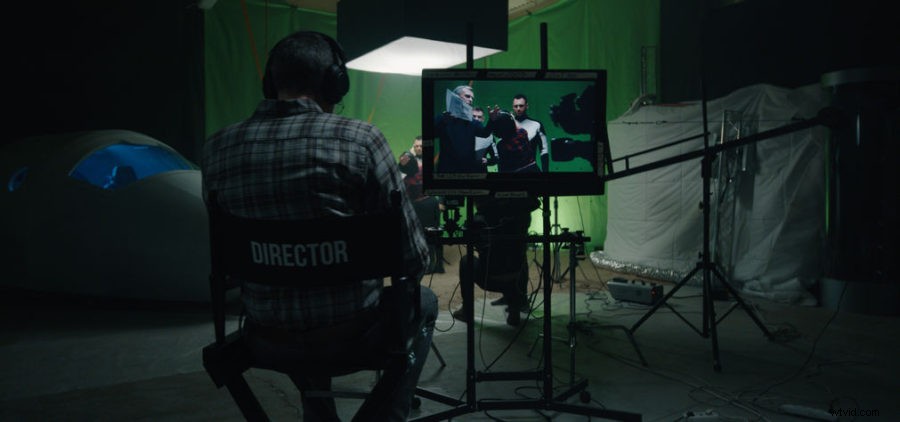
Like I said in the introduction, there are countless examples of a screenwriter who is also the director.
Oftentimes filmmakers that assume both roles are called auteurs. While this term was coined in the 1970s, this has been common since filmmaking was a thing.
Current day writer/directors include:
- The Coen brothers (Fargo, Barton Fink, The Big Lebowski),
- Quentin Tarantino (Pulp Fiction, Reservoir Dogs, Jackie Brown),
- Sofia Coppola (The Virgin Suicides, Lost in Translation, On the Rocks),
- Paul Thomas Anderson(There Will Be Blood, Punch Drunk Love, The Master),
- Wes Anderson (The Royal Tenenbaums, The Life Aquatic, The Grand Budapest Hotel)
- …and many more.
If you’re familiar with these directors, you will notice they tend to occupy a more independent space in the world of filmmaking. They also tend to have very consistent visual styles between their filmographies and tell more personal stories.
While it can be useful not to sacrifice any creative vision, that also means your film may come off as deeply personal. Given the strengths of writing and directing a movie, this makes sense.
Strengths being both screenwriter and director
The strength of writing and directing, as stated above, is that you don’t have to sacrifice any creative vision. As opposed to writing your film, selling it, and wiping your hands clean, you will be involved in (and controlling) major creative decisions throughout the entire process.
For certain films, this might be necessary. Especially if you intend to make an introspective movie, being onboard through the end may be necessary.
Another strength is that you do not have to work to get a director attached. Even if you sell your screenplay (already a very difficult task), there is a slim chance it will be made.
If you are a writer and have a movie you desperately want to make, you have a far better chance if you take matters into your own hands.
Similarly, writing and directing expedite the filmmaking process. In addition to not having to shop around for directors, you understand your own shorthand. You will have to do fewer rewrites and can write in a style you are more comfortable with.
In short, being both the writer and the director lets you avoid the headaches associated with collaboration.
Weaknesses being both the screenwriter and director
At the same time, being the writer and director means you miss out on the benefits of collaborating. It would be naive to assume you are the most talented writer and director, so it can help to find people that know more than you.
Even at the independent level, if you are making a feature film you should be able to find some collaborators that have more experience than you, different skills, or different perspectives. Oftentimes a diversity of input lends itself to a better film.
Though we listed plenty of successful examples at the beginning of this article, there are also many awful examples of writers who direct. I went to film school; I could be one of those examples.
Another example of a writer/director who missed the mark could be Tommy Wiseau with The Room (though you could argue it was ultimately successful).
You can read tips on how to be a good director here.
If you want to learn from others, grow as a filmmaker, and get new skills, then being an active collaborator is essential. Perhaps you could co-direct or ask to simply be involved or shadow during the filmmaking process.
Additionally, if you are an unknown filmmaker, going about the process all by yourself may hinder your film’s ultimate success.
If you’re able to get a director attached with bigger name recognition, studio or festival connections, or who knows actors, there is a far better chance people will see your film.
The final weakness of this is that writing and directing are both intensive processes. If you undertake both, you will be committing a huge part of your life to one film. There will be many expectations put on you, and you will assume a huge amount of responsibility for the ultimate success or failure of the project.
Things to Watch Out For
If you still want to write and direct after reading this far, then good for you. Perhaps you have no choice, and that is fine too. Still, there are some things you must watch out for.
Simply because you are the writer and director doesn’t mean you shouldn’t still want input and listen to suggestions. Ask friends, peers, and actors for notes. If you’re on set and the actor thinks their character would say a line a different way, consider it.
Many times writers/directors are strongly attached to their creative vision and have been for some time. This can make accepting new inputs difficult, but it is necessary for the success of the film.
Since you will probably be stretched thin, make sure to communicate your vision clearly with other department heads and then let them take it from there.
Whether it’s costuming, photography, or lighting, it’s important to pick your collaborators for a reason and trust their decision-making.
It is also important that you still follow proper screenwriting etiquette with your project. After all, you will probably be handing it off to producers, actors, and potential investors.
Even if you want to include shorthand, notes on camera angles, or things otherwise typically avoided in screenplays, you should have a copy of your script that is as readable as possible.
Finally, while all these notes are best practices it comes down to the scale and type of project you’re making. If you’re filming with a group of friends, the process will be drastically different than if you’re trying to make a project with union rates.
The only note that can apply between these is that you have to be a good collaborator if you want to make a good film.
Conclusion
As always, there are no universal maxims that can be applied to making movies. Things vary drastically between the scale of projects, whether they’re narrative or documentary, depending on the people involved.
Still, for the sake of good stories and good filmmaking, collaboration, self-reflection, and diversity are necessary. If you’re writing and directing, don’t get too caught in your own bubble.
Even if you’re making a personal story, I’d assume you have the goal of getting other people to watch it. Ensuring that it’s appealing to someone besides yourself is a good thing to do as early on as possible.
During the directing process, the same applies. There are stories of famous directors being awful collaborators, but you can’t afford to do that as an independent filmmaker.
If you want to make a second movie, you will need to have people who want to work with you. Being respectful and creating a welcoming environment is key.
Have any of you written and directed? What did you like about the process, and what was challenging? Let us know in the comments, and good luck on your next project!