
The Directors Guild of America hosted a three-hour conversation with these incredible filmmakers. Here are the takeaways.
This year’s Oscar for “Outstanding Directorial Achievement in Feature Film Award” went to Guillermo del Toro for The Shape of Water, but in this three-hour conversation, you can learn some valuable filmmaking lessons from all five of the nominees.
Hosted by the Directors Guild of America and moderated Jeremy Kagan, this video presents the experiences and perspectives of directors Guillermo del Toro (The Shape of Water), Greta Gerwig (Lady Bird), Martin McDonagh (Three Billboards Outside Ebbing, Missouri), Christopher Nolan (Dunkirk), and Jordan Peele (Get Out).
In this write-up, I’ve pulled out five key lessons that should prove useful in your own filmmaking journey. If you have the time, the whole conversation is well worth watching, as there are many fascinating filmmaking anecdotes and approaches.
1. Stay on Your Feet
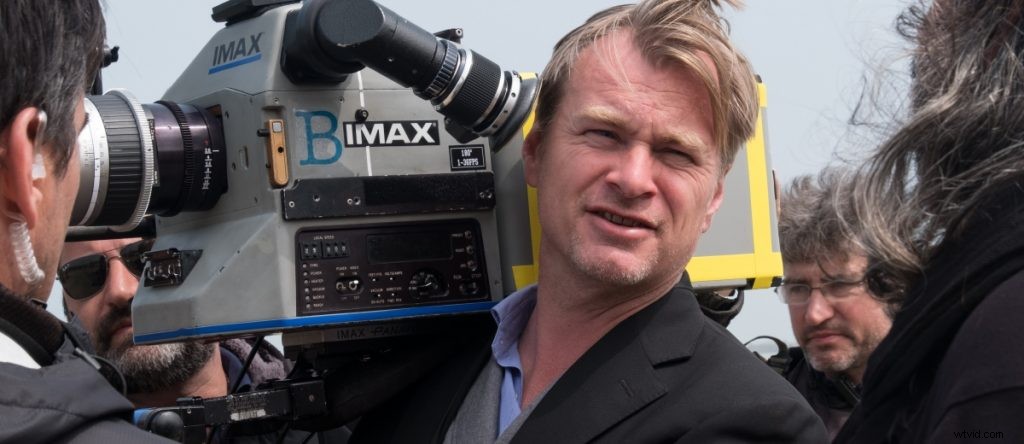
One of the first questions Kagan asks is “Where do you position yourself on set?” which seems like a fundamental question. Christopher Nolan, for example, prefers to be as close to the action as possible:
For directors who like to be a little more aloof, wearing a monitor from the comfort of a chair in video village makes sense to me as an editor. If it’s not in the camera, it’s not in the film. But in order to engage with the actors and direct more intimately, there seems to be no substitute for standing close to the camera.
In fact, Greta Gerwig also stays away from the “video village” approach:
2. Write for the Screen
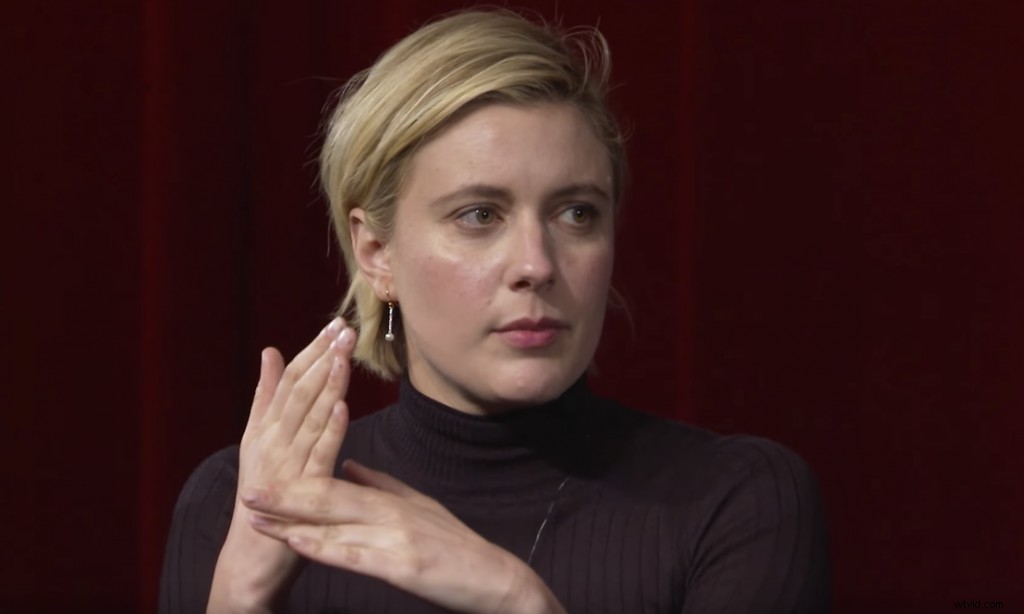
Several of this year’s nominees are also credited as writers on their films; in fact Greta Gerwig, Jordan Peele, Guillermo del Toro and Martin McDonagh were also nominated for Best Original Screenplay.
There’s a question for Gerwig about 28 minutes in to the conversation, and in her response, she describes her writing process and the way it translates to the screen, which I think offers some really interesting insights into good screenwriting. The script is the blueprint for the film’s production, but it’s not designed to be published on its own. It carries the rhythm, structure, and feeling of the film that the cast and crew will bring to life.
Here are a few of my favorite lines from her response:
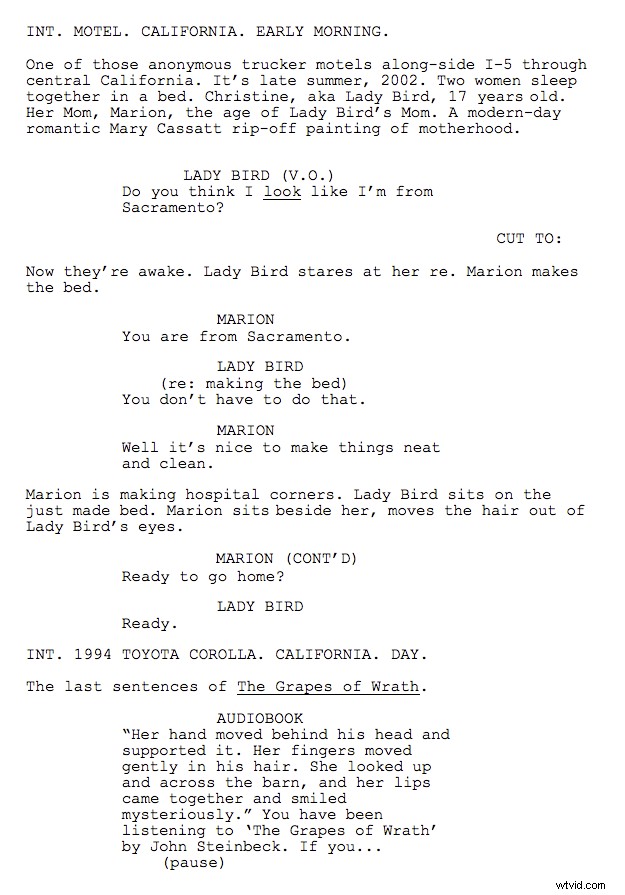
You can see what Gerwig is talking about in the first page of the shooting script for Lady Bird.
She also talks about crafting an opening to the film that is, in essence, the entire film in one moment:
3. Try New Things with Every Film
One of the things that surprised me about The Shape of Water is that its budget was only $19.3 million dollars. That’s pretty small for a film of this ambition, and part of del Toro’s solution was to use dry for wet filming techniques, rather than doing tank work for some of the more complicated water scenes.
So he had 10-12 puppeteers moving every object that’s floating around in the scene, as in the opening shots of the trailer when the main character is dreaming she is under water.
Del Toro describes all this at about 25 minutes in:
4. Honest Ideas Matter
Get Out director Jordan Peele shared these thoughts about his approach to filmmaking, which I think is really important to remember throughout the production and post-production processes. The honest ideas at the heart of a film are what audiences will connect with — much more than any one specific line of dialogue or moment.
In the DGA conversation, Peele talks about his rehearsal process on the film and how he was struggling to believe that two main characters were really in love, but when he found the honest idea he could focus on, it became believable:
I think this concept of sticking with honest ideas over specific lines or moments is crucial in the editing suite, and it’s similar to the editing concept of ‘killing your darlings’ — those shots or scenes that you worked so hard to produce, but (for whatever reason) just don’t work in the final edit. To make the whole film better, they have to go.
Keeping everything that plays to the truth of a character’s motivation, or the truth of the world of the film, will feel coherent and real to the audience, but elements that fail this test will stick out and pull audiences out of the film.
5. Embrace Accidents
There’s a brilliant story from del Toro about embracing the unexpected, which is queued up in the video above.
He raises a really important point that is essential for any director: be able to “orchestrate the accident.”
Each director talked about having to embrace accidents and disappointments, on a daily basis, and use all of their preparation and filmmaking craft to turn them into elements that benefitted the final film.