
Let’s take a look at the dolly Francis Ford Coppola developed for some of his most revered films — and how it affected the overall aesthetic.
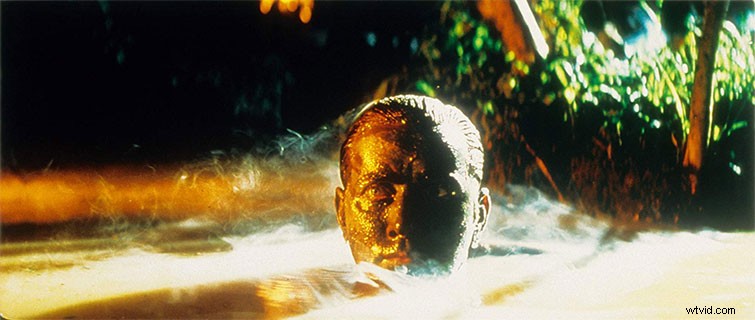
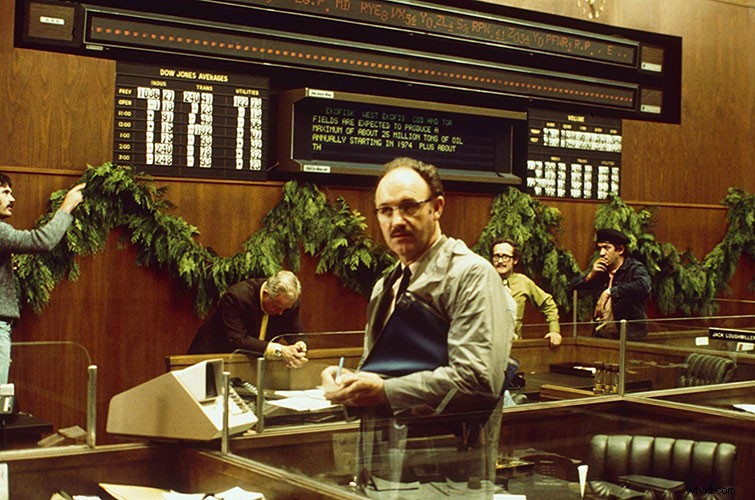
There’s no denying that Francis Ford Coppola‘s narratives always feel powerful — almost inevitable. From his Godfather trilogy to Apocalypse Now and The Conversation, the camera captures events that seem to stand out in history — that seem momentous.
A big part of this is his masterful command of story and character, but he also moves (or doesn’t move) the camera in ways that enhance this aesthetic.
In his interview with James Lipton on Inside the Actor’s Studio, Coppola talked about a technique he developed to give his dolly shots extra gravity — literally. He asked the grips to load the dolly with every sandbag on set until it weighed over 900 lbs. The resulting forward movement was slower, smoother, and had an ominous sense of power and fate about it.
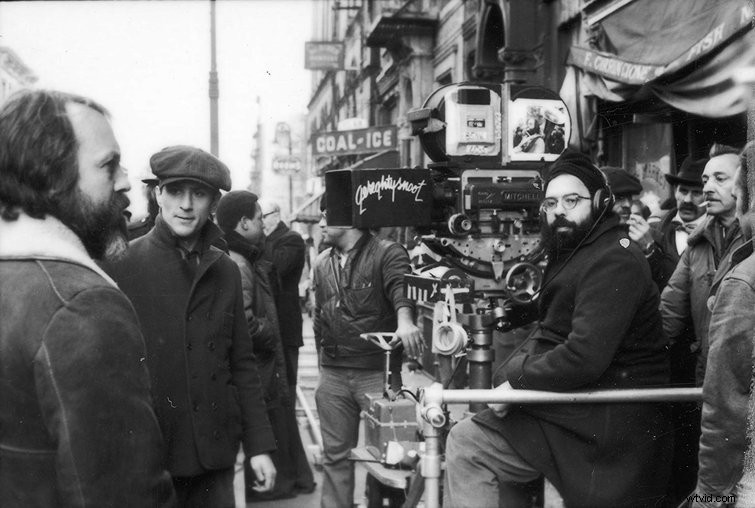
One downside was that after he called “cut,” the crew had to quickly stop the dolly before it rolled off its track and demolished the set like a freight train.
Because of the extra weight, the movement of the dolly has more inertia to overcome, and as a result, is slower to accelerate and decelerate.
A dolly movement is markedly different from handheld because it contains none of the camera operator’s small movements, their sense of humanity. This is neither good nor bad but is, rather, a stylistic choice on the part of the director. Some films use handheld movement to a great effect — Coppola isn’t one of them.
If you have an operator sitting on the dolly, using the camera on a shoulder rig or handheld, it’ll subvert the effect — or at best create a hybrid. To get the most out of the weighted dolly, the camera needs to be on a tripod (or other mount) that can make slow, jitter-free movements. You may want to consider a heavier, cinema-style camera or a geared tripod head to enhance the effect.
A weighted dolly move is like a normal dolly move, only more so. It conveys the sense of an objective, impartial observer — of the pages of history being written. It can also come across as an inescapable fate closing in on its victims — in contrast to the random, erratic sequence of events that handheld camerawork imparts.
I did some experiments with both a dolly and a slider, adding weight to slow down the movement. It isn’t easily noticeable, but it’s an effect you “feel.” The slower shot definitely adds a weight that wasn’t there before.
Make sure you check your dolly or slider’s weight capacity before adding too much weight. If you’re using rails and stands, be sure to check their capacity as well. Try not to hang sandbags or place the load in a way that’ll swing and disrupt the momentum, and keep it clear from where the operator needs to be to move the camera.
This is a technique I plan to use in my dolly and slider moves from now on — as long as I’m not the one who has to carry hundreds of pounds of sandbags to the set and back again!