
Exploring Frame Rates: How to Choose the Right Setting for Your Film
Frame rate—or frames per second (fps)—defines how many individual images appear each second of video. As a filmmaker, setting your fps is one of the first technical decisions you’ll make. The most common standards are 24 fps for a traditional cinematic look, 30 fps for North American broadcast, and 25 fps for European broadcast.
In the one‑second sequence below, you can see exactly how many stills make up a second at 24 fps.

Below the same footage is broken down into individual frames, each representing 1/24th of a second:
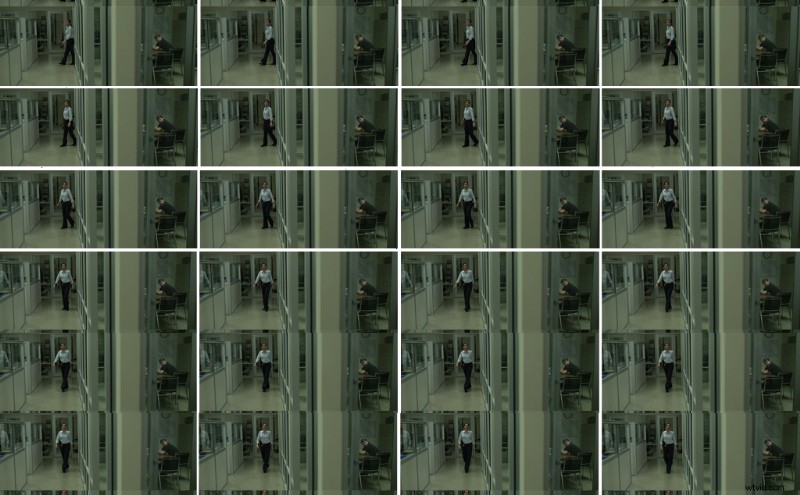
So why 24? The choice isn’t arbitrary; it’s the result of technological constraints, economic considerations, and human visual perception. Below we unpack the history and science behind the standard.
Human Visual Perception and Early Film

Image via Shutterstock
Psychologist Max Wertheimer first described the phi phenomenon—the illusion of motion created when a series of still images are displayed in rapid succession. Studies show that the human eye can distinguish individual frames at rates of 10–12 fps; beyond that, our brains fuse the images into continuous motion.
In the silent‑film era, studios favored lower frame rates—typically 16 fps—to conserve film stock and reduce costs. As sound technology emerged, higher frame rates became necessary to synchronize audio and visual tracks.
The Birth of 24 fps: Sound, Math, and Standardization
When synchronized sound was introduced in the 1920s, engineers needed a frame rate that would keep audio and picture locked. The Vitaphone system, which combined a 16‑inch optical disk running at 33 1/3 rpm with film projected at 24 fps, proved the ideal match: 33 1/3 rpm yielded exactly 11 minutes of audio, matching the 1,000‑foot reel that ran at 24 fps in 90 feet per minute.
In 1927, the SMPTE Standards Committee adopted 24 fps as the industry standard for sound films. The choice was driven by both practical and mathematical reasons: 24 is easily divisible, simplifying editing and time‑code calculations (e.g., 12 frames = ½ second, 6 frames = ¼ second).
Had the Vitaphone system not set the precedent, 22 fps—used by some early sound experiments—might have become the norm.
Frame Rate vs. Shutter Speed
While frame rate determines how many frames are captured per second, shutter speed controls how long each frame is exposed. The cinematic rule of thumb is to set shutter speed to twice the frame rate, achieving a 180° shutter angle. For example, at 24 fps, use a shutter speed of 1/48 s (or 1/50 s on many consumer cameras).
Using Frame Rate to Tell a Story
Frame rate can dramatically affect the tone and pacing of a scene. Common techniques include:
- Slow motion (over‑cranking)—shooting at a higher frame rate (e.g., 48 fps) and playing back at 24 fps to create a smooth, dramatic effect.
- Fast motion (under‑cranking)—shooting at a lower frame rate and speeding up in post, often used for comedic or kinetic sequences.
- Time‑lapse—capturing a single frame at extended intervals and compiling them into a continuous motion sequence.
These techniques require careful planning: frame rates affect shutter speed, exposure, and the overall aesthetic of your footage.
Case Study: The Hobbit’s 48 fps Aesthetic
When Peter Jackson’s “The Hobbit” was shot at 48 fps, critics noted a hyper‑realist feel that felt “like daytime television” to some viewers. This example illustrates how a higher frame rate can shift the perceived realism and genre conventions of a film.
Key Takeaways for Filmmakers
• 24 fps is the standard for cinematic storytelling due to its historical, economic, and perceptual advantages.
• 30 fps and 25 fps are standard for broadcast in North America and Europe, respectively.
• Shutter speed should be set to double the frame rate to maintain natural motion blur.
• Adjusting frame rates can create slow‑motion, fast‑motion, or time‑lapse effects, but requires technical consideration.
For more cinematography insights, explore these related articles:
- Useful Movie Magic With Forced Perspective
- An Ode to Top Gun
- Meet the New ARRI ALEXA 35
- Understanding Point of View in Film and Video