
Dive into the cameras and gear used to capture all of the 2018 Academy Award nominees for Best Picture and Best Cinematography.
Top image: Set of The Shape of Water via K Hayes/20th Century Fox/Kobal/REX/Shutterstock.
Leading up to the Academy Awards, I always love diving into the production stills and going deep into the tech specs for many of the Oscar nominees. That includes finding out the gear these filmmakers and cinematographers used.
Obviously, ARRI continues to lead the pack as the standard cinema camera package — and ARRI just celebrated it’s 100th anniversary. Let’s dive into the cameras and lenses behind 2018’s Oscar-nominated films and see what made the list. (You can find previous nominees here: 2017, 2016.)
Blade Runner 2049
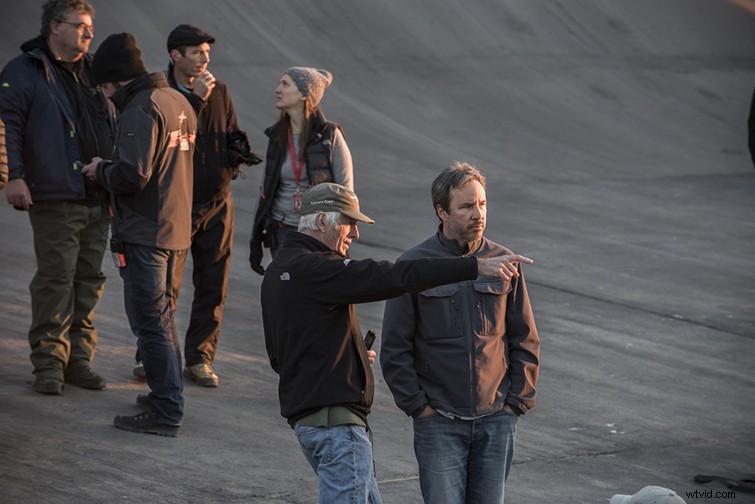
Image: Blade Runner 2049 set via Sony Pictures.
Oscar Nominations: 5 — Best Cinematography, Best Visual Effects, Best Sound Editing, Best Sound Mixing, Best Production Design.
Director: Denis Villeneuve
Director of Photography: Roger Deakins
Camera: ARRI Alexa Mini, ARRI Alexa XT Studio
Lenses: Zeiss Master Prime Lenses
Recording Format: ARRIRAW 3.4K
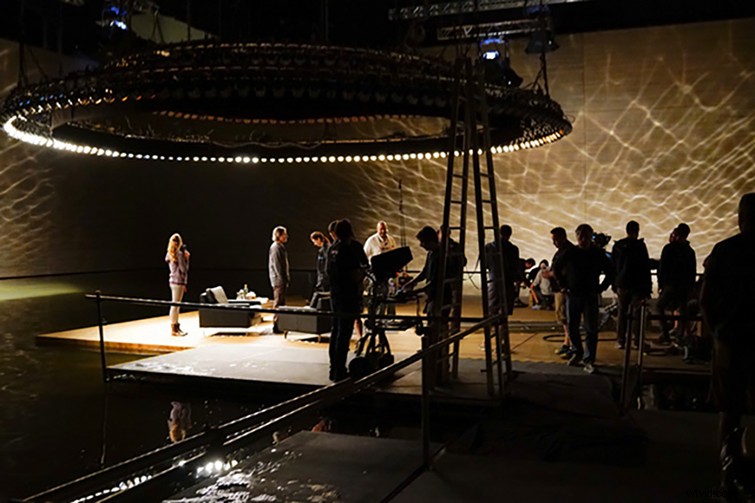
Image: Set of Blade Runner 2049 via ARRI.
We previously took a hard look at Roger Deakins‘s work on Blade Runner 2049. Our friends at ARRI provided some stellar set photos and gave us insight into the lighting rigs set up by gaffer Bill O’Leary.

Image: Set of Blade Runner 2049 via ARRI.
The lighting rigs on Blade Runner 2049 were absolutely massive. One of the main set pieces featured a light ring with 256 ARRI 300-watt fresnels, and another used 100 SkyPanels.
You can read the whole Blade Runner 2049 cinematography piece here. The film’s sound design and VFX were also well received. I’d also suggest checking out The Secrets Behind the Sound Design of Blade Runner 2049. Several VFX houses worked on Blade Runner 2049, including Atomic Fiction, whose office we visited in a previous interview and tour.
Dunkirk
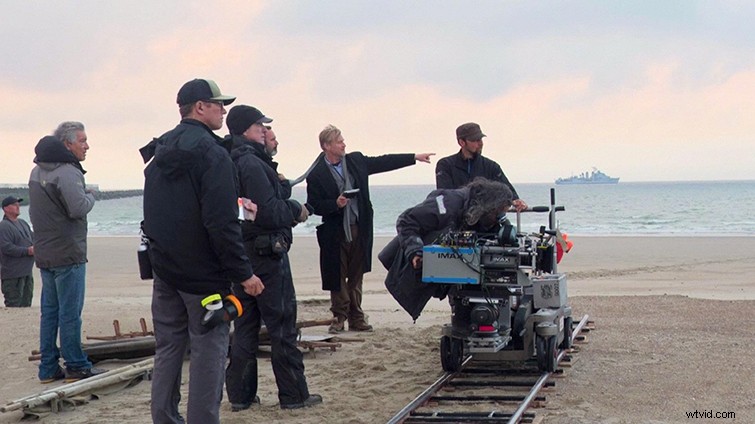
Image: Dunkirk set via Warner Bros.
Oscar Nominations: 8 — Best Motion Picture, Best Director, Best Cinematography, Best Film Editing, Best Original Score, Best Sound Editing, Best Sound Mixing, Best Production Design
Director: Christopher Nolan
Director of Photography: Hoyte Van Hoytema
Camera: IMAX MKIV, IMAX MSM 9802, Panavision 65 HR, Panavision Panaflex System 65 Studio
Lenses: Panavision Sphero 65 (50mm wide angle, 80mm for close-ups), Hasselblad Lenses
Recording Format: 65mm (Kodak Vision3 50D 5203, Vision3 250D 5207, Vision3 200T 5213, Vision3 500T 5219)
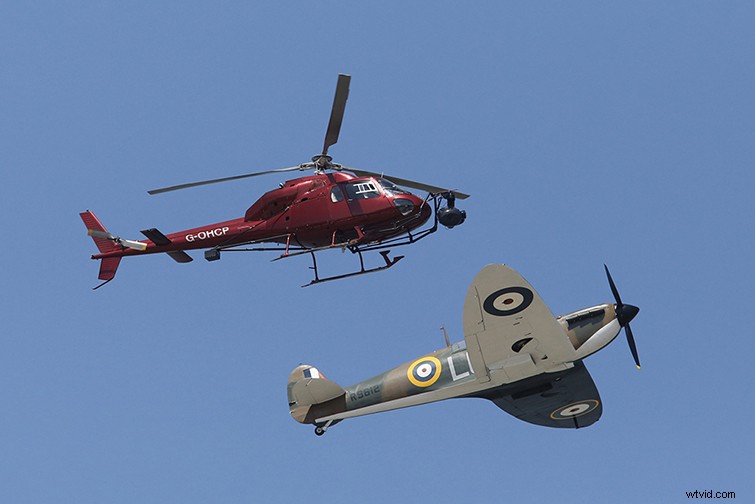
Image: Set of Dunkirk via Thibault Vandermersch/EPA/Shutterstock.
In an interview with British Cinematographer, Van Hoytema shared the following:
On shooting handheld with an IMAX camera:
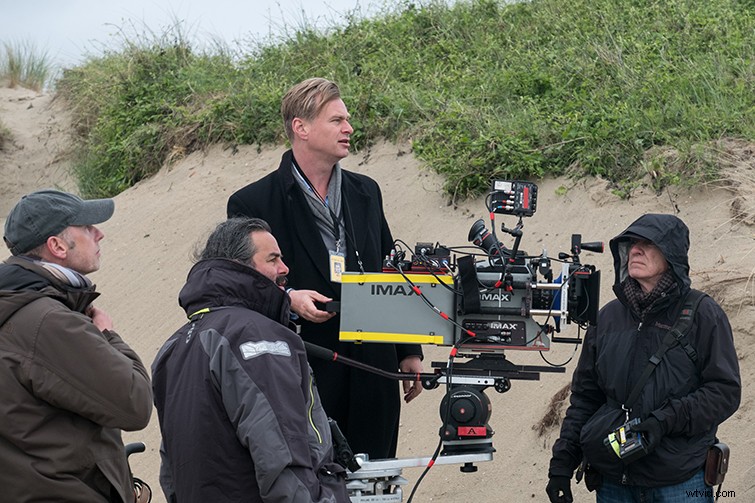
Image: Christopher Nolan and Hoyte Van Hoytema via M.S.Gordon/Warner Bros/Kobal/Shutterstock.
On the camera and lens package,
You can read the entire British Cinematographer piece here. Hoyte van Hoytema also sat down with Deadline to talk about Dunkirk, and I suggest giving that podcast a listen.