
Go behind the scenes with Oscar-nominated interviews with the filmmakers, editors, and sound designers who made this year’s stand-out movies.
Top image: set of Dunkirk. (M.S.Gordon/Warner Bros/Kobal/Shutterstock.)
We had the opportunity to chat with several filmmakers about their work on several of this year’s best films — all now nominated for Academy Awards. Take a look at the work of editors who cut acclaimed films like Baby Driver, The Disaster Artist, and I, Tonya. Dive into the cinematography of 14-time Oscar nominee Roger Deakins, and go behind the sound of Blade Runner 2049 and Dunkirk.
I, Tonya
Oscar Nominations (3): Best Film Editing, Best Actress in a Leading Role, Best Actress in a Supporting Role.
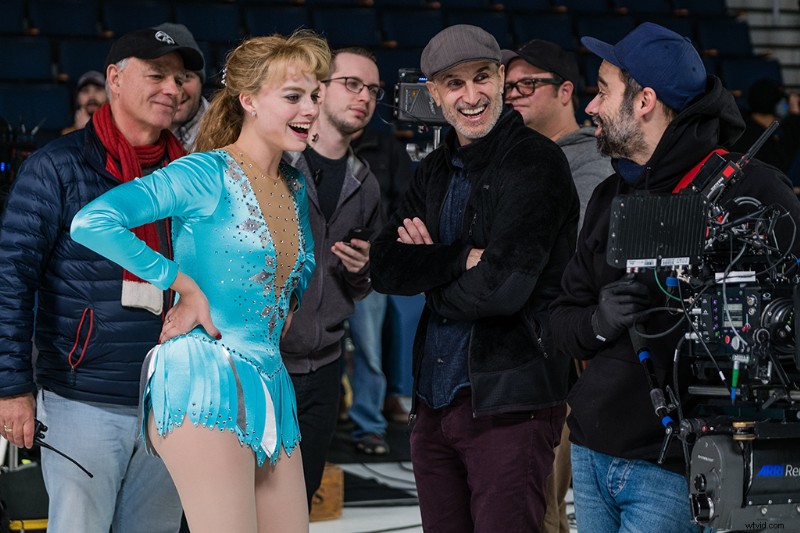
2018 Oscar-nominated film editor Tatiana S. Riegel sat down with us to talk about her work cutting together the biographical comedy drama I, Tonya.
If one is a good editor, they should be able to cut all genres of films. In every film, you have a little bit of everything. Like in I, Tonya, you’ve got these action sequences with ice skating and tricks that is very entertaining and engaging in way that the comedic moments and dramatic moments are not. Little, tiny eye moments or reaction shots can sway the meaning of a scene.
Riegel went on to tell us about what it was like balancing the rapid shift in tone, collaborating with director Craig Gillespie, and telling the true story of a divisive figure in American history. You can read the entire interview here: Interview: How the Editor Behind I, Tonya Recreated History.
Baby Driver
Oscar Nominations (3): Best Film Editing, Best Sound Mixing, Best Sound Editing.
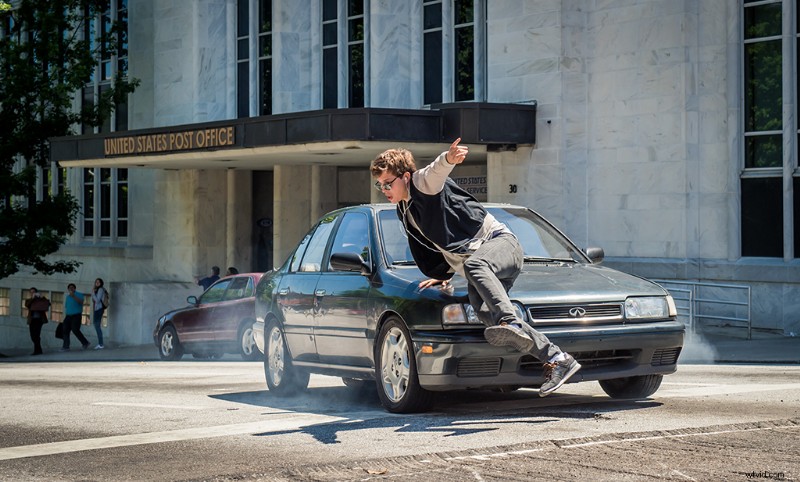
Before Baby Driver‘s release in June of 2017, I had a chance to meet the film’s editor Paul Machliss at NAB. In his presentation at the Avid booth, he talked about his work editing the films of Edgar Wright and then dove into the real time editing workflow he had to adapt on the set of Baby Driver.
As for the film and his workflow, Machliss had the following to say:
“I wouldn’t say it’s a musical — it’s a film full of music. But the integration of the two is quite unique.” The goal was “not make it feel like a musical where everything is heavily choreographed. We didn’t want you to notice that someone puts a bottle down on a chair. It may happen to be on the beat, but we don’t want you to think we are waiting for that moment.”
For the film to work just right, Machliss had to be on set editing to verify that the timing of each shot was perfect: “To make it work, you had to sort of be there at the moment of creation . . . I was there every day of every moment of every take. Edgar would do a take and yell ‘Cut!’ and then from the other side of the set go ‘How was that Paul?’ . . . and sort of wait until you went . . . ‘Yes it’s good.’ Then he felt he could move on. The advantage, of course being, we knew that six months down the line we weren’t gonna go ‘Ugh, we missed a trick here,’ ‘This didn’t work.’”
The feature goes on to show you Machliss’s on-set camera cart, and even the camera car he sat upon while editing literally on the road. You can read the entire piece here: How Editor Paul Machliss Cut Baby Driver in Real Time on Location
Blade Runner 2049
Oscar Nominations (5): Best Cinematography, Best Visual Effects, Best Sound Editing, Best Sound Mixing, Best Production Design.
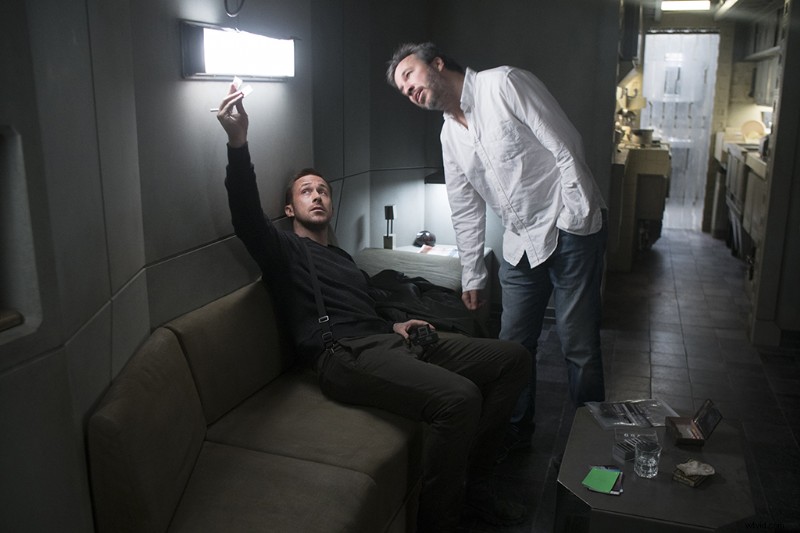
We dove deep into cinematographer Roger Deakins‘s work on Blade Runner 2049. Our friends at ARRI even provided some stellar set photos and gave us insight to the lighting rigs set up by gaffer Bill O’Leary.
Roger achieved most of the look in-camera. For the lighting, we used soft sources and lots of gels on the lampheads to create the different color atmospheres. We went through almost 1,400 rolls of gel by the time we had finished shooting!
The lighting rigs on Blade Runner 2049 were absolutely massive. One of the main set pieces featured a light ring with 256 ARRI 300-watt fresnels, and another used 100 SkyPanels.
Deakins elaborated on his light diagrams,
I always wanted to light the two scenes on that set quite differently. The first lighting design was something I had thought out well before the idea of the pool was finally locked in. This was based on the idea of sunlight coming through skylights in the roof and was similar in a way to the initial wide shot that introduces the Records Library. Of course, the addition of the element of water helped me create a second, quite-different look for that ‘interrogation’ scene. But the caustics were just a background to the actual character lighting, which was also something I had been thinking about for some time. It seemed a natural extension of the theme of moving light.
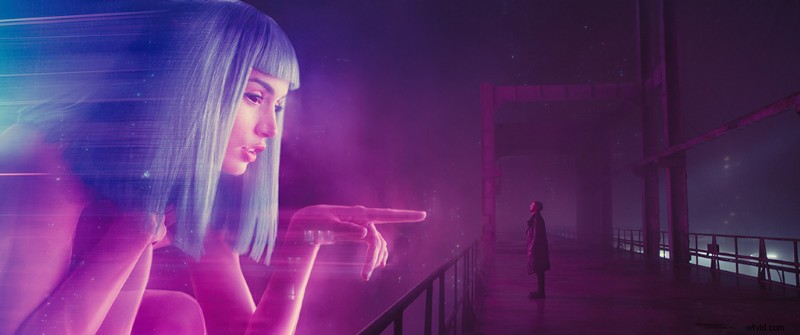
Blade Runner 2049. (Columbia Pictures/Kobal/Shutterstock.)
Though the film is renowned for its cinematography, the sound design and mixing were also incredibly well done. The team at Soundworks Collection did a marvelous piece on the film’s sound and score. The film’s supervising sound editor, Mark Mangini, talked about balancing originality while staying true to a new project:
I began making very brooding musical textures that would underpin almost every scene. So if you listen in any given scene, even if it’s a talkie in a room, there are these languid kind of pads and tones that are reminiscent of things that Vangelis had done in the first film that you didn’t know were his score, and they weren’t really score, they were his kind of sonic noodlings. So I created these sonic noodlings that were made from musical textures — things like wind chimes and guitars, winds, saxophones. But you won’t know them as those sounds when you hear the film. But you’ll get this sense that there’s a brooding tone that creates an atmosphere, a mood . . . and you don’t know what it is, but it fills the scene with a kind of feeling.
You can see all the light rigs and read more about the cinematography of Blade Runner 2049 here: How Roger Deakins Shot and Lit Blade Runner 2049. For more on the sound design, check out The Secrets Behind the Sound Design of Blade Runner 2049. For a look into one of the visual effects studios that worked on the film, read Inside Atomic Fiction: An Exclusive Interview With a VFX Powerhouse.
Dunkirk
Oscar Nominations (8): Best Motion Picture, Best Director, Best Cinematography, Best Film Editing, Best Original Score, Best Sound Editing, Best Sound Mixing, Best Production Design
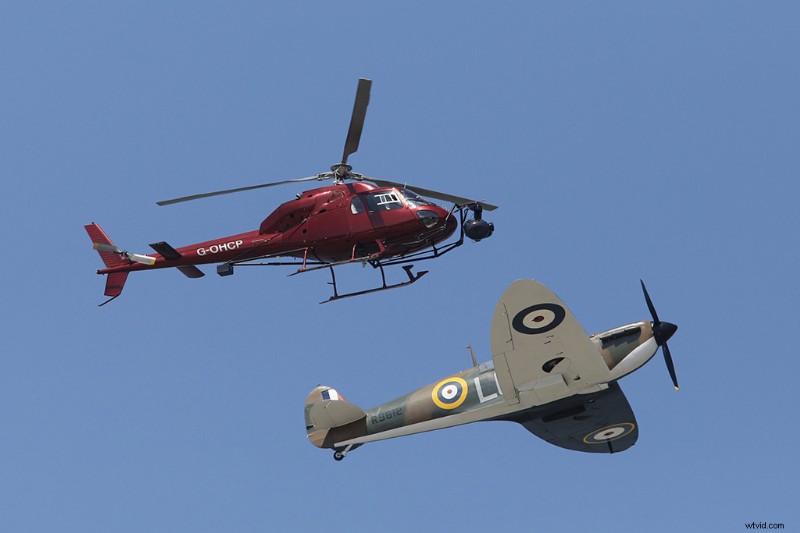
Dunkirk, just like Blade Runner 2049, is also renowned for its visuals and sound. Something that audiences may not have caught onto immediately was the manipulation of their emotions through sound. Dunkirk uses a technique called the Shepard tone, which is a sound that continually ascends (or descends) in pitch.
In an interview with Business Insider, director Christopher Nolan said the following:
There’s an audio illusion, if you will, in music called a ‘Shepard tone’ and with my composer David Julyan on The Prestige we explored that, and based a lot of the score around that. It’s an illusion where there’s a continuing ascension of tone. It’s a corkscrew effect. It’s always going up and up and up, but it never goes outside of its range … And I wrote the [Dunkirk] script according to that principle. I interwove the three timelines in such a way that there’s a continual feeling of intensity. Increasing intensity. I wanted to build the music on similar mathematical principals. So there’s a fusion of music and sound effects and picture that we’ve never been able to achieve before.
There is a wonderful video essay from Vox that further explores this illusion within Dunkirk. For more on this effect, check out The Power of Sound: Using the Shepard Tone In Filmmaking. If you’re interested in recreating the title sequence from Dunkirk, you can also check out my video tutorial here: Create Transparent Titles Inspired by Dunkirk in Premiere Pro and FCPX.
The Disaster Artist
Oscar Nominations (1): Best Adapted Screenplay
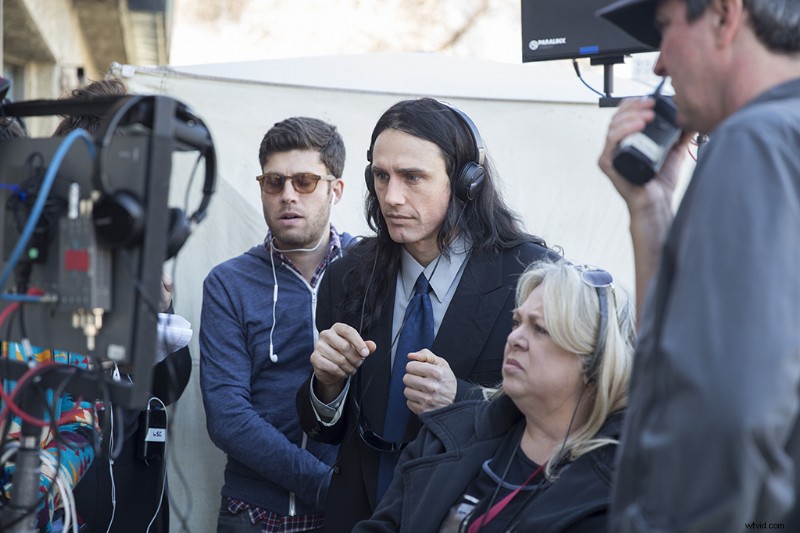
Film editor Stacey Schroeder talked to us about the challenge of telling a true story that is simultaneously hilarious, inspiring, and bizarre. The Disaster Artist is the biographical comedy based on the true story of the cult hit The Room. The film is an adaptation of Greg Sestero’s book of the same name.
One of the most admirable accomplishments of the film is that it nails Tommy Wiseau’s redeeming qualities. For being such a divisive figure in the filmmaking community, he comes across as a sympathetic-yet-ambitiously flawed character. However, this was no easy feat. Schroeder and the team behind the film were careful to balance comedy, drama, and cringe:
We didn’t want to make fun of Tommy ever — we constantly discussed the balance of being true to that story, which is very complicated, and sometimes a little nonsensical, and then not making fun of him. We wanted to make sure that we were making him relatable on some level by helping the audience understand his motives. This idea of having a dream and pursuing it, [with] whatever means are available to you, is very universal. We knew if we could push that narrative, people could relate to the story and the character of Tommy. To relate to Tommy, you don’t have to believe you would make all the same decisions as him — you just have to understand why he made the decisions he did. That idea of desire and wanting respect and wanting to be liked on some level are all universal themes that carry the movie.
The full interview dives into editing improv comedy, sources of inspiration, the film’s premiere, and some advice for upcoming video editors. You can read the full interview here: The Disaster Artist: Editing A Film About Making a Film.
Interested in more interviews and features like this? Check out these articles.
- Oscar Winning Editors Share Secrets to Their Success
- Exclusive: Designing Wakanda and the Amazing Sets of Black Panther
- Interview: How This Oscar Nom Edited Downsizing While Directing His First Feature
- Microsoft Used a Robot and an Xbox Controller to Shoot a Commercial
- How the Team Behind Thor: Ragnarok Crafted an Epic Action Film
- Behind The Scenes: Crafting The Stylized Naturalism of Bomb City