
In which we examine five famous ending shots from filmmaking masters to discover what makes each one so effective and memorable.
Cover image from Butch Cassidy and the Sundance Kid (via 20th Century Fox).
There are many parts and elements of your favorite classic films that will always stand out to you. While certain sequences, scenes, or lines of dialogue may linger in your mind for decades, there is an undeniable power to both your very first and very last impression of a film. In a video essay, Jacob T. Swinney juxtaposes the opening and closing frames of many famous films to show how they can both be powerful and thematically linked. This is not a new phenomenon, as filmmaking masters have used both as important elements in their defining works.
As such, let’s examine the latter of the two: the ending shot in some of the most famous films throughout history. With this examination, we can glean some greater insights into these master filmmakers’ approach to the craft — and hopefully learn a thing or two about how cinematic moments can make meaningful films seemingly last forever.
Perspective
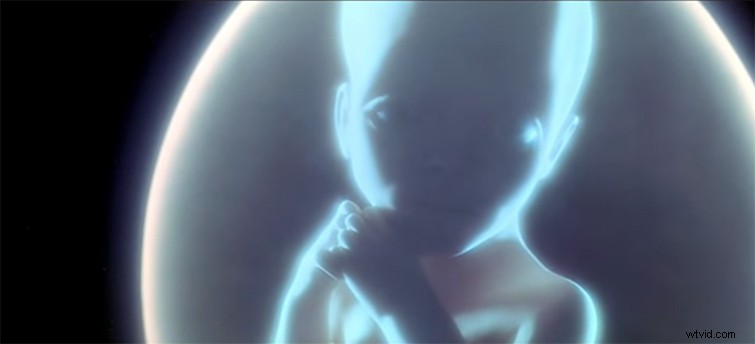 Image from 2001: A Space Odyssey via MGM Studios.
For the most ambitious filmmakers whose films examine the deepest questions about humanity, an ending shot that puts everything into perspective can be a powerful reminder of the grandest of scales. No film is more iconic in this regard than Stanley Kubrick’s masterpiece 2001: A Space Odyssey, which, among other themes, looks at the nature of life itself. Kubrick, who often tackled huge ideas and themes throughout his filmography, leaves a remarkably memorable, yet ambiguous, ending note with the famous moon fetus hanging over earth.
Implied Action
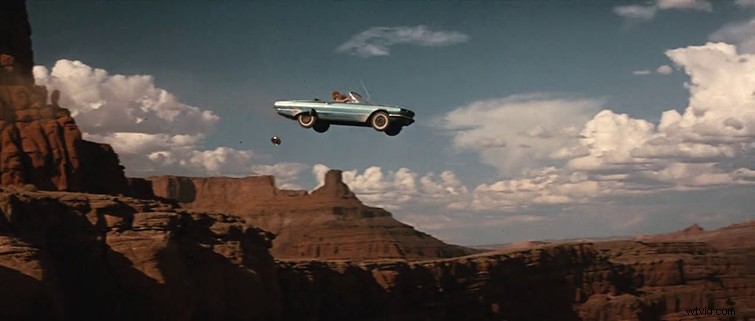 Image from Thelma & Louise via MGM Studios.
Similar to the ending in the cover image above from Butch Cassidy and the Sundance Kid, the director of Thelma & Louise (Ridley Scott) decided to use the freeze frame to hammer home the importance of the last shot and final frame of the film. Both are noteworthy for their implied action, in both cases, the impending doom of their title characters. Yet, because it is a film and the viewer is attached to the character and their journey, the freeze frame is a great way to keep those characters thematically alive, there and ready for another viewing.
Open to Interpretation
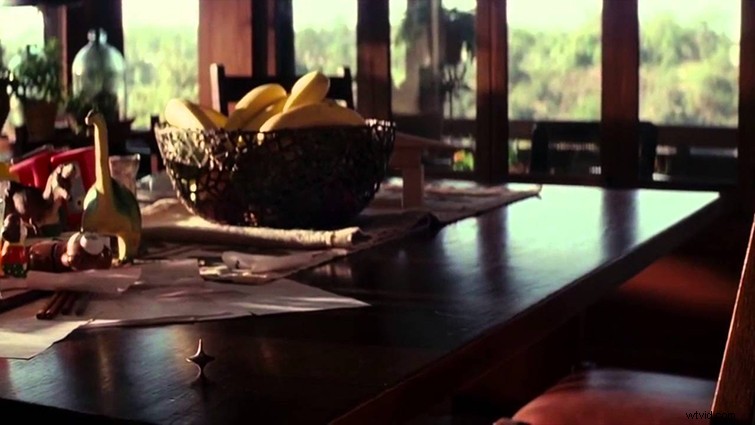 Image from Inception via Warner Bros.
As its name implies, this ending style can go a couple of different ways. Many of the more ponderous film classics opt to leave their endings as ambiguous as possible to leave them open to interpretation. Ideally, this is a great way to encourage discussion and repeat screenings to look for clues into plot points and thematic meaning. Christopher Nolan’s Inception is a great example of this, with the famous top spinning shot, but American Psycho, Shutter Island, and Black Swan are other great recent examples.
Resolution
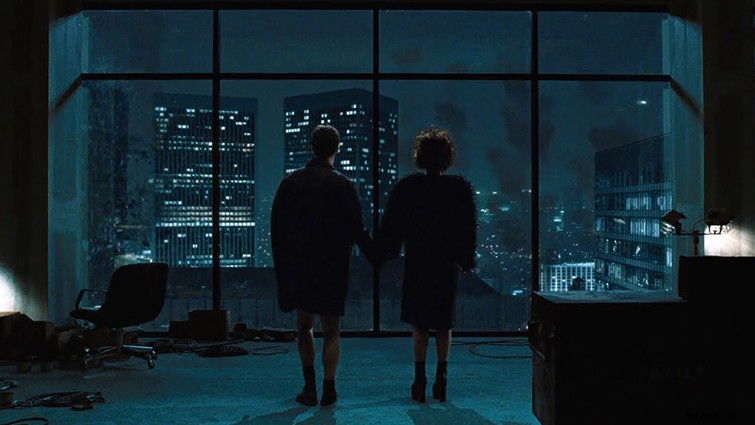 Image from Fight Club via 20th Century Fox.
Now, as the medium dictates, mainstream, narrative, feature films are always supposed to offer conflict resolution. Characters encounter conflict, which spurs the narrative journey toward their ultimate conclusion. However, it can be quite difficult to always tie things up nicely, especially when it comes to providing complete closure to all the narrative arcs and tribulations. So, films that wait until the very last shot to offer closure can ultimately be some of the most famous and memorable — as is the case in the beautiful ending to David Fincher’s Fight Club above.
Symbolic Parallelism
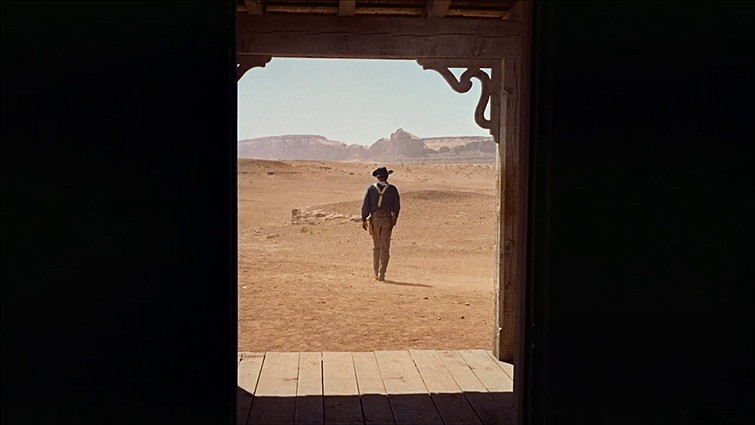 Image from The Searchers via Warner Bros.
If we go back to the beginning (of the article) and look at the video essay again, it’s easy to find many parallels between opening and closing shots of famous and successful films. This is important to note as it demonstrates that these filmmakers are very mindful of these first and last impressions and the correlation between the two. It’s only when we see them side by side do we realize what the subtle differences are and what they might thematically mean for their stories, which we would only subconsciously register when we view the films all the way through. This is perhaps best exemplified by the famous last shot from John Ford’s The Searchers, where we see the symbolic parallel to the beginning and how that affects our understanding of the character and the film.