
Filming conversational scenes can be tricky. Let’s look at how to use a wide-angle lens and NOT cause distortion.
You could easily argue that there’s a generic focal length used for filming everyday conversations. The favorites are 35mm, 24mm, and 50mm. Of course, these focal lengths somewhat increase if you’re using a sensor outside of full-frame, but I would say these are the median focal lengths for standard character moments.
However, sometimes diverting away from the norm can produce interesting results.
Recently I posted a Pocket 6K Pro video on my channel, UglyMcGregor, and received several comments regarding the lens for the shot within the thumbnail.
“Was it anamorphic? Vintage? Custom?” These were only a few questions I received about the image.
However, it wasn’t the result of these lenses. I filmed the test short with a modern Sigma lens. The reason why it looked different than normal is that I used a 14mm wide-angle lens.
Wide Angles Don’t Cause Distortion . . . Kind of
14mm is regarded as an ultra-wide-angle lens as its field of view is extreme. For landscapes, architecture, and astrophotography, such a focal length is perfect for encapsulating the entire surrounding.
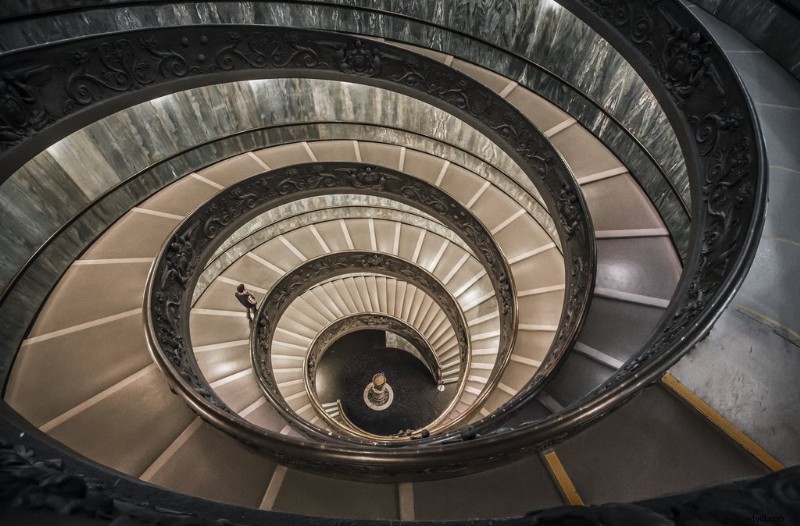
However, for conversational scenes, it’s not entirely practical. In fact, when we think about using an extreme wide-angle for filming or photographing people, we conjure images like this:
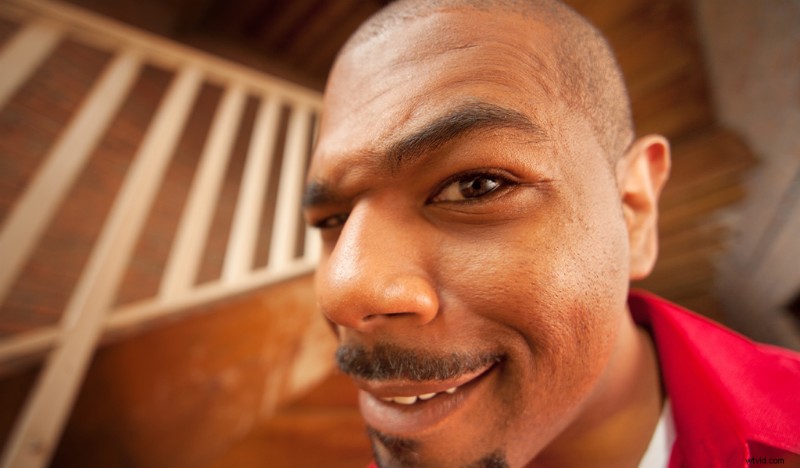
Typically, we don’t gravitate towards wide-angle lenses for filming conversational scenes or portrait shots because people often associate wide-angle lenses with distortion. Which is true, a wide-angle will further emphasize perspective distortion.
Additionally, because of how the lens is designed for the image to fit the sensor, wide-angle lenses will often have radial distortion with a barreling effect (curves towards the edges).
In photography and cinematography, perspective distortion is a warping or transformation of an object and its surrounding area that differs significantly from what the object would look like with a normal focal length, due to the relative scale of nearby and distant features.
However, perspective distortion only occurs to a notable degree when the subject-to-lens distance is relatively small. The wide-angle itself doesn’t distort—if that were the case, everything captured with a wide-angle would distort. But it’s not, simply because of the subject-to-lens distance.
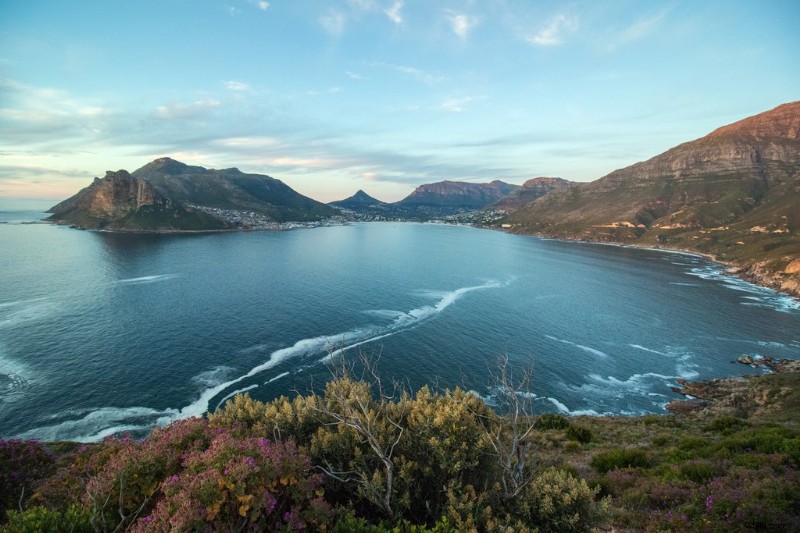
Take the landscape shot below for example. Even though the photographer captured it with a wide-angle, there’s no visual distortion to the image. That’s because the distance of the landscape is far away.
Meanwhile, in the case of the male model above, we can see that the camera is practically in the face of the model. As a result, there’s a noticeable distortion to this face with the left-side of his face being abnormally large.
Shooting Close-ups
So, the wider the lens, the smaller and further away the background appears from the subject. If we couple this with a shallow depth of field, this is where we can start to create some interesting imagery.
If you’re filming at a location that has a variety of interesting background textures and light pools, such as a forest, and not against a boring white wall, you’re going to obtain beautiful swirls of bokeh. But, because the background appears further away, and not necessarily compressed as if using a telephoto lens, we have the entirety of the background visible in a mid-closeup.
Now, to fill the composition with a mid-shot, you’re going to have to get in close to the talent. Not too close as to cause perspective distortion on the facial features, but close enough where they’re the main component of the composition.
It’s not entirely practical to always have the lens and camera quite literally in the face of the talent. So, when it comes to moving shots, anything fast, or handheld, it’s not going to work well.
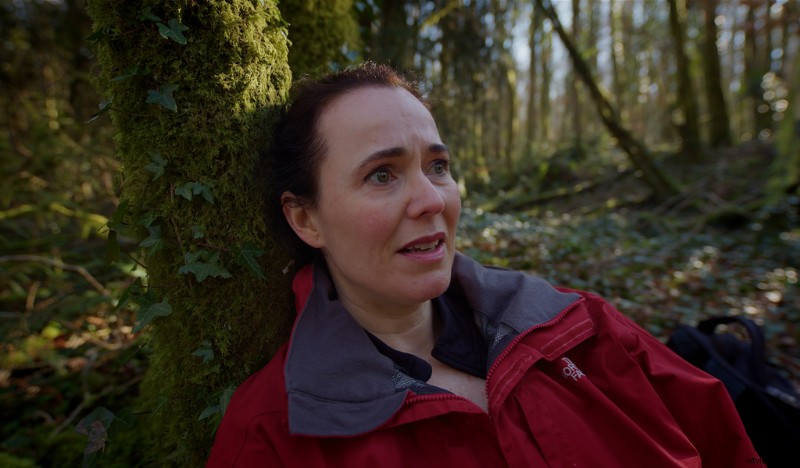
Additionally, an extreme wide-angle, like 14mm, is also going to have a form of radial distortion. As previously noted, this is typically a barrel distortion at wide angles.
This distortion occurs because the lens’s field of view is much wider than the size of the image sensor, and it needs to be mapped to fit the image area. Because of this, straight lines noticeably curve inwards, which is typically easier to notice towards the edge of the frame. The center of the frame remains somewhat untouched by comparison.
Now, when coupled with making the background appear further away, knocked out of focus with a wide aperture, and having your talent close to the lens, you obtain this wonderful image with distorted, yet out of focus, edges. And, it creates an image that gets people on YouTube asking: Is this a vintage lens? And, I love this look.
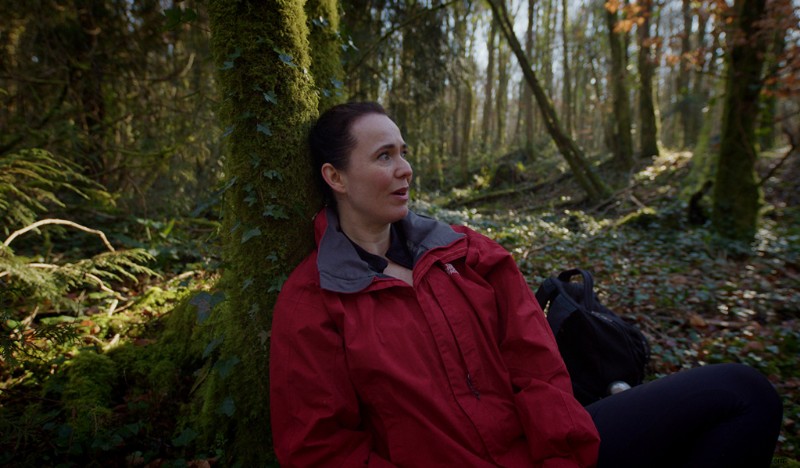
However, one thing to note is that with the barrel distortion to the edges of such a wide lens, you couldn’t have someone to the side or have someone walk across. We’d see that distortion on screen.
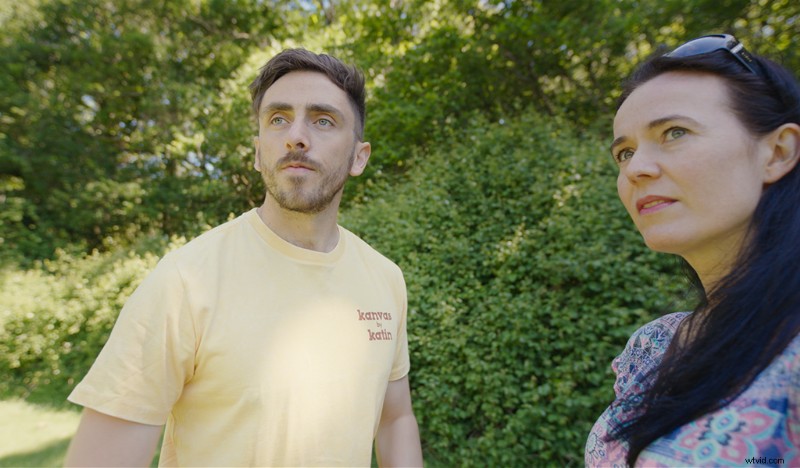
Below, we can see that the actress’ face has been widened, whereas mine remains relatively normal.
For more tips on lenses, check out these articles:
- Lens Basics: 16-35mm or 24-70mm for Video?
- Gear Review: Venus Optics Laowa 24mm Probe Lens
- How To Mod Your Own Lenses on The Cheap (Anamorfake)
- Old-School Looks: The 5 Best Vintage Lenses for Under $250
- 5 Easy Ways to Keep Your Lenses from Fogging up