
“It’s the easiest job in the world,” actor Chris Rock, who voices Marty the Zebra in the Madagascar movies, once said about voice acting. That’s not an uncommon perception of those who give life to the characters in animated movies. We’ve all watched a behind-the-scenes DVD feature where an actor is standing in a sound booth and casually delivering variations on the same line of dialogue into a microphone. Seems easy enough, right?
Not really. There is a fine art to great voice acting. Like any form of creativity, there are core qualities that lead to exceptional work. We asked four animation experts — a casting director, a voice actor, a historian, and an author — to take us through some of the best voice performances of the last 25 years and illustrate what defines exceptional voice acting.
Make An Audience Care: Jack Black as Po in Kung Fu Panda
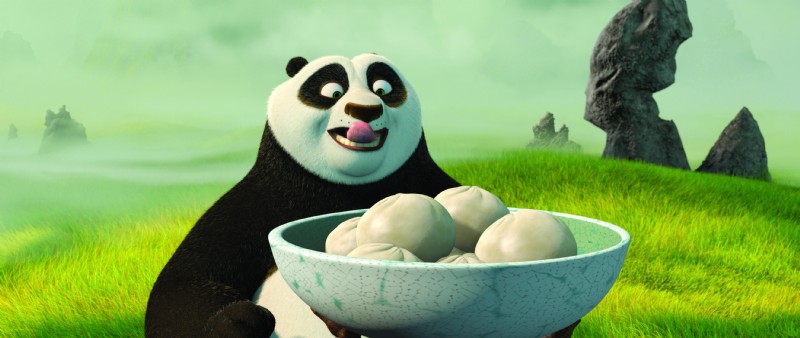
“For any character or voice, it all comes down to, do we care?” says Jerry Beck, an animation historian and an author of more than 15 books. “Do we relate to this guy? Can we hear him think through his voice? Do we get what he’s doing, what his motivations are? A really good voice actor can impart that.”
For Beck, Jack Black in Kung Fu Panda playing Po, the dumpling-loving panda who has to learn martial arts, captures that key quality of a great performance that instantly connects us with a character.
Black brings to the affable panda a relentless enthusiasm for the world around him — and martial arts, in particular — that is not just endearing, but instantly recognizable to any of us who have geeked out over anything. “He’s such a fan boy,” Beck says. “He’s that guy, and it comes through in his voice and how he acts. It’s vocal acting. You can hear the excitement.” It’s that enthusiasm in his voice, like in his final battle with the movie’s villain, that allows us to share it and connect more deeply with both Po and the film.
Emphasize the “Acting” in “Voice Acting”: Tom Hanks as Woody in Toy Story
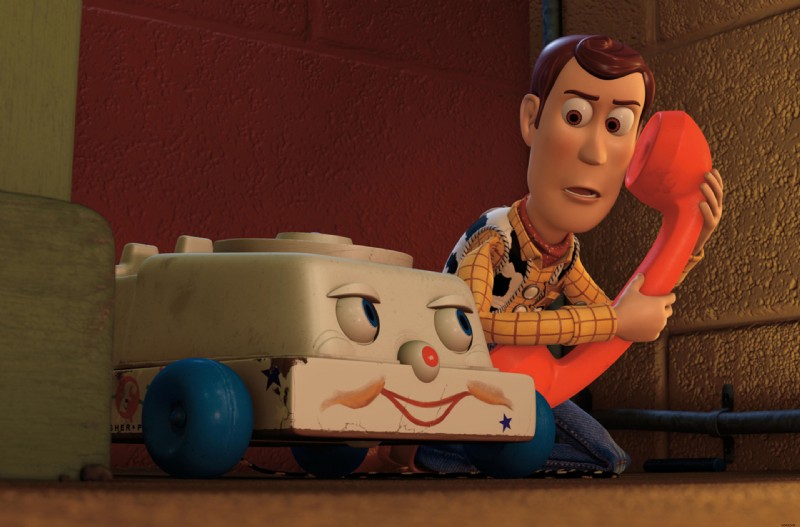
It can be tempting to put all the emphasis on the “voice” part of the “voice acting” profession. That would be a mistake.
“Having the voice doesn’t mean anything,” says Beck. “You have to be an actor first. You have to know what acting is. You have to study.” That’s one reason Tom Hanks’ performance as Woody in the Toy Story series stands out. Think of any moment when the beloved cowboy gets emotional — angry, hurt, concerned, heartbroken — and you can detect Hanks’ acting range at work. His ability to personify a cartoon to the extent that viewers forget about the actor doing the voice work and instead think, “That’s Woody talking,” helped millions of kids (and their parents) connect emotionally to Toy Story.
That’s because Hanks does the same thing for voice acting that any other acting job would call for, says Josh Spiegel, author of Yesterday is Forever: Nostalgia and Pixar Animation Studios, and co-host of Disney-centric podcast Mousterpiece Cinema.
“When you watch literally any good performance in a live-action film, you’re not thinking about the actor playing that character. You’re watching that character come to life,” he says. “The good voice-over performances are the ones where it’s equally inseparable: the actor and character are one and the same.” That can only be achieved if a performer is willing to devote their actor selves to bring their character to life, particularly for actors like Hanks, whose recognizable voice barely changes from one character to the next. “The thing that an actor does, in the depth of his creative soul, is create something that lives in its own space,” says Brian Cummings, a professional voice actor (DuckTales, Beauty and the Beast, G.I. JOE) for more than 30 years. “It’s almost as if a character himself takes control of the instrument: You.”
Put Love Into The Work: Ellen DeGeneres as Dory in Finding Nemo and Dory
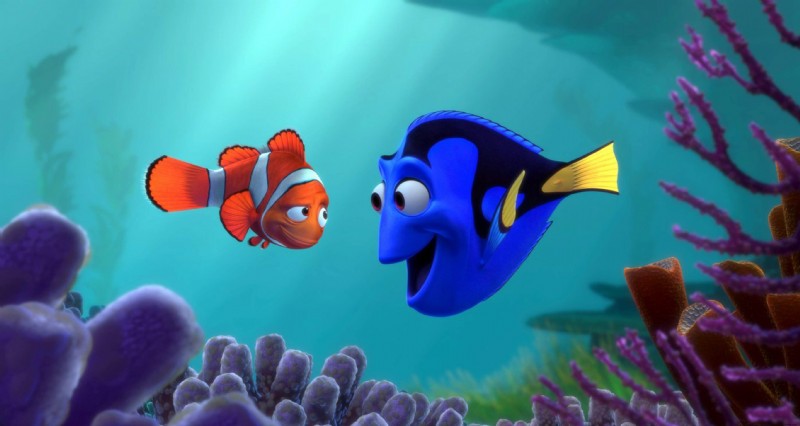
No matter what the art, enthusiasm matters, and voice acting is no exception. “I think joy and passion is what makes a successful performer,” says Cummings. He points to Ellen DeGeneres’s performance as Dory in Finding Nemo and Dory as a good example of how that manifests. “In everything that she does, you can tell that she’s really overjoyed to be there,” says Cummings. “She infects the character with that.” Whether Dory is speaking whale, or encouraging herself to just “keep swimming,” there’s a joy that doesn’t just belong to the character, but also to DeGeneres.
That’s not all she brings to it, of course. Spiegel points to a scene in Finding Nemo in which Dory pleads with Marlin (Albert Brooks) not to leave her as an example of DeGeneres digging deep into her acting chops. “There’s a desperation in her voice. That’s something you have to work towards,” he says.
But what makes DeGeneres’s performance shine most of all is the fun she has while doing the voice acting. “If you look at the people who do this, and do this well, they may be wonderful and brilliant to your mind, but they’re still in their process out of the sheer love of doing the work,” says Cummings. That, whether it’s Eddie Murphy in Shrek or Patrick Warburton in The Emperor’s New Groove, can do wonders for creating a memorable performance.
Serve a Character with Natural Talents: Robin Williams as The Genie in Aladdin
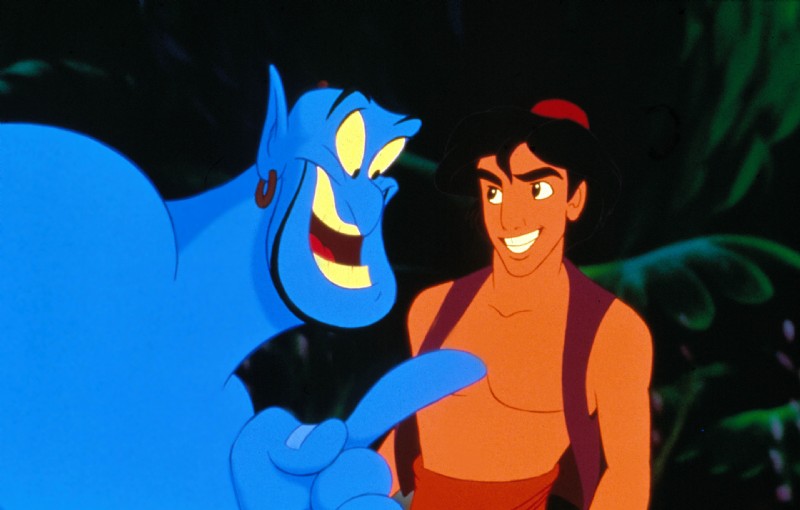
An occasional criticism lobbed at celebrities voicing animated characters is that some just play themselves without applying much acting to the process at all.
Sometimes, however, that can work. Take Aladdin: You never forget that the Genie is Robin Williams, but you also never forget the performance. That’s because even though Disney simply used the actor’s natural voice and abilities — his hyperkinetic comedic speed, manic vocal fluctuations, quick-fire impressions — it did so because it fit the character. “He was, in a way, an animated character himself. He was like an old school Looney Tunes character,” says Spiegel of Williams. “They’re just filtering his maniac sensibility into the medium where it almost feels like he belonged to begin with.” In doing so, Disney and Aladdin demonstrated not just the importance of understanding what an actor’s given skills are, but also how to embrace and use those skills to create an exceptional performance.
Treat Animation Like It’s Real: Amy Poehler as Joy in Inside Out
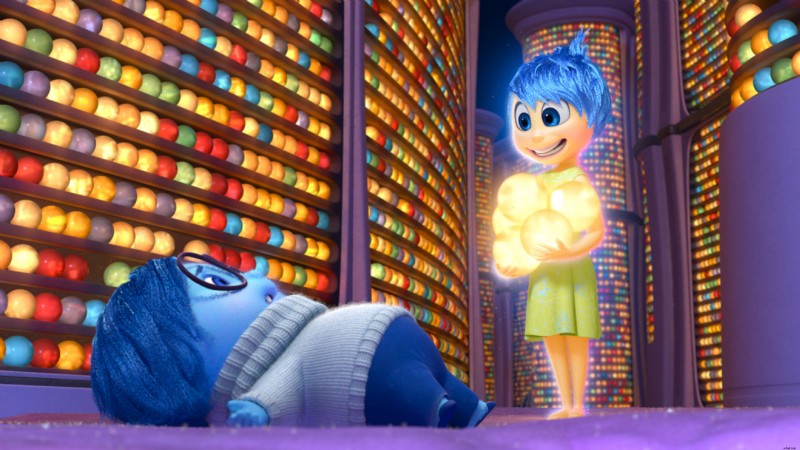
Considering how far removed from reality most animated movies can be, it could be easy for some actors to treat it like it’s fake. Amy Poehler’s work as Joy — a living emotion — in Inside Out shows what can be achieved when you don’t. That’s especially true when her usually exuberant character finds her meticulously controlled world start to crumble. “When it eventually turns darker, and more emotional, I think she fills that character with so much life,” says Spiegel. He cites one scene where Joy is at her lowest moment, trapped in a seemingly inescapable place, and realizing it’s all her fault.
“The emotion that she reaches, even just hearing her sobbing — that’s the kind of work that pushes it beyond,” Spiegel says. “She’s able to sell you on that sense of being at the worst possible point in her life.” For Jen Rudin, a former casting executive at Walt Disney Animation and author of Confessions of a Casting Director, that achieves one of the most impressive qualities of great voice acting. “Her emotional performance feels so real, that nothing about it feels animated.”
Let the Voice Carry the Story: Holly Hunter as Elastigirl in The Incredibles
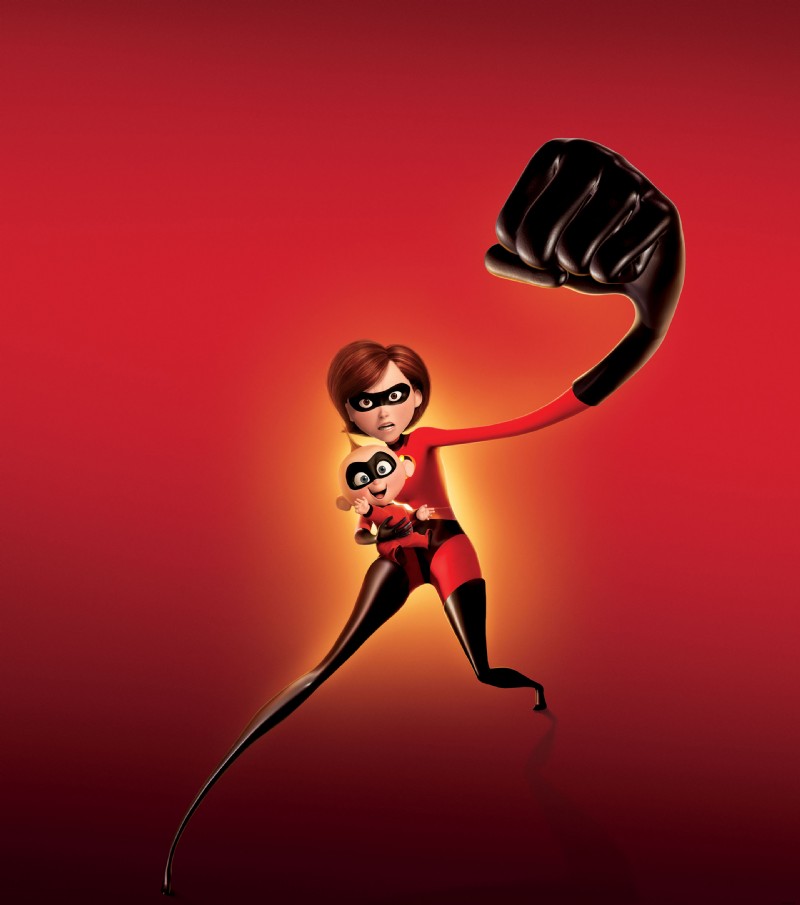
“What defines a really great voice-over performance is that, when we close our eyes and listen to the voice, we feel like we’re right there in the story — in the moment-by-moment of the actor going through their journey,” says Rudin.
There are a lot of journeys in The Incredibles, namely individual, familial, and thematic ones, and nobody conveys all of that better than Holly Hunter as Helen Parr, aka Elastigirl, a forcibly retired superhero who is now a housewife and mother. The Incredibles is undoubtedly a fun superhero movie, but it’s also a mature one about mid-life crises, parenthood, family responsibility, marriage, and other hallmarks of adulthood. Hunter’s performance conveyed a deep understanding of these issues and of her role in the film. She knows her performance’s responsibility and devotes herself to it, demonstrating a quality Rudin greatly admires: “I love that you can just concentrate to listening to the story they’re telling in their voice.” In The Incredibles, Hunter demonstrates not just how important it is to do so, but how to do it right.
A Bonus Checklist of What Great Voice Actors Should Have
The qualities outlined above are just a few of the many that are required to create a great voice acting performance. Rudin offers a checklist of what she looks for when casting someone for a voice-over role: “The ability to have a great imagination in a recording studio, the ability to have the endurance that you need to record for four hours at a time, energy, the technical and proficient way to pitch your voice to make it sound real — like you’re running through the woods, or in a duel. You have to be able to tap into really specific parts of your voice in order to create those sounds,” Rudin says.
And most of all? “Somebody who can tell the story with just their voice and make it seem real and appealing. That’s what’s going to make it stand out.”
Top photo of Finding Nemo. Moviestore Collection/REX/Shutterstock.