
We live in a time where photography cameras can shoot video that rivals even the best video cameras. Because of this rise in quality many videographers opt to purchase a DSLR or mirrorless camera instead of a dedicated video camera. This is a great option if you are an all-purpose creative person, but shooting video with photography lenses can pose a few difficulties. While you can certainly capture good footage with both types of lenses, below are five reasons to choose a cinema lens over a photography lens on your next shoot.
1. Cine Lenses are Designed for Cinematic Usage
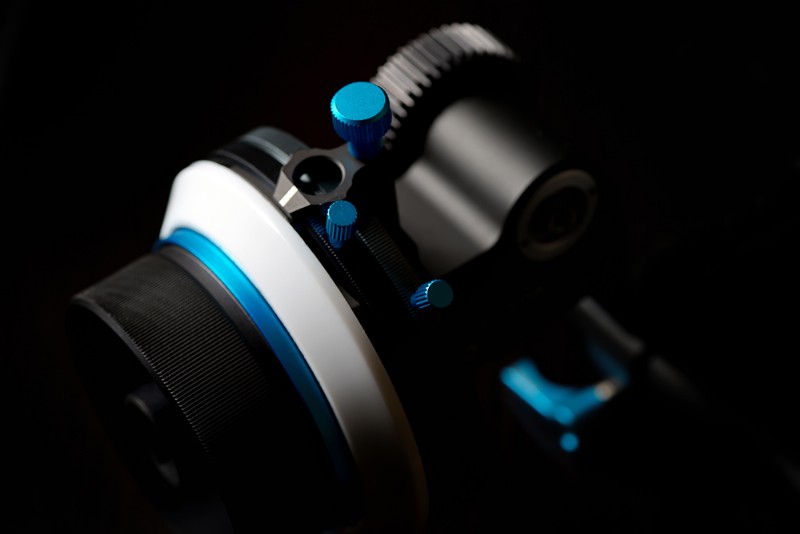
Photography lenses can produce great images, but they weren’t intended to shoot video or films. Cine lenses are great for videographers and filmmakers alike because they are specifically designed for shooting video. For example, they have gear rings on the outside that allow you to attach a follow-focus system. A follow-focus system makes it easier to focus on your subject while holding onto a rig such as a shoulder rig or a tripod. Needless to say, this is an important tool to have when shooting video.
Cine lenses are also designed without plastic elements protruding off the end. Photography lenses include these small pieces to protect from bumping against things like walls or tables, but in cinematography this is not an ideal feature because it makes it difficult to put your camera into a rig.
Another useful feature is the focusing charts engraved on the outside of the cine lenses. These charts let you see exactly how far the focus wheel needs to be turned in order for your subject to be in focus. While you never want to use the focus guide over an on-set monitor, it can be a helpful tool for blocking out your focus points.
2. Cine Lenses Focus Smoothly
Unlike photography lenses, cine lenses don’t have autofocus motors. Even if you’re in manual mode on a photography lens, you still must push the autofocus gears while focusing, which produces results that aren’t entirely smooth. Instead, cine lenses only have manual focus capabilities, making focusing much smoother. This is especially handy when rack focusing.
3. Cine Lenses Have De-Clicked Apertures

Photography lenses have what is called clicked-aperture. This means that photography lenses will jump between f-stops. If you’re taking photos this is a fine because you’re only ever capturing a single moment, but for video it can pose a problem. For instance, if you want to go from indoors to outdoors you can’t simply jump from one f-stop to another because it will be jarring to the audience. It’s much better to have a smooth aperture ring where you can easily transition from a dark space to a lights paste. This is where cine lenses really shine above photography lenses.
It should be noted that you can de-click most photography lenses as long as you have a lens maintenance kit. Just keep in mind that this may void any warranties you have on your lens.
4. Cine Lenses are Durable

Typically, photography lenses are made from a combination of plastic and metal, whereas cine lenses are almost exclusively created out of durable metals. Their rugged design means they are weather sealed to protect the lens, making them a great choice if you are working on shoots in uncontrolled environment: If your lens is accidentally exposed to the elements the weather seal should protect it from water and dirt.
5. Cine Lenses are Easy to Fix
Cine lenses, unlike photography lenses, are created to be easy to take apart and maintain. While photography lenses have motors and electronics on the inside, cine lenses are created in a more mechanical fashion. By using a simple lens maintenance kit you can take apart just about every cine lens in the world.
If you liked this post, please let us know in the comments below. And for more great video tips, check out our post on creating corporate video!
Top image by Alexander Kirch