
Cinema glass has always been way more expensive than still camera lenses. Combined with the cinema camera sensors these high end lenses provide an image that's far superior to DSLRs capable of recording video. But yet, there are decent films created with DSLRs with still camera lenses. I'm not going to compare the glass quality here. I'm about to talk only about this peculiar T-stop measure on the cinema lenses while still camera lenses have an f-stop. Why should they differ?
Light Meter Reading vs. Desired Exposure
Both measurements relate to the theoretical amount of light that enters the sensor through the lens. How many of you have noticed your light meter tells a reading that's slightly off by a third or two-thirds of a stop on your reference monitor. Most of the time we either ignore it and fix it in post, or we simply change the aperture on the lens to compensate for that. This mostly happens with still camera lenses; even with high end ones. For example, you measure f/4.0, but on your monitor that's too light, so you change it to f/4.5, and it's just fine.
This also happens with the camera sensors. Not all camera sensors are the same and ISO 200 is not the same for every camera. You may have ISO 200 based on the light meter reading accurate on one camera and slightly off as exposure on another.
Why Accuracy Is Critical In Cinema
Knowing that the combination between lenses and camera sensors can lead to light meter readings inaccuracy, makes the manufacturers of cinema lenses to be more careful about their lens measurements on the barrel. When shooting video footage it's far more complex, as you may know. You have lots more people involved and for every scene you roll cameras and sound. You need more light in terms of power consumption and more expensive camera sensors; the whole industry is a lot more expensive. There are scenes you shoot on different days and different places, and you need them to be matched as exposure. Fixing the exposure in post costs more, and for a feature film you may find it's cheaper to use cinema lenses instead of paying for the post work. You may do that because cinema lenses are more accurate with their aperture measurements. The T-stop is exactly for that purpose.
T comes from "transmission". Every cinema lens is individually tested and T-stops are marked specifically for it. When your light meter tells you 4.0 it's a T 4.0 exactly on that lens. That's one of the reasons the production of a cinema lens is more expensive. When using different cinema lenses for the same or related scenes, you will can get the same exposure every time trusting your light meter readings.
As funny as may sound to you, cinema lenses help to lower the production cost on big budget projects.
Can't We Use Still Camera Lenses?
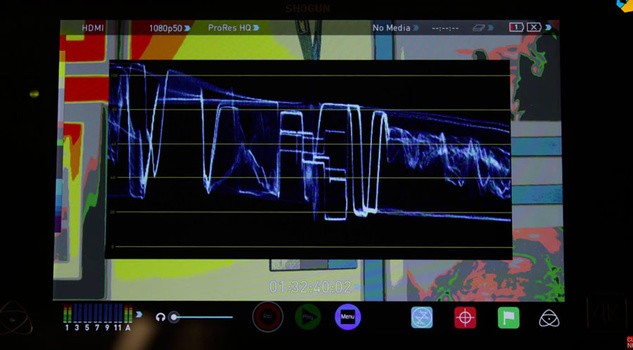
We can absolutely use them! Although we can rent expensive cinema glass for some low budget projects, it may not be necessary. Yes, we will not have the quality of that glass using still camera lenses, but compensating for the exposure readings is much easier today with digital cameras. We can always do this by checking our histograms, wave monitors, using our internal camera meters, and calibrating our light meters to the lenses we use. The difference between an f-stop and a T-stop is, most of the time, up to a third of stop. If the image quality of the still camera lens is good enough for the project we can surely go with it for our video production.
If you want to see more videos like the one above, check their YouTube channel.