
Creative directors, in‑house studios, agency leads, and photographers all face the same question: how to embed AI into their production pipeline while meeting brand standards. Over the past six months, we’ve refined a solution for hundreds of enterprise creative teams on invideo, addressing recurring concerns such as memory management, consistency across variants, and the ability to iterate on what already works.
Case Study: Uniqlo Linen SS’26 Collection
We’ll walk through every step, model decision, and cost point for this campaign—from the hero film to BTS, trial‑room UGC, and outdoor UGC—showing how a single brand brain can drive four formats with a single workflow.
Building the Brand Brain
The foundation is treating the AI agent as a collaborative partner, not just a prompt box. Proper onboarding determines the quality of all downstream content.
Step 1: Feed the Agent Four Key Inputs
- Campaign Brief – A broad overview of the objective. For Uniqlo, "performance ads for the Linen Collection." No shot lists or scripts yet.
- Brand Language – Visual guidelines, identity, voice, tone, palette, and music sensibilities from the brand book. This keeps output true to the brand rather than generic.
- Product Catalogue – Detailed images of each outfit from multiple angles, under varied lighting. Linen fabric behavior is critical, so exhaustive visuals are non‑negotiable.
- Treatment Note – Camera language, lighting, composition, and explicit “don’ts.” We provided a reference ad and a list of prohibitions such as “no plastic‑looking fabric” and “no AI‑looking humans.”
Once loaded, Agent One locks all rules into project context, eliminating the need for reminders or re‑briefs throughout the campaign.
Creating a Product Film Ad (Ad #1)
This flagship piece must showcase fabric, fit, and feel while reflecting brand identity.
1. Intent‑Based Briefing
We described the desired energy—"fun summer linen showcase"—and attached a reference video. The agent’s clarifying question, "Are we thinking of friends on a summer day?", mirrors a seasoned creative director’s alignment check.
2. Casting & Wardrobe
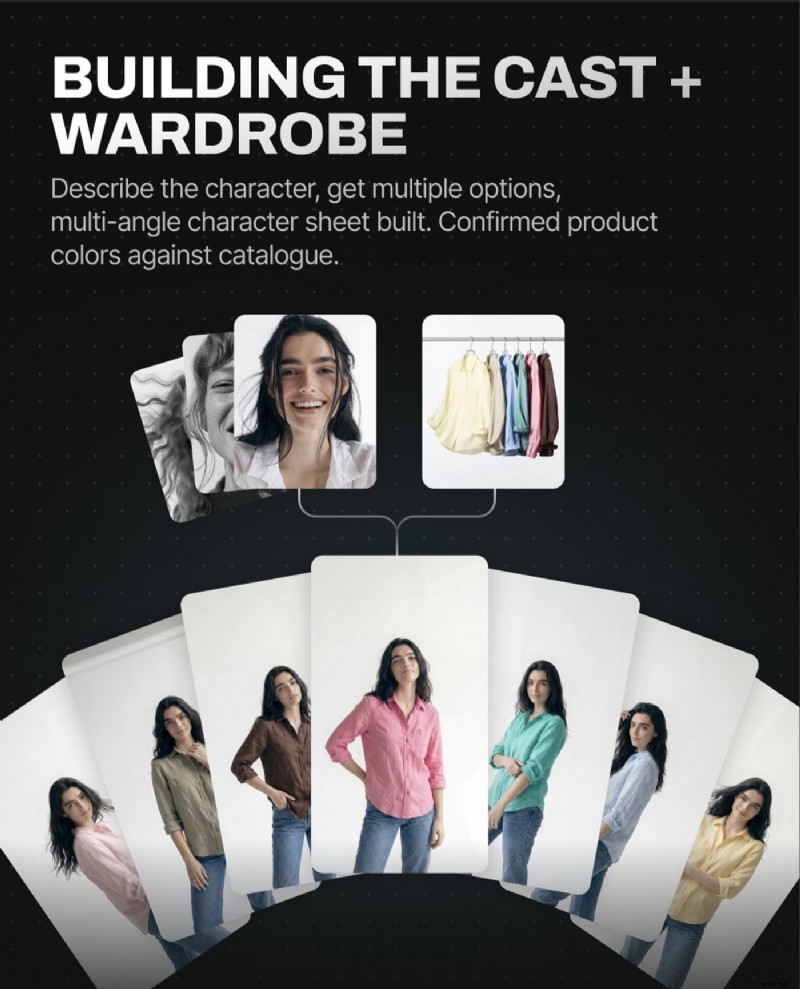
AI-generated characters aligned with the U.S. market were created using Recraft, then upscaled with GPT Image 2 and Nano Banana 2 to ensure realistic skin texture. Full multi‑angle character sheets were saved in context.
3. Storyboard Generation
The agent produced multiple storyboard options, automatically self‑reviewing to correct anatomical errors before presenting them.
4. Clip Production
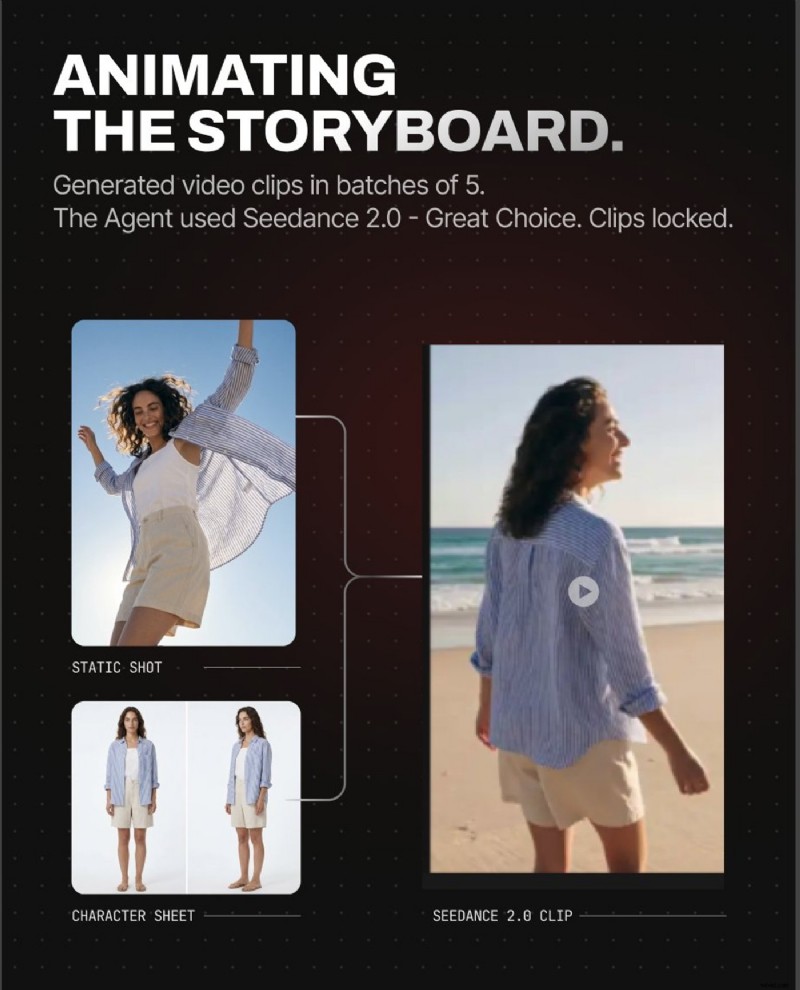
Clips were generated in batches of five, using Seedance 2.0 unless a specific model was requested.
5. Voiceover & Music
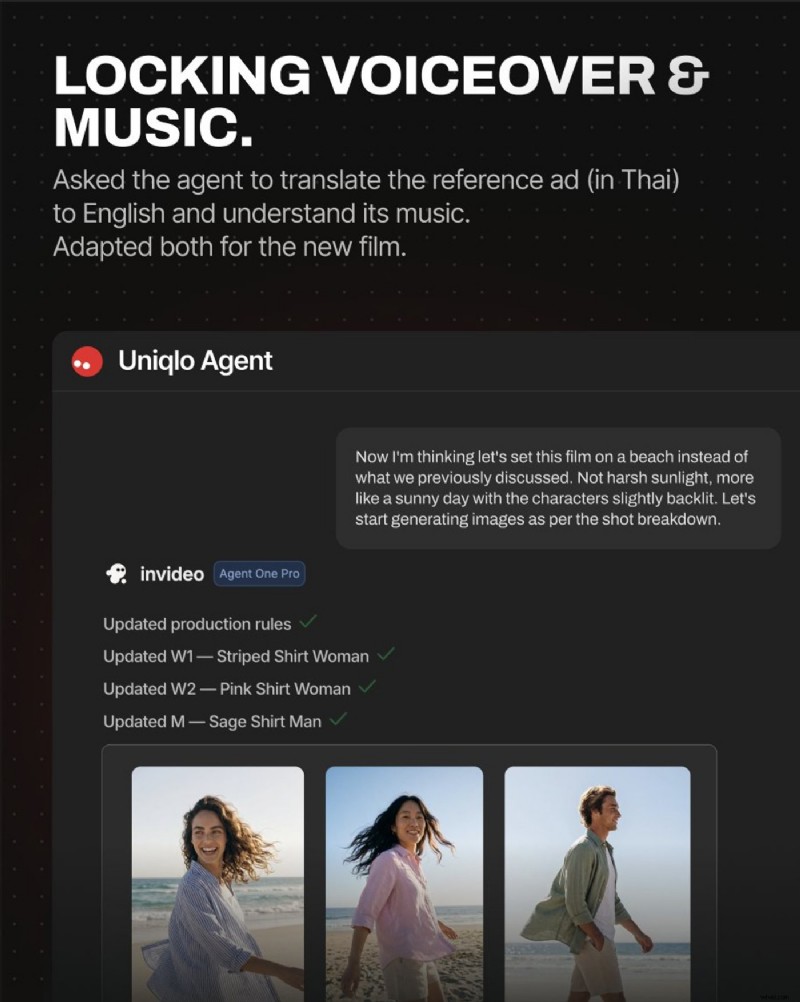
Existing Thai market music was adapted for the U.S. cut, and the voiceover was translated in a single exchange.
6. Editing & Iteration
After initial cuts in Premiere Pro, we pivoted from a rooftop to a beach setting—an entire storyboard re‑generation with the same cast and wardrobe, proving the model’s agility.
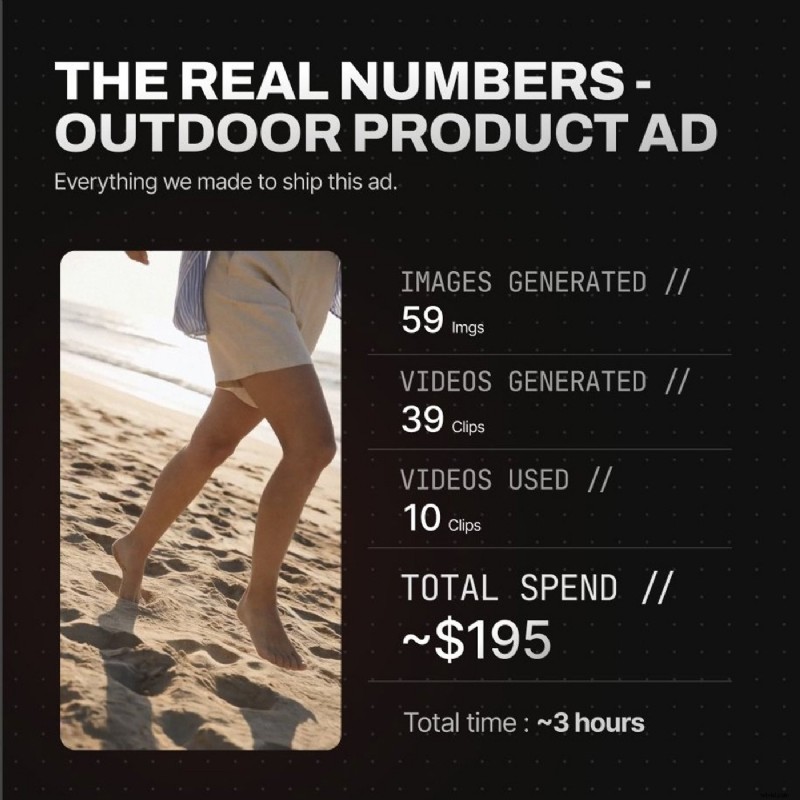
Cost Overview
BTS Product Demo Ad (Ad #2)
Must not fail on the hero film; must succeed in follow‑up variants.
1. New Agent Within Same Project
We spun up a second Agent One, reusing the visual guidelines and catalogue without re‑uploading, ensuring separation between hero and BTS workflows.
2. Cast Reuse & Wardrobe
The agent automatically suggested reusing hero cast and selected desired outfit colors, maintaining brand coherence.
3. Camera Direction
Dynamic movements—slightly Dutch angles, push‑ins, pull‑aways—were specified, yielding 5‑second clips that emphasized propulsive storytelling.
4. Music & Editing
We selected upbeat, clean music from Google Lyria 3 Pro and integrated it in Premiere.
Cost Overview
UGC Trial Room Review Ad (Ad #3)
Self‑produced feel is essential; any polished brand look undermines authenticity.
1. Dedicated Project
Mandatory mandates: no locked palettes, mandating raw references to achieve realism.
2. Hook Development
Generated 2–3 hook options; we chose a one‑take reaction to fit and feel for A/B testing.
3. Set & Cast Finalization
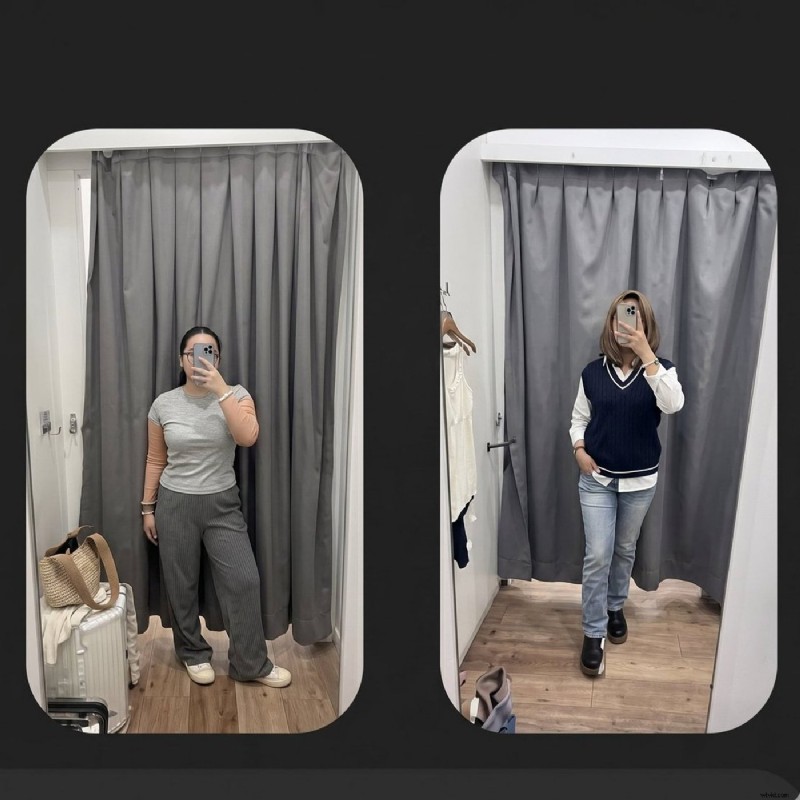
We supplied a real Uniqlo trial room photo and fine‑tuned facial features until the AI character appeared indistinguishable from a real customer.
4. Model Comparison
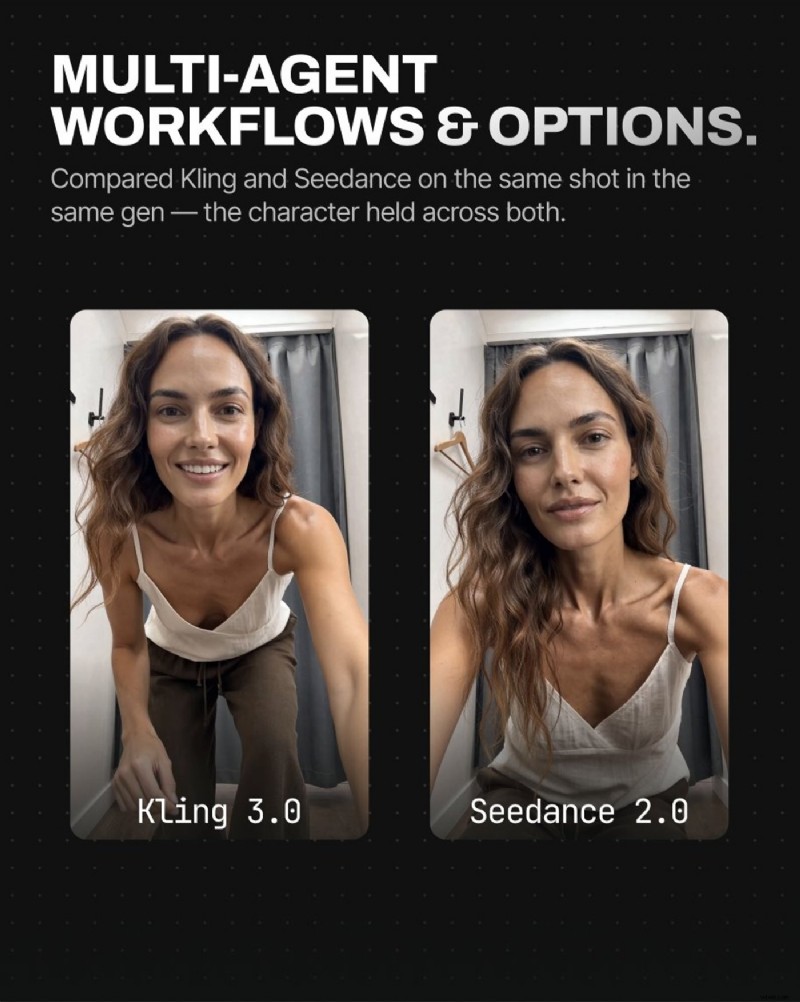
Generated identical clips with Kling 3.0 and Seedance 2.0; selected the version with superior motion.
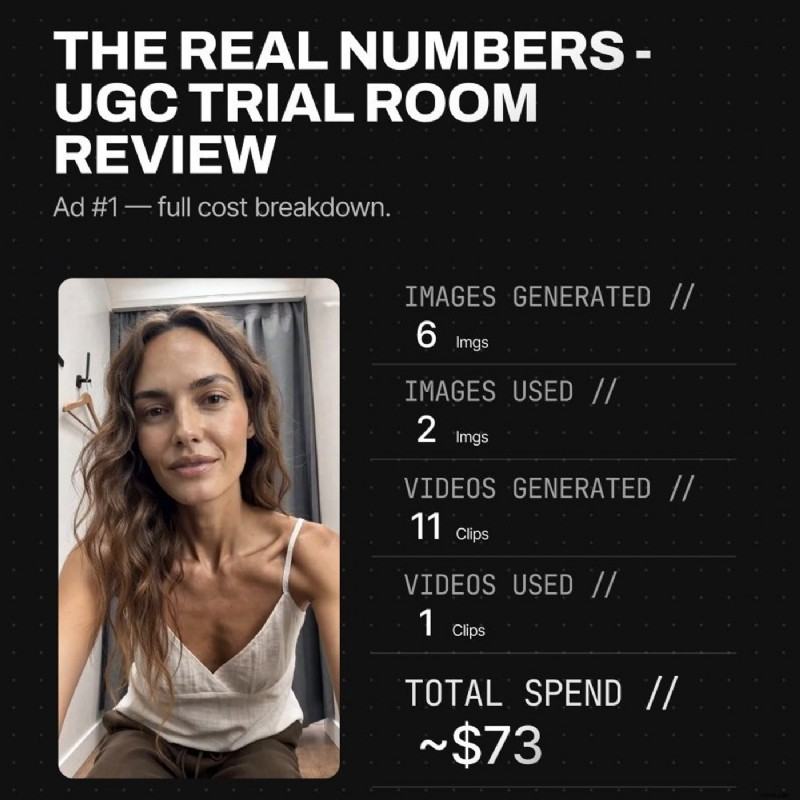
Cost Overview
Outdoor UGC Ad (Ad #4)
Simulated iPhone‑style footage with natural light and a clear backdrop.
1. New UGC Agent
Briefed the agent: VO‑driven, outdoor, iPhone aesthetic.
2. Learn from Best Ad
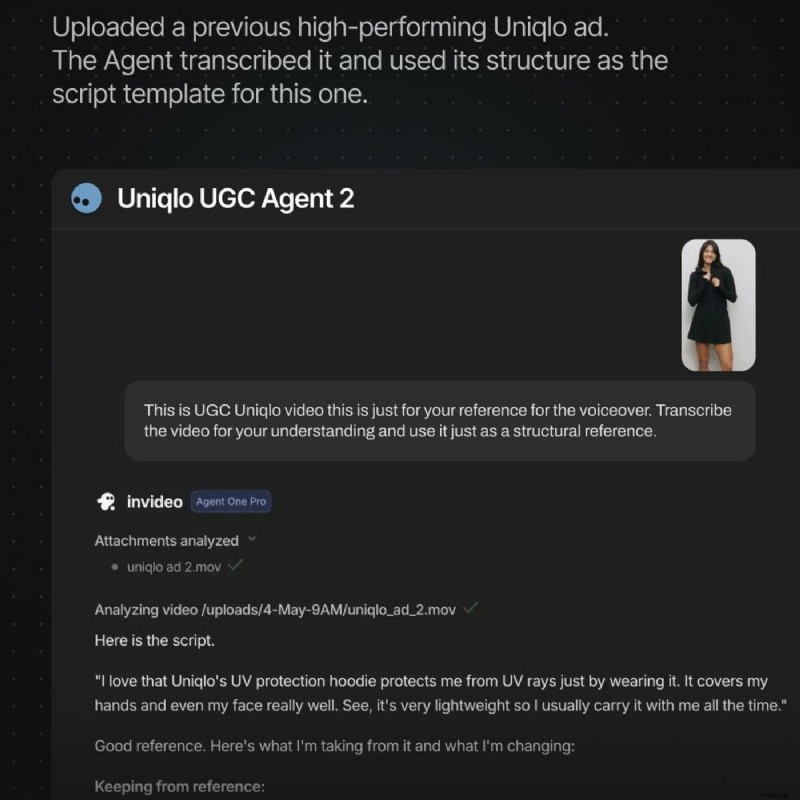
Uploaded a high‑performing UGC ad; the agent transcribed and emulated its structure—hook, pacing, reveal, close—while adapting the content.
3. Anchor Frame & Cast Refinement
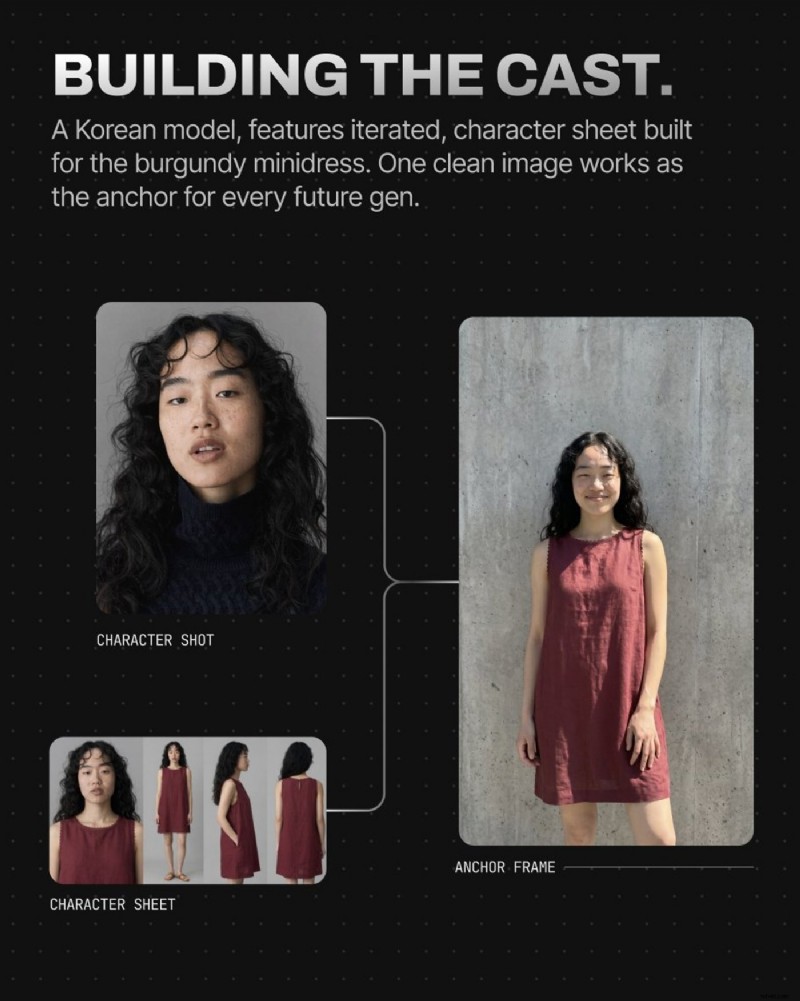
Generated a clean anchor image of the locked character to maintain consistency across clips.
4. Voiceover, Music & Edit
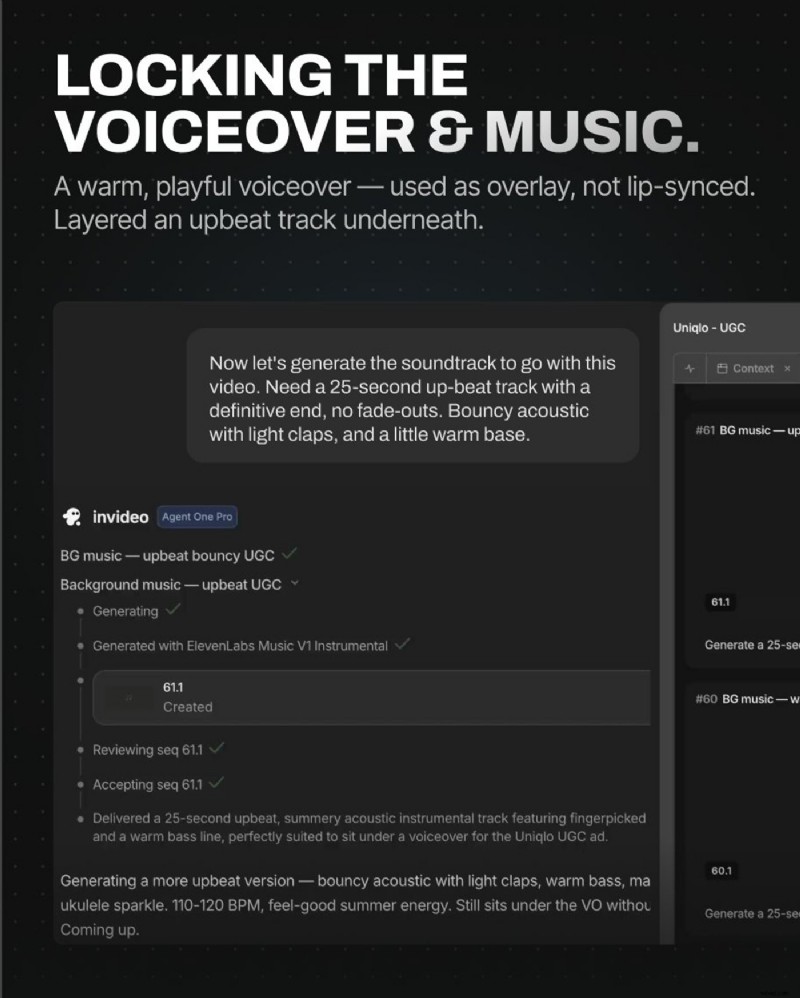
Selected a warm, playful soundtrack; collaborated until the tone matched the brand voice.
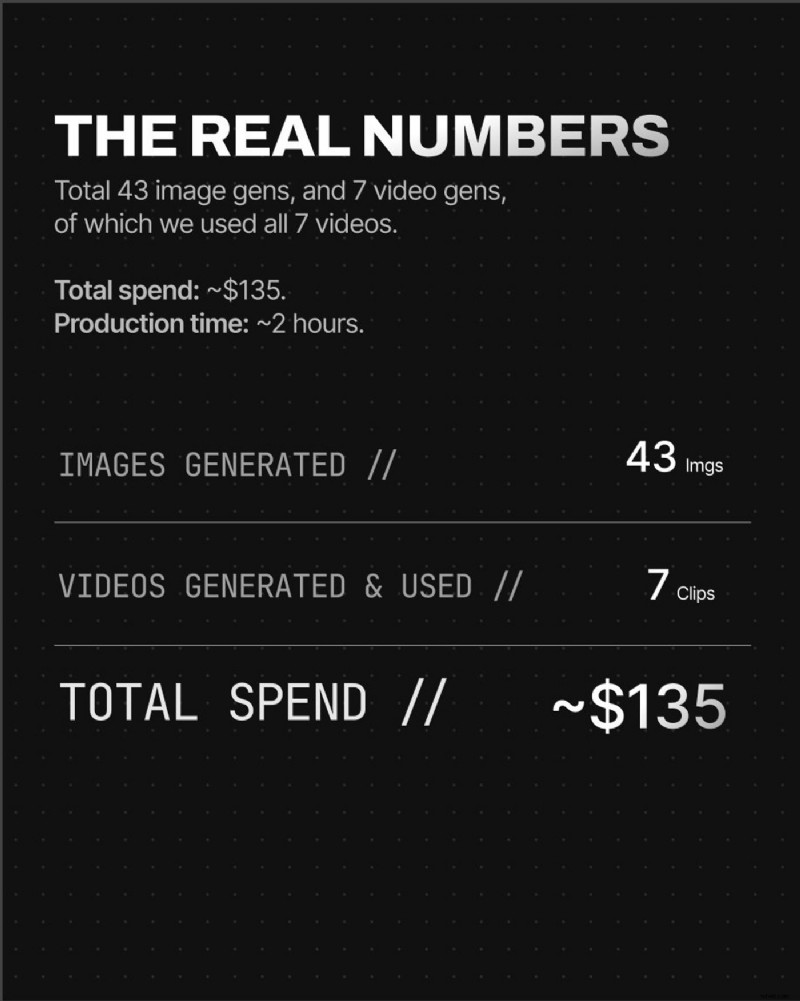
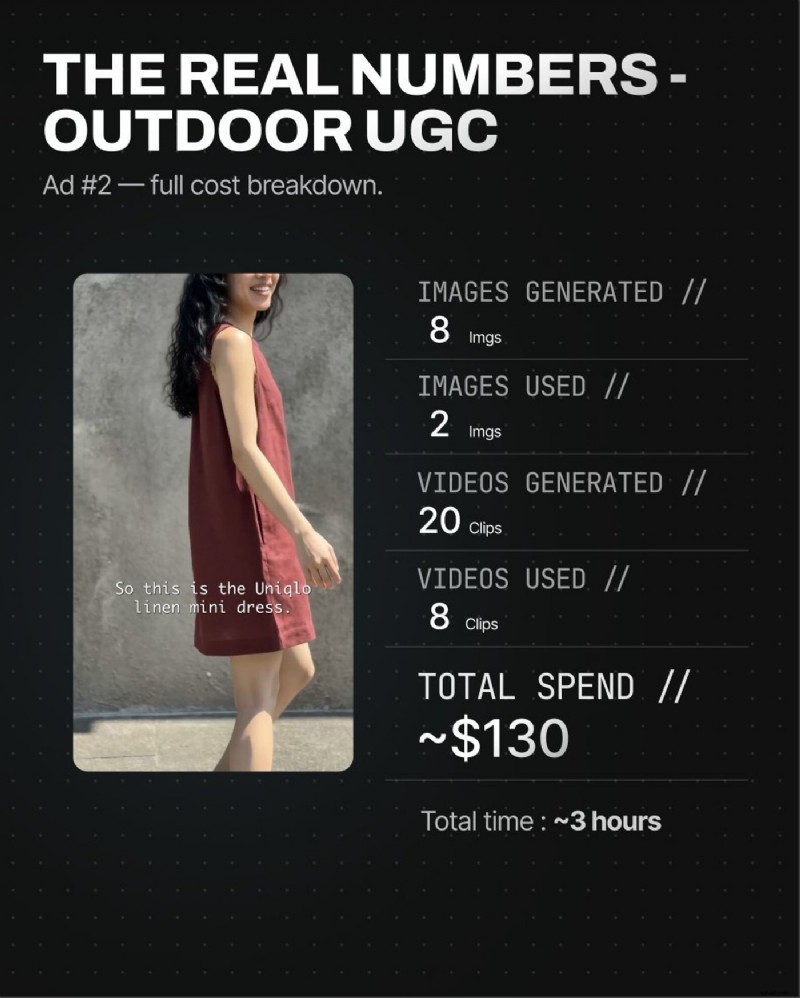
Budget Snapshot
Impact on Creative Operations
By integrating all four ad formats into a single project, we achieved:
- 5x faster production compared to agencies briefed per variant.
- Seamless iteration—creative pivots become a chat, not a reshoot.
- Rapid feedback loops—data‑driven iterations happen within weeks, not months.
Brand teams that internalize this workflow gain a reusable brand brain: every new piece of work accelerates the next. If you lead a brand team, start a project on Agent One, load your brand context, and watch your next campaign launch 5x faster.
For a full 20‑minute walkthrough, follow every chat, iteration, and model decision—link in the comments.