
On any particular project, you can’t always control when great ideas will strike you, or even if they ever will. What you can do, is know all the footage better than anyone else and, thereby, give yourself the best chance for those brilliant inspirations to strike.
Story-telling Short Cuts
Trailers use a variety of tricks to tell the story of a film in only two and a half minutes.
Technique #1: Juxtaposing Lines
For instance, you might see or hear one character speak but the responding character’s dialogue will be from a completely different scene.
This juxtaposition allows for short-cuts that often cannot be accomplished by using only the dialogue as it plays out in the movie. The source material may have 15 minutes and multiple scenes to get across an idea that you have less than 20 seconds to convey in a trailer.
Technique #2: Dialogue Cobbles
Another common technique is the splicing or cutting of dialogue to make a character say something that they don’t actually say in the script/movie.
For example, if the hero, in the first five minutes of the film, declares…
“I’m not going to do that.”
And then one hour later, in an unrelated scene, says:
“You can’t let that happen.”
We might combine the two so that she appears to say:
“I’m not going to let that happen.”
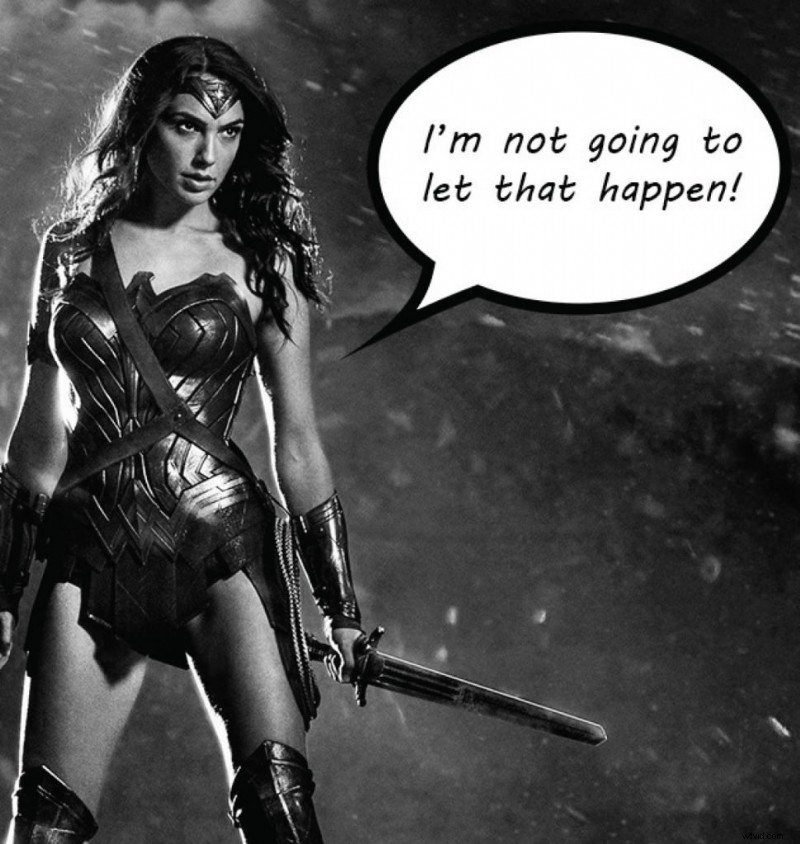
This could be an important character moment, a declarative statement from our hero that kicks us off into an action-packed backend montage. And it might be something that doesn’t exist on its own in the film.
When utilized correctly, techniques like these can be almost like shooting brand new scenes specifically for the trailer. Moments that fill in the exact gaps you need to tell the most succinct and interesting story.
As we talked about before, this may be one reason why it is often very difficult for the editor of the actual movie to cut a great trailer for that same project.
Telling a story in this ultra-short form requires divorcing oneself from the presuppositions of the full length film and being open to nonlinear connections and short-cuts.
But creating these beats is not easy even for the dedicated trailer editor. It requires an excellent knowledge of all available footage and dialogue.
Your brain cannot make disparate associations in a vacuum. It has to know what tools you have at your disposal.
The Breakdown
One of the best ways to become deeply familiar with your footage is by doing a detailed breakdown. This is the act of subclipping or categorizing every single line of dialogue and every single visual in the entire movie (including dailies/rushes/multiple takes if you have them).
The advantage of this approach is three-fold:
Advantage #1:
First, you are creating a kind of searchable database for your movie.
If you find yourself in a position where you wish the hero said a certain word or phrase, you can easily locate it. If you type the word “explosion” into your visual breakdown, you can quickly see every option available to you. This is immensely helpful, especially when working under deadlines.
Advantage #2:
Second, the process of creating the detailed breakdown is a way to increase your future recognition and recall of the footage.
Many studies have shown that the very act of writing something down (even if you never go back and read what you wrote) makes it much easier to remember than only hearing or only seeing it.
By forcing yourself to catalogue every line of dialogue and every visual, you are increasing your later ability to recall that perfect shot to fill in the critical moment of your trailer.
Advantage #3:
And finally, the time taken while creating the breakdown is often when many of the nonlinear connections are made.
It is a forced reflection, given to each singular moment of the movie, as you input it in your “database”. It is like planting seeds that will later grow later into great ideas.
The process of doing a full movie breakdown is time consuming and often tedious and/or boring. But, take it from us (and our years of experience), a detailed catalogue of every shot and every line of dialogue in your project is the foundation for creating a great trailer.