
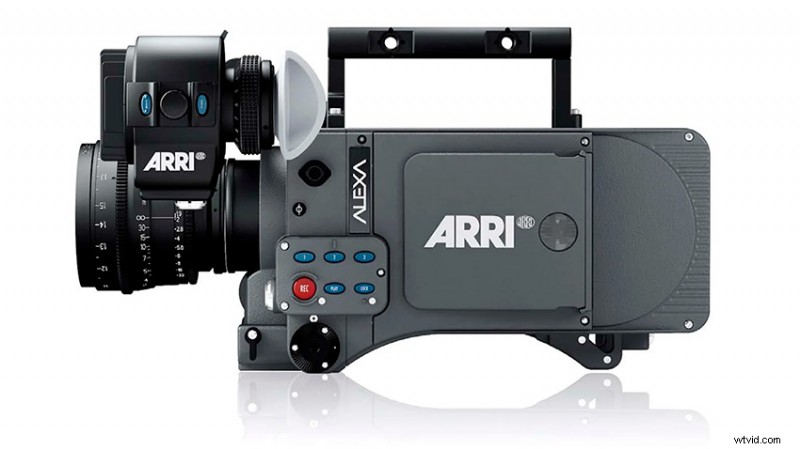
When the conversation turns to ARRI, the ALEXA family dominates the discussion. Yet a lesser‑known but equally impressive sibling deserves attention: the ARRI AMIRA.
Built on the same celebrated ALEXA imaging pipeline, the AMIRA incorporates subtle refinements that make it a natural fit for handheld, run‑and‑gun projects where speed and reliability are paramount.
Recent footage from CVP highlights the camera’s strengths, and whether you’re already familiar with the AMIRA or discovering it for the first time, a closer look is worthwhile.
“Go anywhere, shoot anything.”
This tagline underscores ARRI’s intent: blend uncompromised image quality, a compact form factor, rugged durability, and intuitive usability into one package.
While ARRI cameras have traditionally leaned toward studio‑style rigs, the AMIRA—released four years after the original ALEXA—was engineered specifically for documentary and handheld work.
Despite its age, the AMIRA remains a valuable tool; a kit with an Advanced License currently retails for roughly $15,000.
Image Quality and Formats
The AMIRA shares the same sensor as its ALEXA cousins (except the newly launched ALEXA 35), ensuring top‑tier image fidelity.
Unlike the original ALEXA’s non‑true 4K sensor, the AMIRA can record UHD 4K in ProRes via in‑camera upsampling. However, the camera is restricted to 16:9 footage. Additional features require licensed upgrades, which can be costly, so buyers of used units should confirm the necessary licenses are in place.
All standard ARRI lenses are fully compatible, and a B4 adapter enables the use of broadcast lenses with a crop factor.
Recording options include ARRIRAW, ProRes, and MPEG‑2 (depending on license). ProRes 4K is available up to 60p, ARRIRAW up to 48p, and 2K ProRes up to 200fps, delivering excellent slow‑motion performance. Custom LUT ingestion, recording, and distribution streamline post‑production workflows.
Body Design
The AMIRA’s design philosophy centers on portability: a solo operator can pull it out of a bag, balance it on a shoulder, and be ready to shoot in seconds.
Boot time is quick—just 18 seconds—and the camera features an integrated bubble level on the top of the body for precise framing.
Side controls have been reorganized for on‑shoulder use, with three front dials for immediate adjustments and additional functions behind the handle. The baseplate and top handle are fully adjustable to achieve optimal balance.
Although the camera is relatively heavy, this weight reflects its rugged construction, designed to withstand the bumps and dings typical on professional sets.
Heat management is addressed: hot air is expelled on the side opposite the operator, and dual CFast 2.0 card slots provide ample storage.
Power consumption remains high; operators should bring large V‑mount batteries and spare packs for extended shoots.
I/O is robust: two SDI outputs, BNC, timecode sync ports, and multiple power connectors enable seamless integration of accessories and lenses.
ND filtering is handled by a four‑stage internal system offering 0.6, 1.2, and 2.1 stops. While effective, the system’s response time is modest.
Audio
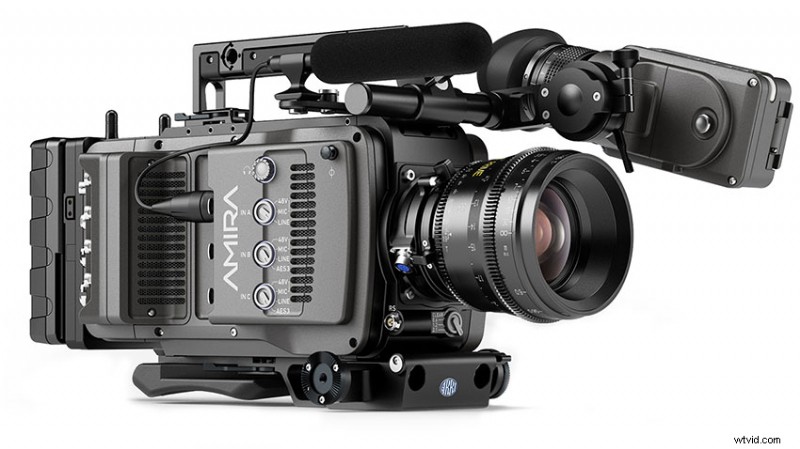
Audio is a core strength for the AMIRA’s run‑and‑gun focus. The camera records up to four channels of 24‑bit, 48kHz audio through three full‑size, phantom‑powered XLR inputs (two standard 3‑pin and one 5‑pin).
Operator‑side controls prioritize real‑time audio management, featuring dedicated dials and switches for level adjustment. On the right side, more nuanced controls—mic/line level and phantom power—are set to avoid accidental changes during a take.
A unique feature allows Bluetooth headphones to connect for audio monitoring.
AMIRA Live
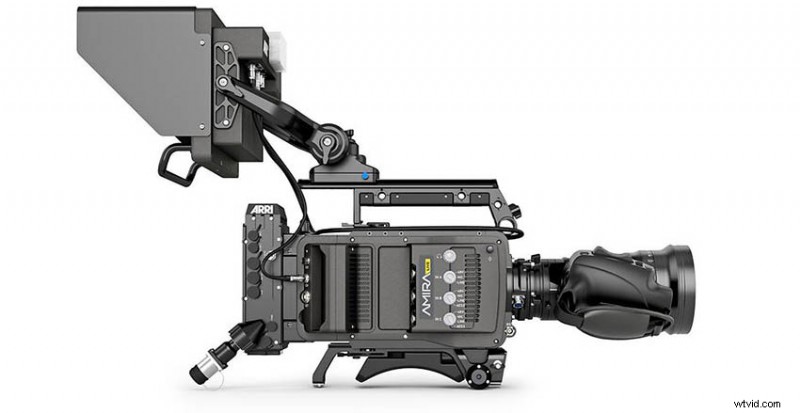
Expanding into broadcast, ARRI released the AMIRA LIVE in 2021. It adds a fiber adapter for multi‑cam integration and a larger 10‑inch monitor to improve live‑shot visibility.
The ALEXA 35
ARRI’s newest flagship, the ALEXA 35, offers a significant performance leap over previous models, including the AMIRA. Despite its advancements, the AMIRA’s value remains stable; the new camera’s capabilities may not drastically reduce the market price of existing units.
While the ALEXA 35 can emulate the AMIRA’s run‑and‑gun workflow, it falls short in that niche. Therefore, a solid AMIRA at a reasonable price remains a compelling choice.
Interested in acquiring an ALEXA or AMIRA today?
[source: CVP]
Disclaimer: As an Amazon Associate and a participant in other affiliate programs, we may earn a small commission from qualifying purchases made through some of the links on this page—at no additional cost to you.