
Most music production setups include a laptop or a computer — but these don’t usually come with the dedicated inputs and outputs required by those working with sound. That’s where an audio interface enters the picture.
At its core, an audio interface is essential hardware that converts analogue signals into digital audio. Among other uses, the digital audio can be recorded by your DAW while providing low-latency monitoring through outputs for your monitor speakers or headphones.
- READ MORE: Best Spotify alternatives in 2024 for music listening and discovery
Introducing an interface into your setup unlocks a world of possibilities, whether you’re recording vocals and instruments, processing tracks with external hardware effects, or simply want to hook up your speakers when crafting beats.
With countless options available, finding the right audio interface for your needs can be a daunting task. But don’t worry — our expert reviewers have tested countless audio interfaces over the years. Here are the best ones we’ve found.
Best audio interfaces at a glance:
- Our pick: Focusrite Scarlett
- Best interface for beginners: Audient Evo 4
- Best high-quality interface: MOTU UltraLite-mk5
- Best DSP-powered interface: Universal Audio Apollo
- Best interface for spatial audio: Audient ORIA
- Best interface for guitarists: Universal Audio Volt
- Best interface for podcasts: RØDECaster Duo
- Best interface for electronic music producers: Arturia AudioFuse 16Rig
How to Choose an Audio Interface
There’s an enormous variety of audio interfaces on the market, catering to a range of budgets and requirements. Here are some key factors to consider when choosing an audio interface:
- Number of inputs – Think about how many microphones, instruments, or other gear you’ll need to connect at the same time. For many cases, one or two inputs is enough, but you might want at least four if you’re recording a drum kit, for example.
- Number of outputs – Consider your needs for monitor speakers and headphones, and whether you’re planning to connect any external gear using sends and returns.
- Connectivity – Whether it’s USB-C, Thunderbolt, or something else, make sure your interface matches your computer’s ports.
- MIDI support – If you want to use MIDI keyboards and controllers, check the interface includes MIDI in and out, whether via 5-pin DIN or USB.
- Latency – Consider your latency requirements. For example, very low latency is important if you’re using your interface in a recording or live context, but may not matter as much for tasks like mixing and mastering.
- Future expansion – If you think your studio setup might grow in the future, it might make sense to choose an interface with more capabilities than you currently require.
- Budget – Find a balance between what you need and what you can spend. Sometimes, a little extra cash goes a long way.
Best Audio Interfaces in 2024
Our pick – Focusrite Scarlett
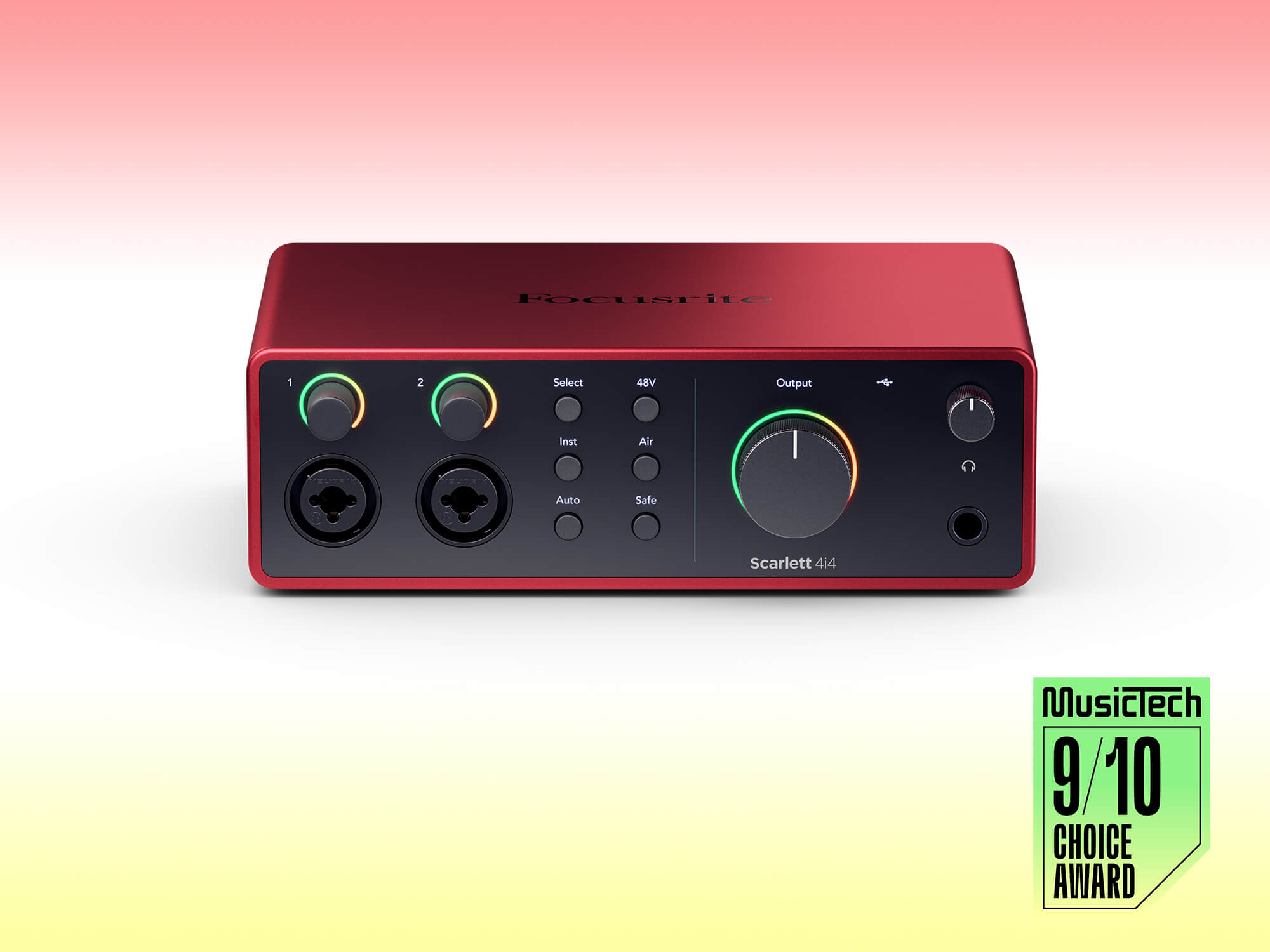 Focusrite Scarlett 4i4. Image: Focusrite
Scarlett Solo: £139
Scarlett 2i2: £199
Scarlett 4i4: £274
The Focusrite Scarlett series has become a staple in home studios everywhere, and for good reason. These interfaces are reliable, easy to use, and offer fantastic sound quality up to 192kHz and 24-bit — all at an affordable price.
Features in the 4th Gen update include Auto Gain for automatically setting input levels, Clip Safe that adjusts gain on the fly to prevent tracks from clipping, and an Air Mode that adds a pleasing high-end boost to your signal.
If you’re looking for your first audio interface, the Scarlett 2i2 is a strong option, offering two input channels for instrument, line, or mic signals. For monitoring, there are two output channels for your speakers and a separate headphone output with independent volume control.
Read our Focusrite Scarlett 2i2 4th Gen review or check out our Focusrite Scarlett buyer’s guide.
Best interface for beginners – Audient Evo
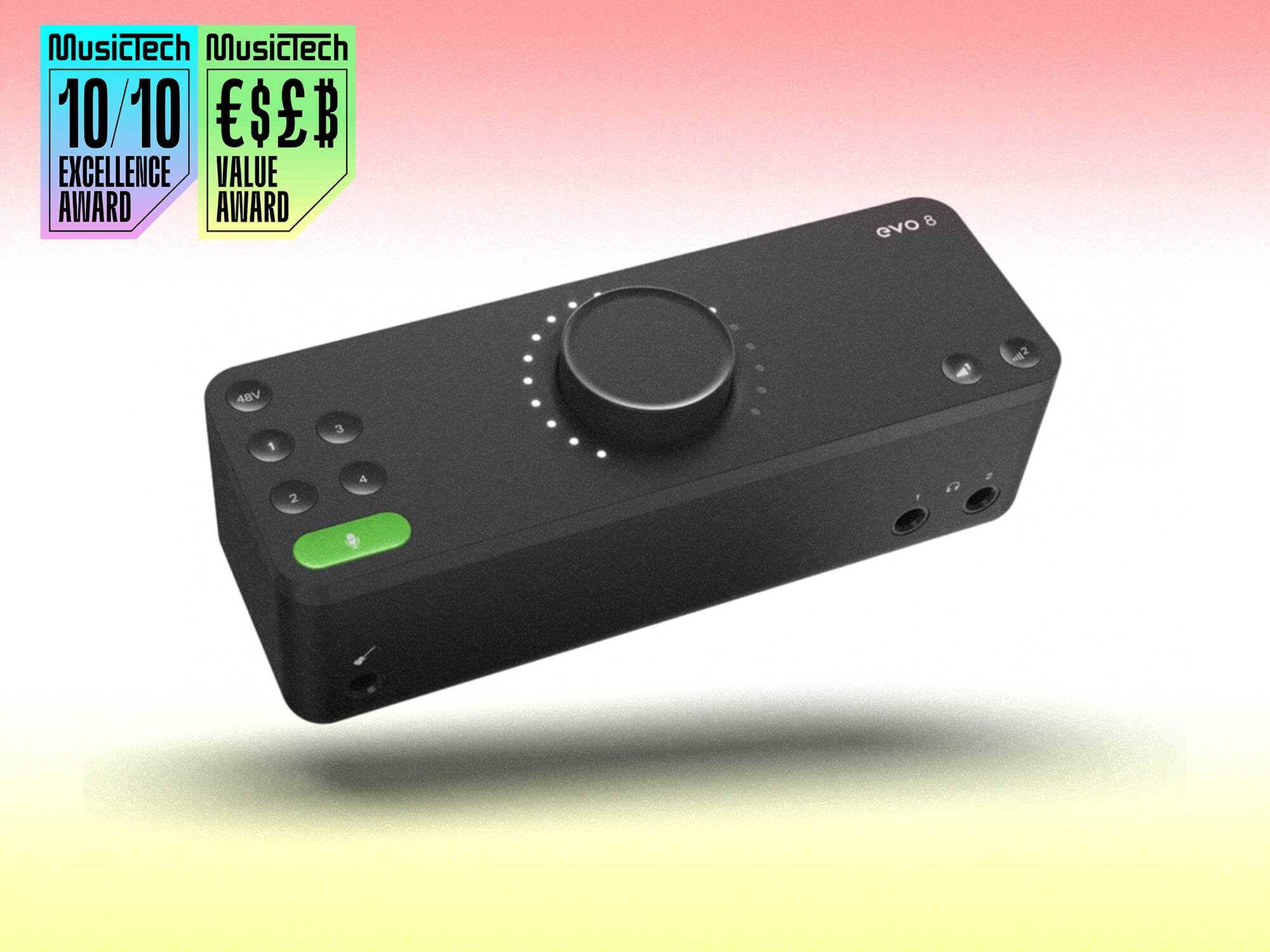 Audient Evo 8
Evo 4: £92
Evo 8: £145
Evo 16: £380
If you’re just starting out or working with a tight budget, the Audient Evo series is a real gem. Coming in three sizes with various input and output configurations, these interfaces are compact and user-friendly, while offering surprisingly high sound quality for the price.
All Evo interfaces feature the same transparent preamps found in Audient’s pricier gear, supplying 58dB of gain that’s plenty for most microphones. Other functions include Smartgain for automatic level setting, per-channel phantom power, and direct monitoring.
The 2-in/2-out Evo 4 is a great entrypoint, although for the extra £50, we’d recommend going for the Evo 8. With four XLR/TRS inputs, and four TRS outputs with mirrored headphone amps, this model suits a wider range of applications without a significant price increase.
Read our Audient Evo 8 review.
Best high-quality interface – MOTU UltraLite-mk5
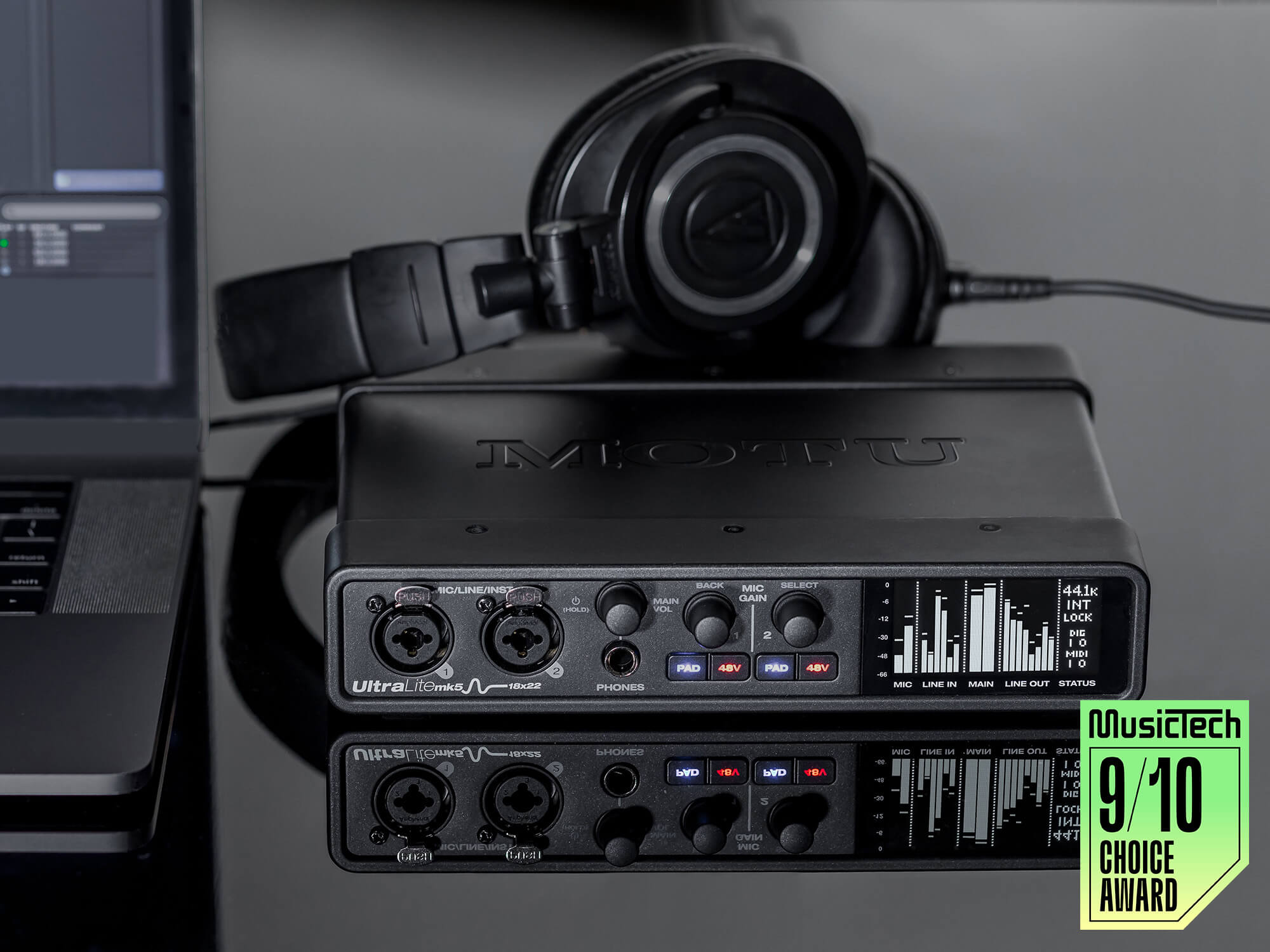 MOTU UltraLite-mk5
MOTU UltraLite-mk5: £599
MOTU interfaces have a strong reputation for quality, and the UltraLite-mk5 continues to deliver on this promise. Under the hood is ESS’ Sabre32 DAC technology providing crystal-clear conversion with incredible detail and 125dB of dynamic range. You’ll also benefit from sample rates up to 192kHz, near-zero latency, and built-in DSP for real-time effects processing.
With a half-rack form factor, the unit is small and lightweight — but don’t let that deceive you. Squeezed into the UltraLite-mk5 are two XLR/TRS combo inputs, six line inputs, ten line outputs, MIDI connectivity, a single headphone output, 8-channel optical I/O, and even LED metres for every single in and out.
All in all, the UltraLite-mk5 — along with its generous array of inputs and outputs, outstanding build quality, additional features, and reasonable price tag — is an interface that’s ready for anything from studio recording to live performances.
Read our MOTU UltraLite-mk5 review.
Best DSP-powered interface – Universal Audio Apollo Twin X Duo
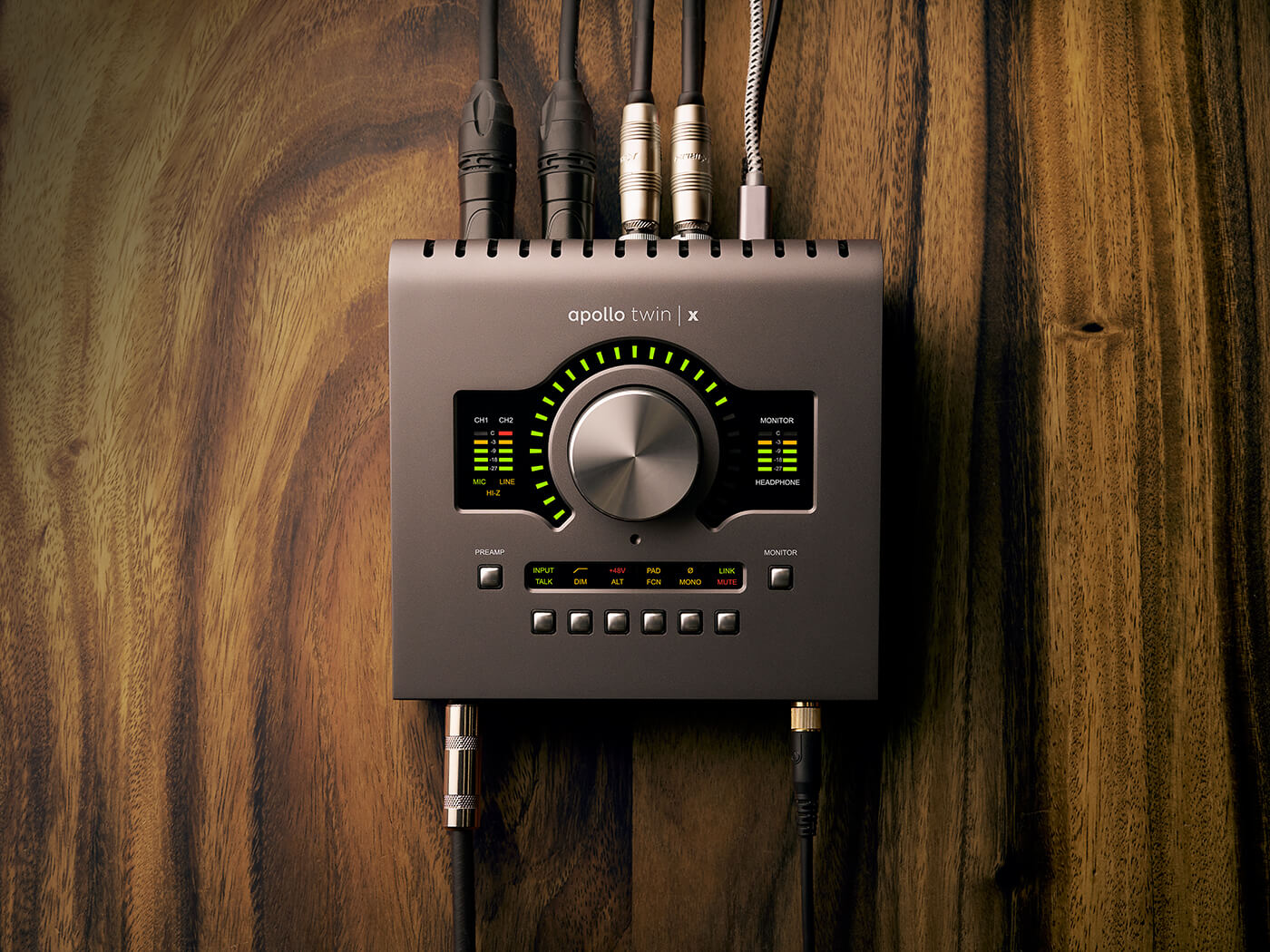 Universal Audio Apollo Twin X
Apollo Twin X Duo: £769
Universal Audio’s Apollo interfaces are favourites among producers looking for onboard digital signal processing (DSP), and it’s common to find them in hobbyist and pro setups alike.
Apollo interfaces deliver pristine analogue-to-digital conversion through UA’s Unison preamps. However, thanks to the onboard DSP, these preamps can be transformed into emulations of classic channel strips, processors, or amp models that modify the behaviour of the analogue circuitry and simultaneously apply digital modelling — all of which can be printed to the audio in your DAW on the way in.
In addition, you’ll find a vast array of effects in the UAD plugin library, including recreations of legendary reverb units like the Lexicon 480L or delays like the Roland Space Echo. And given Universal Audio’s storied background in audio recording hardware, the accuracy and quality of these DSP-powered effects is no surprise.
The the Apollo Twin X features two mic/line inputs, four line outputs, and an optical connection, and is available in 2-core or 4-core versions based on how much onboard DSP you need.
Read our Apollo Twin X review.
Best interface for spatial audio – Audient ORIA
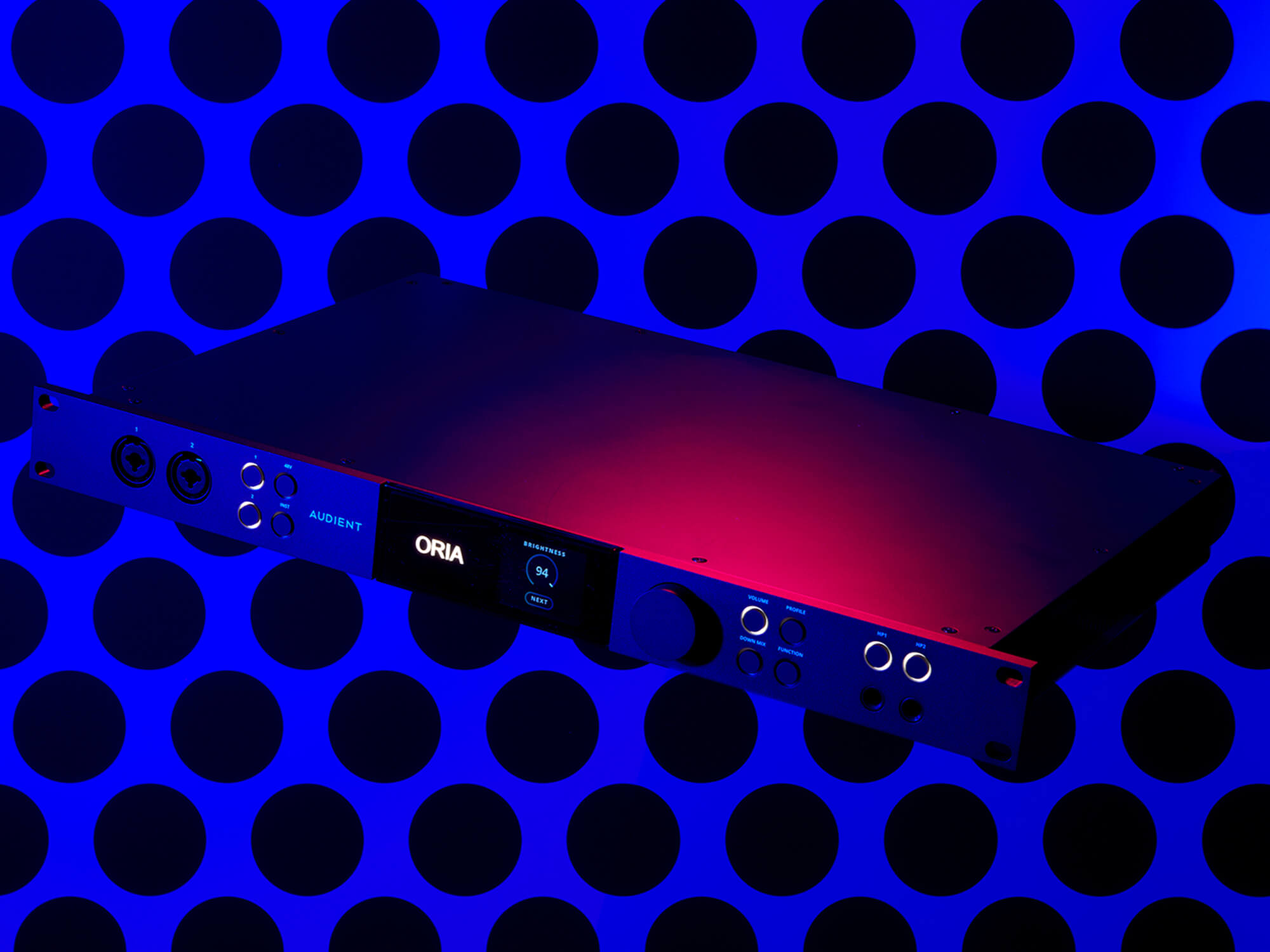 Audient ORIA. Image: Simon Vinall for MusicTech
Audient ORIA: £2,445
For those working in spatial audio, the Audient ORIA is built for the job — but at a price point that makes it more accessible than most alternatives. Specifically designed for immersive audio, the ORIA supports up to 9.1.6 speaker setups, so it’s ideal for mixing in formats like Dolby Atmos.
The ORIA includes a range of purpose-built features. Built-in speaker processing makes it easy to calibrate your monitors to your room thanks to controls like individual trim, delay, and bass management. This calibration can be configured manually based on physical measurements, or made easy through ORIA’s close integration with Sonarworks SoundID Reference. In either case, the processing is handled by onboard DSP so there’s no performance hit to your CPU.
What’s more, the Down Mix button lets you instantly fold down an immersive mix into 7.1, 5.1, binaural, or stereo. Undoubtedly, these features — and a user-friendly design at a competitive price point — make ORIA the go-to for anyone serious about spatial audio.
Read our Audient ORIA review.
Best interface for guitarists – Universal Audio Volt
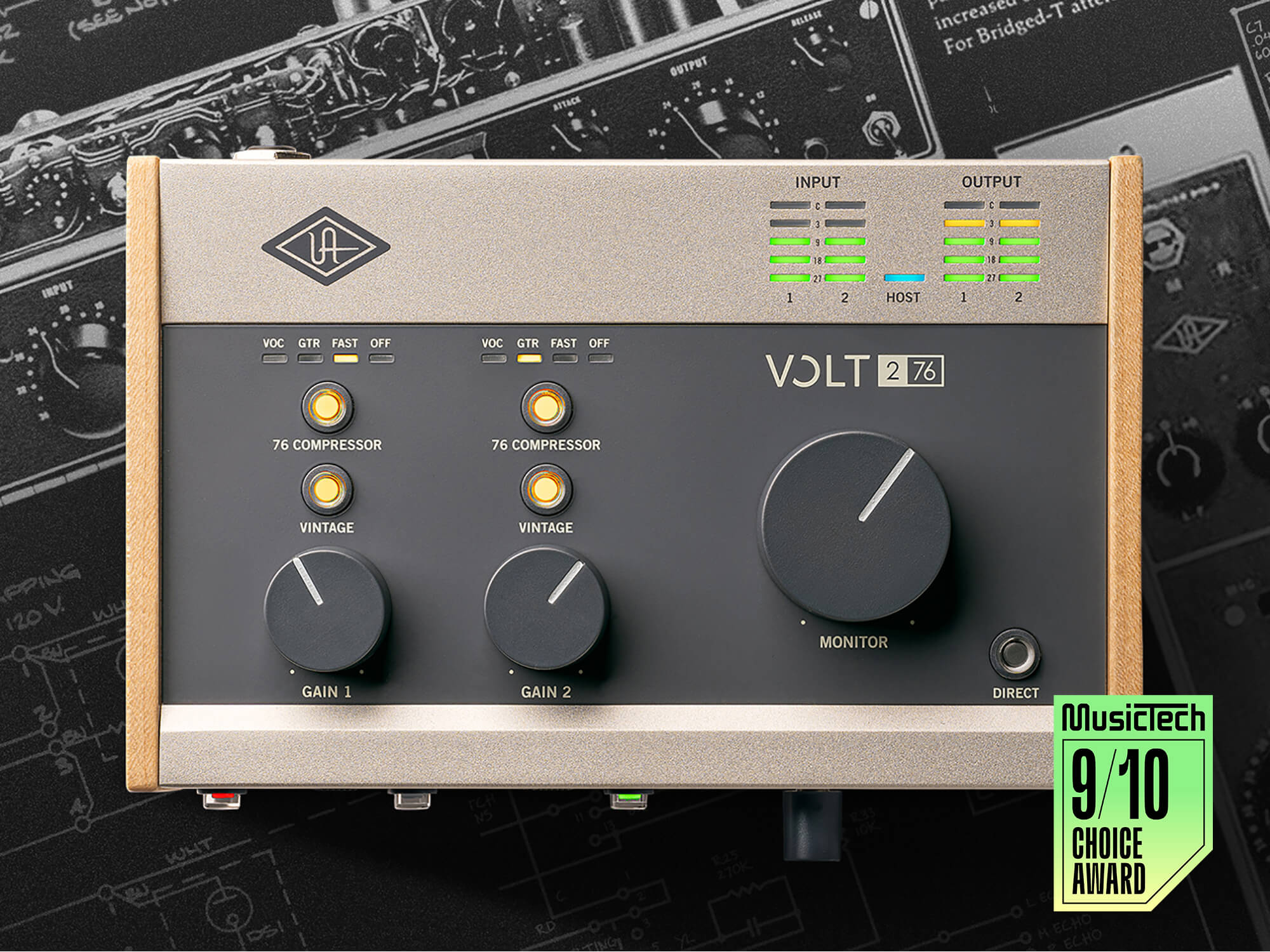 Universal Audio Volt
Volt 176: £149
Volt 276: £219
Volt 476: £268
Volt 476P: £350
Appearing for a second time in the list, Universal Audio is clearly doing something right with its interfaces. This time, it’s earned a spot thanks to its cheaper Volt interface line introduced in 2021.
Volt’s price range pits it against myriad competitors (for example, Focusrite’s Scarlett range that won our overall pick), but it does differentiate itself from the pack with a couple of extra tricks. In the standard units, users get a ‘vintage’ preamp mode that adds pleasing saturation based on the UA 610 tube preamp. But spend a bit more for the ‘76 edition and you’ll get an interface with a built-in analogue compressor inspired by the unmistakable UREI 1176.
These processing options are what make the Volt interfaces a top choice for guitar players, letting you inject some extra character into your tone for a fuller, more vibrant recording within the DAW. If you’re just recording guitar or bass, the single-input Volt 176 is incredible value for money, although the two- or four-input versions provide more flexibility for those who need it.
Read our Universal Audio Volt review.
Best interface for podcasts – RØDECaster Duo
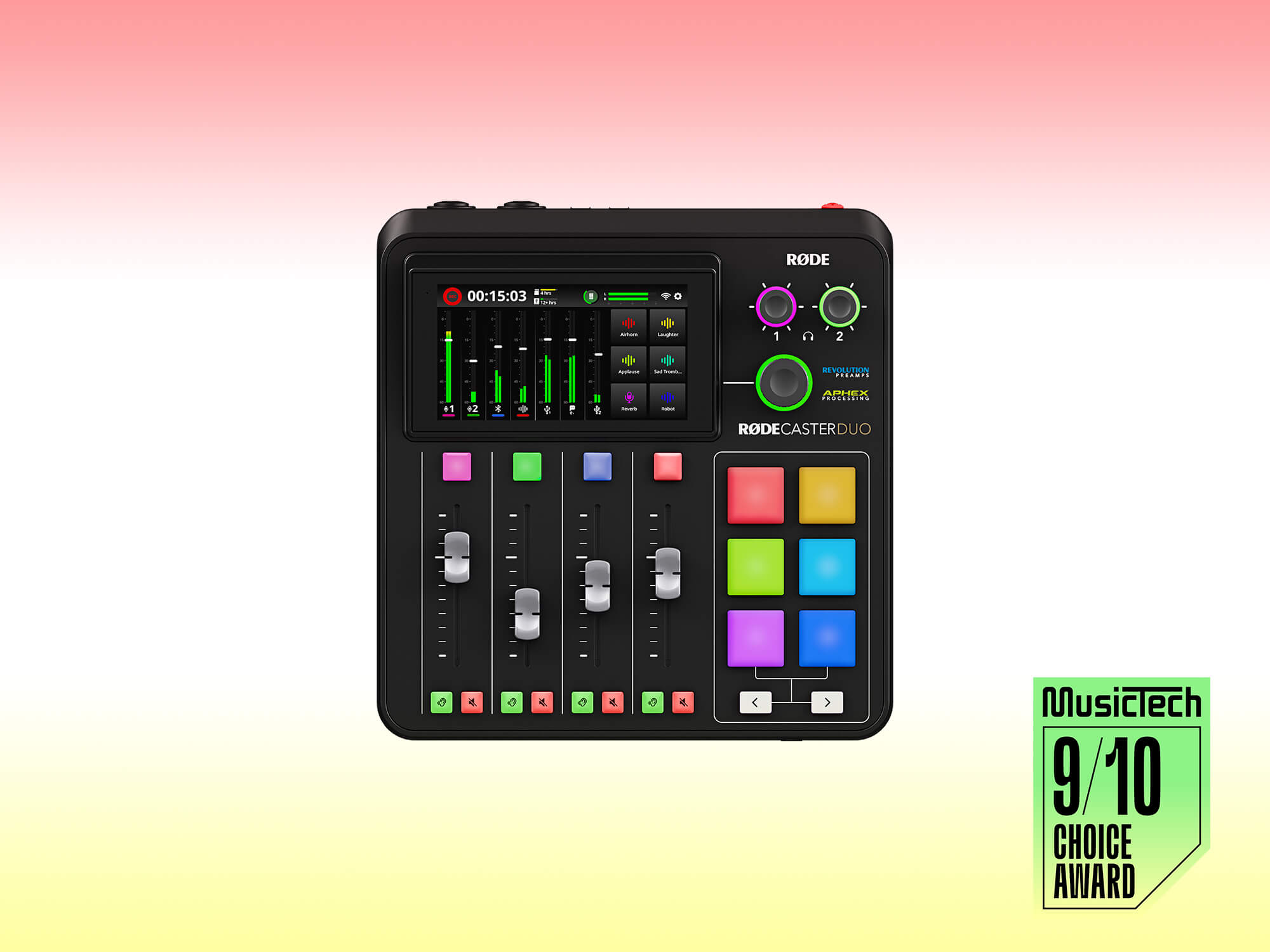 RØDECaster Duo
RØDECaster Duo: £399
Aimed at podcasters and content creators, RØDE’s series of RØDECaster devices combine mixing and recording functionalities into one slick console. The Pro model kicked the line off to much acclaim — but for many, the smaller RØDECaster Duo will be enough.
On the input side, two XLR/TRS combo connections feed into ultra-low-noise, high-gain Revolution preamps. There’s also a built-in wireless receiver for RØDE Series IV transmitters. Then, your signal can be processed with onboard effects like reverb, delay, and compression for a more professional touch.
Unlike many other audio interfaces, the RØDECaster Duo also features six programmable pads that can be used to trigger sounds, music, effects, transitions, and MIDI commands. Another killer feature? You can record straight to a memory card or external drive — no computer needed — so it’s an incredibly versatile option for all types of content creation.
Read our RØDECaster Duo review.
Best interface for electronic music producers – Arturia AudioFuse 16Rig
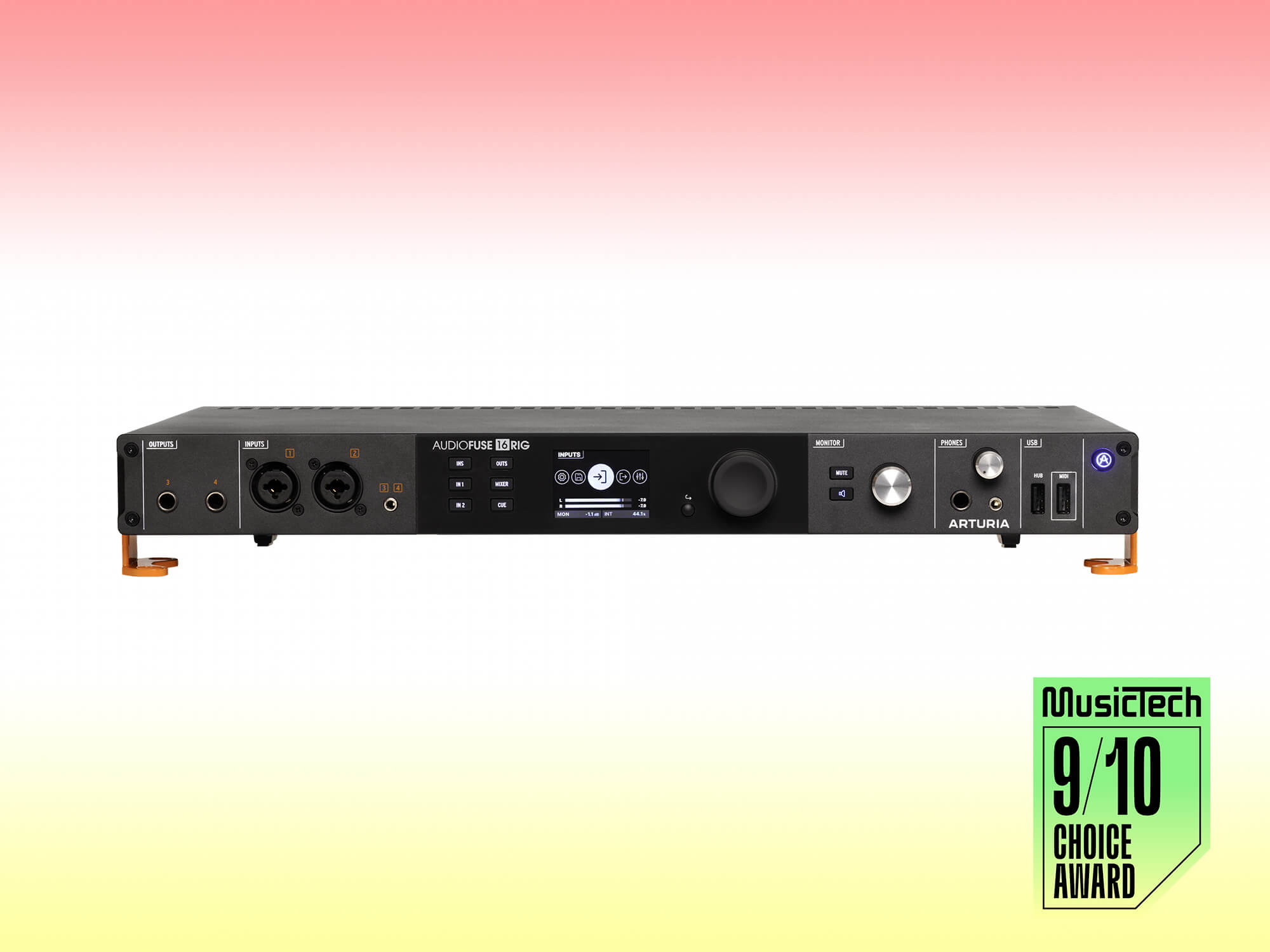 Arturia AudioFuse 16Rig
AudioFuse 16Rig: £1,159
For electronic music producers, the AudioFuse 16Rig from Arturia is a powerhouse. It’s built to handle the complexity of modern electronic music setups, with 16 analogue inputs, 10 analogue outputs, and dual ADAT in/out to further expand the channel count.
This is complemented by MIDI in/out/thru plus word clock to keep all your devices perfectly in sync. You can also connect external devices through the USB MIDI port, and line outputs can even transmit CV signals.
Given the 16Rig’s connections are split between the front and back panels, you might expect repatching to be cumbersome, but that’s not the case. Where sockets on the front panel correspond to ones on the back, switching between the two is handled in software so you won’t have to unplug any cables — an elegant solution.
All in all, the AudioFuse 16Rig packs a tremendous amount of functionality into just 1U of rack space, and it’s an excellent choice for gearheads with extensive external hardware.
Read our Arturia AudioFuse 16Rig review.
Why You Can Trust MusicTech
MusicTech reviews hundreds of new products every year, from powerful synthesizers, DAWs and pro plugins through to everyday headphones and portable speakers. Our expert reviewers are producers, engineers and enthusiasts with hundreds of years of collective experience, with a keen ear to the ground on new trends and technologies.
Every guide on MusicTech is created by a producer, musician and tech enthusiast just like you. We understand what you’re looking for when searching for a new audio interface, and we want to ensure you purchase genuinely useful products for your craft. So you can guarantee that every product MusicTech recommends to you is a product we’d be happy to have in our studios.
Frequently Asked Questions
Do I need an audio interface for music production?
It depends. While you can produce music using just a computer and headphones, if you want to connect studio monitors or record instruments and microphones, you’ll generally need an audio interface.
How do I choose an audio interface?
Consider your requirements — how many inputs and outputs do you need? Any extra features? What’s your budget? Think about how your setup might grow in the future too, as it might be cheaper in the long run to spend a bit more now instead of upgrading down the line.
Do DJs need an audio interface?
A dedicated audio interface can greatly improve sound quality and give you the outputs you need for a professional DJ setup. However, many decks and controllers have audio interfaces built in so you won’t need a separate device.
Do more expensive audio interfaces sound better?
Generally speaking, more expensive interfaces are built with better components like converters and preamps, resulting in superior sound quality. Whether you’ll notice this quality difference in the context of a full mix is relatively subjective, however.
What is the difference between an interface and a sound card?
Typically, an interface is an external device that offers better audio conversion and more connectivity options. It’s designed specifically for recording and playing back audio. Conversely, sound cards are typically built into your computer and offer fewer features, designed for playing back audio in a casual context.

James is a freelance writer for MusicTech. You'll often find him pushing plugins to their limits, skimming through the latest sample packs, or obsessively watching Rig Rundowns. With a background in live music, he also loves finding elegant solutions to complex problems — especially when it comes to gear.