
Buying a Speedlight: What You Need to Know
Choosing an external flash can feel overwhelming—prices range from $30 to over $400, and feature lists are dense. This guide breaks down the essential concepts so you can make an informed purchase.
The market is now far more diverse than the days when the only choice was the camera’s built‑in flash. Today, third‑party manufacturers offer a spectrum of units, from budget models to professional‑grade tools. Understanding what matters will help you avoid overpaying and choose a flash that meets your needs.
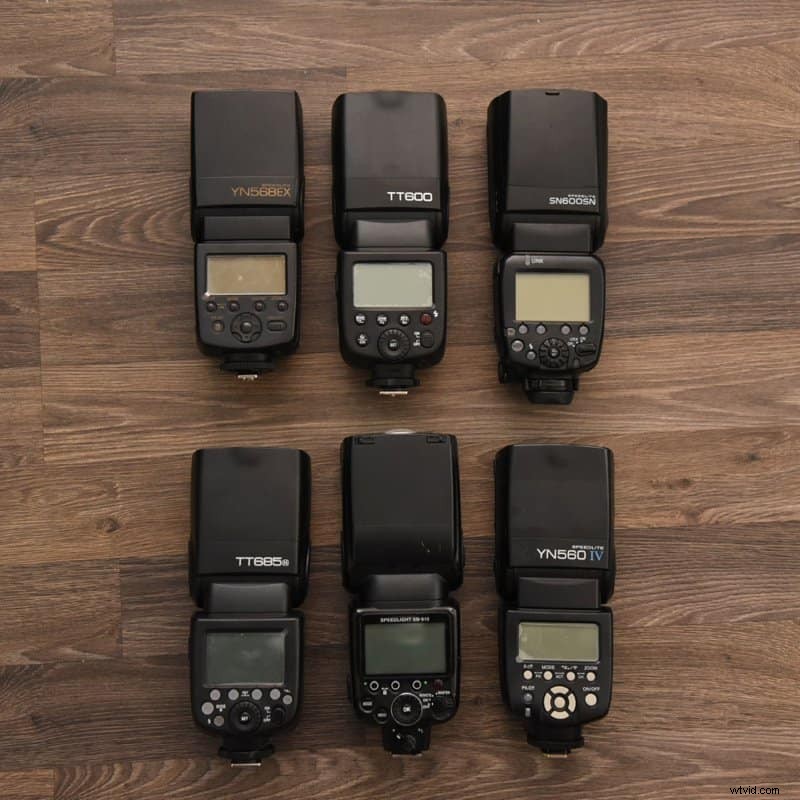
What Is a Speedlight?
A speedlight is a lightweight, hot‑shoe‑mounted flash that adds illumination to your photos. It’s also called an “external flash” or “on‑camera flash.” While the built‑in pop‑up flash is convenient, a speedlight gives you greater power, flexibility, and creative control.
Tip: OCF (off‑camera flash) refers to a flash that’s triggered remotely, not to be confused with an on‑camera flash.
Why Choose a Speedlight Over the Built‑In Flash?
Most DSLRs and mirrorless cameras include a pop‑up flash that emits light only forward and at a relatively low power level. This makes it suitable for simple fill light but insufficient for portraits, product work, or creative lighting.
A speedlight lets you rotate the head to bounce light off walls or ceilings, producing a larger, softer light source. Because the flash sits above the lens, the beam doesn’t directly reflect into the sensor, avoiding the “red‑eye” effect that can occur with a pop‑up flash.
Tip: The larger the light source, the softer the light.
Speedlights use their own batteries, so they don’t drain your camera’s power supply during a shoot.
The Two Most Important Features When Buying a Speedlight
When comparing speedlights, focus on these two features: TTL (Through‑The‑Lens) metering and High‑Speed Sync (HSS). Other specifications matter too, but these two will have the biggest impact on your workflow.
Through‑The‑Lens (TTL)
There are two basic types of speedlights: TTL and manual. A manual flash requires you to dial the power level yourself; each increment (e.g., 1/8, 1/16, 1/32) changes the amount of light emitted. Manual units are generally cheaper because they are simpler to manufacture.
A TTL flash automatically communicates with your camera’s metering system to determine the correct flash output for a given exposure. While TTL isn’t infallible—sometimes you’ll need to apply exposure compensation—it’s highly accurate and eliminates the need to guess power levels.
Choosing a TTL flash is usually the safer bet. TTL units can be used in manual mode if you want to fine‑tune your light, but a manual flash can’t automatically match your camera’s exposure.
Jargon Buster: Nikon’s “i‑TTL” and Canon’s “e‑TTL” are simply brand‑specific versions of TTL.
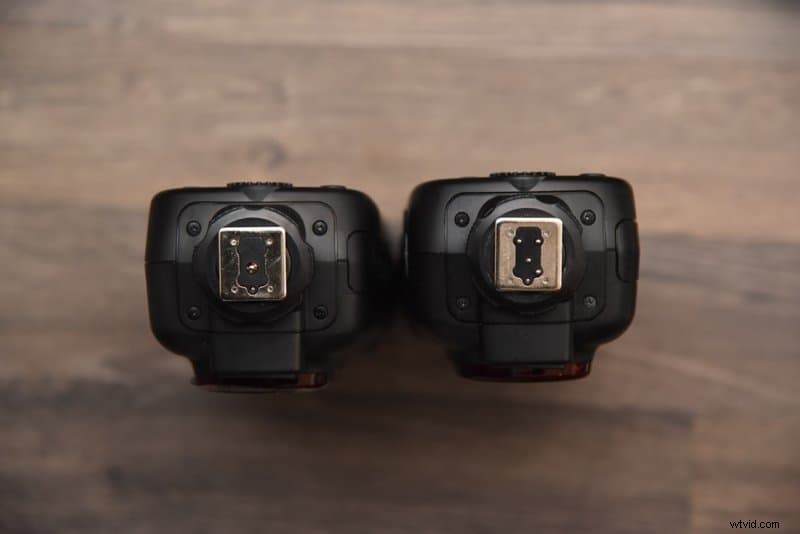
If a product description doesn’t mention TTL, it’s probably a manual flash. You can also inspect the hot shoe: a single central firing pin usually indicates a manual unit.
High‑Speed Sync (HSS)
Every camera has a native sync speed—the fastest shutter speed that can be used with flash (typically between 1/160 s and 1/250 s). If you exceed this speed, you’ll see a dark band or no light at all.

HSS allows you to fire a flash at shutter speeds beyond the native sync limit by emitting rapid pulses of light. The result is that your subject can be lit correctly even with fast shutter speeds, but the total flash power is reduced.
Most modern speedlights support HSS. Because the price premium is usually modest, we recommend investing in an HSS‑capable unit to future‑proof your gear.
Other Factors to Consider
- Reliability: With many inexpensive brands on the market, durability can vary. Test units for build quality and longevity, especially if you’ll be using them in a professional setting.
- Price and Savings: Manufacturer‑branded flashes are often the most reliable, but they come at a premium. For example, the Canon 600EX‑RT retails for $469 on Amazon, while an equivalent clone like the Yongnuo 568 costs around $126.
- Professional vs. Hobbyist Use: If you’re a hobbyist, the savings from a clone brand may outweigh the marginal reliability difference. Professionals or those aiming to advance may prefer a manufacturer’s model for its proven durability and support.
- Personal Preference: I personally use a Nikon SB‑910 but often opt for off‑brand flashes in everyday shooting because they’re less costly to replace after accidental drops.
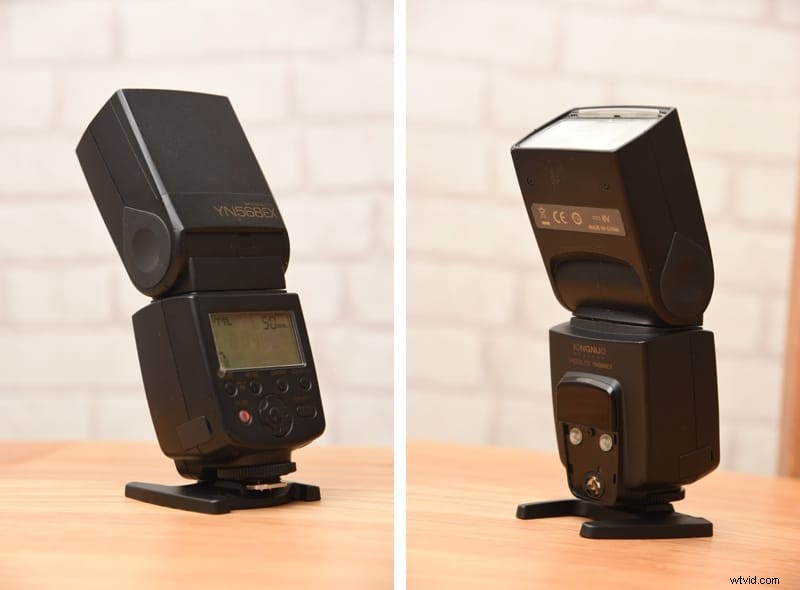
Below is a photo of my old Yongnuo 568. It’s withstood several falls and still fires reliably, making it a popular choice among budget‑conscious photographers.
Bottom Line
The price gap between a basic manual flash and a full‑featured TTL/HSS unit isn’t huge, yet the latter offers a significantly smoother shooting experience. With TTL and HSS, you’ll enjoy precise exposure, creative flexibility, and peace of mind that your flash can keep up with any shooting scenario.
We hope this guide helps you understand the key features to look for when buying your first speedlight. For more hands‑on tips, check out the video linked below.
If you have additional tips or questions, feel free to leave a comment.