
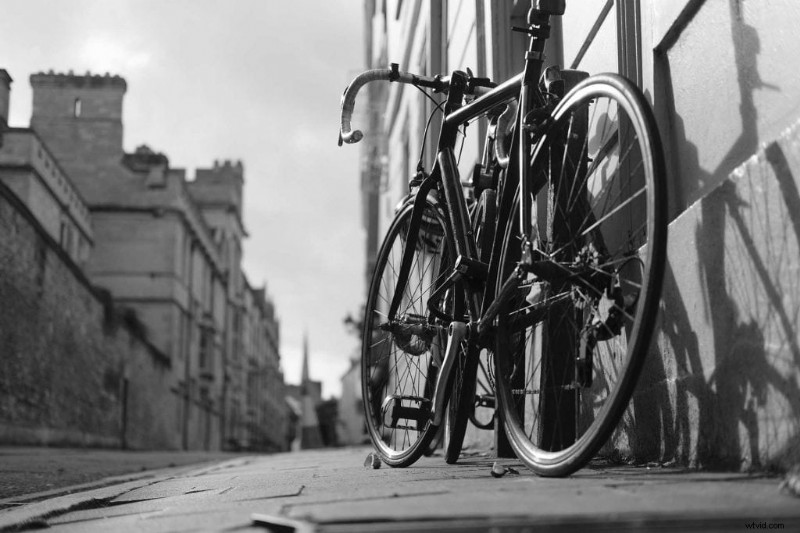
Maybe it’s because I’m a little below average height, but I find myself drawn to low-level photography. I like the ability to lose a dull mid-ground and draw attention to small objects in the foreground. And while I don’t mind a bit of mud, I’m not a massive fan of getting absolutely covered in it.
Don’t get me wrong, when I got out on a ‘proper’ shoot I usually wear a pair of walking trousers and a waterproof coat and I’m not adverse to getting down on my hands and knees.
I’ll even lie down if a shot calls for it, although if it’s really muddy I’ll spread a bin liner on the ground to keep the worst off me – I routinely carry one in my bag as they’re so light.
It’s just that a tilting, or even better, a vari-angle screen make’s life so much easier. You don’t even have to kneel down, you can just squat with the camera at ground-level and the screen tipped-up towards you to give a nice clear view.
And tilting screens aren’t just useful for handheld photography, they can be a real bonus when you’re using a tripod as well.
Even if you don’t compose the image on the screen, it’s more comfortable to view the menu on a screen that’s angled towards you.
With DSLRs videographers have to compose scenes on the rear screen and it’s much easier for them to see the shot if the screen tilts.
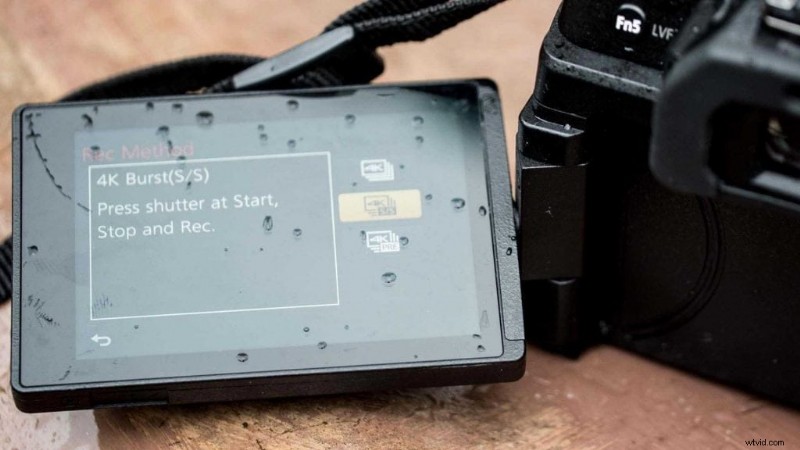
The bonus of a vari-angle or articulating screen like the ones on the Nikon D5600, Canon 80D and Panasonic G80 is that you can tip the screen upwards for low-level photography whether you’re shooting in portrait or landscape format. A screen that just tilts around one axis is only helpful with landscape format images.
Why don’t all cameras have tilting screens?
There are usually two arguments given against tilting and vari-angle screens; cost and durability. Yes, an extra hinge and clever cabling is going to add some expense, but the price will come down as more of them are used.
Interestingly, both Canon and Nikon give their ‘upper entry-level’ cameras (Canon 750D and Nikon D5600) vari-angle screens, it’s not something that’s reserved for the top-end models. In fact it’s something that their top-end models don’t have.
As for durability and concerns about weather proofing, the Pentax K-1 seems to cover-off that argument. The movement range of its articulating screen is a little limited, but it’s still very useful. The Fuji X-T2, Panasonic G80 and Olympus OM-D E-M1 Mark II are all weatherproof cameras and have vari-angle screens.
It’s time we saw more cameras with articulating screens.

Save