
From Consumer Drones to Studio‑Grade Gear: DJI’s Journey into Professional Filmmaking
Located in Shenzhen’s Nanshan District, DJI meticulously planned each product launch to reshape the visual storytelling landscape. Their evolution from a modest drone maker to an indispensable partner for filmmakers is a story of relentless innovation and industry partnership.
Western media’s access to a privately held Chinese company is limited, but industry insiders and end‑users attest to DJI’s rapid ascent. Today, DJI’s devices are the backbone of production pipelines worldwide, powering everything from low‑budget indie films to high‑profile Hollywood shoots.
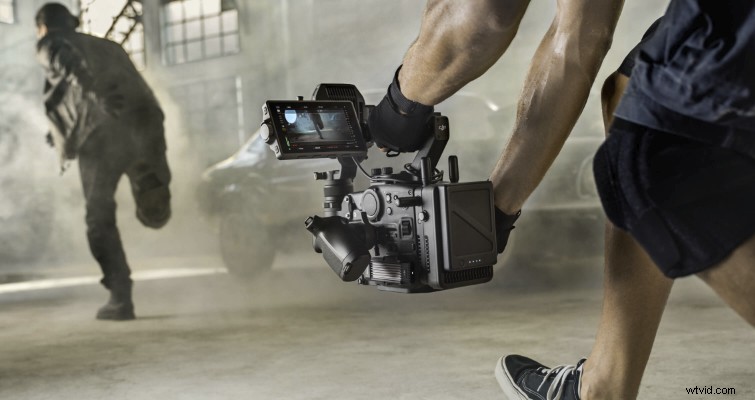 The Ronin 4D camera is an 8K or 6K cinema‑grade camera with built‑in stabilization. Image DJI.
What Happened to 3DR?
For a time, DJI and the American startup 3DR vied for dominance in the small‑drone market, each offering unique operating systems and stabilization tech. By 2015, 3DR shifted focus entirely to software, unable to keep pace with DJI’s hardware roadmap and aggressive product releases.
Simultaneously, DJI broadened its appeal to professional cinematographers, producers, and directors. Influential figures like Joe Jamieson—who managed footage for the first season of The Grand Tour—highlighted the power of DJI’s X5R camera on the Inspire 1. Its 4K clarity was praised, though users noted the need to stay within DJI’s ecosystem for file handling.
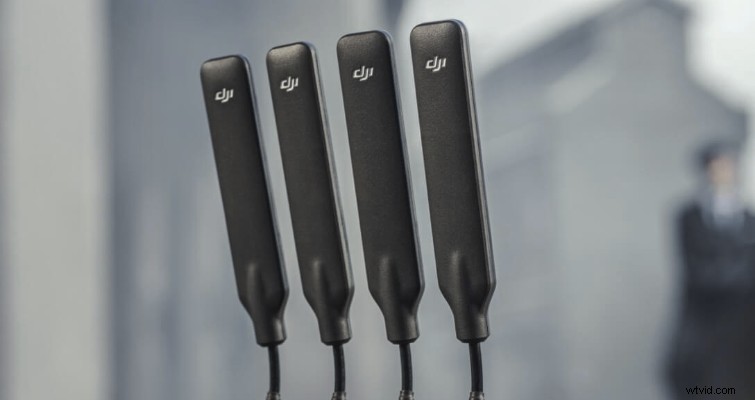 DJI’s Transmission product brings cutting‑edge video relay technology. Image DJI.
Discovery’s Adoption of DJI Gimbals
Major broadcasters, including Discovery, began integrating DJI’s lightweight stabilization solutions into their production workflows. The OSMO range allowed producers to achieve jib‑like motion on a 15‑foot pole, all controlled from a mobile app.
Mark Bridge, a seasoned producer, noted, “Dropping an OSMO from a short pole and controlling it with a phone gives you shots you can’t get with traditional rigs.” The resulting footage matched the quality of Sony broadcast cameras, proving that small, affordable gimbals could compete with expensive equipment.
The Circle: Drone‑Only Cinematography
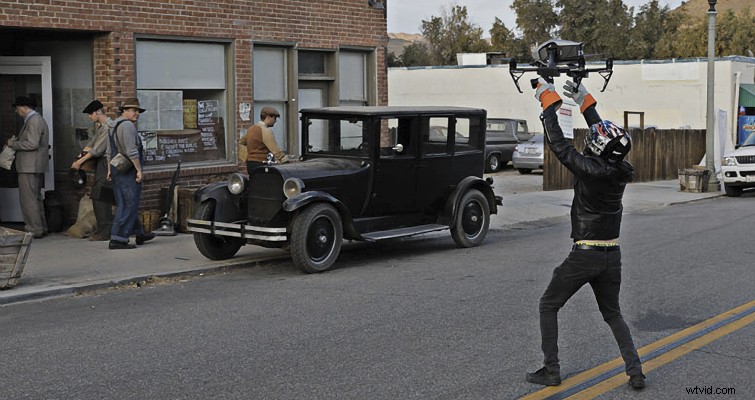 The short film "The Circle" pioneered drone‑only filmmaking. Image DJI.
Oscar‑winning cinematographer Claudio Miranda tested the Inspire 2 on the short film The Circle, using the X5S camera—a Micro‑Four‑Thirds sensor. Initially skeptical of small cameras, Miranda was astonished by the image quality and dynamic range.
Miranda’s team executed smooth hand‑off moves, where a camera operator would catch the drone and transition to a stabilized shot without interrupting dialogue. The drone was also mounted on dollies, replacing conventional cranes, and controlled via the DJI app, which mirrored a multi‑channel lens controller.
From OSMO to Ronin: Replacing Traditional Rigs
DJI expanded its professional lineup with the Ronin gimbal series, complemented by Master Wheels for remote operation. The Ronin 2 quickly became a staple on television sets, allowing directors of photography to keep cameras in motion while maintaining full control.
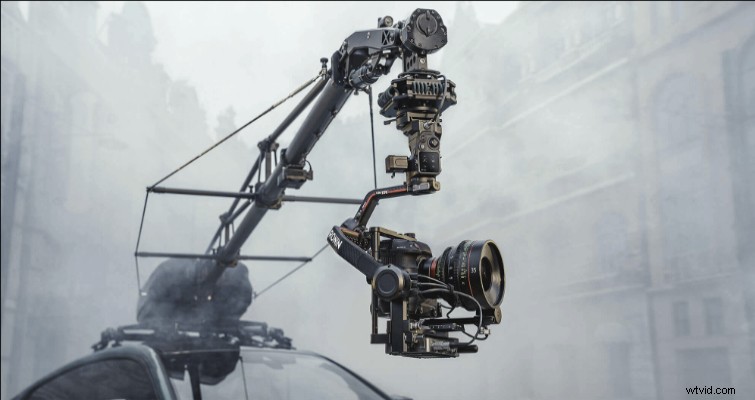 The latest RS3 Pro gimbal promises unparalleled versatility. Image DJI.
Building on the success of the RS3 and RS3 Pro, DJI introduced the Ronin 4D—an integrated camera‑gimbal system. It offers 6K or 8K resolution, a 35mm full‑frame CMOS sensor, a DX mount, and support for additional accessories. DJI also released proprietary lenses (24mm, 35mm, 50mm), LiDAR‑assisted focusing, and built‑in CFexpress Type‑B slots.
Expanded R&D: Transmission and Audio Solutions
DJI’s research and development now includes transmission products capable of delivering 1080p/60p video over distances up to 6km under ideal conditions, at 50Mbps for monitoring. The line will continue to evolve with higher bandwidth and lower latency.
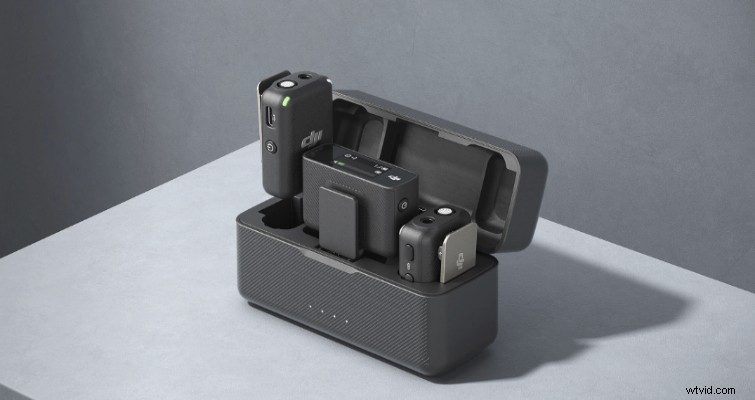 DJI’s inaugural microphone, a sleek lapel‑type radio mic. Image DJI.
Additionally, DJI released its first audio accessory—a lapel mic—and expanded its drone lineup with the Mavic 3, which houses a Hasselblad camera capable of 5280×3956 pixels. These innovations cement DJI’s reputation as a reliable partner for both visual and audio capture.
Filmmakers who once viewed DJI as a consumer‑grade company now trust its products for high‑stakes productions. As DJI continues to innovate, competitors in image and audio capture must adapt to this new benchmark of integrated, stabilized, and high‑resolution technology.
Cover image via Tada Images