
Rode NTH‑100 Review: Stylish Design, Solid Sound, but Reliability Issues
The NTH‑100 from Rode is an eye‑catching monitor pair with a neutral soundstage, yet its durability has proven problematic after just four months of use.
When Rode first announced the NTH‑100, many of us—who have long relied on industry staples like the Audio‑Technica ATH‑M50x—were surprised. Given Rode’s reputation for premium microphones, it made sense for the company to venture into headphones designed for professional monitoring.
At first glance, the NTH‑100 looks sleek and modern, with a matte black finish and subtle brass accents. The price point is comparable to the M50x at $150, though the M50x can often be found for about $120.
I received the NTH‑100 in April for a six‑month review. My goal was to benchmark it against my five‑year‑old M50x, a pair that has never let me down. Over time, I discovered several strengths and a few critical weaknesses.
Sound Quality – Neutral but Not Head‑Topping
As a monitor headset, the NTH‑100 delivers the expected flat response for audio editing. When I tuned the EQ with FXSound, the headphones handled bass‑heavy tracks well and provided a comfortable listening experience during long writing sessions.
The low 32‑ohm impedance means the NTH‑100 can be driven directly by phones, laptops, or game consoles without an external amp, which is a convenience not all budget monitors offer.
Despite the higher sensitivity of 110 dB versus the M50x’s 99 dB, the NTH‑100 actually sounds slightly quieter in practice. In side‑by‑side tests, the M50x produced a more even, neutral tone, while the NTH‑100 leaned towards a warmer bass that sometimes muddied vocals.
Online reviews mention a balance issue on one side, but I did not encounter that during my testing. Still, the lack of a truly neutral mix could be a concern for critical listening.
Design – Aesthetic Appeal Meets Practical Features
The NTH‑100 breaks the conventional black‑and‑metal mold with a black‑on‑black Rode logo and brass circles around the earcups. Optional color rings fit over the headphone jack, adding a playful touch that many users appreciated.
Constructed largely from metal, the headset feels sturdy. The headband and earcup arms are robust, though the plastic clasp that attaches the earcup to the arm proved fragile.
The earcups feature thick memory foam filled with cooling gel, creating a comfortable seal that reduces sweat buildup. The headband cushion mirrors this design, keeping the pair comfortable for extended sessions.
Unlike the M50x’s thin pleather cups, the NTH‑100’s foam provides better isolation, sealing out ambient noise without the ear leakage that can occur at higher volumes.
Convenience – Dual Audio Ports and Locking Height Adjustment
Each earcup has a proprietary audio jack that can be inserted on either side. This flexibility prevents cable snagging when moving the headset or when using a desk setup versus a stereo receiver.
The height adjustment is a twist‑lock mechanism that holds the earcup in place once set. The swivel on the x‑axis and z‑axis gives a slightly more forgiving fit than the M50x’s simple slide.
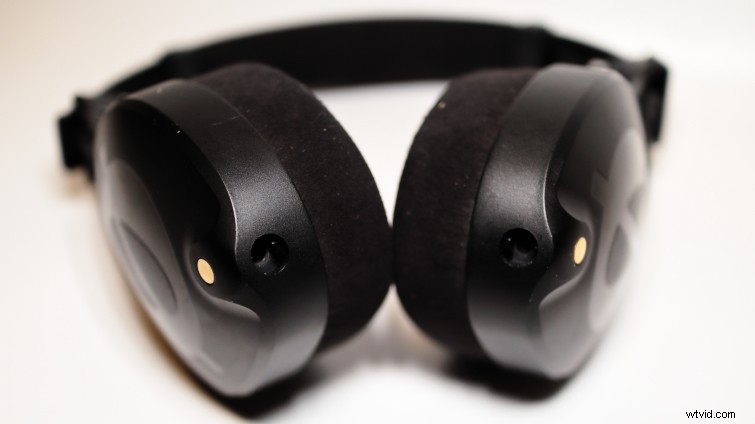 You can insert the proprietary audio jack into either port.
Durability – A Critical Shortcoming
While the metal construction feels solid, the plastic clasp that connects the earcup to the arm snapped after just four months of use. The left earcup fell off, and although a quick superglue fix restored basic function, the headband lost some mobility and the cosmetic appearance suffered.
Multiple users on Reddit reported similar failures, indicating a systemic design flaw. The weight of the headset, combined with a brittle plastic fastener, ultimately undermined the build quality that Rode’s branding promised.
Other Considerations – Weight, Size, and Cable Costs
The NTH‑100 is heavier than the M50x, which can cause discomfort after extended wear. The headband may dig into the skull after 4–6 hours of continuous use, whereas the lighter M50x remains comfortable for longer sessions.
Unlike the M50x, the NTH‑100 cannot fold; the earcups only rotate to a reduced height. Rode supplies a drawstring pouch, but a dedicated carrying case would have been preferable.
The headset comes with a single proprietary cable that locks into the headphone jack. The 1.2 m cable costs $22 and the 2.4 m version $25—double the price of standard audio cables. Audio‑Technica offers three cables, including a 1.2 m coiled cable that can extend to 3 m, and third‑party replacements are readily available at a lower cost.
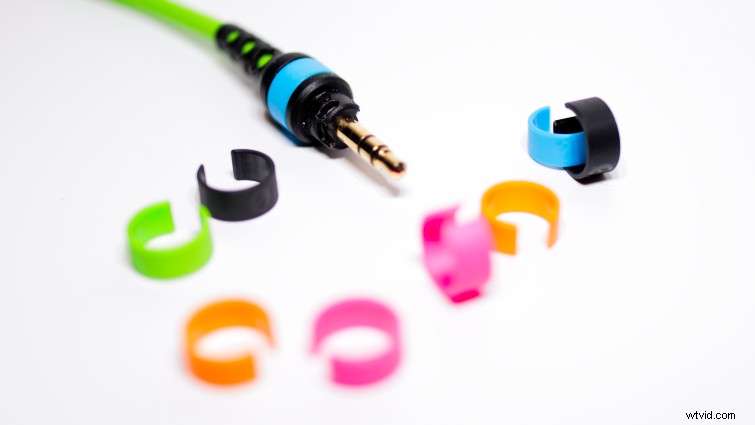 While the headset is an all‑black affair, the included rings add a nice touch of color.
Conclusion – Good Ideas, But Not a Replacement
Rode has introduced several commendable features—memory‑foam earcups with cooling gel, dual audio ports, and a locking height adjustment—that could shape future monitor headsets. However, the combination of a fragile clasp, heavier weight, and a price that matches a more reliable alternative means the NTH‑100 falls short of a true upgrade over the ATH‑M50x.
For professionals who prioritize durability and long‑term reliability, the M50x remains the benchmark in this price segment. The NTH‑100 may appeal to those who value aesthetic flair and modern convenience, but it does not yet justify replacing the industry standard.