
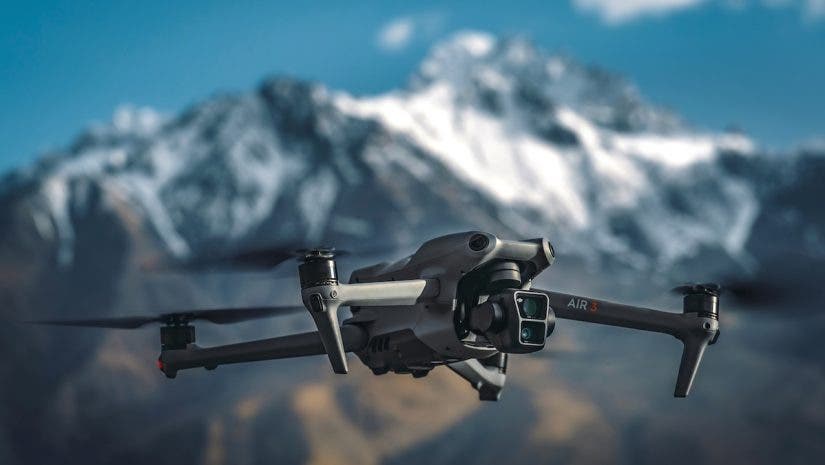
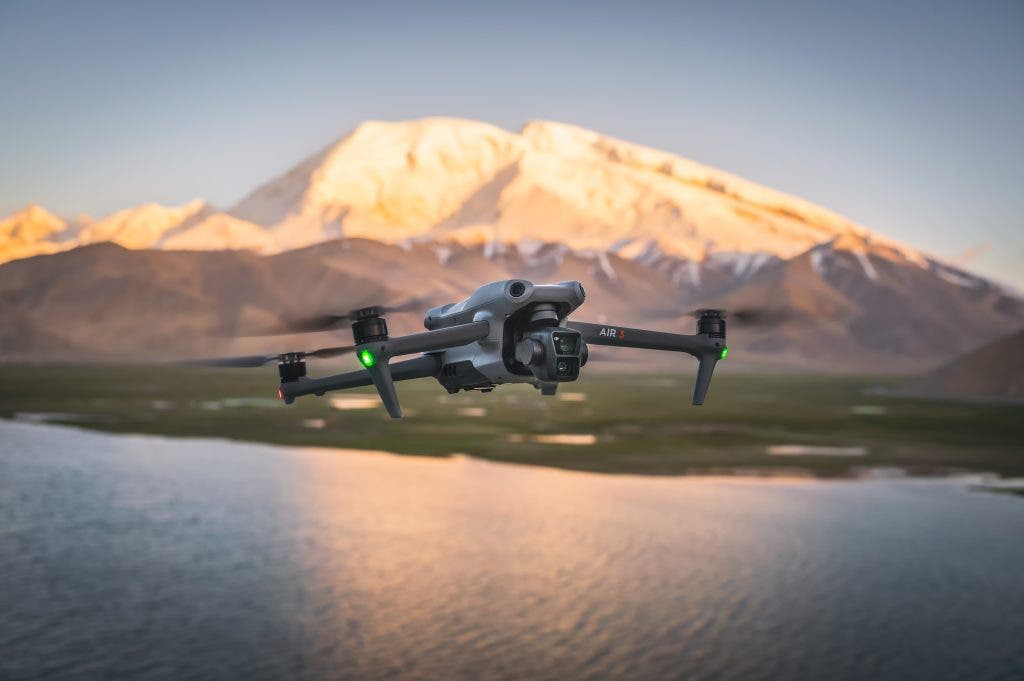
DJI has unveiled the latest addition to its Air line, the DJI Air 3. This foldable, pocket‑sized drone packs a dual‑camera system that records 4K video at 60 fps and captures 48‑megapixel stills. Its 24 mm wide‑angle and 70 mm medium‑telephoto lenses give creators instant access to a range of perspectives, while a 46‑minute battery life and omnidirectional obstacle sensing ensure you can fly with confidence.
Key Features
- 24 mm 1/1.3‑inch CMOS wide‑angle camera
- 70 mm 1/1.3‑inch CMOS 3× medium‑telephoto camera
- Up to 46 minutes of flight time
- Omnidirectional obstacle sensing
- 4K at 60 fps with dual‑camera setup
- 48 MP stills from each lens
- O4 video transmission
- Advanced Smart Return‑Home
- 2.7K vertical video
What’s New About the DJI Air 3?
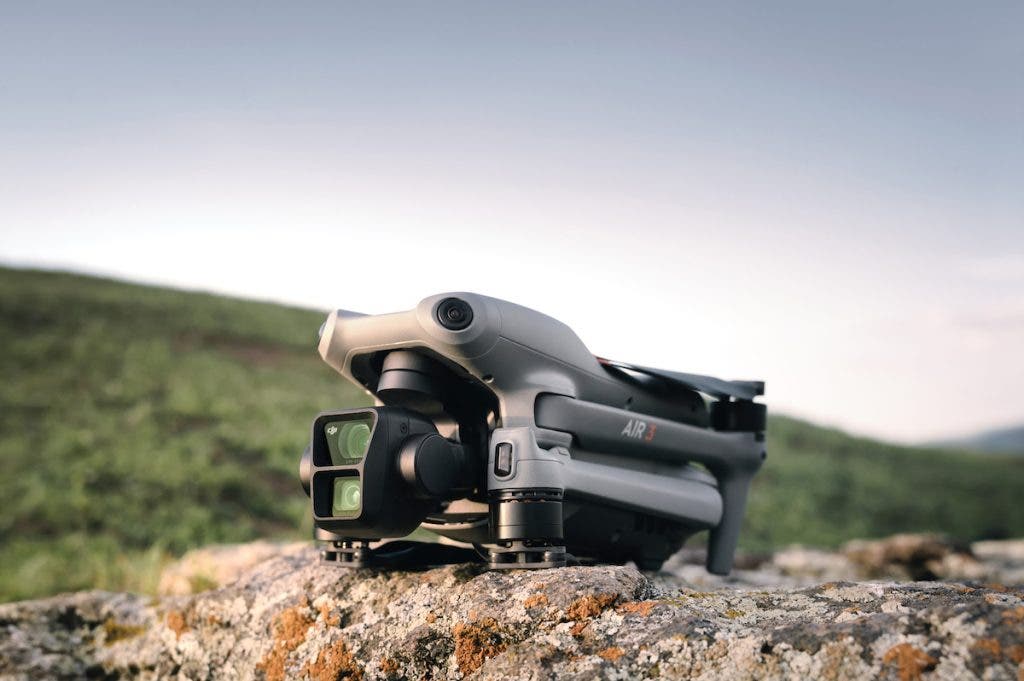
Dual‑Camera System
The Air 3 is the first in the Air series to feature two separate cameras: a 24 mm wide‑angle lens (f/1.7) and a 70 mm 3× telephoto lens (f/2.8). Both are equipped with 1/1.3‑inch CMOS sensors, offering 48‑MP resolution that lets you crop without losing detail.
Each sensor supports dual native ISO in 4K 60 fps HDR, delivering natural color and accurate lighting. The maximum video mode is 4K at 100 fps, and both lenses can record in 10‑bit D‑Log M or D‑Log HLG, preserving data for professional color grading.
New Battery
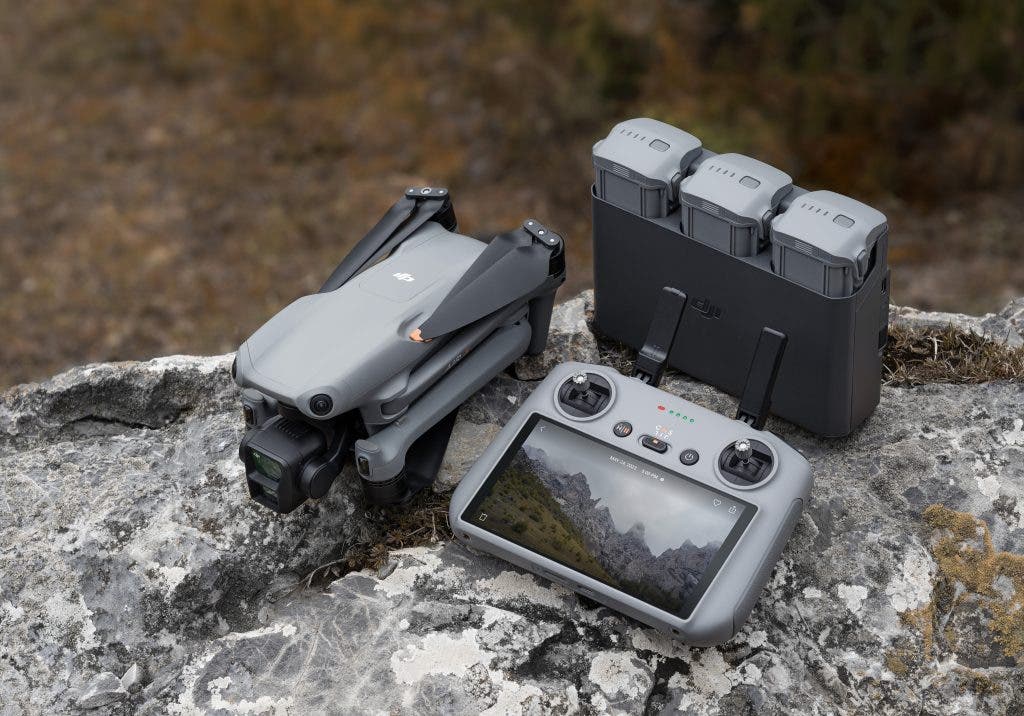
Thanks to a new battery design, the Air 3 can stay aloft for up to 46 minutes— a substantial jump from the Air 2s. The included charging hub supports power‑transfer, letting you combine batteries to keep the one with the highest charge powered, ideal for fast‑paced shoots.
O4 Video Transmission
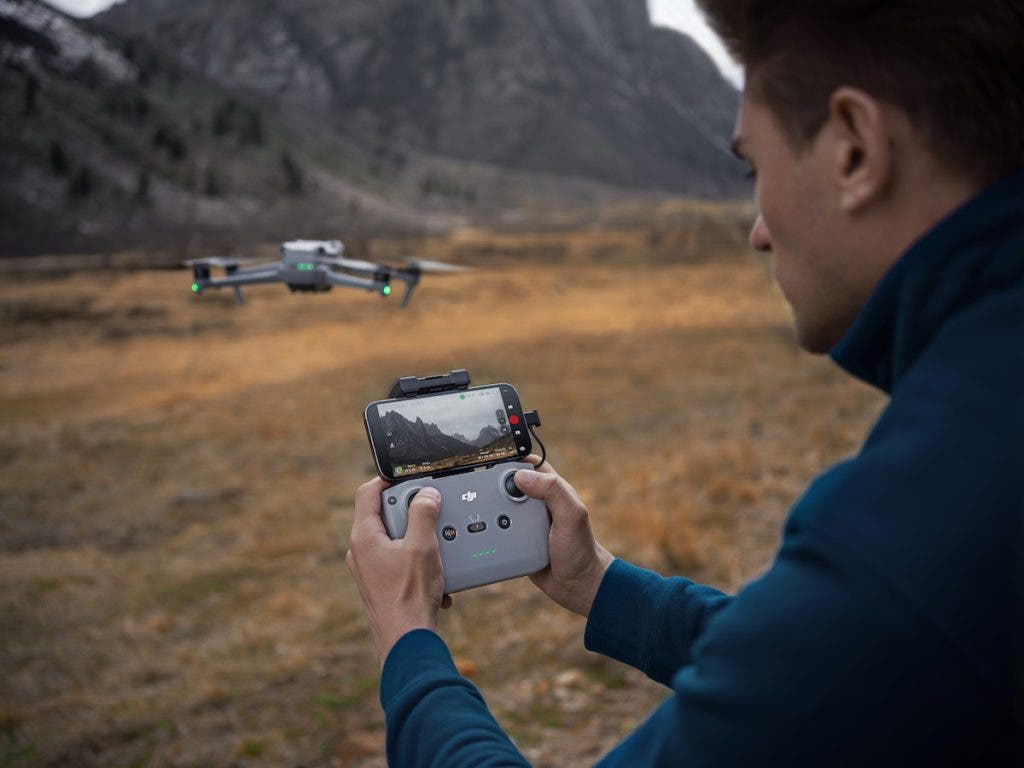
This model is the first Air drone to adopt the O4 system, delivering a 20 km range, 1080p/60 fps live feed, and reduced interference. The DJI RC 2 controller, featuring a 5.5‑inch FHD display, leverages O4 for seamless, real‑time viewing.
Omnidirectional Obstacle Sensing
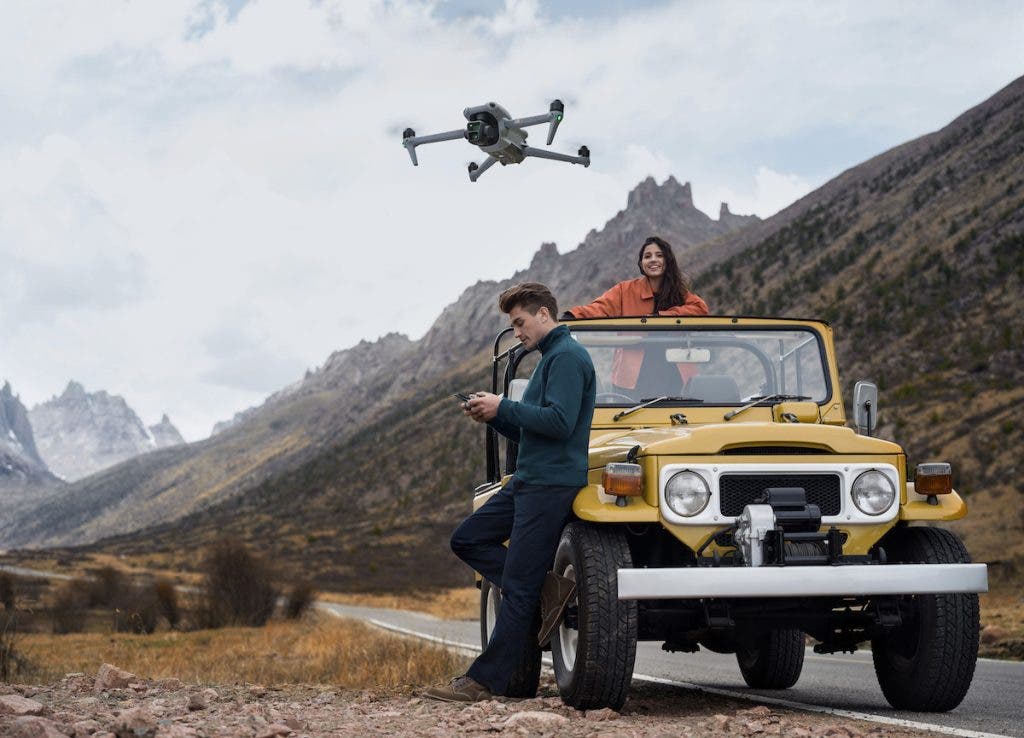
The Air 3’s full‑suite sensors detect obstacles from every direction. When an object is detected, APAS 5.0 executes smoother avoidance maneuvers, giving pilots—both new and seasoned—greater safety.
Smart RTH automatically charts an optimized return path, respecting obstacle data, so you can rely on a safe home‑point touchdown.
2.7K Vertical Video
Both cameras can shoot 2.7K vertical footage directly from the 4:3 CMOS sensor, ideal for social‑media formats. MasterShots automates shooting sequences, editing, and adds music or effects, making share‑ready content possible in minutes.
Who Should Buy the DJI Air 3?
Travel photographers, vloggers, and content creators who need a compact yet powerful platform will find the Air 3 a compelling upgrade over the Air 2s. The dual‑lens design and extended flight time also make it a viable tool for hobbyists eager to push creative boundaries.
Comparable DJI Models
DJI Air 2s
While the Air 2s still offers 4K 60 fps, its smaller sensor limits still‑capture quality compared to the Air 3.
DJI Mavic 3 Pro
Preceding the Air 3, the Mavic 3 Pro features a 4/3 sensor and tri‑camera array, positioning it as the flagship for high‑end professionals.
DJI Mavic 3 Classic
The Classic version delivers similar performance to the Pro at a lower price, retaining the 4/3 sensor and 46‑minute flight time.
Conclusion
For users transitioning from the Air 2s, the Air 3’s O4 transmission, longer battery, and dual‑camera capability offer clear improvements. Its affordability, combined with professional‑grade features, makes it the go‑to choice for creators on the move.

Tyler Glass
Tyler is a photographer and writer based in Louisville, Kentucky. His mission is to inspire others through images while encouraging stewardship of our planet. Follow him on Instagram (@tylerwayneglass), Facebook (@tylerwayneglass), and YouTube.