
Are you looking for new ways to add emotion to your photos? Give monochromatic color photography a try.
Experimenting with monochromatic colors will improve your ability to convey emotions through your images.
In this article, I’ll teach you what monochromatic photography is and how to shoot it.
What Is Monochrome Color Photography?
Any photo containing only the hues or tones of one specific color is monochromatic. There are two ways to do it.
You can achieve the effect of monochromatic colors by using post-processing software. Or, you can take a photo of a scene containing only one color.
Either way, monochromatic photography is about using only one color in your photos. That color should convey mood or atmosphere.
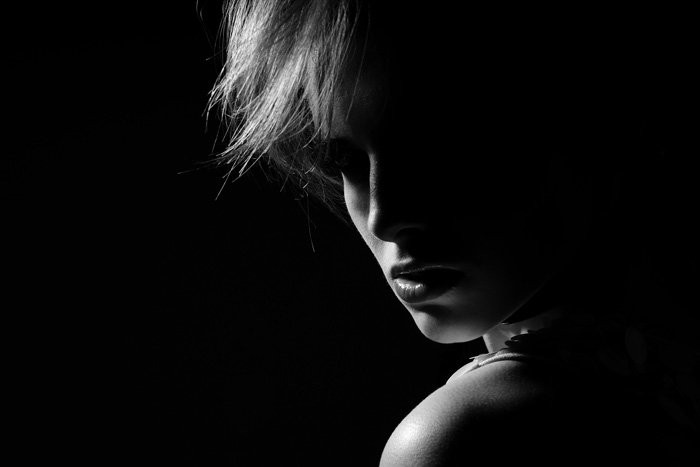
Black and white photography is a well-known example of monochromatic photography. But monochromatic photography is not limited to black & white.
Sepia is another classic example where the photo contains only reds or browns. You can use any color to create a monochromatic photo.
Why Use Monochromatic Colors
There are two main reasons why photographers use monochromatic colors.
1. Simplify
It’s a great way to simplify your photos. In black & white photography, you remove visual distraction. This allows your viewer to focus more on things like composition or textures.
It’s exactly the same for monochromatic photography. Use just one color in your photos and you’ll immediately feel that the image is less complex.
2. Emotions
Colors also inspire emotion. If you capture monochromatic scenes, that effect will be even stronger.
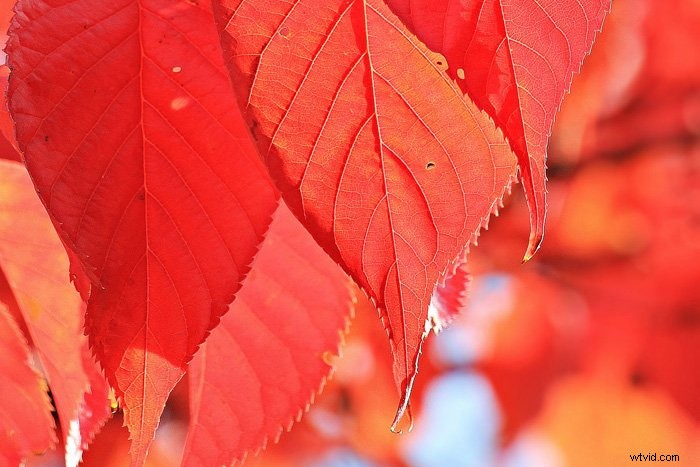
The color red conveys love and valor but also anger or danger. Red associates with passionate emotions inherent to human nature.
The dominant association of green is with nature but also with health and growth. We associate it with trees, seeds, fruit, and vegetables. In some cultures, green means jealousy and sickness.
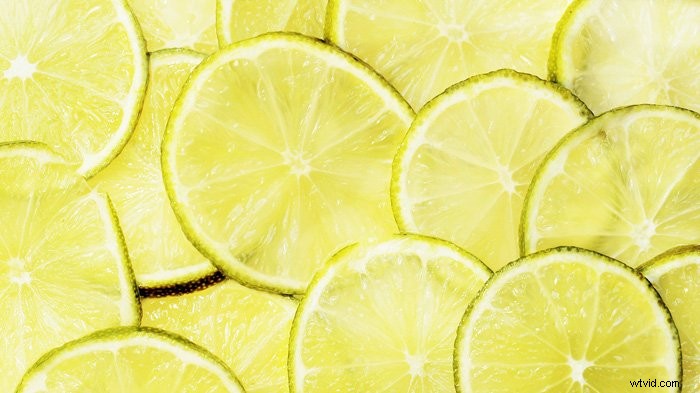
Yellow is the color of the sun, vibrancy and youth.
It creates lightness and a sense of ease. Yellow feels like summer.
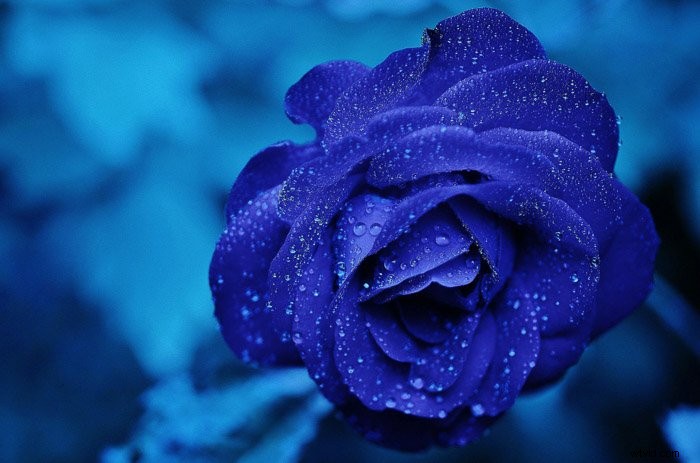
Normally, warm tones are more uplifting and exciting than cooler tones. In monochromatic photography, warm and cool tones tend to be calming and soothing.
It’s because a monochrome image is simpler and easier to look at.
Every culture associates colors with emotions and mood. If you want to understand monochromatic photography, it’s important to learn those associations.
You can find a lot of articles on colors and emotions on the internet.
How to Shoot Monochrome Color Photography
Monochromatic photography is not difficult because you only have to deal with one color and focus on it.
Combining colors in photography, on the other hand, is a lot harder. You need to learn how they combine well and why some combine better than others.
It’s not so for monochromatic colors. You just need to find the right scene to capture and learn which emotions they’ll convey.
You can find monochromatic scenes everywhere. Start out by exploring the man-made world. You’ll be surprised by how many monochromatic photos you can take if you really look for it.
Look at buildings, brick walls, or cars. Even if you look down at a concrete floor or dirt road, you can find interesting scenes.
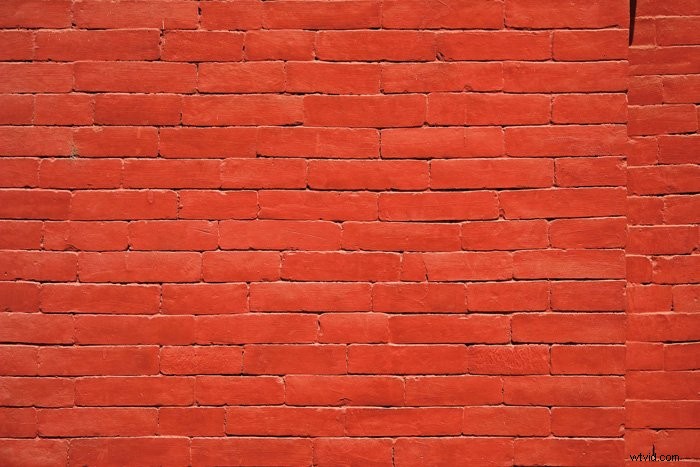
All of these are good subjects for monochromatic photography. Find scenes that contain shades, tints, and tones of one color.
Then, it’s up to you to play around with textures, light, and composition. Don’t worry if your image contains small amounts of other colors. It won’t kill that monochromatic look.
Ask someone which colors they see around them. Chance is they might forget green because it’s everywhere in nature.
Also, blue, yellow, and red can be found in the sky or flowers. The natural world has a ton of monochromatic scenes to discover.
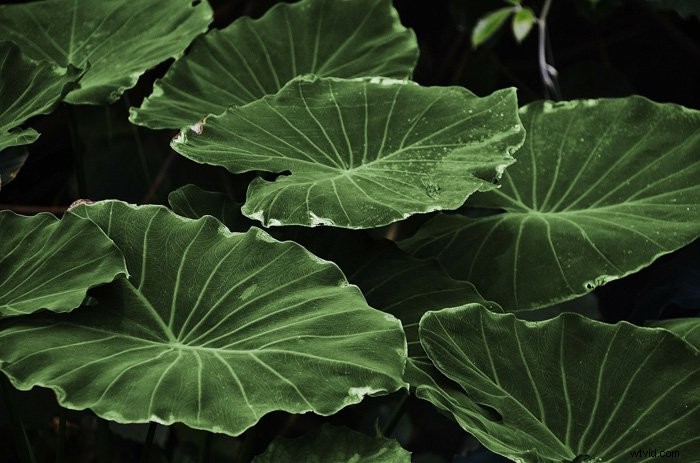
If you want to start with monochromatic photography, there’s only one difficult part. Going out there and exploring the world.
You’ll be amazed by how many monochromatic scenes you’ll discover if you really look and pay attention.
Monochrome Color Photography With Photoshop
If you don’t feel like going out, there’s another way to create photos with monochromatic colors. Photoshop. The idea is to convert a color image to black and white. Then, just replace black with any color you want.
It looks and feels different than real monochromatic photography you can get some interesting results this way. Here’s how to do it.
Step 1: Convert to Grayscale
For the best results, use a simple image. Too many details and objects in a photo will make the result look messy. I’ll use this photo of a frog.
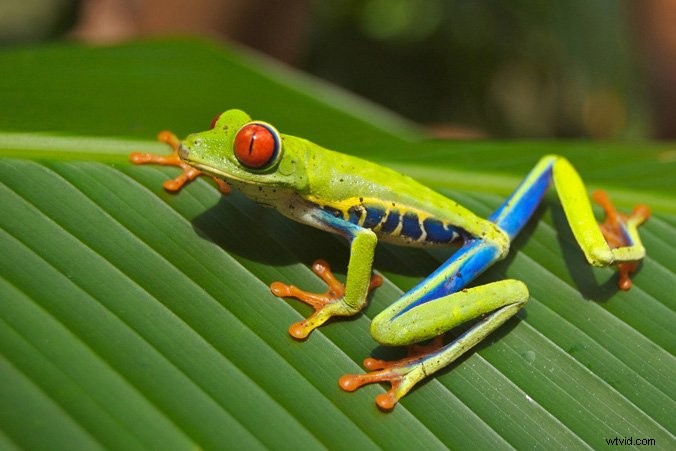
Open the image and go to Image > Mode and select “Grayscale”. Click “Discard” when Photoshop asks to discard all color information.
Your image converts into a black and white photo.
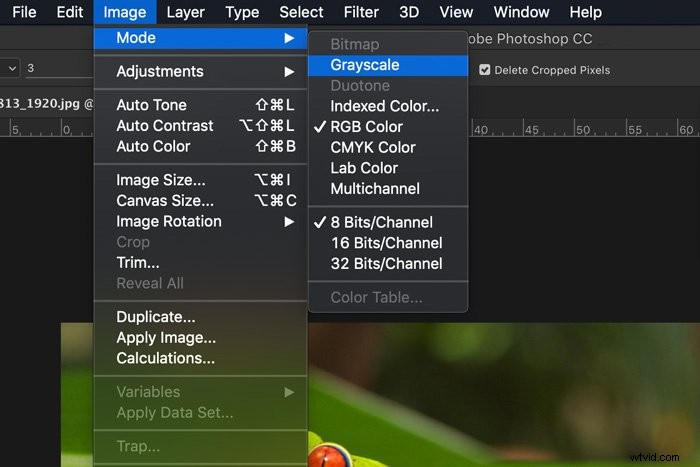
Step 2: Adjust the Curves
This step is optional but doing it will result in a better-looking image. We’ll add contrast to the photo by creating an S-curve. Especially when you want to use a lighter color, this step is necessary.
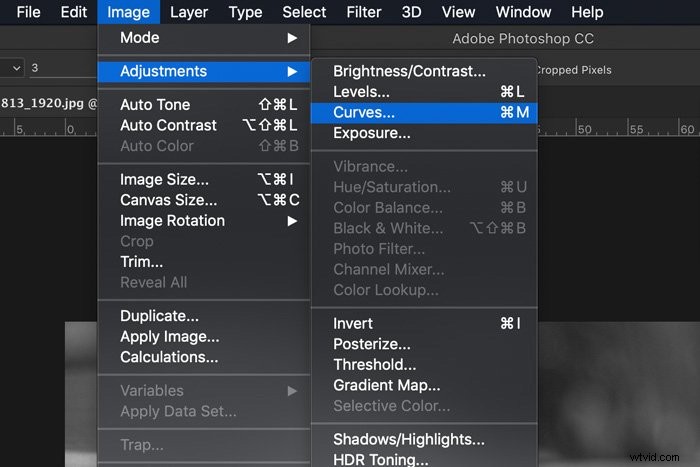
Go to Image > Adjustments and select “Curves…”.
Click in the middle of the diagonal line to create an anchor point.
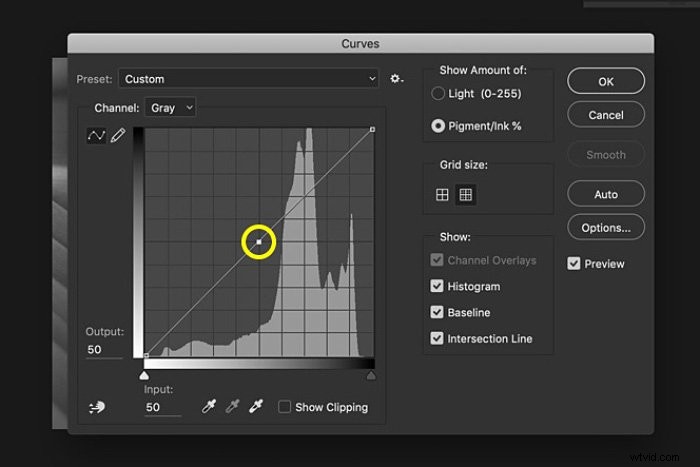
Make two more anchor points. These will allow you to create an S-shaped curve.
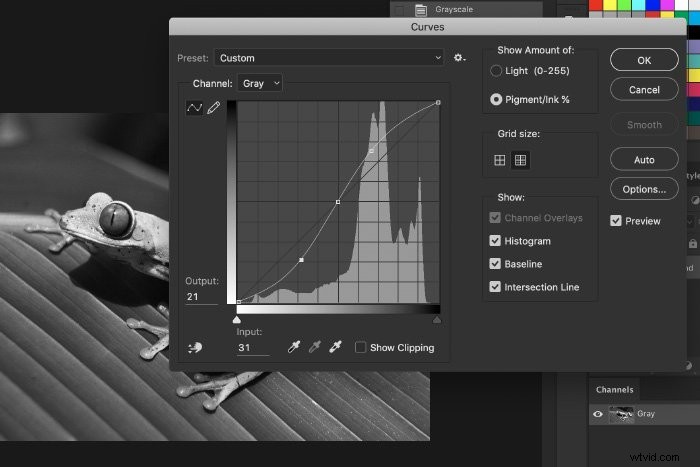
Click and drag to create an S-shape. The more you drag the anchor points to the sides, the more contrast your photo will have.
Make sure to tick the Preview box so you can see what happens to your photo.
Step 3: Convert to Duotone
Finally, we can play around with monochromatic colors.
Go to Image > Mode and select “Duotone”. The duotone window will open up.
From the dropdown menu, select monotone. Only black will remain as a color. Click on the black square and pick any color you want.
Photoshop will ask you to give the new color a name before you can click OK.
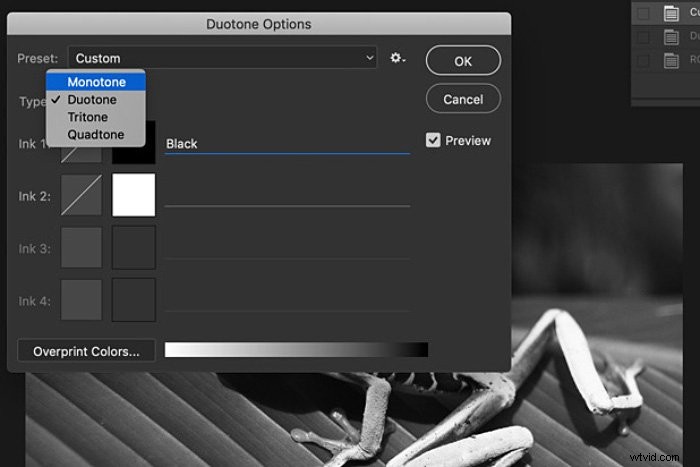
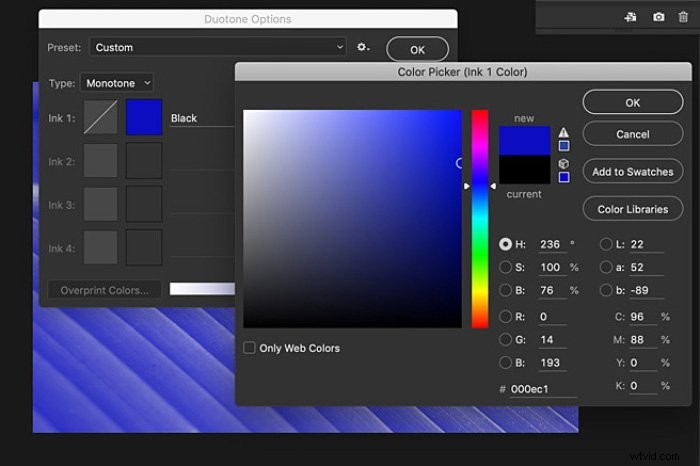
And there it is, a monochromatic photo.
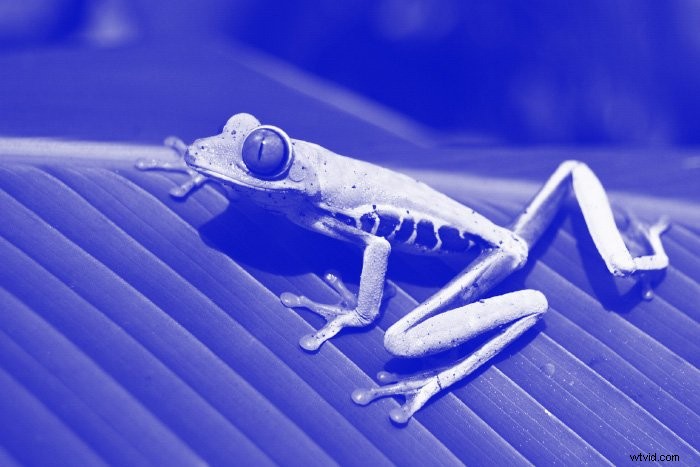
If you want to save it as a jpg, you have to convert the image to RGB again.
Conclusion
It’s fun to experiment with monochromatic colors and it will definitely take your creativity to the next level. It’s also easy to do.
You can go out and look for monochromatic scenes because there are hundreds to discover. You’ll learn how to find details and textures in the real world.
Or, if you want to take a different approach, just open up Photoshop and experiment with the photos on your hard drive.
Find out which colors work well and which don’t. It will open up a whole new world of color photography for you to play around in.