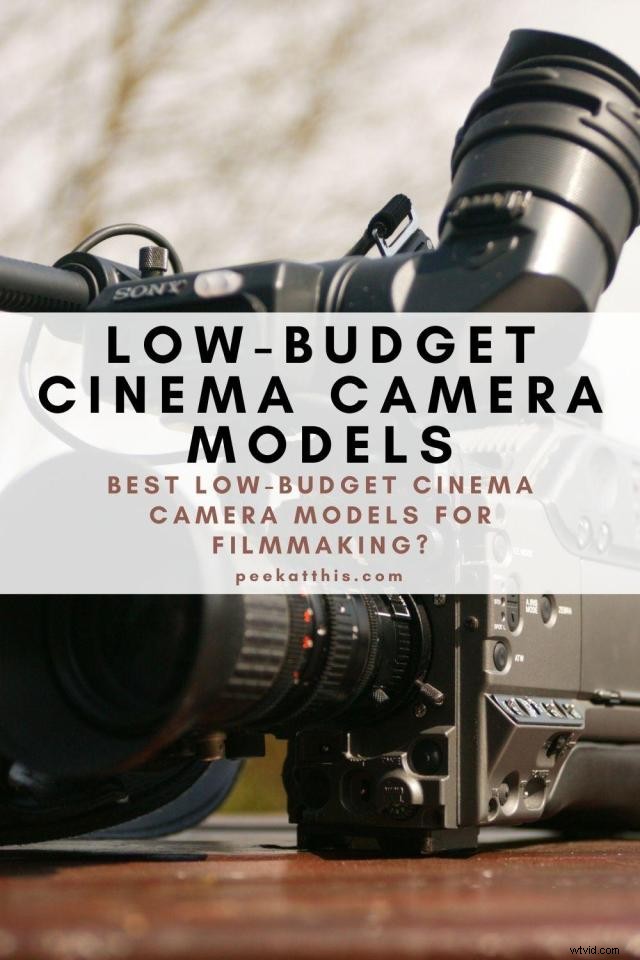
Introduction
The air in Victoria at 4:30 AM smells like sea salt and industrial-grade espresso. I spent 10 episodes as a set dresser on Maid, moving furniture and aging practical locations to look lived-in and worn. “Budget” isn’t a word you hear on a union set. But “efficiency”—that’s the only religion that matters.
Three hours into a night exterior on Going Home, the DP’s $8,000 Sony rig overheated. We had one backup: a borrowed Blackmagic Pocket 4K that cost less than the dead camera’s lens. That footage made the festival cut.
I’m telling you both stories because they’re connected. The camera mattered less than you’d think. What mattered was being ready when the moment came.
Affiliate Disclosure: I link to gear I’ve personally used or thoroughly researched. If you buy through these links, I earn a small commission at no cost to you. I don’t recommend anything I wouldn’t put on my own rig.
The Short Answer
The best low-budget cinema cameras right now are the Blackmagic Pocket Cinema Camera 6K G2 (~$1,995), the Sony FX30 (~$1,798), and the Panasonic Lumix S5 II (~$1,999). All three shoot 10-bit internally, support professional codecs like ProRes, RAW, or All-Intra, and use sensor sizes that align with theatrical standards—without dragging you into a $15,000 support ecosystem before you’ve shot a single frame.
But before we get into the cameras, we need to talk about what actually separates a professional set from an indie one. Because if you buy the right camera but run your set like an amateur, the footage won’t save you.
What Netflix Actually Taught Me About Indie Filmmaking
Indie filmmakers tend to think the gap between a $5,000 short and a $50 million series is the camera. It’s not. It’s the hierarchy, the logistics, and the absolute refusal to waste five minutes on a technical problem that should’ve been solved the night before.
The Hierarchy Is the Engine
On Maid, if the director moved a couch, the entire production would halt for a union grievance. On your indie set, the director is probably also the producer, the writer, and occasionally the grip. That’s fine—but it’s a trap.
I watched the AD hierarchy manage a massive kitchen scene where every plate, towel, and chair had to be reset to the millimeter for continuity. There was no “we’ll fix it in post.” We fixed it in the room, immediately, because the 1st AD’s voice was the only clock that mattered. Meanwhile, I’ve seen indie productions lose their best light of the day because the director was busy swapping lenses.
The fix: Assign one person to one job. Even if your crew is three people, define the lanes. If everyone is responsible for audio, no one is.
“Ready” Doesn’t Mean What You Think
On Maid, “ready” didn’t mean “almost done.” It meant the tape was on the floor, the batteries were fully charged, and the actor was lit. That’s it. Done. Waiting.
Indie filmmakers treat wrap as a suggestion. Union crews treat it as a hard deadline—and that discipline bleeds backward into every setup throughout the day.
The fix: Use a 15-minute rule. If a gear setup takes longer than 15 minutes, you’re burning performance energy and probably losing the light. Simplify the rig to protect the story.
Pro Sets Buy Reliability. Indie Sets Buy Specs.
During a scene with a running dishwasher, the boom op on Maid didn’t reach for a $5,000 mic. He used a Sennheiser MKE 600—a $330 mic—with a specific shock-mount technique to isolate the dialogue. It wasn’t about the price. It was about the placement and the preparation.
On a professional set, nobody cares that your camera shoots 8K if it overheats on take three. Professionals would rather shoot 1080p on something bulletproof than 8K on something that might fail. Reliability is the only spec that matters when you’re paying a crew to stand around and wait.
The fix: Stop shopping the Netflix Approved Camera List like it’s a status symbol. Shop for a camera with reliable media and professional inputs. Then learn it cold, so you’re never fumbling in the moment.
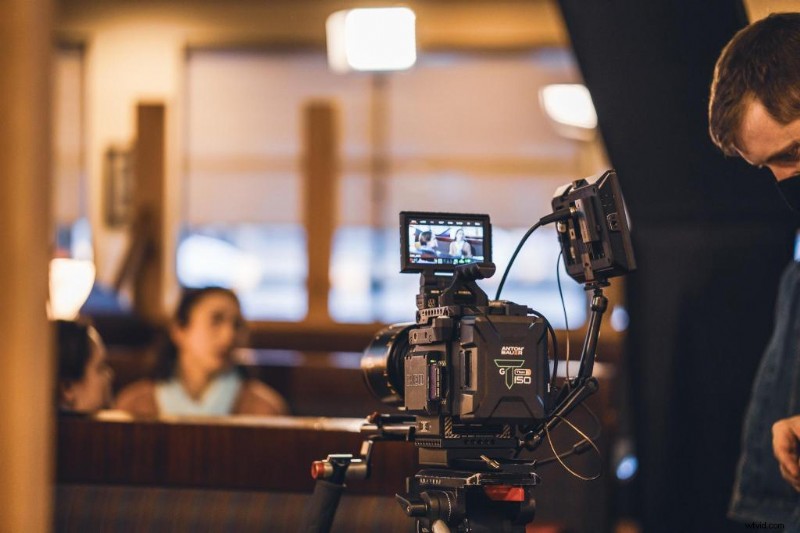 Making Films for Social Change: My 'Going Home' Experience
Why Most Budget Camera Lists Are Useless
Gear blogs publish the same article over and over. Spec sheets dressed up as advice. They’ll tell you a camera shoots 6K at 60fps with 13 stops of dynamic range and external RAW recording. What they won’t tell you: the 6K mode crops to Super 16, those 13 stops only appear at base ISO 400 which is useless in low light, and “external RAW” means you’re carrying a $600 recorder that eats batteries faster than the camera does.
I’ve been on sets where the so-called budget camera required four V-mount batteries, a $400 cage, and an external monitor just to confirm focus. Add it up and your $1,200 body is a $3,000 rig—and you still haven’t bought a lens.
The real question isn’t “what’s the cheapest camera with RAW?” It’s “what gives me usable footage without becoming a $5,000 problem?”
The Thing Nobody Says Out Loud: Codec Over Resolution
4K ProRes 422 HQ will grade better than 6K H.265. Every time. I learned this the hard way on Married & Isolated. We shot 6K to “future-proof” the project, and the files were so compressed that pulling a key in post looked like bad YouTube encoding. We ended up downscaling to 1080p just to hide the artifacts.
Resolution is a marketing number. Bit depth and codec are what survive the edit.
On Maid, the Alexa Mini shot 3.2K ProRes. It graded cleaner than any 6K mirrorless I’ve touched since—because 10-bit 4:2:2 captures more color information than 8-bit 4:2:0, even at lower pixel counts. If your camera only shoots 8-bit internally, you’re not buying a cinema camera. You’re buying a mirrorless with a cinema badge on the front.
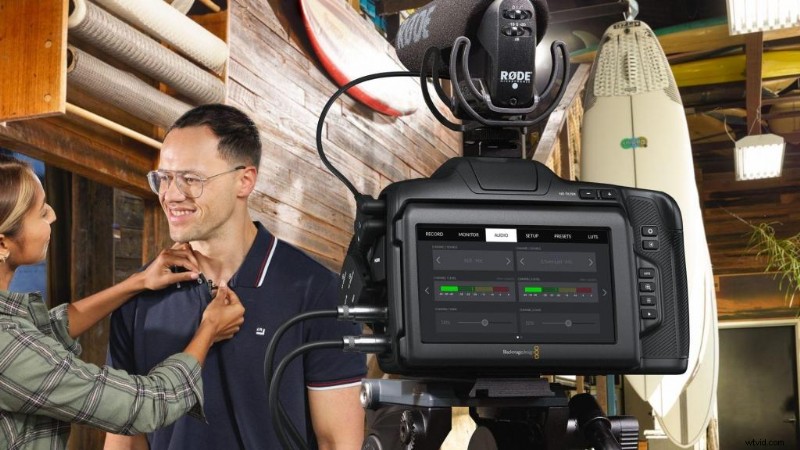
The Cameras That Actually Hold Up
1. Blackmagic Pocket Cinema Camera 6K G2 — Best Overall
- Sensor: Super 35 (6144×3456)
- Dynamic Range: 13 stops (Dual Native ISO 400/3200)
- Recording: ProRes & Blackmagic RAW internal
- Frame Rates: 60fps full sensor, 120fps at 2.8K crop
- Mount: EF (native Canon glass)
- Price: ~$1,995 Buy on Amazon
The only camera under $2K with internal RAW that doesn’t cripple the image. Super 35 is the actual film industry standard—not a marketing claim—and the included DaVinci Resolve Studio license knocks $295 off your software bill on day one.
The battery life is catastrophic. That’s not an exaggeration. On Dogonnit, we burned through three LP-E6 batteries in 90 minutes. By lunch we were rotating cells like a pit crew. Budget at least $200 for LP-E6NH spares or a D-Tap power solution before you show up to set. There’s also no built-in ND, so add $150 for a variable ND if you’re ever shooting outside.
The 4:1 Blackmagic RAW files on that shoot graded clean enough to push shadows four stops without falling apart. That’s not something H.265 lets you do.
Who should skip it: Solo run-and-gun operators. The autofocus exists mainly to frustrate you. If you’re working alone without a focus puller, this will cost you shots.
Accessories you actually need:
- Lens: Canon EF 24-70mm f/2.8L II (~$1,400 used) or Sigma 18-35mm f/1.8 (~$600 used)
- Power: SmallRig V-Mount Battery Plate + 95Wh V-Mount (~$250 total)
- Audio: Rode NTG5 (~$450) or Sennheiser MKE 600 (~$330)
- ND Filter: Tiffen Variable ND (~$150)
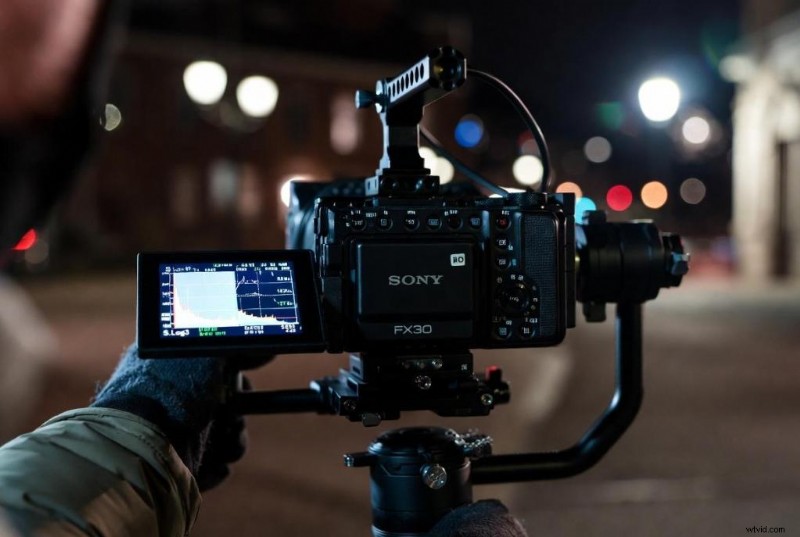
2. Sony FX30 — Best Autofocus & Color Science
- Sensor: APS-C (Super 35 crop)
- Dynamic Range: 14+ stops (S-Log3)
- Recording: 10-bit 4:2:2 XAVC-SI internal, 16-bit RAW via HDMI
- Frame Rates: 120fps 4K (with 1.6x crop)
- Mount: E-mount
- Price: ~$1,798 Buy on Amazon
This is the camera for filmmakers who don’t have a focus puller. Sony’s autofocus tracks eyes through foreground objects, racks focus in near-darkness, and doesn’t hunt when you don’t want it to. It’s genuinely unsettling how good it’s become.
The S-Cinetone profile gives you a clean, deliverable-ready look straight out of camera. On The Camping Discovery, we shot an entire documentary interview in S-Cinetone and only touched the grade to match exteriors. Six hours saved in post. Hard to argue with that.
The APS-C crop is the real limitation—a 24mm lens becomes roughly 36mm equivalent, which gets claustrophobic in tight interior spaces. And if you want Netflix-approved 16-bit RAW, you’ll need an Atomos Ninja V ($650) and a stack of SSDs. At that point you’re spending BMPCC money for equivalent workflow complexity.
Who should skip it: Anyone who hates Sony’s menu system. It’s a labyrinth. Coming from Blackmagic’s touchscreen simplicity, the FX30 might genuinely test your patience.
Accessories you actually need:
- Lens: Sigma 18-50mm f/2.8 DC DN (~$550) or Tamron 17-70mm f/2.8 (~$800)
- Cage: SmallRig for Sony FX30 (~$90)
- Audio: Sony XLR-K3M Adapter (~$600) + Sennheiser MKH 416 (~$650)
- Monitor (optional): Atomos Ninja V (~$650) for RAW output
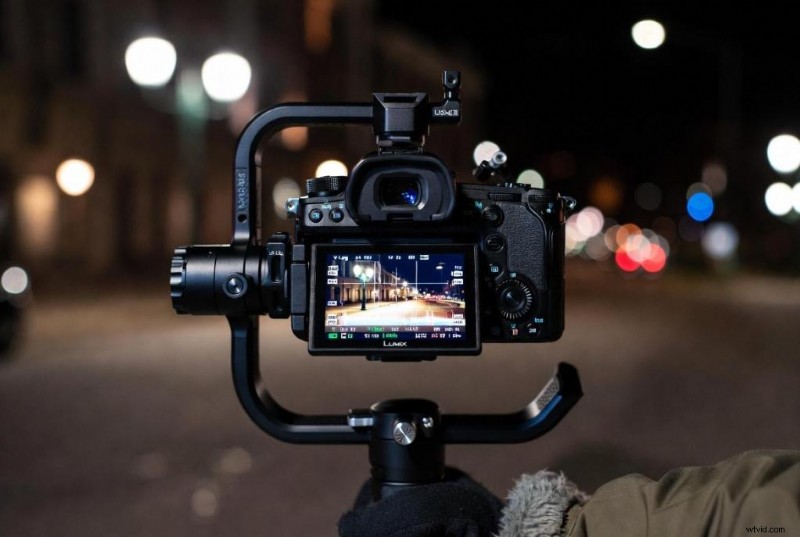
3. Panasonic Lumix S5 II — Best Full-Frame Value
- Sensor: Full-Frame (24.2MP)
- Dynamic Range: 14+ stops (V-Log)
- Recording: 10-bit 4:2:2 internal, 6K open-gate, ProRes RAW via HDMI
- Frame Rates: 60fps 4K, 30fps 6K
- Mount: L-mount (Leica/Sigma compatibility)
- Price: ~$1,999 Buy on Amazon
Full-frame at this price is still kind of absurd. Panasonic added phase-detect autofocus (the original S5 was manual-focus purgatory), and the IBIS is strong enough for clean handheld shooting without a gimbal on most setups. We tested this on a low-light music video in a basement bar—ISO 6400 in V-Log was completely usable. Grain texture rather than digital noise. A $200 Sigma 50mm f/1.4 looked like cinema glass on that sensor.
The 6K Open Gate mode overheats after roughly 20 minutes. It’s the combination of reading the full 3:2 sensor area and the processing load that pushes the thermals over the edge—and no firmware update is going to solve that. Long interviews, live performances, extended takes: plan around it or choose something else.
L-mount lenses also aren’t cheap. The Sigma partnership helps, but you’re not stumbling onto $300 primes the way you would in the Canon EF world.
Who should skip it: Documentary shooters who need bulletproof reliability. Overheating mid-interview is a dealbreaker with no workaround.
Accessories you actually need:
- Lens: Sigma 24-70mm f/2.8 DG DN Art (~$1,100) or Panasonic 20-60mm f/3.5-5.6 kit (~$400)
- ND Filter: Breakthrough Photography X4 (~$120)
- Audio: Tascam DR-10L (~$180) for redundant lav recording
- Cage: SmallRig for S5 II (~$85)
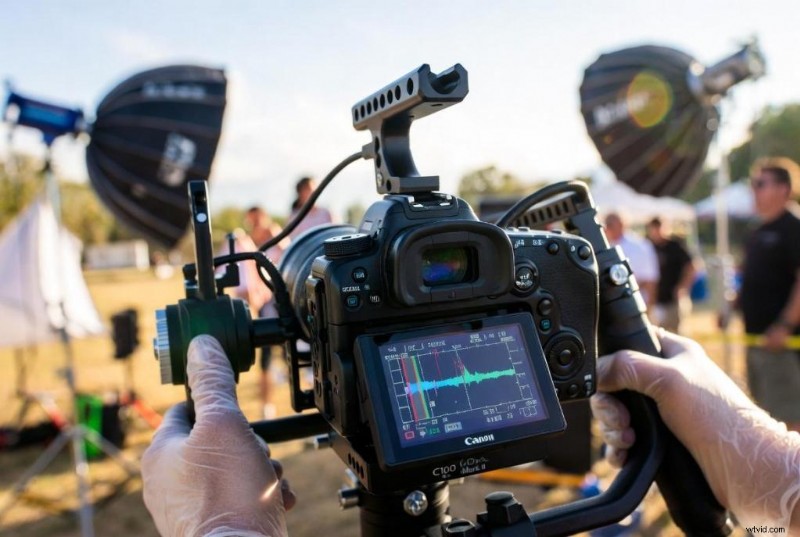
4. Used Canon C100 Mark II — Best “Real Cinema Camera” Under $1K
- Sensor: Super 35 CMOS
- Dynamic Range: 12 stops (Canon Log)
- Recording: AVCHD internal, RAW via HDMI with external recorder
- Frame Rates: 60fps at 1080p
- Mount: EF
- Price: ~$800–$1,000 used Buy on Henry’s
This is an actual cinema camera—not a mirrorless wearing a cinema costume. Built-in XLR inputs. Internal ND filters. Professional ergonomics. Canon’s color science from the C300 line. It only shoots 1080p, but 1080p from a C100 II looks better than 4K from most mirrorless cameras at this price point. The codec, the sensor design, the color tuning—all operating at a different level.
On Beta Tested, we rented a C100 II as an emergency backup when our primary camera broke mid-production. It matched our Blackmagic footage in the grade almost perfectly—same color response, same skin tones, same highlight rolloff. That kind of cross-camera compatibility is genuinely rare.
Who should skip it: Anyone delivering to platforms that require 4K. Also skip it if you’re starting your lens kit from scratch—the body costs $800, but building a basic EF setup will run another $2,000 minimum.
Accessories you actually need:
- Batteries: Canon BP-955 (~$150 each; buy two)
- Media: SanDisk Extreme Pro SD cards (~$40 for 128GB)
- Audio: Already has XLR—add a Rode NTG3 (~$600)
- External Recorder (optional): Atomos Ninja V for 10-bit ProRes
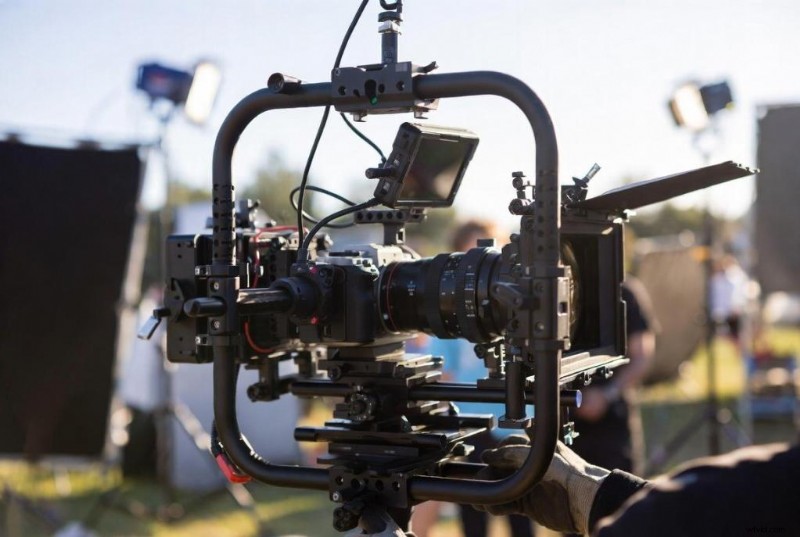
What a "Budget" Cinema Rig Actually Costs
Every camera is a brain without a body. Here's what the camera body doesn't include.
I've watched indie filmmakers buy a $1,500 camera and discover on day one that they can't monitor focus properly, can't record clean audio, and can't keep the battery alive past the second setup. The camera functions fine. It's just completely non-functional as a production tool.
This is something union sets understand instinctively: the camera body is almost incidental to the ecosystem around it. On Maid, the Alexa Mini LF was what Netflix mandated—but it was the full support infrastructure that actually made it work across a 12-hour union day.
You don't need a $10,000 matte box. But you do need a rig. Budget accordingly:
| Item | Cost | Why You Need It |
|---|---|---|
| Cage | $80–$150 | Protects the body, adds mounting points |
| Batteries | $150–$300 | Plan for 4–6 to survive a full shoot day |
| Media | $100–$400 | CFexpress or V90 SD for high-bitrate recording |
| ND Filter | $120–$200 | Essential for outdoor shooting at wide apertures |
| XLR Adapter or Recorder | $180–$600 | Budget cameras don't have pro audio inputs |
| Monitor (optional) | $300–$650 | Necessary if your EVF can't show false color or waveforms |
| Total Hidden Costs | $930–$2,300 | Before you've bought a single lens or light |
🎥 Costs based on 2026 market data. Actual prices vary by brand and features. Camera body not included.
How to Actually Get Cinematic Results
Shoot Flat (Log) and Grade in Post
Every camera here supports a log profile—Canon Log, S-Log3, V-Log, Blackmagic Film. Log footage looks washed out and lifeless in-camera. That’s intentional. It captures the maximum tonal range so you can shape it in post rather than fighting against decisions baked into the image.
On Noelle’s Package, I shot S-Log3 on a borrowed Sony. The raw footage looked genuinely awful—flat, milky, no contrast whatsoever. But in DaVinci Resolve, I could recover blown-out windows and lift crushed shadows without breaking the image. Impossible with a baked Rec.709 profile.
One important thing: learn to read waveforms and false color before you shoot log. If you’re underexposing because the image “looks right” on your screen, you’re introducing noise in post that you can’t fully fix.
Buy the Lens Before You Buy a Better Body
A $600 Sigma 18-35mm f/1.8 on a $1,200 camera beats a $50 kit lens on a $3,000 body. Depth of field, sharpness, rendering character—that comes from the glass, not the sensor. On Maid, we used $15,000 Zeiss Supreme Primes on an Alexa. I’ve since shot indie projects with $400 Rokinon Cine DS lenses, and if you expose correctly and light well, most viewers genuinely can’t tell the difference.
Rent expensive glass for hero shots. Use affordable primes for everything else.
Light the Scene
I’ve seen footage from $50,000 Arri packages that looked like garbage because nobody lit it. I’ve also seen Blackmagic Pocket 4K footage that looked theatrical because someone showed up with two Aputure 300Ds and understood how to shape light.
On Going Home, we shot night exteriors in a parking lot with zero ambient light. Two cheap LED panels bounced off a car windshield gave us enough fill to keep faces readable without looking artificially lit. The scene graded beautifully. Total lighting spend: $200.
Buy one good key light before you buy a second camera body. An Aputure 120D II runs around $600 and will improve your images more than any sensor upgrade at this price point.
Lock Your Exposure and Don’t Touch It
Most “cinematic” footage is just properly exposed footage. Auto-exposure makes your image breathe and shift tone mid-take—and that’s immediately readable as amateur. Lock your exposure, use a light meter or false color, and target skin tones at 50–70 IRE in your log profile.
This is something union sets enforce instinctively. Nobody’s chasing exposure on a professional shoot. It’s set, it’s locked, and the next problem gets solved. That discipline is free. It costs nothing but attention.
Use your camera’s zebras, false color, or waveform monitor. If your EVF doesn’t offer those tools, a $300 field monitor that does is a smarter investment than almost anything else on this list.
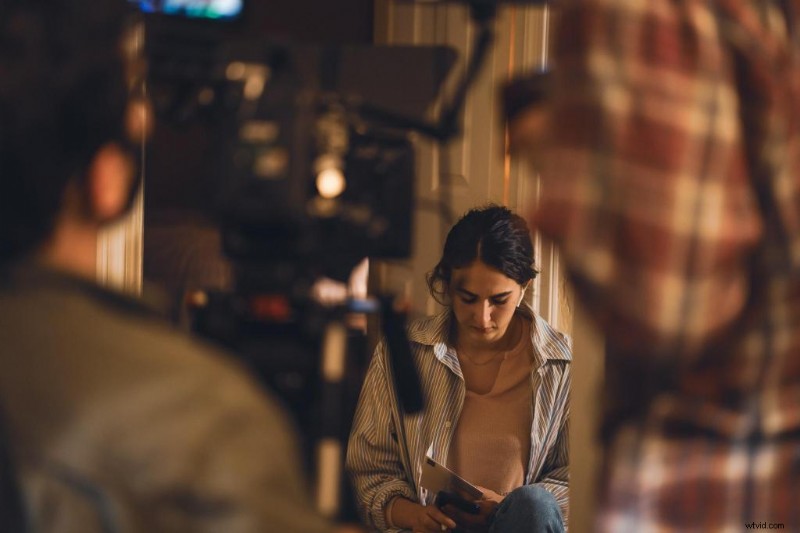 On Set, Trent Peek, Directing an Actor needing space before her next emotional scene for the short film "going home"
FAQs
Is a cinema camera better than a mirrorless for beginners?
No. Cinema cameras require manual focus discipline, external monitoring, and genuine understanding of exposure. If you’re starting out, a hybrid mirrorless like the Sony A7 IV or Canon R6 II will serve you better—you can autofocus, shoot stills, and learn while you work. Cinema cameras reward people who already understand lighting, composition, and post-production workflow. If you don’t know what a LUT is yet, start somewhere more forgiving.
Can I shoot a professional movie on a camera under $1,000?
Yes. Tangerine was shot on an iPhone 5S. Monsters on a prosumer camcorder. Story and craft matter infinitely more than camera specs. That said, if you’re chasing a specific filmic look—shallow depth of field, controlled highlight rolloff, proper motion cadence—a dedicated cinema camera helps. A used Blackmagic Pocket 4K (~$800) or Panasonic GH5 (~$600) can absolutely produce festival-ready work.
What's the cheapest Netflix-approved camera in 2026?
The Sony FX30 (~$1,798) qualifies when paired with an external recorder outputting 16-bit RAW. The Panasonic S1H (~$2,500 used) also makes the list. But Netflix approval is irrelevant unless you’re actually shooting a Netflix Original. For indie work, focus on dynamic range and codec quality—not corporate compliance.
Sony FX30 vs. Blackmagic 6K G2—which one?
FX30 if you’re a one-person crew doing documentary or run-and-gun narrative. The autofocus alone will rescue footage you’d otherwise lose.
BMPCC 6K G2 if you have a focus puller and a colorist and you’re doing controlled lighting setups. The internal RAW and color science are meaningfully better.
Do I need full-frame for a cinematic look?
No. Super 35 is the actual Hollywood standard—most Arri, RED, and Sony cinema cameras use it. Full-frame gives you shallower depth of field, which sounds appealing until you’re shooting wide open and losing half your coverage because an actor shifted two inches. Super 35 is easier to focus and matches theatrical aspect ratios more naturally. It’s a choice, not a requirement.
Used professional gear or new budget gear?
Used professional wins almost every time. A $1,000 used Canon C100 II outperforms a $1,500 new mirrorless in nearly every practical filmmaking metric except resolution. On The Camping Discovery, we rented a used Sony FS7, and the built-in NDs alone saved 30 minutes per setup. No variable ND to fiddle with, no exposure shifts mid-take. Buy used from reputable resellers—MPB, KEH, B&H Used—check the shutter count, inspect the sensor, and test it before the return window closes.
Best budget cinema lenses?
EF mount:
- Sigma 18-35mm f/1.8 (~$600 used) — the indie workhorse
- Canon EF 50mm f/1.8 STM (~$125) — cheap, sharp, great for interviews
- Rokinon Cine DS 35mm T1.5 (~$400) — manual cine lens with a proper focus gear
E-mount:
- Sigma 18-50mm f/2.8 DC DN (~$550) — best budget zoom for APS-C
- Tamron 17-70mm f/2.8 (~$800) — sharp corner-to-corner
- Samyang AF 35mm f/1.4 (~$400) — budget autofocus with a cine rendering quality
Do budget cinema cameras have usable internal audio?
No. Even the FX30 only offers a 3.5mm input, which introduces noise and lacks XLR phantom power. You need an external recorder like the Zoom F6 (~$500) or an XLR adapter. On Pity Party, we recorded dialogue straight into a mirrorless’s 3.5mm jack—the hiss was so persistent we ended up ADRing half the film. Record audio separately and sync in post, or invest in proper XLR. Never trust a 3.5mm input for anything you care about.

The Verdict
Narrative fiction with a crew: Blackmagic Pocket 6K G2. The internal RAW and color science are unmatched at this price.
Solo operator or documentary: Sony FX30. The autofocus will save footage you didn’t even know you were losing.
Full-frame for low-light or a specific look: Panasonic S5 II—but build your shooting schedule around the thermal limits.
Broke and smart: Used Canon C100 II, and spend the savings on lenses and lighting.
One last thing, and it’s probably the most useful thing in this entire article: the best crew members on Maid were the ones you didn’t notice. Their work was done before the director sat down. The camera was ready, the batteries were full, the audio was clean. There was nothing left to solve.
That’s the standard. It has nothing to do with which camera you bought.
Stop looking at the camera and start looking at the clock.
 Trent Peek (@swoop1138) in action, pitching the film Racing Time during a session at the Austin Film Festival—likely in one of their famous Pitch Competitions, where writers get a tight window (often 90 seconds) to present their screenplay or concept to a panel of industry jurors like agents, producers, and managers.
The “PeekatThis” Bio & Closing
The Fine Print: Peekatthis.com is part of the Amazon Services LLC Associates Program, which means we get a small commission when you click our links and buy stuff. It’s a way of saying “Thanks for supporting the site!” We also team up with B&H, Adorama, Clickbank, and other folks we trust. If you found this helpful, share it with a friend, drop a comment, or bookmark this page before you head into your next shoot.
About the Author:
Trent Peek is a director, producer, and actor who spends way too much time staring at monitors. While he’s comfortable with high-end glass from RED and ARRI, he still has a soft spot for the Blackmagic Pocket and the “duct tape and a dream” style of indie filmmaking.
His recent short film, “Going Home,” was a selection for the 2024 Soho International Film Festival, proving that sometimes the “lessons from the trenches” actually pay off.
When he isn’t on set, Trent is likely traveling (usually forgetting at least one essential pair of shoes), falling asleep two pages into a book, or brainstorming film ideas that—let’s be honest—will probably never see the light of day. It’s a mess, but it’s his mess.
P.S. Writing this in the third person felt incredibly weird.
Connect with Trent:
- Watch: YouTube | [Vimeo]
- Credits: [IMDB] | [Stage 32]
- Social: Instagram @trentalor | [Facebook @peekatthis]
- Hear him talk shop: Check out his guest spot on the Pushin Podcast discussing the director’s role in indie film.
Business Inquiries: trentalor@peekatthis.com