
In this article, we’ll examine the EVF, its usability pros and cons, and the best options for an indie filmmaking budget.
Back in the glory days of film, the only way to see what the camera was seeing was by placing your eye to the eyepiece and framing up the shot. This meant that the cinematographer or operator was the only one seeing what they were capturing, giving them tremendous power on a film set.
Once digital came along, with its SDI/HDMI-out cameras, the whole set could see the image in glorious high definition, color-graded, and ready for the big screen. If the PA didn’t think your ratios were right, they could point it out to the whole set, and the producer could agree with them.
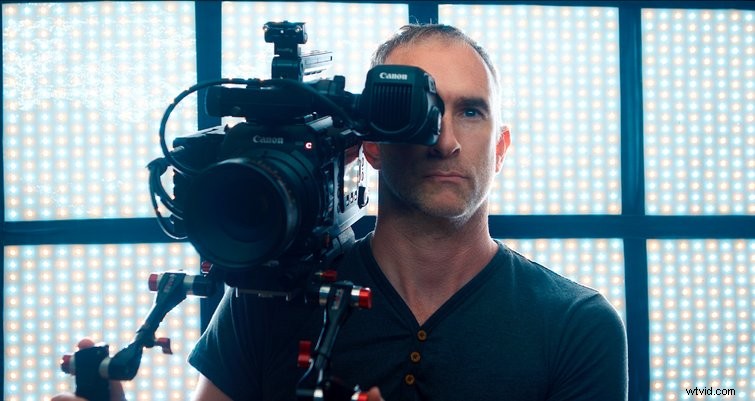
Cinematographers who worked in the days of celluloid love the EVF (Electronic Viewfinder), which is a tiny display inside an eyecup that only allows the person next to the camera to see what’s going on. Besides offering a one-person view of the camera’s sensor, the EVF has some key advantages and disadvantages worth noting.
Camera Native vs. Third Party
EVFs on the market today break down into two camps: camera native and third party. The camera native ones, like the ARRI EVF-2 and the Canon EVF-V70, cost upwards of $6000 and have custom camera controls, as well as high-quality displays. They are, however, out of reach for most indie filmmakers. The Canon costs more than the Canon c200 Digital Cinema Camera.
The third party ones, like the Zacuto Gratical and the PortKeys OEYE-3G, come in between $1000 and $2000, and connect to the camera via HMDI or SDI. They don’t add extra menu buttons or camera controls, but they give a great image and most have advanced features, like false color and peaking.
EVF Usability
EVFs are most useful on bright, sunny days when glare makes monitors hard to see, or when the position of the camera makes it hard to see. If you’re shooting in a constrained environment — like the back of a car — a EVF pressed against your eye will take up a lot less room than a five-inch monitor on an arm.
An EVF also adds more stability to a handheld shot because the rubber pressed against your eye adds a point of contact, making the camera less “tippy.”
A final advantage of an EVF is when shooting intimate drama scenes. Because one eye is pressed to the EVF and the other closed, it’s less distracting for an actor than the operator/DP watching a small monitor just off their eye-line. Less light will escape compared to a backlit monitor, allowing the actor to focus on their scene partner.
An EVF totally eliminates your peripheral vision. You’ll be dependent on other members of the crew to keep you from colliding with things. It’s never a good idea to do walking or moving shots with an EVF, unless someone you trust is spotting you, making sure you don’t get taken out by a car or walk into a low-hanging sign.
The Future
EVFs definitely have their place on set, and as miniature high-resolution LED screens become cheaper — thanks in part to their use in cell phones — there’ll be more and more full-featured offerings for filmmakers of all budgets.