
Is there anything inherently wrong with acquiring older technology in the age where “new” is often perceived as best? Let’s take a look.
I think it’d be fair to say that the rate at which new cameras are announced and released is quite astonishing. While better and newer cameras are seemingly on an endless supply belt, is there anything actually wrong with acquiring older technology? Here are my reasonings.
One Lens Ecosystem
First, some context. Since September, I’ve been trying to figure out what’s going to be the big one, the big cine camera investment that’ll last me for years to come. To shoot client work, stock footage, and personal passion projects.
I wanted something with built-in NDs, 12-bit color, RAW, and the possibility of shooting at a higher framerate than 60fps. I was thinking about the URSA G2, but I had the URSA 12K for a few weeks recently, and having previously owned an URSA Mini 4.6K, I know that the form factor is just too much for me as a solo shooter. So, I opted for the C300 Mk III.
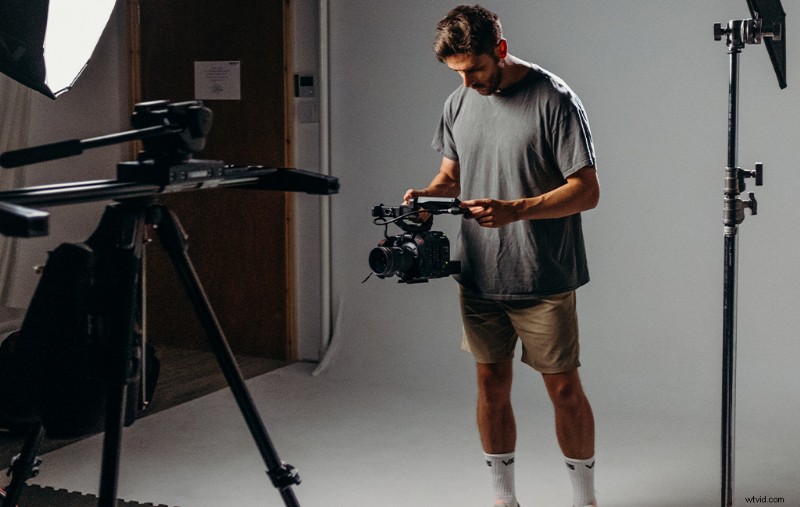
I wouldn’t say I like to use hybrids much. I’ve also wanted to have a cine and photo setup under the same lens mount for years. I still think you’re better served by having a separate dedicated photo tool and a reliable video tool. If one breaks, you still have the other.
But, for years, it was a case of having a set of lenses for photo and a separate set of lenses for video. I know you might be thinking, “Why not use an adapter?” In a lot of circumstances, it wasn’t plausible.
For example, the Voigtlander 17mm wouldn’t work on a Sony, or my Fuji XF lenses weren’t compatible with that camera, and so on.
So, finally, after almost a decade, I’m back to having both cine and photo under one single lens mount—the EF mount—and the camera I recently purchased to accommodate the stills was the 5D Mk IV.
Five Years Is a Lifetime in New Tech
As of this year, 2021, the 5D Mk IV is a five-year-old camera. In terms of technology, that seems like a lifetime. If we jump over to the Blackmagic line for comparison, within that time we’ve had the URSA Mini 4.6K, the Mini Pro, the URSA Broadcast, the Pocket 4K, the 4.6K G2, the Pocket 6K, and now the URSA 12K.
When I think of the 4.6K, it feels like that release was a lifetime ago, and extremely outdated compared to something like the Pocket 6K.
Likewise, without going through all the numbers, Sony has had four new entries into the alpha line since 2016. Even Canon introduced an entirely new system—the mirrorless RF series.
The point? Technology, especially camera technology, moves fast.
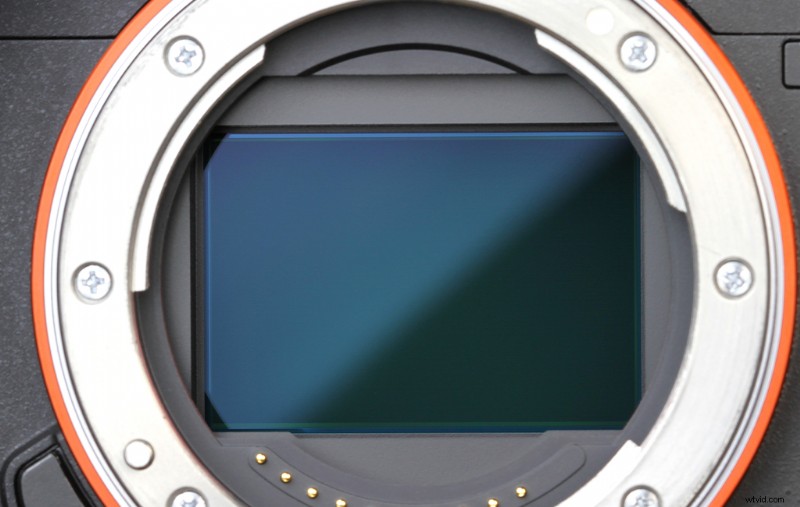
It may feel like to even think about getting an expensive digital camera from five years ago would be a huge detriment because of how outdated it may seem compared to newly-released models. That’s certainly reflected across social media and YouTube. There’s a slight collective thought-process that older cameras won’t produce images as good as the current models released on the market. However, that’s simply not true.
Now, the primary aspect of picking up the 5D Mk IV was, of course, for the native EF mount, and I wanted the best Canon stills camera with that mount outside of the 1D series. The R5 wasn’t within my budget. And, regarding the 6D Mk II or the 5D Mk III, while I didn’t buy the 5D Mk IV for video, I knew in the back of my mind I’d likely use it as a B-cam at some point, so 4K was also a selling factor.
But yeah, this is a camera from 2016 and, notably, some of the internals do feel dated. There’s no focus peaking, which I find incredibly useful when hunting for the hyperfocal distance on landscape shots.
Image Quality Doesn’t Move That Much in 2021
However, regardless of some features that may be missing (which I’ve become accustomed to), when I was using the Sony A7R IV, the image quality is still world-class. It’s Canon at their best.
This is the critical element I want to hit home on. It’s important to note that when you’re purchasing a newly-released model over an older camera (or older variant of the line), it’s the functionality of the camera and the elements that boost the efficiency of being able to take your photo that has dramatically increased. Newer ameras offer the likes of using autofocus in low-light, better low-light performance, and more focus points. You will also find better in-camera stabilization, more color accuracy on the LCD screen, and so forth. This is usually what you’re paying extra for.
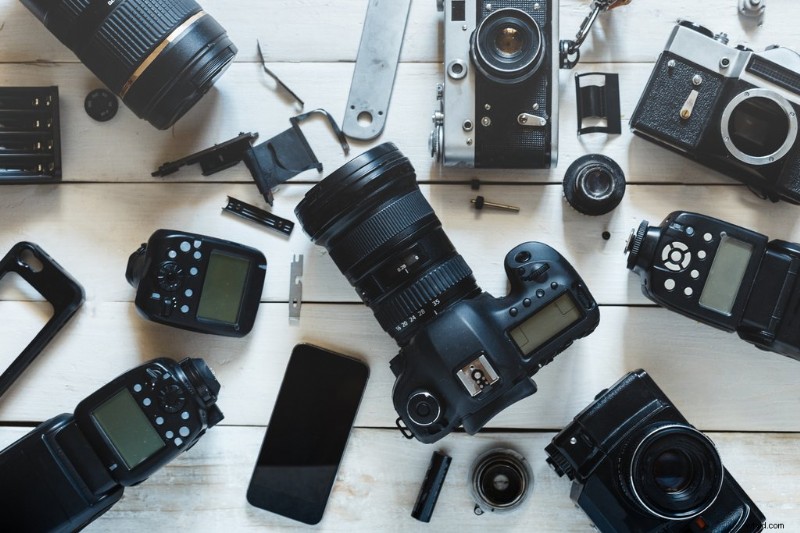
Of course, upgrade to upgrade, new processors or a redesigned sensor will give a slight boost in image quality. If we compare the 5D Mk III to the 5D Mk IV, the Mark IV has more megapixels resulting in larger photos and better color rendering because, of course, the manufacturer needs to entice you to buy the next model. But still, at some point, the older model was the current top version of the camera available that many pros shot with. The images that the camera produces suddenly don’t become worse.
I’d argue that since 2013, possibly earlier, if you’re paying over $3,500 for a camera and you know the basics of taking a photograph, the images are going to be fantastic. Whether or not they’re visually interesting or composed with motivation is at the discretion of the photographer’s skill. But, regarding image quality, it’s going to be fine. There’s only so much, here in 2021, you can advance the quality of photographic images within that price bracket.
The rate at which technology advances—mobile phones, GPUs, video games, etc.—has influenced how we see technology regarding its age. An iPhone from 2016 may feel sluggish and be devoid of features compared to the latest model, but while a camera from 2016 may not have the functionality of a 2021 model, the image quality still exists. There’s a reason why some photographers are still getting film images published on cameras from the 80s and 90s. Likely earlier.
Now, there’s a caveat. Nothing I said today equates to the video functionality of a camera. A camera from 2016 that has video is going to be vastly dated from a camera in 2020. In 2020, it got to the point where pretty much every $3,500-7,000 camera is producing exceptional video. And, in 2025, I would imagine someone could create the same video.
If you’re looking to acquire a new camera, take a look at our tutorial below. Jason runs through a few tips you should consider.
For more on film and photo technology, check out these articles:
- 14mm Focal Length for Filming Conversational Scenes
- Is Building a PC the Best Option for a Video Editor?
- How to Master the PC to Instagram Workflow for Posts
- 7 Best-Recommended Headphones for Editing Audio
- Is Deepfake Technology the Future of the Film Industry?
Cover via Anikin Dmitrii.