
Depth, compositional space, and the evening sun. These are a few practical elements outside of using tungsten light to light a single subject.
Over the past five years, we’ve seen online content creators take advantage of the low-priced and high-performing daylight-balanced LEDs that have taken the market by storm. Thus leaving the classically hot and robust tungsten Fresnels on the shelf.
While online content now relies primarily on daylight-balanced lights, you can still make good use of tungsten light in a daylight-balanced scene.
The video tutorial will cover this in-depth, but if you’re low on data, or quite simply would prefer to read the information, you can find an abridged transcript underneath.
Halogen, tungsten, incandescent: when you hear these words relating to light, it’s usually referring to a type of light created by a heated source. This will typically produce a warm light glow, which, on the Kelvin scale, is around 3200k. When your camera is set for a daylight white balance, a tungsten light source will appear orange and warm. As such, when you mismatch these two lighting sources on a single subject, say a daylight key and a tungsten fill, often the image isn’t going to look that appealing.
I made this mistake in 2012 and quickly learned that these two color temperatures don’t work that well when directly mixed. Of course, I imagine many people have put it to good use, but for the most part, it’s not that flattering, and it’s often unrealistic if you don’t have a tungsten source within the scene (a lamp for example).
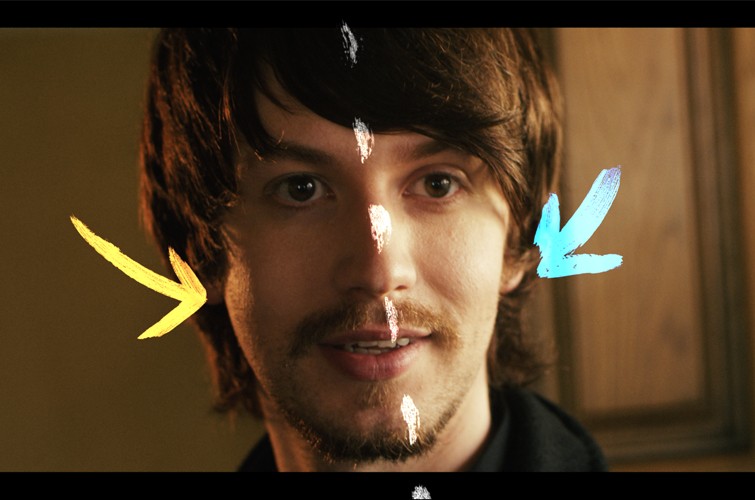
However, there are a few circumstances when you could use tungsten lighting in a daylight-balanced scene, without it looking like a high school theater play. One is compositional depth.
In the video below, warm lighting fixtures are illuminating the location, and I had intended on illuminating the musician with a daylight fixture. Instead of turning the practical lights off or gelling them, I decided to keep them on to create a separation of cold and warm colors, which will help develop a sense of visual depth.
I’ve used the very same technique in the tutorial.
You may question, and rightly so, if you could just do this with daylight-based lights, too. And yes, you would be correct in suggesting so. However, I would argue that it would give the environment and overall ambient feeling, rather than giving us a sense of compositional space, which is a result of the contrast of the different color temperatures.
I would love to have also recorded several shots with the lights off and instead show my secondary daylight fixtures illuminating the background, but since I recorded this several years ago, that isn’t possible, so instead, we will go back in time . . .
(Using Cinematography Database’s CineTracer.)
Here, I’ve rebuilt the entire studio set to show what the location would look like solely illuminated by daylight. Of course, there is still an element of depth to the image, but it’s become much more clinical and standardized as opposed to creatively presenting the location.
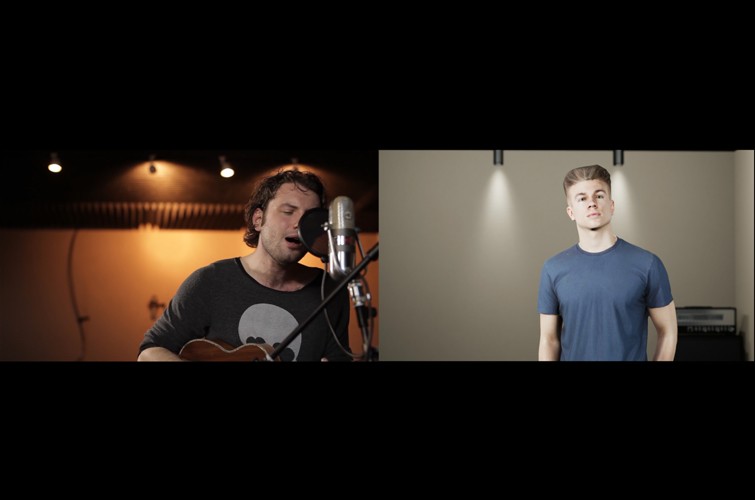
Of course, this isn’t to say that to create depth you always need to completely light the background with different color temperatures; that’s just impractical. Sometimes, a splash of light is all you need.
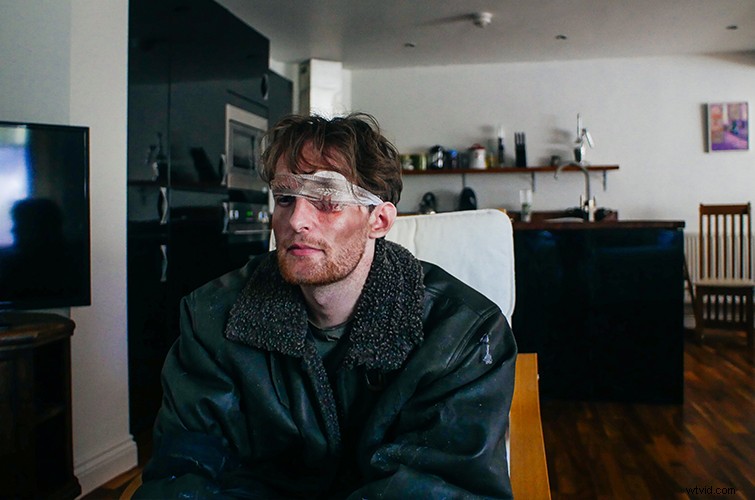
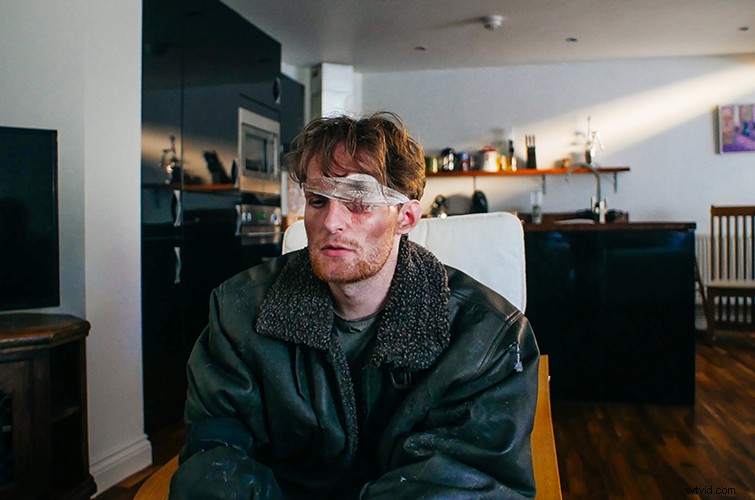
These stills are from a project I was working on a few years ago. At this point, it’s coming into the evening, there are no lights on within the house, and the actors are illuminated by daylight fixtures. It looks fine, but I think it also looks flat.
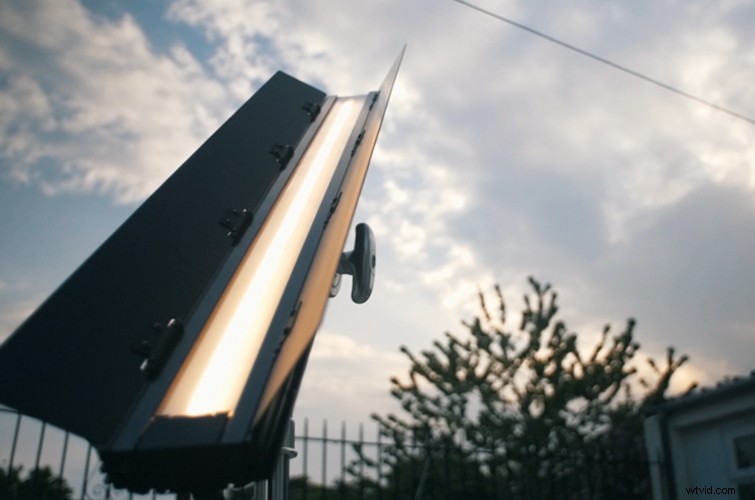
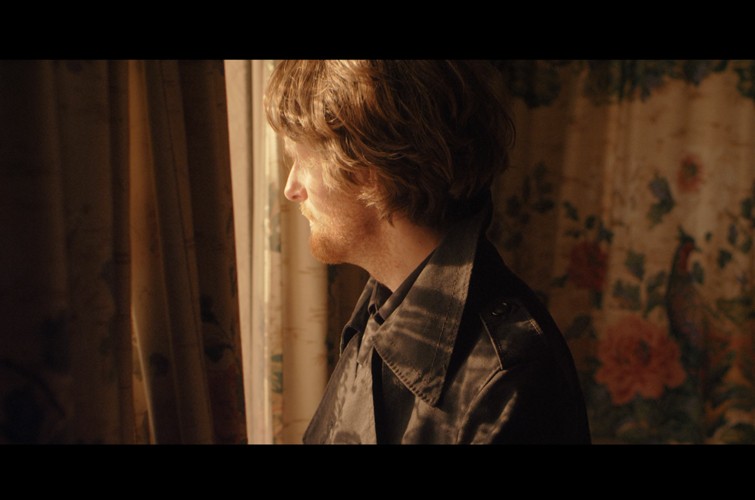
Therefore, by using a 3200 kelvin-based Bladelight, we can create a cut of evening sunlight on the background, and even as a backlight onto the talent.
Evening Light
In a previous article, we went over the entire kelvin scale chart to demonstrate how each color temperature appears. The evening sun is around 2900-3000k (depending on how low it is over the horizon.
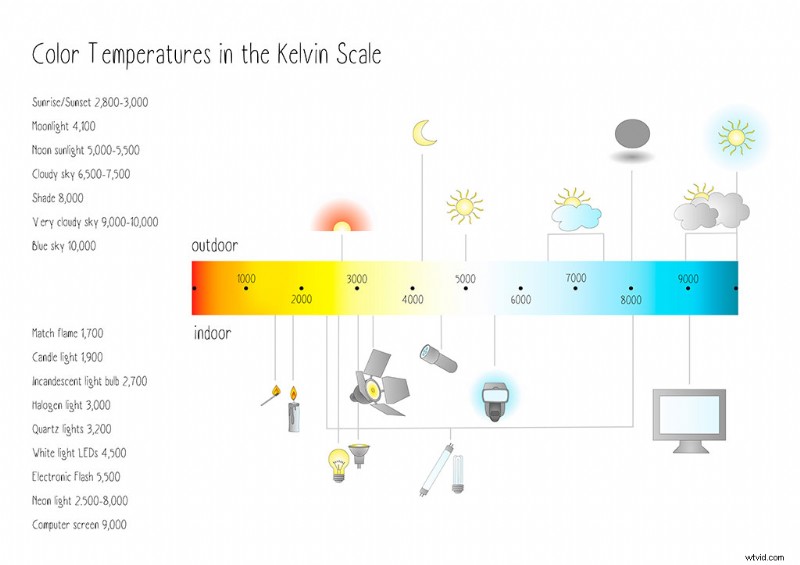
Initially, I said that you would get mixed results when using a daylight fixture and a tungsten fixture to illuminate a subject. However, upon removing a tungsten fixture on a daylight-balanced image, you now have a light that imitates evening light; therefore, we can look at using tungsten-balanced light on a daylight-balanced image to replicate evening light.
Looking for more on lighting? Check out these articles.
- Top 10 DIY Lighting Rig Tutorials to Light Up Your Set
- Color Temperature and 3 Point Lighting Basics
- Cinematography Tips: 10 Things Beginners Need to Know About Lighting
- Cinematography Tips: How to Use Additive and Reductive Lighting
- How to Build A Super-Bright DIY LED Balloon Light
Interested in the tracks we used to make this video?
- “Red Wire” by The Lone Wranglers
- “Rotations and Swings” by Alex Studio
- “Bicycle at Night” by Peter McIsaac Music