
Think about the last really great short film or documentary you saw. What was it that held you the most — Was it the dialogue? The way the light hit the subjects? Or the way the camera captured a quirky detail shot, a breathtaking landscape, or a background movement so subtle you’d miss it in a blink?
Though the most compelling films seem to center around the action, watch carefully and you’ll see that a lot of magic hides within the moments in-between: the transitions, the lingering pauses, the movements into a new place or the exiting of another. Despite its relegation as second-class footage, what really holds a production together is the b-roll.
You may think of it as an afterthought, but top-notch, creative visuals can make the difference between run-of-the-mill videos and those that capture and captivate the viewer. Working together with what’s called “a-roll,” or your primary action and interview footage, highly engaging b-roll can add visual interest and show us the story without having to say a word.
If you’re feeling stuck in a shooting rut, follow these tips and techniques that will elevate your b-roll to new level.
1. Match Your B-Roll’s Mood to That of the Entire Video
Unique skyline of New York City (day to night) by stockelements
You probably have an idea of how you’d like your final film, and certain key sequences within it, to turn out. Use that aesthetic as a guide when you start planning b-roll, but don’t confine yourself to it entirely.
Is there a scene full of high-energy action? Try for dynamic, quick-cutting shots. Are you trying to emphasize and prolong a single moment in time? Search for dramatic, languid footage that can drive your story forward. Whether the mood is somber, peppy, or hopeful, look for b-roll that supplements the overall feeling.
2. Let Your Subject Guide You
If interviews are a key component to your film, listen carefully to what the subjects are telling you. Then, make it your job to illustrate those key points. Does he mention a specific location? Recall a memory? Describe a movement or feeling? Find a way to reveal these to the viewer with b-roll. That way, you won’t have to rely on someone’s words to paint the full picture.
3. Try a Different Perspective
Top down view of London city workers on their commute by Chris Schmidt
Varying the angle of your shots can add an unexpected twist to your final product. Try shooting really, really high for a bird’s-eye view. Then crouch low on the ground and shoot upwards — you might just find that your surroundings take on new character from an unfamiliar viewpoint.
4. Don’t Stop Rolling
It’s frustrating when you’ve stopped recording, only to witness a fleeting moment that would have worked perfectly on camera. To ensure you’re getting the most of every frame, keep rolling well past the time you think you need to. As noted by this Transom how-to, it’s better to capture an unforgettable shot with imperfect settings, which you can try to fix later, than to miss it completely (or even worse, capture an unusable shot where you’re fumbling to adjust the white balance or ISO).
5. Capture the Extremes
Closeup shot of boy eye surfing internet at night by motion.pl
Get as close and as far as you can from your narrative and subjects — literally. Try super-tight shots that almost render certain details indecipherable, then try sweeping, wide-angle shots that encapsulate an entire location.
6. Pause
Try to capture an interviewee in the minutes before or after speaking, when his expression is more neutral or unguarded. This gives the audience a way to see the subject beyond what is said straight to the camera.
Likewise, let your shots linger a few seconds longer than you think you need to, especially before or after any significant action. You might capture exciting material that you weren’t initially expecting.
See More: How to Get the Right Coverage When Shooting an Interview
7. Utilize Blur to Add Emphasis
Tennis line by Adrian Koch
Keep an eye out for interesting, detailed backgrounds so that you can switch up your depth of field; focus on your subject when he’s talking, then adjust the blur so that you can instead focus on what’s happening behind him. Even the process of adjusting the focus, moving from a wisp of fuzziness to razor-sharp definition, can make for an interesting transition to add to your cache of b-roll.
8. Don’t Forget Sound
While visuals are a major piece of the puzzle, sound is also crucial to making your film feel whole. Observe the natural sounds of your shooting environment and take a moment to record them, as well as their source. Organic audio can add a welcome interruption to a stream of constant dialogue.
9. Use Movement
Worker using industrial grinder, slow motion by Pathos Media
B-roll doesn’t have to be stilted. Take the time to mix up how you’re moving your camera; try panning into a room while your subjects remain still, or following as they walk in and out of locations. Moving the camera in unusual ways can effectively transition between bits of audio.
10. Take Risks
Even if you don’t think something will work, try it anyway. B-roll is your time to experiment and add creative flair the way your main footage can’t. Try out the odd angle you’ve always thought about, test the interesting pan you think could work, or even use it as a time to test out new lenses or equipment. It’s better to be left with too much footage when you hit the editing room than not enough.
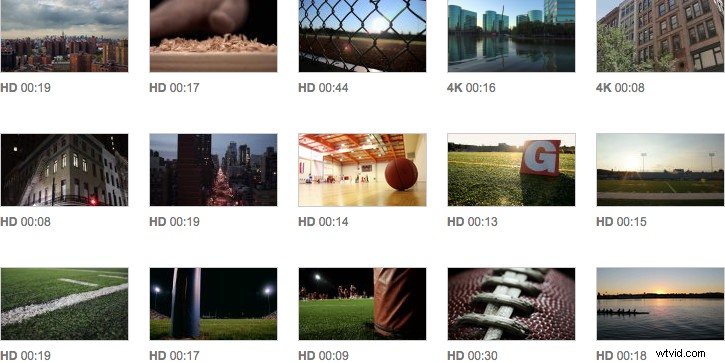
No matter what route you take, shooting b-roll is an opportunity to prove your knack for unique storytelling. If you find yourself in a time crunch or without the resources to capture your own b-roll, stock video can also help add variety to your finished project.
Explore more examples of HD and 4K b-roll »
Top image: Skateboarding woman at sunrise by lzf