
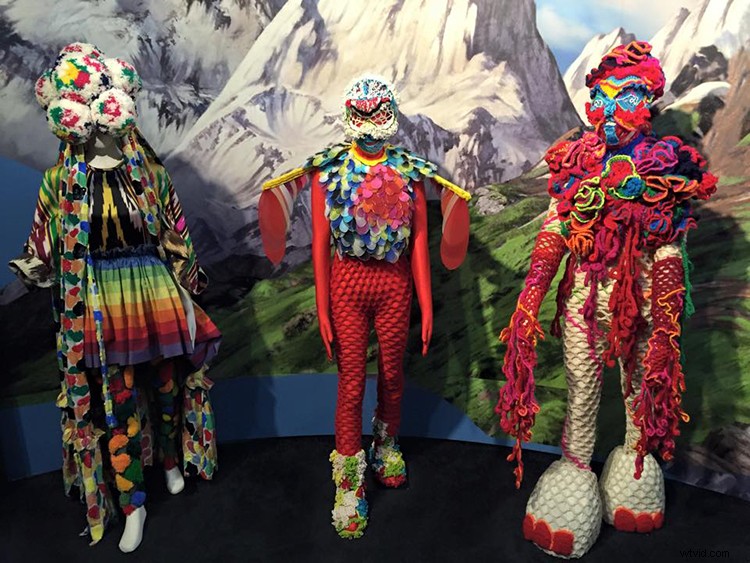
This week, the Museum of Modern Art in New York pulled back the curtain on its “mid-career retrospective” of Icelandic musician Björk for the press, followed by a members-only preview leading up to the show’s official opening on March 8. Featuring fantastical instruments from the artist’s Biophilia tour, a screening room running a music-video marathon, a specially commissioned audiovisual piece, and an interactive tour driven by Volkswagen technology, it’s an engaging multimedia experience that will resonate with any longtime Björk fan.
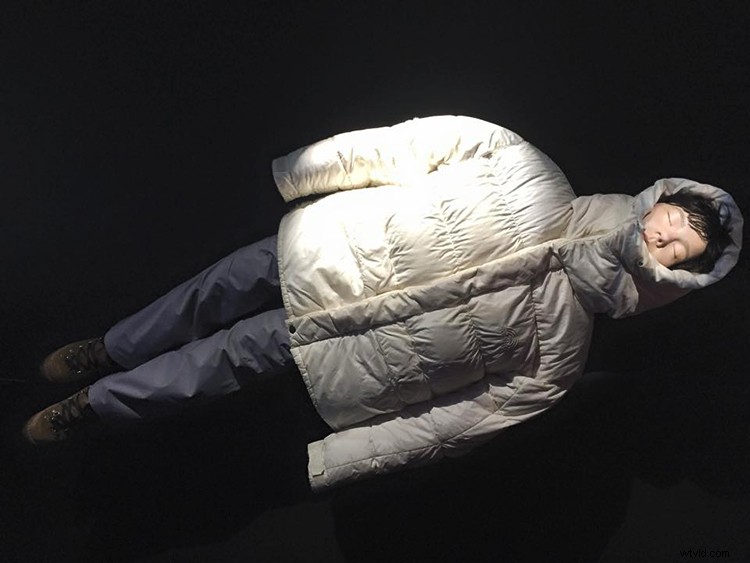
Much has already been written about the context of an exhibition like this taking place at an institution like MoMA, but rather than delve into those implications, it makes more sense to approach “Björk” (the exhibit) from a venue-agnostic standpoint. First and foremost, this is a show that requires at least some familiarity with the artist to appreciate — and the more of her work you know (and love), the more you’ll likely enjoy it. After all, seeing the props, costumes, images, and handwritten lyrics from pieces you’ve previously experienced offers a glimpse-behind-the-scenes kind of thrill that will resonate less fully with the uninitiated.
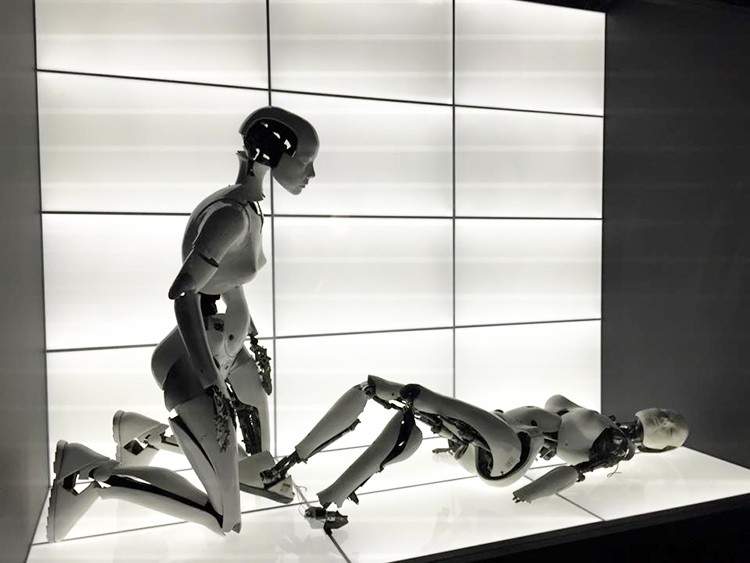
Which isn’t to say there’s nothing for the novice here: Throughout a solo career that has already spanned more than two decades, Björk has collaborated with artists including Michel Gondry, Chris Cunningham, Spike Jonze, Alexander McQueen, and her former partner, Matthew Barney. The marks of these and other visual artists and designers are all around you as you traverse the show, presenting a surreal narrative that evolves from vision to vision.
For the ticketed “Songlines” component, visitors put on a headset with bluetooth technology that recognizes where they are in the path and adjusts the audio to match. If you spend the recommended full 40 minutes in this portion, you’ll hear a fairytale version of Björk’s career (and life) trajectory penned by Icelandic scribe Sjón. Alternately, you can move a little faster, in which case the soundtrack feels more ambient, as the story can’t quite congeal, but the audio still syncs with your location.
Most impressive, however, is the commissioned piece — an immersive video installation for “Black Lake,” a track featured on Björk’s latest album, Vulnicura. Shot at an Icelandic volcano, the video provides a wrenching reflection on the unraveling of the artist’s relationship with her former partner, projected in slightly altered form on two different screens in a room designed to feel like the interior of the volcano itself. With the sound washing over you and the singer becoming more and more distressed onscreen, it’s an experience that becomes increasingly visceral as it progresses.
MoMA curator-at-large Klaus Biesenbach has been chasing Björk to create a show for over a decade now, and with the request finally granted, this exhibit has itself been years in the making. Whether it reflects that level of effort or not is debatable, and any out-of-the-box choice like this will have its detractors. It is, however, especially of note that it’s been labeled a “mid-career retrospective,” as the artist — who released her first actual album at the age of 12 — is now approaching 50. It’s an ambitious statement that promises an artistic lifespan similar to that of Yoko Ono — herself the subject of a MoMA show opening later this year.
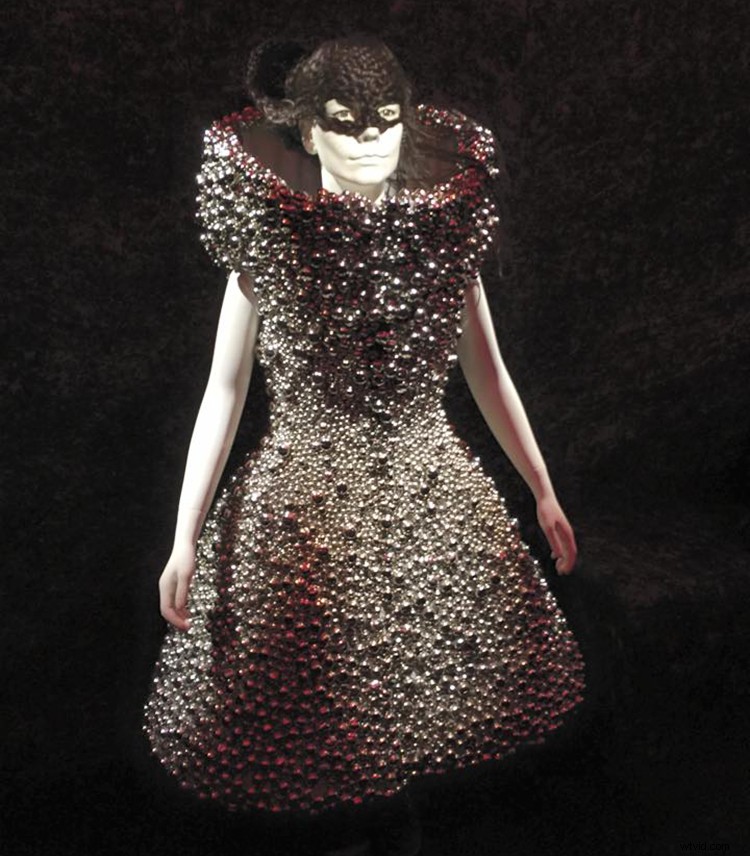
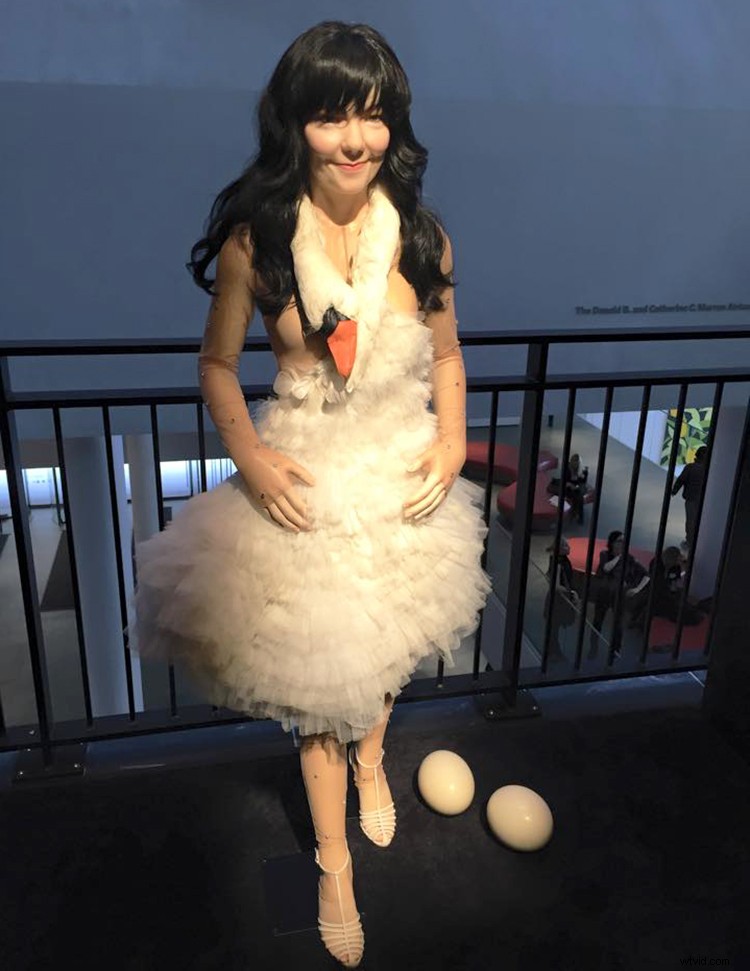
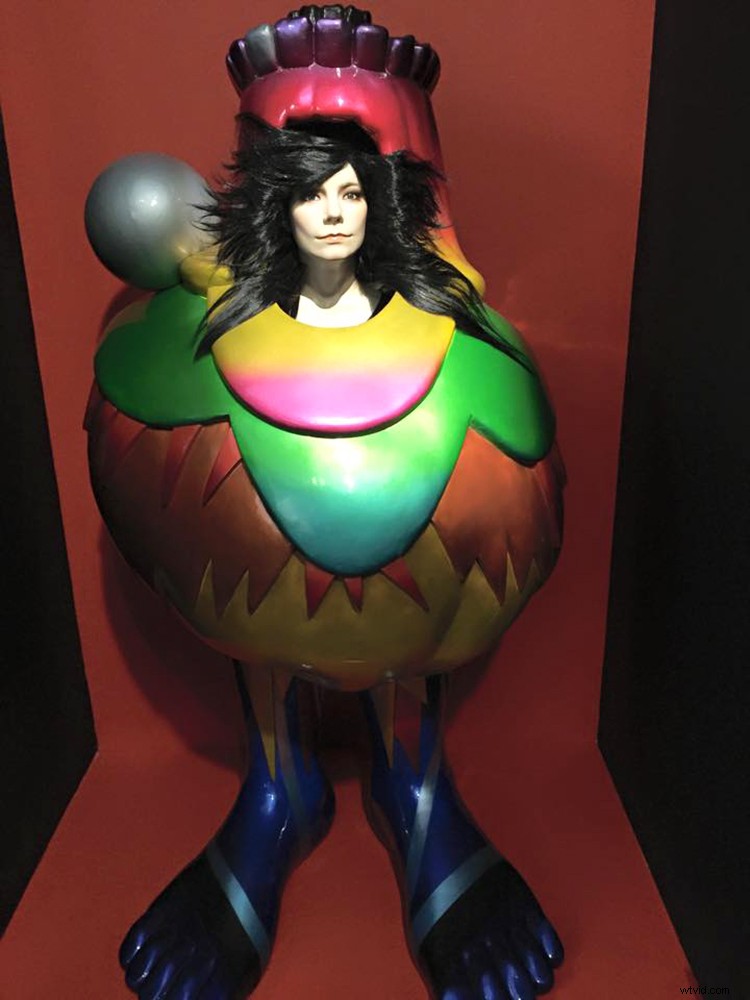
At the press preview, Björk herself appeared in the shadows to introduce a pair of screenings of “Black Lake,” but was otherwise not visible, even at the press conference. In that light, walking through the exhibit — where numerous mannequins in her likeness gaze blankly back at you — the artist’s true self became even more nebulous, more ethereal. She was both present and not present, there and not there, at the same time. In a way, this speaks to the divide between artists and their work, and our inability to ever really know one through the other, despite their inherent inseparability. By adding the fairytale narrative to the journey, Björk seems to be not only reinforcing this, but actively encouraging it.
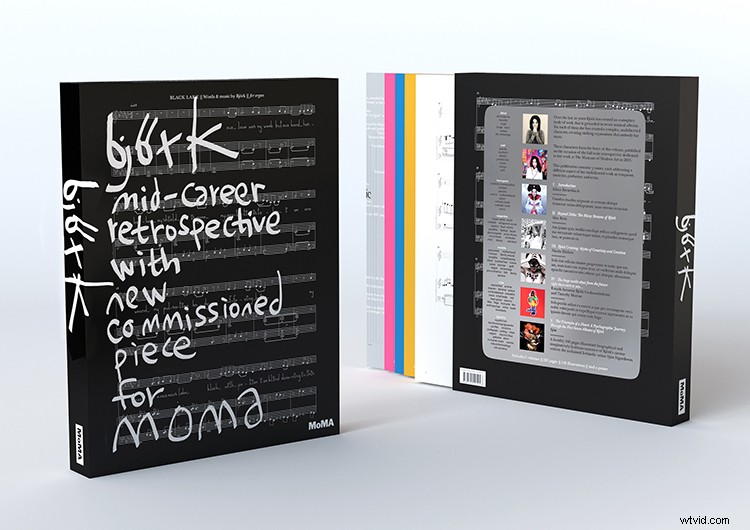
The slipcased exhibition catalog will also be a must-have for any Björk completist. Featuring a book, a poster, and four illustrated pamphlets, it provides an overview of the show and in-depth insight into its genesis, with contributions from Biesenbach, Alex Ross, Nicola Dibben, Timothy Morton, and Sjón. Again, whether any of this has a place in one of the world’s preeminent modern-art institutions is a conversation we’ll leave to others; as longtime fans of Björk, however, we found this well worth our time, and if you have similar inclinations, it will be worth yours as well.
Björk is open to the public from March 8 – June 7 at the Museum of Modern Art in New York. Entry is included in museum admission, and timed tickets are required for the “Songlines” component of the show.