
Finn O’Hara is an established photographer who, despite the self-doubt and hesitation that often lingers in a creative mind, made a big leap into film directing. In fact, it was his photography work that first propelled him to tell stories in broader dimensions. Whether still or live-action, O’Hara’s work is highly cinematic and narrative-focused, consistently led by artistic intuition and a “creative mind’s eye.”
O’Hara’s photography has been featured in national and global publications including Esquire and Vogue India, and he has also directed ads and short films for big players like Budweiser and Sport Chek. We had the opportunity to speak with O’Hara about finding one’s “creative confidence,” the power of open communication, and being fluid throughout the creative process.
Shutterstock: It’s 2014, and you’ve established yourself as a go-to lensman for major global brands and prominent outlets like Esquire and The New York Times — what’s been crucial to your success?
Finn O’Hara: Life experience. I came to photography later in my life, in my late ’20s, and it was part of a general restructuring in my life in that, quite simply, I didn’t want to live life with regret. I very much admired and was infatuated with photography. I wanted to stop fantasizing about being a photographer and just put things into play. I wanted to start shooting, so I just started asking.
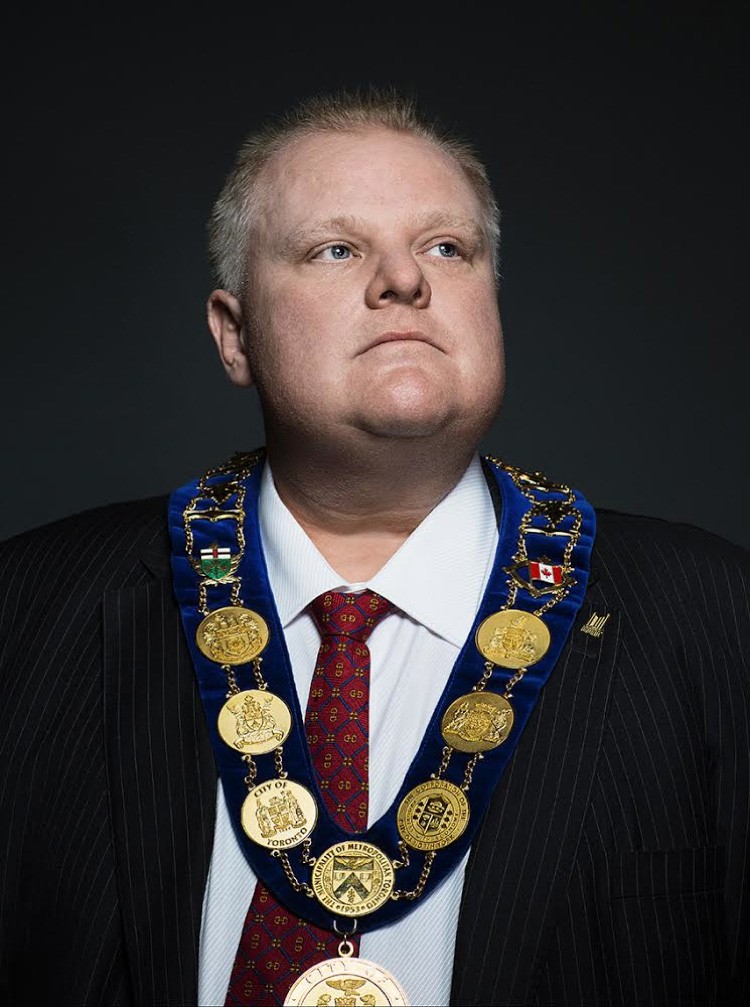
What I was able to bring to my photographs was a more general understanding of how things worked. I’ve done some traveling, I’ve moved around, and I was able to give a more mature background to my lens. That helped. I had to immediately start to market myself and to figure it out from the get-go.
As a creative, what’s important to consider when representing a brand?
You have to take yourself out of it. I think when working with a brand, you really are working with a celebrity; it’s similar in the sense that you’re working with a managed identity. You just need to be very conscious of that the entire way. It’s not about you — it’s actually all about them. So what you’re bringing to that brand or that individual is really a sense of style and a sense of that understanding of how they want to be portrayed and how you want to portray them, and keeping a very open dialogue about that. Understanding what their plan is and understanding how you can serve that is the biggest key.
How do you decide, artistically, what message to convey and how to convey it?
When it comes to brands, they have a very specific idea of what they want. I don’t get too many brands that are like, “We don’t know, can you help us?” I’m very lucky that I get to work with some major brands that have a very clear idea of how they like to be portrayed. So, really, it’s about taking all those pieces and giving it a very specific lensing. In photography, you’re cutting out so much and you’re really focusing in.
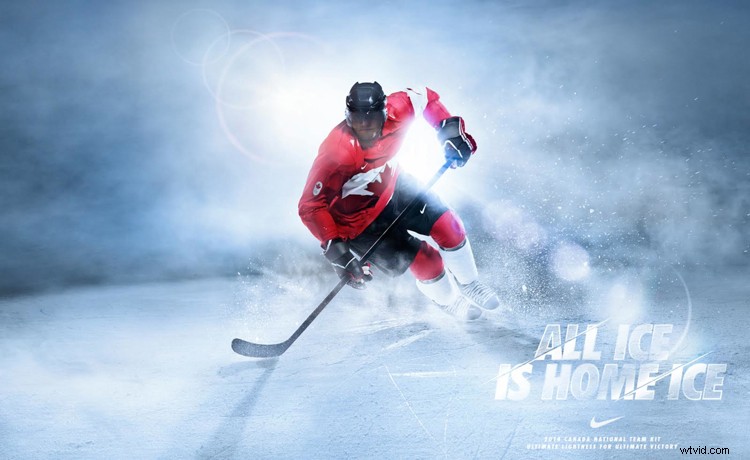
There’s a lot of trust involved. Sometimes you need to be very expressive in how you’re going to treat it, which is done through processes, documentation, and pre-production meetings. That generally helps to pinpoint the artistic points. You don’t want them to be confused about how it’s going to look, so explaining it in full detail, whether it’s through words or images, to the best of your ability, is the best way to avoid that.
Many people can learn photography techniques and tricks of the trade, but is it intuition and insight into visual cues that make a great photographer?
For me, I would say, yes. Upon deep reflection, I think it’s a realization that I’ve been an observer my entire life and photography has enabled me to act upon that — to be a keen observer and a very detailed one. Through exercise and embracing photography, and by going to dark corners and coming out with imagery, being trusted with assignments, I’ve developed creative confidence. That’s a very commercial way to talk about creativity, but that’s essentially what it is — a combination of creative confidence and problem solving.
When you made the transition into directing commercials and short films, you’ve said your photography helped you take the leap. How did being a photographer prepare you for the role?
Directing is like 3D chess; that’s the only way I can describe it. It involves many more levels of visual language. It’s funny, because I found myself creating photographs that had a narrative to them, and I wanted the narrative to be one that the observer or the viewer had to explore a little. I found myself developing these narratives and then a little light bulb went on. I thought, “You know, this is what film is. This is what live action is.”
It was the same with directing. I didn’t go to school for that, but with good mentorship and a bit of encouragement, suddenly it was something I started to exercise. The best analogy is that it was like being out of shape and thinking, “There’s no way I can do that.” And it takes time to explore, but over time, and with concentration and good work habits, it develops.
You’ve also described your film and photography methods as “a raw and always improving process.” Can you elaborate on what you mean?
“Raw” in the sense that I’m never quite completely committed to any one way to shoot an image; ‘raw’ in the sense that my concepts are completely manipulative or transformational. When I get an assignment, I have a pretty good idea of what I’d like to do, but sometimes when I get there, my ideas are transformed. The idea might not work in that specific environment.
I see many ways to solve a creative problem and many ways to deliver images and live-action work, but I like to be open, and I don’t think there’s a timeframe for when I have to decide on one creative direction. I came to the realization that it’s okay to be open to as many ideas and techniques as possible.
For someone looking to transition from being a photographer to being a director, what’s crucial to keep in mind?
I think one of the biggest struggles I had was that I didn’t understand the job fully. I thought the idea of the director was all very lovely, but I had no idea what the job really was. And no one was very explicit with the idea until I met (Executive Producer) Geoff Cornish at Suneeva. It was a far slower conversation with vision that looked at the horizon, rather than what was happening right in front of your face or ten minutes ahead of time.
Understanding the job, for me, was most crucial at that point. Understanding what the day-to-day part of the job was. The biggest part is really understanding how to make something compelling. Understanding the “30-second ad” and distilling it for what it is helped me a lot to understand short-form storytelling. For me, it was crucial to broaden the storytelling dimension that I was already doing in photography, but could now take further. That was the biggest challenge in taking the leap into directing.
Explore more of Finn O’Hara’s work on his website at finnohara.com.