
How do you make your film stand out at festivals? Consider the advice of these filmmakers on why they shot their feature in black and white.
All images via Pepper Island Films and DIFF.
Almost like a rite of passage, famous filmmakers have found themselves drawn to shooting films in black and white, despite the obvious advancements of color film stock and digital cameras.
Woody Allen directed Manhattan, the Coen Brothers did The Man Who Wasn’t There, and Tim Burton made Ed Wood, to name a few. For each, the decision was a blend of aesthetics, convenience, and a love for the format.
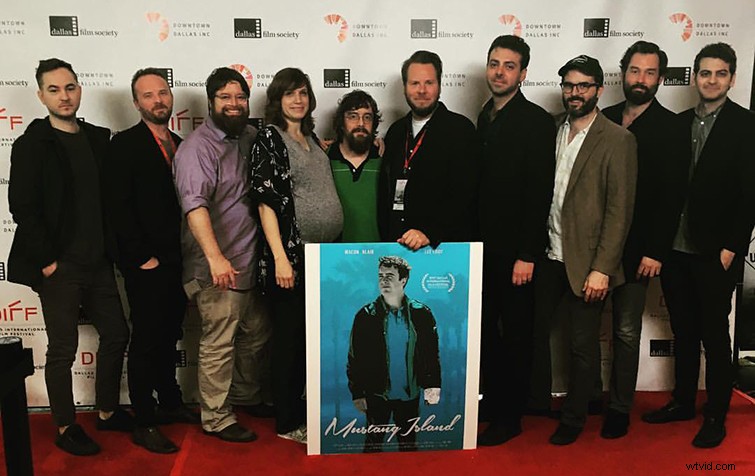
We caught up with filmmakers Craig Elrod and Nathan Smith (pictured above 6th and 7th from left) behind Mustang Island at the recent world premiere at the Dallas International Film Festival to chat about their film and their decision to digitally shoot black and white.
Timelessness
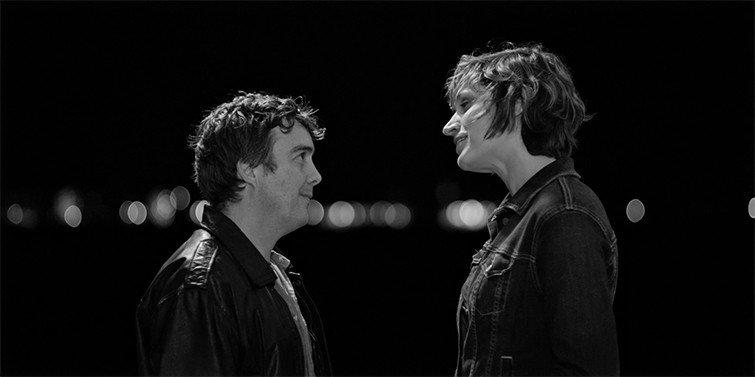
When considering black and white for your project, it’s important to understand what the style can convey to your audience. As Elrod points out, Black and white can seem timeless in a way that the audience can contextualize within cinema history — which can be quite powerful if you’re looking to disconnect from the present.
Composition
In addition to shooting in black and white, director of photography Nathan Smith also shot Mustang Island in an older style with flat backdrops and a camera that seldom moved. Without a heavy reliance on camera motion, the style invites you to take in the full composition in the frame and consider how it fits in with the story.
Comedy and Drama

Similar to films like Noah Baumbach’s Frances Ha and Woody Allen’s aforementioned Manhattan, Mustang Island is comedic, but it is a love story at heart. Elrod and Smith’s black-and-white film never lets you forget the underlying themes despite heavy doses of goofy characters, wild antics, and comedic sequences.
Matching Locations
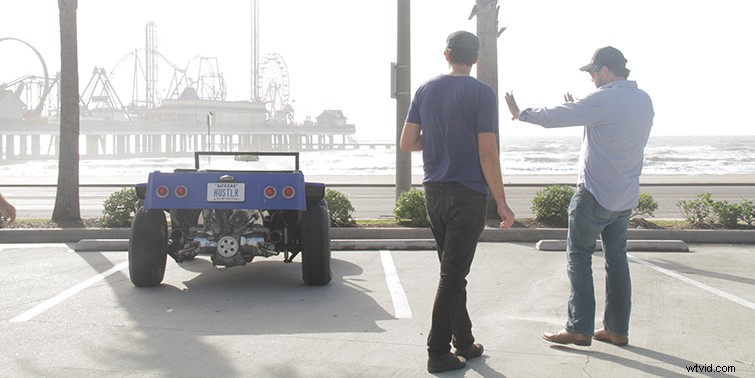
When shooting in multiple locations and across different seasons, matching colors and “faking” locations can easily become a large part of production and post-coloring. When shooting black and white, it’s still important to monitor these issues, but, as you can imagine, it makes matching shots to shots easier.
Practical Lighting
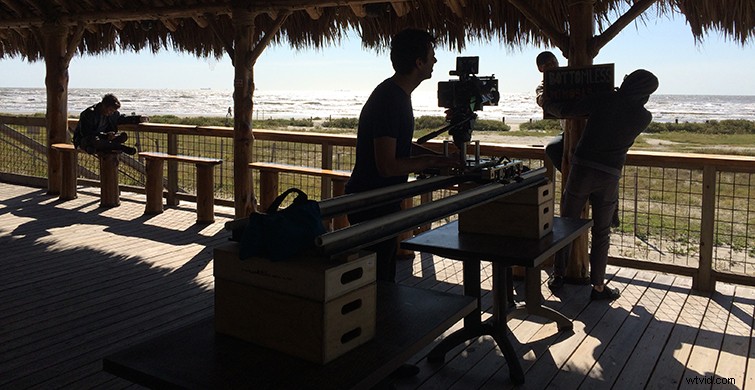
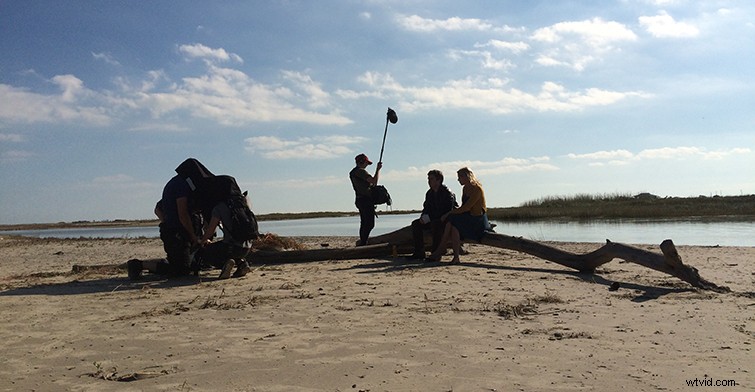
For many productions, practical lighting can actually be a good (or, at times, the only) option. When shooting in black and white, working with practical lighting becomes a little easier, especially at night. It also helps, as was the case with Mustang Island, to shoot daylight exteriors on a bright beach.
Flexibility in Post
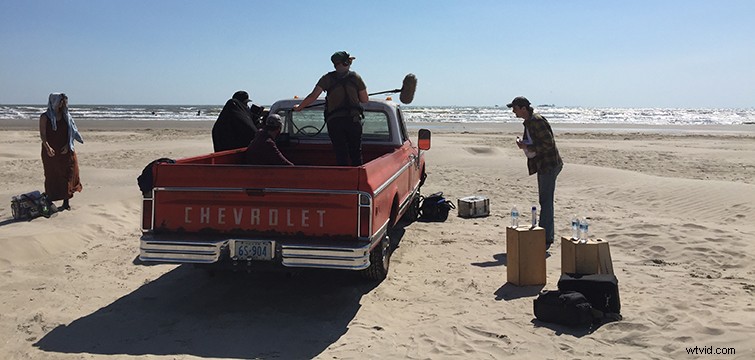
Interestingly, Mustang Island‘s crew shot in color with the the plan to finish the film in black and white. While you’ll never catch a “we’ll fix it in post” statement from our featured filmmakers, it is interesting to note just how much color and contrast control you get when grading your color footage down to black and white.
Be sure to check out Mustang Island‘s website or Facebook page. For more filmmaker interviews and coverage of DIFF, check out this article.
Have you worked on a black and white project? Let us know in the comments.