
This year’s nominees for Best Director brought their A-game and then some with the most visually arresting, engaging films in recent memory.
2017’s Oscar nominees for Best Director come from wildly different backgrounds, and they tell stories in completely different ways. Experts in their field, these artists have truly demonstrated what it means to have a vision. Each of this year’s nominated films overcame many different challenges on their way to the box office. Let’s take a look at their creators.
Denis Villeneuve — Arrival
 Images via Paramount Pictures.
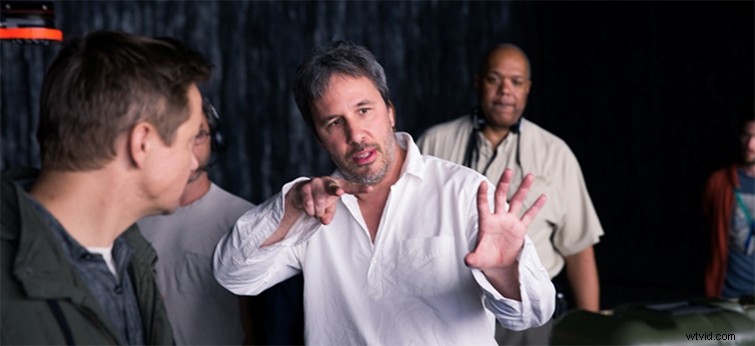
Some would say Quebec native Denis Villeneuve is long overdue for a Best Director nomination. Last year’s Sicario garnered worldwide acclaim — as did its predecessor, Prisoners. Villeneuve’s work ethic is admirable, to say the least. However, his recent successes span only a small portion of his career.
Cosmos, Villeneuve’s first dip into feature territory, is an anthology film featuring five other directors, shot entirely in black and white, that landed a spot at the Cannes Film Festival in the Directors Fortnight category. It’s available in its entirety at YouTube here (check it out while you can).
His first full-length feature, August 32nd on Earth, premiered at Cannes in 1998, then eventually came to the U.K., France, and Germany. Villeneuve’s directing career took off after the success of his second feature-length film, Maelstrom, in 2000. Villeneuve grabbed everyone’s attention when his film Incendies earned a nomination for Best Foreign Language Film of the Year, and he quickly became a director to watch.
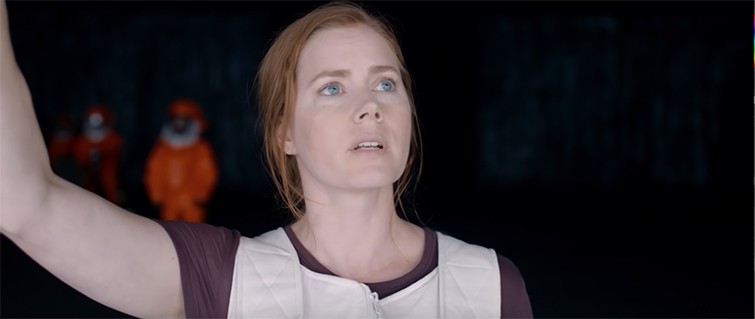
Until very recently, Villeneuve has had to work with relatively small budgets, even on large film projects. Yet, each film comes off in the end like an epic. He’s spoken in interviews about dealing with a small budget and the importance of preparation (with one of his usual DPs Roger Deakins), as well as knowing everything you want to get out of each shot before you begin production. This precision and cutthroat editing attitude has produced some truly stellar films.
Villeneuve recently spoke with DP/30 about his Oscar-nominated film Arrival and the magic of working with cinematographer Bradford Young. The two are a perfect match, and they created mysterious, hopeful, and engaging environments that are breaking new ground for Villeneuve both commercially and critically.
Villeneuve has recently signed on to direct the latest adaptation of Dune. Given his recent foray into sci-fi, this is certainly not a surprise. For now, we’ll simply have to be content watching the Blade Runner 2049 trailer for the twentieth time. Villeneuve’s films are tense, heavy, and masterfully crafted, and they have successfully established him as the next great auteur.
Mel Gibson — Hacksaw Ridge
 Images via Lionsgate.
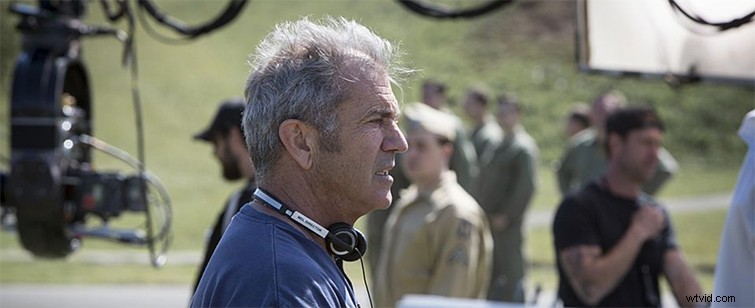
As far as Hollywood superstars go, Gibson topped the list for the majority of the early ’80s and ’90s in classic franchises like Mad Max and Lethal Weapon. Gibson has stated that working with directors like George Miller and Peter Weir were major influences on the type of director he would eventually become.
His first at-bat, The Man Without a Face, demonstrated his ability to direct and act at the same time. His next project, Braveheart, launched him into the box office stratosphere and earned him Oscar glory. It was almost a decade after Braveheart before Gibson’s controversial return with 2004’s Passion of the Christ. When asked about taking the reins and assuming responsibility for dozens — if not hundreds — of people on set, Gibson had the following to say:
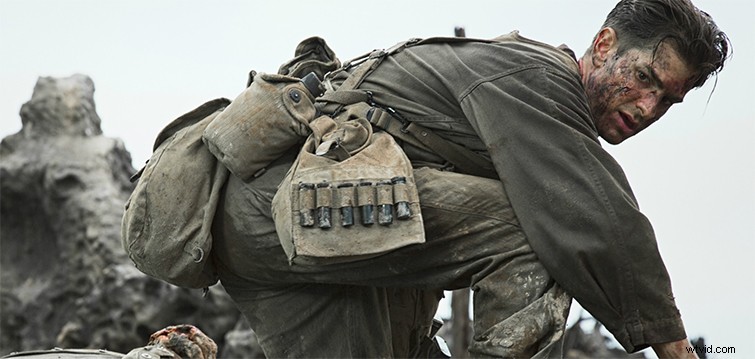
In a recent hour-long interview with DP/30, Gibson discussed the struggles of his latest effort, Hacksaw Ridge, an epic war movie that had a $30 million budget and a limited production window. They had to shoot all three battle sequences in nineteen days, so Gibson personally bought a couple Blackmagic Pocket cinema cameras.
Gibson embraces the unknown and accepts the challenges of limited resources. He demonstrates that even A-list Hollywood status can’t always guarantee good funding. Gibson claims to have multiple projects in the works, but only time will tell if these get off the ground anytime soon.
Barry Jenkins — Moonlight
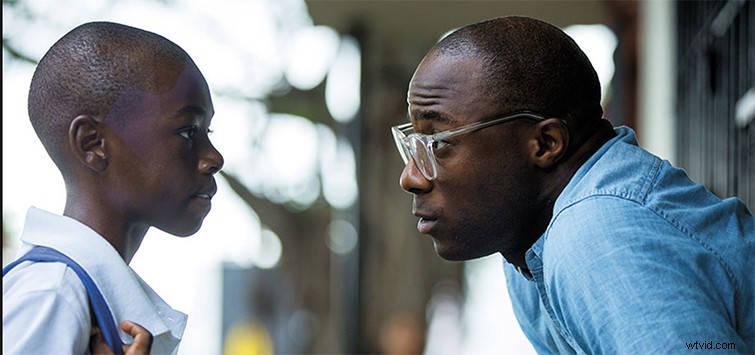 Images via A24.
Starting out in film school at Florida State University, Jenkins worked on short films and commercials. His debut feature in 2008, Medicine for Melancholy, had only a five-person crew, a fifteen-day shoot, and a $15,000 budget. Jenkins reflects on that project fondly, as the (relatively) low stakes afforded him the luxury of a production with little pressure.
After the attention Medicine for Melancholy garnered, Jenkins became the announcer for film screenings at the Telluride Film Festival. Jenkins had attended the festival for years through a student program that allowed young filmmakers to attend Q&As with some of the industry’s biggest directors. Jenkins praises this opportunity to learn from long-admired directors like David Cronenberg and Lynne Ramsay.
While introducing 12 Years a Slave in 2013, Jenkins met with distribution and production company Plan B, which would later go on to back Moonlight. Jenkins is a quintessential example of improving one’s craft by seizing every available opportunity and establishing good relationships in the film community.
Recently Jenkins sat down for Apple’s Meet the Filmmaker series for a conversation about the making of Moonlight, working in the industry, and where the future will lead. When asked about the dynamic between himself, his DP, and the actors, Jenkins praised the openness and improvisation he experienced on the set:

On top of the many accolades and praise that Moonlight has garnered in the past few months, one of the standout features of the film is its look and feel. Jenkins decided to shoot with the ARRI ALEXA XT Plus with his DP James Laxton:
Jenkins had options to shoot the film in New Orleans or Atlanta, where he could expect favorable tax incentives, but Miami was always the only option for him. A filmmaker who recognizes the importance of time and place to this degree will always make wise decisions when it comes to choosing projects. His work speaks for itself, and I personally can’t wait to see which film he chooses to work on next.
Damien Chazelle — La La Land
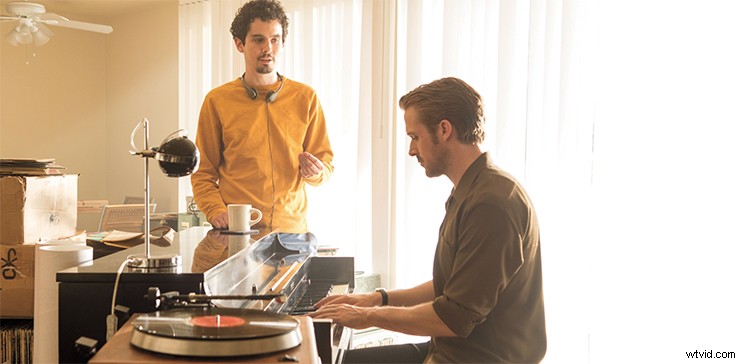 Images via Lionsgate.
Damien Chazelle is everywhere. As I write this, he just won the Directors Guild of America award and is the current front runner for the upcoming Oscars. Chazelle has been in producers’ sights since his breakout feature about two jazz musicians, Guy and Madeleine on an Park Bench, premiered at the Tribeca Film Festival in 2009. Chazelle filmed the majority of the project while he was at Harvard University with a borrowed 16mm film camera on an off-and-on shooting schedule for a couple of years. Chazelle stuck with these musical themes for his next passion project, Whiplash.
Starting out as a short film (primarily shot to impress investors), the feature would premiere at Sundance, where it won the Grand Jury Dramatic Competition Award. It went on to win three Oscars for Best Supporting Actor, Best Editing, and Best Sound Mixing — as well as earning a Best Picture nomination. Chazelle sat down with DP/30 after Whiplash premiered at Toronto International Film Festival, and he discussed funding, writing from your experiences, and overcoming fear.
After the wild success of Whiplash, Chazelle’s “passion project” La La Land went into production during the late summer of 2015. The film is unique in today’s cinematic world, given the nostalgic yet original aspects that set it apart from other musicals. Working with DP Linus Sandgren, Chazelle decided to shoot with a Panavision Panaflex Millennium XL2 on a 2.55:1 aspect ratio — just like 1954’s A Star Is Born.
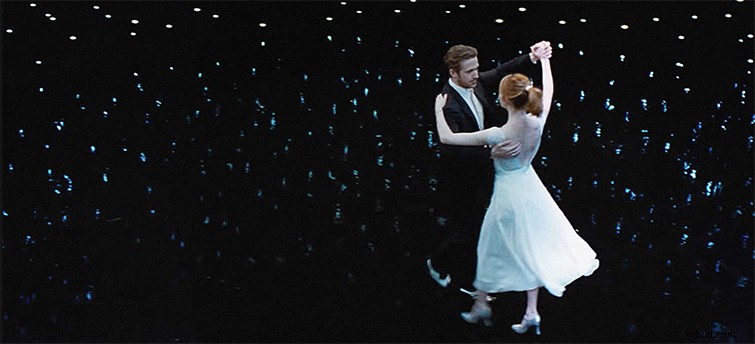
The film is a wonderful combination of comedy and drama that sustains a feeling of inspiration, which is exactly what Chazelle wanted. While discussing the necessity of maintaining a consistent tone throughout the musical, Chazelle noted the following:
Musical themes aren’t the only motifs in Chazelle’s work, and his range has only broadened with La La Land. Though nothing has been announced, his next project will surely have critics and audiences lined up to see what he will accomplish next.
Kenneth Lonergan — Manchester by the Sea
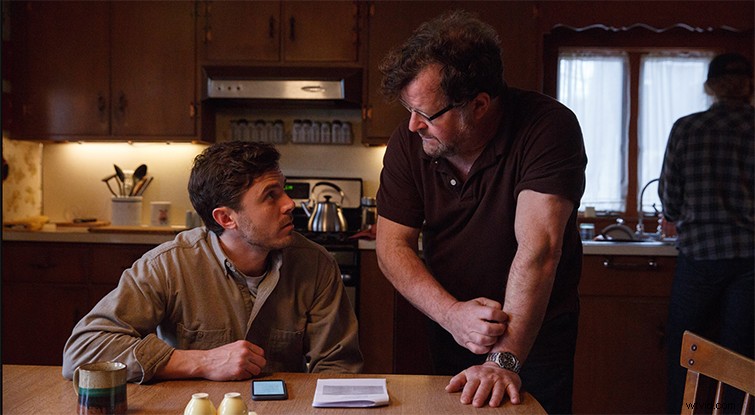 Images via Amazon Studios.
The voice behind many of your favorite movies has established himself as one of the next great directors with Manchester by the Sea. Starting out with screenplay credits on films like Gangs of New York, Analyze This, and You Can Count On Me (which he also directed), Lonergan developed his unique voice but had yet to stand out as a director. Primarily considered a screenwriter and a playwright, Lonergan holds that screenplays are meant to be filmed, meaning that, as standalone pieces of work, they are genuinely uninteresting. You Can Count On Me, which gained Lonergan a Best Screenplay Oscar nomination, gave him the opportunity to hone his skills behind the camera before his sophomore feature Margaret in 2011.
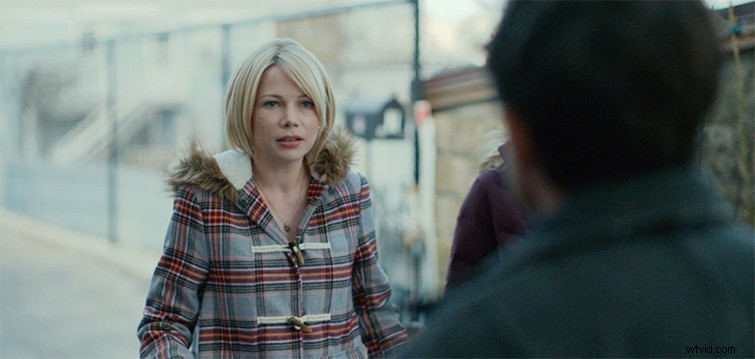
In Lonergan’s dense screenplays, dialogue is everything, and he’s said multiple times in press junkets how important it is to give each character (no matter how small) their own voice. Bringing those performances to life was tricky:
Making his rounds promoting Manchester by the Sea, Lonergan stopped by The Film Society of Lincoln Center to discuss the pains, processes, and procedures of directing his latest masterpiece.
Lonergan isn’t your typical director. He’s soft-spoken, unsure of the future, and brutally honest. His films are tough, intimate character studies that pack an emotional punch and will continue to resonate with audiences for years to come. Though still relatively new to directing, Lonergan’s work comes across like he’s been doing this his entire life.