
Have you ever heard an alien‑like sound and wondered how it was captured? The answer often lies in specialised microphones designed to hear what ordinary mics miss.
While the classic condenser, dynamic, and ribbon microphones handle everyday recording needs, the following unconventional types unlock immersive sonic experiences—whether capturing subtle vibrations on a surface, the depths of the ocean, or true three‑dimensional ambience.
1. Contact Microphones
Contact microphones, also called piezo or transducer mics, pick up vibrations through direct contact with objects rather than airborne sound waves. They are indispensable for amplifying acoustic instruments such as guitars, mandolins, and mandolins‑like percussive surfaces.
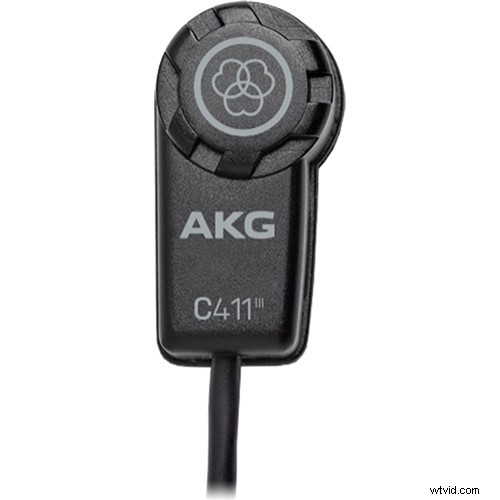 Image via AKG.
Because of their simple construction—usually just a piezo disc and a single capacitor—contact mics are inexpensive, highly portable, and even DIY‑friendly. Sound designers use them to harvest metallic clangs, subtle distortions, or unique textures from everyday objects like metal gates, railings, or vehicles. When aimed at a surface that reverberates strongly, the result can be an other‑worldly soundscape, ideal for sci‑fi or experimental sound effects.
2. Hydrophones
Hydrophones are the underwater cousins of contact mics. Built with a waterproof housing and piezoelectric transducers, they convert pressure changes in water into electrical signals across a wide frequency range.
The U.S. National Oceanic and Atmospheric Administration (NOAA) explains: “Hydrophones capture ocean sounds with great precision. While a single hydrophone records from any direction, an array can triangulate sources and track marine life.”
Hydrophones are essential for marine biology, underwater archaeology, and even entertainment—such as recording performers playing instruments beneath the waves. A recent video demonstrates a hydrophone‑captured concert in an aquarium, producing astonishingly clear and immersive water‑borne audio.
3. Binaural Microphones
Binaural recording emulates human hearing by placing two microphones at ear‑level spacing. The technique captures natural head‑shadow and inter‑aural time differences, creating a 3‑D soundscape that is best experienced with headphones.
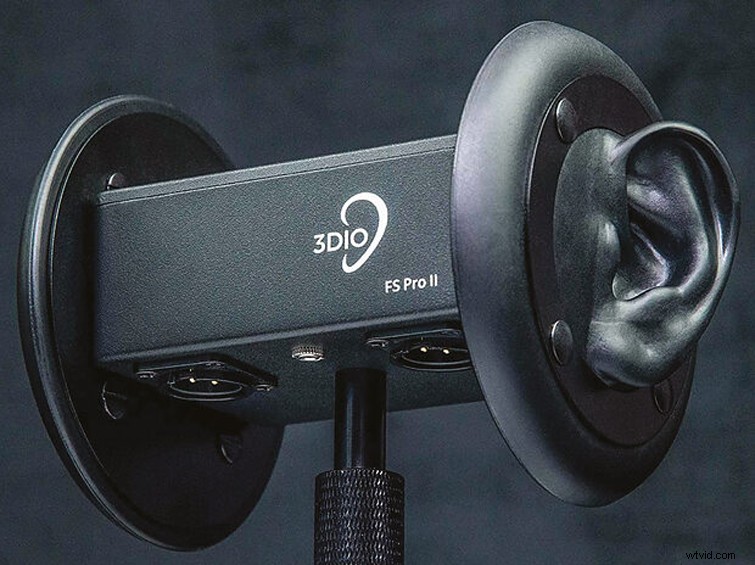 Image via 3Dio Sound.
The first commercial binaural mics used a dummy head with a microphone in each ear. Today, high‑end models like the Neumann KU 100, featuring anatomically accurate ears and low‑noise omnidirectional capsules, deliver studio‑grade fidelity. ASMR creators and immersive media producers rely on binaural mics to deliver authentic, pleasurable listening experiences.
4. Ambisonic Microphones
Ambisonic mics capture sound from every direction in a single recording, producing a full‑sphere 360° audio field. Originating from Michael Gerzon’s 1970s research, the first commercial model was the SoundField mic in 1978.
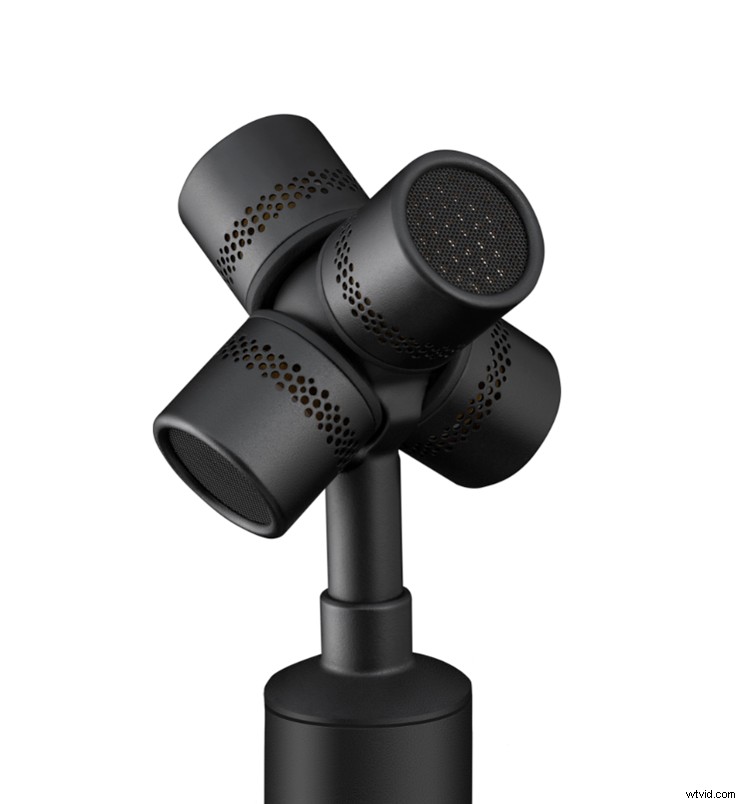 The NT‑SF1 Ambisonic Microphone from RODE. Image via RODE.
With four capsules arranged tetrahedrally, these mics record up, down, left, right, and front‑back cues, enabling post‑production tools to render binaural or multi‑speaker output. Ambisonics are now indispensable for VR, AR, and immersive film projects that demand precise spatial audio.
5. Electromagnetic Microphones
Electromagnetic microphones convert magnetic fields into sound using induction coils. They can capture the subtle hum of microwave ovens, the buzz of cell phones, or even ultrasonic signals that traditional mics miss.
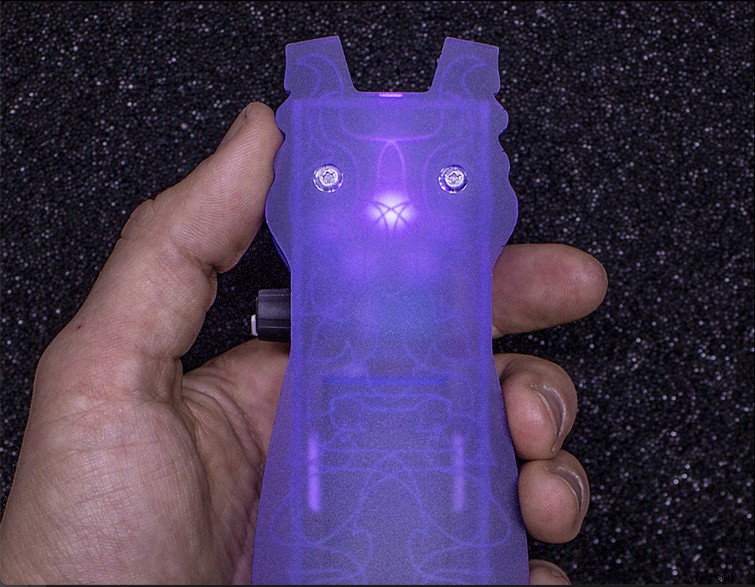
The Elektrolusch 3+ offers a portable, low‑cost option that plugs directly into headphones, making it ideal for field researchers or experimental musicians. Composer Andrew Huang’s demonstration showcases the device’s ability to reveal hidden layers in everyday electronic environments.
6. Parabolic Microphones
Parabolic microphones use a reflective dish to focus sound onto a single transducer, functioning similarly to a satellite dish. The dish amplifies the target signal while rejecting off‑axis noise, making it ideal for long‑range field recording.
Sports broadcasters and wildlife sound recordists frequently use parabolic mics to capture clear dialogue or distant bird calls. The trade‑off is a limited low‑frequency response; larger dishes can capture lower frequencies but are bulkier.
A short video explains how the parabolic dish works and demonstrates its effectiveness in a stadium setting.
7. Fibre‑Optic Microphones
Fibre‑optic microphones convert light intensity variations into acoustic signals, offering complete immunity to electromagnetic interference. Their metal‑free construction makes them safe for high‑voltage or radioactive environments.
Industrially, they monitor rocket engines and high‑temperature furnaces, while in medicine, MRI suites use fibre‑optic mics to enable clear conversation in a magnetically noisy environment. Though rarely used in consumer audio, their unique sound quality can inspire creative exploration.
In summary, each of these microphone types expands what we can hear and record. Whether you’re a sound engineer, content creator, or curious hobbyist, experimenting with one of these technologies can elevate your audio projects to new heights.
For further insights into audio, check out these related articles:
- What is Audio Distortion?
- 4 Production Audio Tips from an Industry Insider
- The Most Practical Live‑streaming Microphones on the Market
- Blind Microphone Comparison with 5 Different Mics!