How long have you been going to That Thing in the Desert?
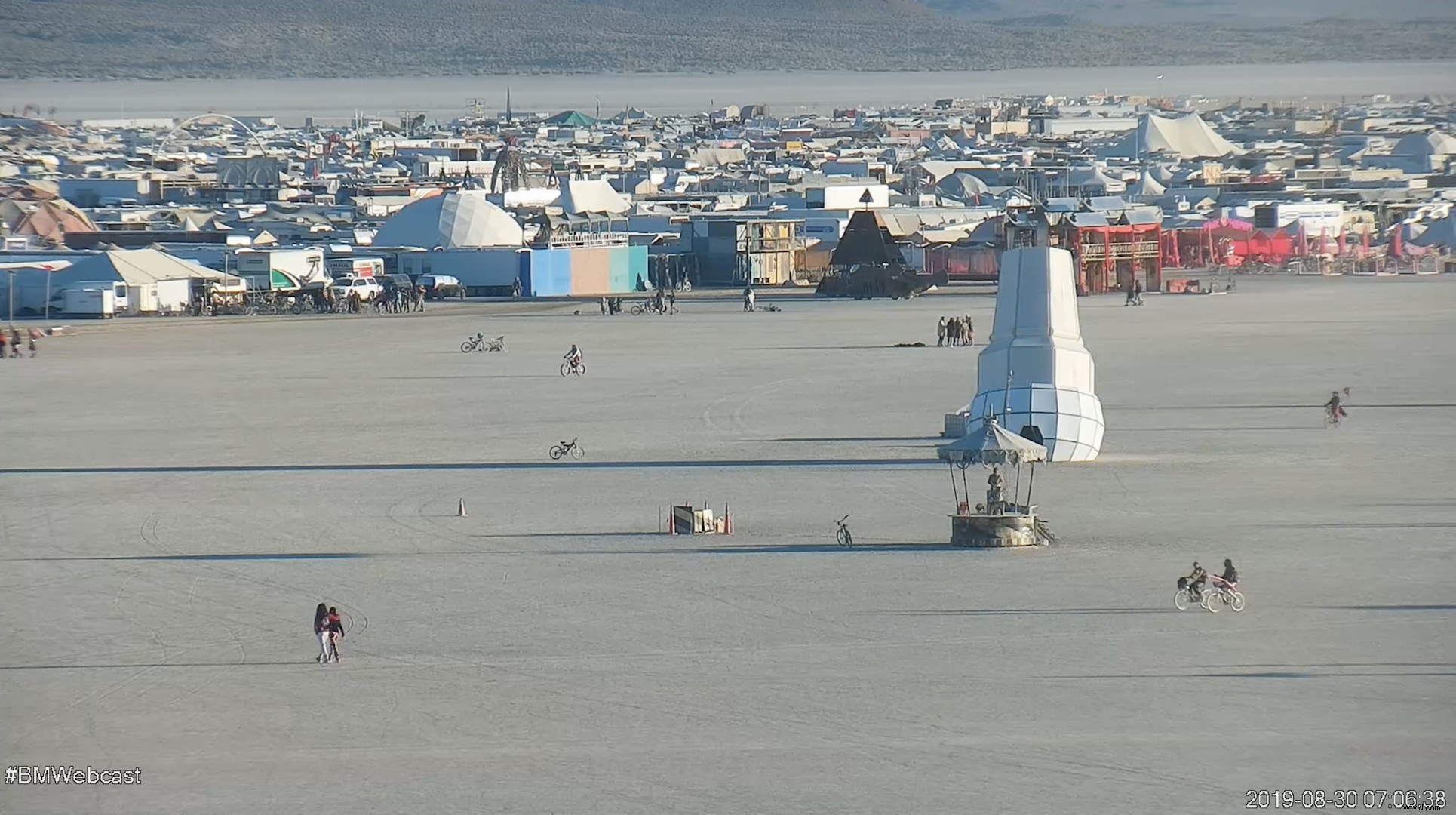
This is my eighth Burn, seventh year webcasting, and sixth year as the Burning Man Project webcast production lead. Every year, I volunteer my services and cover most of the technology costs; it’s my gift to the participants who couldn’t make it to the Playa. The Burning Man Project returns the gift to me with access, tickets, a powered and air-conditioned 20-foot container, and a dedicated connection to the internet.When did you start live streaming the event?
Burning Man has had a live stream of some form since at least 2007, and possibly earlier. In 2013, I helped build the video system for a mutant vehicle called the Mars Rover Art Car, nicknamed “Dustiny.” One of my roles on the project was to build the Playa version of the Mast cam and use them to stream our explorations across the Playa. That year, the official Burning Man webcast was plagued with major tech problems that my system on Dustiny was able to fill in for.Who watches the live stream?
The demographic of who watches the live stream is amazing — most of them are outside the US. Last year, we had hundreds of people from 66 countries. Many of them are older or have a medical condition that prevents them from leaving their homes, much less for the Playa. The most memorable demographic are perhaps the parents of Burners trying to understand what their children are up to.What comments have you gotten from viewers?
I get a range of comments and requests, from “Clean the camera” to questions about particular art pieces. We also provide a service where participants online send us heartfelt messages to deliver to the Temple that burns on Sunday. Every year, we receive hundreds of messages by email or social media from people who want to memorialize loved ones in the Temple. We print them out and deliver them on their behalf.