
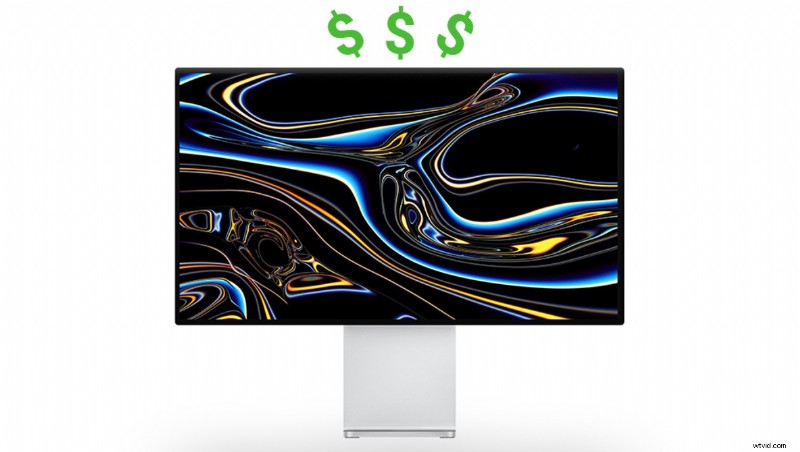
You might not be considering dropping the cash for this thing, but the target customer might.
If you’re out of the loop, Apple announced a brand new Mac Pro. It’s an overdue replacement for the previous trash can model, and I think Apple is getting back to their Mac Pro roots. It’s more cheese grater than ever.
In addition, we’re finally getting an update to the old Cinema Display that many loved. For the past couple years, Apple stopped selling these and instead touted LG’s 5K display. The latest Pro Display XDR offering is as in-house Apple as it gets, even down to the eye-watering price. The new 10-bit 6K monitor will cost $4,999, or for $1,000 more, you can get fancy new reflection-phobic glass.
Your Display Isn’t This Display
I’ve said for a few years now that HDR is the future. When Apple debuted the iPhone X, nearly all of the lauded features pertained to watching HDR content. Netflix is behind it, HBO dropped the ball on it with Game of Thrones, and content producers need to get on board.
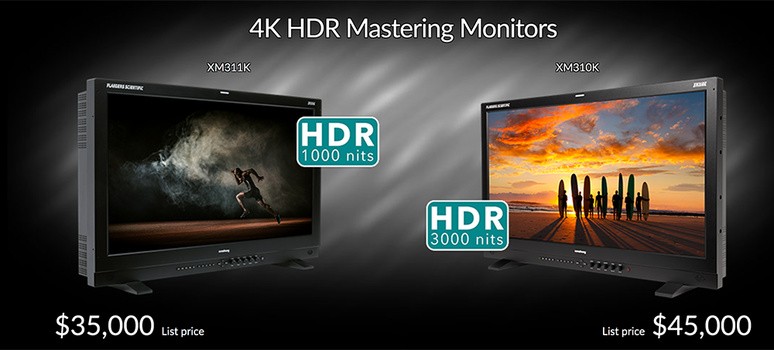
Unfortunately, reference monitors aren’t all the same, and newer standards like HDR10 and Dolby Vision can only be achieved with a certain class of display. That wouldn’t be a problem if these things were cheap, but an industry standard Flanders Scientific monitor will seriously set you back, and you'll want it to last years. A Flanders that’s comparable to Apple’s Pro Display XDR would cost $35,000 and would be 4K instead of 6K.
A side note here that I prefer a true 16x9 4K reference monitor so there’s no upscaling from a 4K signal. Still, 6K is impressive and will be amazing for photographers.
The Competition
Two years ago, I reviewed Atomos’ Sumo monitor/recorder, a wonderful piece of kit that gave me hope for the future of HDR. It had a 10-bit FRC, 1,200 nit display and all the bells and whistles you could need on set: focus peaking, waveforms, the lot. The display-only version costs about $1,300 right now.
However, it’s not true 10-bit. It’s 8+2-bit. Here’s a brief explanation of that. While some might not notice the difference, Atomos certainly have. That’s why they’ve released all new 10-bit HDR monitors that directly compete with their Sumo, the Atomos NEON.
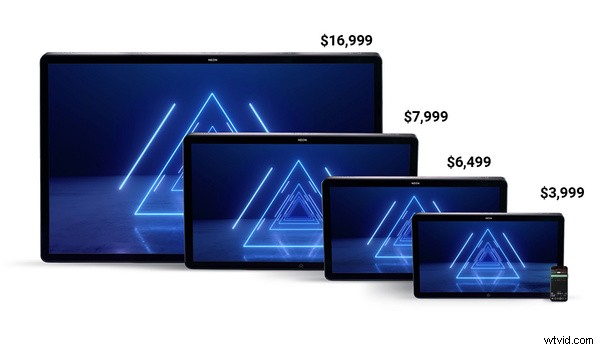
If we were to pick the new Atomos NEON monitor that matched Apple’s Pro Display the best, it would be the 31” model. This monitor comes in at $7,999. Granted, Atomos packs this monitor with way more I/O, a 4K 10-bit recorder, waveforms, LUTS, and even an accompanying app. But I hope you still see what the asking price for a good HDR monitor is.
Non-Issues
Now I don’t think that Apple’s Pro Display really matches exactly to a Flanders or Sony reference monitor. You don’t get built-in scopes, LUT control, or any features that might help on set. They also say that the Pro Display “produces an industry-leading 1,000 nits,” which is and isn’t true. That 1,000-nit $35k Flanders monitor I mentioned earlier has a $45k bigger brother, which peaks at 3,000 nits.
I’m being extremely nit-picky here though, because that Flanders monitor can only display the 3,000 nit image at a 20% scale. So, you’re only getting a small fraction of usable screen. This won’t happen with Apple’s monitor.
What also won’t happen with the Pro Display is full performance when it’s warm. Apple is claiming that it’ll sustain at 1,000 nits and have a peak of 1600 nits. That brighter ability won’t kick in if the monitor is over 25 °C. Interesting that they’d dish out a temperature in Celsius on their US website. That’s 77 °F, so comfortably above room temperature. This isn’t a particularly jarring issue, I feel, but I’ll bet people will complain about it and compare it to the MacBook Pro’s i9 chip overheating.
Industry Adoption
Apple makes a bold point here. They think that if everybody buys these monitors and they overtake the existing industry standard, then the industry will be better off. They’re totally right, in the sense that a colorist or retoucher knows that they’re looking at the same monitor that was used on set.
If industry juggernauts start advertising their tools with the Pro Display, then there’s even more reason to buy it. I’m talking about color calibration tools like Spyder, waveform display apps like Scopebox, and editing apps from Davinci Resolve and Lightroom (who have both already been mentioned in Apple’s keynote).
Also, I know it’s petty, but most of us like when a client recognizes and appreciates our tools, from a particular lens to a type of light. Does a client always know the difference between a softbox and a parabolic? No, but they might know the difference in quality. I’m sure we’ll be seeing these displays in high-end studios soon, and I’m sure that some of the appeal will be the client seeing a brand they know and trust.
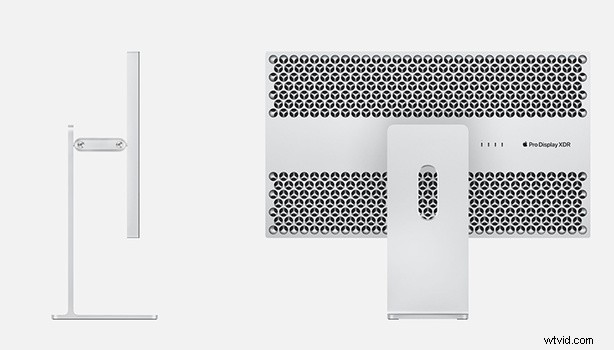
Pros have called on Apple to provide updated gear for years, and it’s finally happened. I’m going to brush off the comments that they’ve missed the mark here. Although, I just can’t get behind a $1,000 monitor stand.
What do you think? Will you be saving up or renting one for a few days? Or do the likes of Atomos, Flanders Scientific, and Sony seem more reputable to you?