
Choosing the right headphones or earphones begins with a clear picture of your intended use. Whether you’re working in a studio, listening on a portable device, or commuting, the right pair can elevate the experience.
Sound quality is paramount, but the ideal headphones also match your preferences for bass depth, isolation, comfort, weight, and portability.
Below we explain the key types and specifications, helping you match a model to your specific needs.
Table of Contents
Understanding What Headphone and Earphone Specifications Mean
How To Choose Between Headphones and Earphones
Sweetened vs. Flat Frequency Response
Types of Headphones
What to Look For When Choosing Headphones
Summary
Understanding What Headphone and Earphone Specifications Mean
The most reliable way to evaluate headphones is by listening. A simple acoustic guitar or piano track reveals the difference between a polished pair and a mediocre one. Often, two models with similar specifications can sound markedly different.
Price is the simplest and most telling spec—quality and performance typically rise with cost. Driver size matters for bass: larger drivers usually deliver deeper lows. Frequency range, sensitivity, and other technical numbers can guide experienced buyers, but for most consumers, expert reviews and customer feedback are more useful.
How To Choose Between Headphones and Earphones
High‑end headphones are essential for critical studio work such as mixing and mastering. Mid‑range models can deliver studio‑grade performance for musicians on a budget, while entry‑level earphones are adequate for casual listening.
Earphones (or earbuds) are often bundled with portable MP3 players, but many users upgrade to higher‑quality models for better sound and comfort.
Consumer‑grade earbuds differ from pro‑grade in‑ear monitors used in live performance and recording environments.
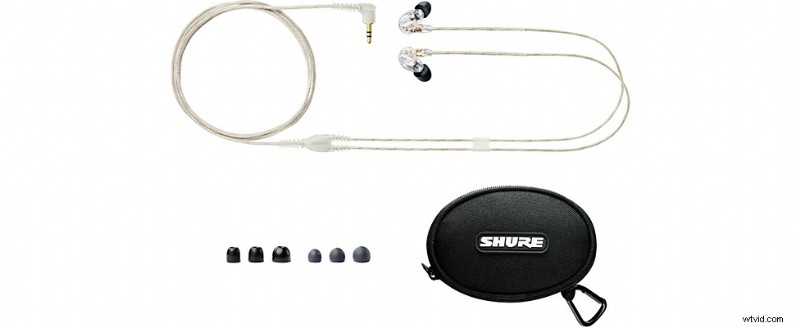
Shure SE215 Microdriver Earphones produce highly detailed sound with enhanced bass response.
To simplify the decision, we group headphones and earphones by two core applications: general listening and professional monitoring.
Sweetened vs. Flat Frequency Response
When you compare the same material on different headphones, you’ll notice differences caused by “sweetening”—the intentional EQing that makes music sound more pleasing. Open‑back headphones or many earbuds often boost bass to counter leakage.
Consumer models usually feature some form of sweetening: Free Field (FF) simulates an open listening environment, while Defined Field (DF) mimics an enclosed space. For critical listening, a flat response is preferable, allowing you to hear the mix accurately.
Types of Headphones
Circumaural (over‑the‑ear) – These headphones either close or open around the ear. The cups form a seal, providing comfort and, if closed, excellent isolation. They’re ideal for studio work and DJs who need to monitor loud tracks.
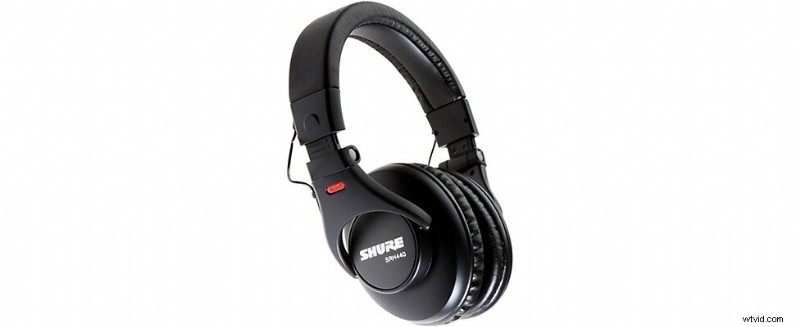
Shure SRH440 Studio Headphones have a closed‑back, circumaural design for excellent isolation.
Supra‑aural (on‑the‑ear) – Lighter and less bulky, they rest on the ear instead of surrounding it. They’re comfortable for extended use but offer less isolation.
Open‑back – The back of the earpiece is open, allowing sound to escape. They provide an airy, natural sound but lack isolation, making them unsuitable for recording environments where leakage could be captured.
Semi‑open – A middle ground that reduces leakage while preserving a realistic stereo field and low distortion. They’re often used in studios where microphones aren’t positioned directly over the headphones.
Closed or sealed – The most isolated design. They’re perfect for loud environments and studio monitoring, but can cause ear fatigue if worn for long periods.
Studio headphone packages – Many studios require multiple headphones for a full band. Bundled packages that include an amplifier and several pairs can save money and simplify setup.
Portable headphones – Lightweight, open‑air models suited for on‑the‑go listening. Their foam earpads make them comfortable for active use, and their openness allows you to remain aware of surroundings.
Earbuds – Ultra‑portable and light, they fit inside the ear canal. Quality models deliver excellent sound for their size, but bass response can vary based on fit. Interchangeable tips help achieve a proper seal.
Noise‑canceling headphones and earbuds – By using phase‑canceling technology, these models suppress background noise, ideal for commuters and travelers.
Wireless headphones – Freedom from cables comes in three flavors: infrared, RF, and digital (including Bluetooth). Infrared offers the shortest range and requires line‑of‑sight; RF works through walls but may suffer from interference; digital wireless delivers higher fidelity at a premium.
DJ headphones – Designed for heavy use, they’re usually circumaural, closed‑back, and loud. Features like rotating earcups, detachable cords, and rugged construction meet the demands of club environments.
What to Look For When Choosing Headphones
Fit and Comfort
Comfort matters most for long sessions. Test a pair for at least 20 minutes before committing. Larger cups are preferable for closed‑back circumaurals, while smaller cups suit supra‑aural models. Fabric or leather padding reduces pressure points.
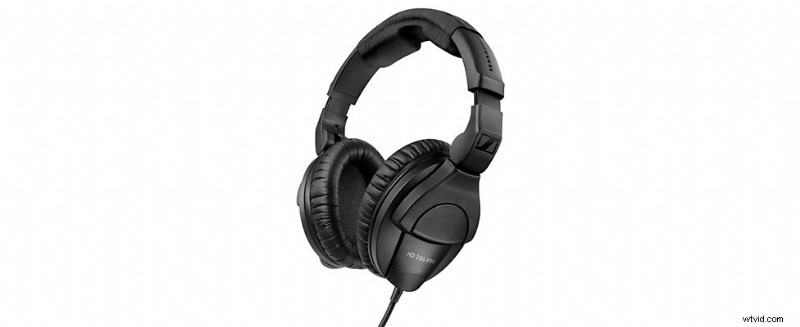
Sennheiser HD 280 PRO Headphones block loud external noises while keeping sound from leaking out.
Weight influences comfort—lighter headphones feel more natural during extended use. Super‑light portable models with foam pads are ideal for active listening.
Adjustable headbands—over‑head or behind‑neck—provide a custom fit. Rotating cups help align with the ear, minimizing leakage and pressure.
Portability
For travel, choose lightweight, fold‑up designs with protective cases. Studio‑grade closed‑back headphones are bulkier but essential for on‑location recording.
Durability
Heavier headphones tend to be more robust. Inspect hinges, cable strength, and the availability of replacement parts. Replacing a cable or earpad is far cheaper than buying a new pair.
Cables
Ensure the cable length matches your use case. Long cables can degrade signal quality and are prone to tangling. Shielded cables reduce noise. If you need an extension, use one of equal quality.
Single‑sided cables—where signal routing occurs within the cable—are generally preferred over double‑sided ones to avoid tangling.
Summary
Choosing headphones or earphones boils down to what you’re willing to invest and how you intend to use them. Specs can guide you, but a critical listening test is irreplaceable.
We stand behind our products with a generous, no‑hassle return policy so you can shop with confidence.
Still unsure? Call one of our friendly Gear Heads for personalized advice.