
Vocals are often the most recognisable part of a song — the human voice is, after all, our oldest musical instrument. Because we’re so attuned to its qualities, it’s also where listeners are most likely to pick up on poor recording or mixing mishaps.
- READ MORE: Here’s my perfect vocal chain and the plugins that get me there
Creating the perfect vocal isn’t just about the performance. Choosing the best microphone for your needs is crucial, but with hundreds of models on the market, which one is right? We’ve been reviewing mics for over 20 years — here are some of our favourites for vocals, updated for 2025, so you can stock up your mic locker with the latest and greatest.
Choosing microphone types: dynamic, condenser or ribbon?
Most vocal microphones fall into one of three categories:
- Dynamic mics are better at handling high sound pressure levels (SPL), and therefore pair well with loud singers. Their robust build also makes them ideal for live use, and they don’t require +48V phantom power to function.
- Condenser mics are revered for their sensitivity and ability to capture high-frequency details, especially in large-diaphragm designs that flatter many vocal styles. They need phantom power, so make sure your interface can supply this.
- Ribbon mics are a less common choice, offering a smoother, darker sound. They’re particularly good at taming harshness and can lend a vintage vibe to vocals, but their delicate aluminium ribbon is much more sensitive to plosives. Passive ribbons don’t need phantom power, but active ribbons do.
Matching the mic’s voicing to your singer can work wonders. For instance, a warm-sounding valve condenser can soften a bright soprano while a dynamic with a grittier tone might suit rapped vocals.
Think about where you’ll be recording, too. According to Abbey Road engineer Paul Pritchard, sometimes a dynamic mic like the Shure SM7B is a smarter choice in smaller rooms: “It’s got a built-in pop filter, you can physically get closer. And it’s slightly narrower in its polar pattern. Sometimes that eliminates a bit of the room sound, but what you gain there, you lose in microphone sensitivity.”
Which polar pattern do I need?
For vocal recording, cardioid and supercardioid polar patterns are most commonly used as they’re highly sensitive to sound coming from the front while attenuating sound from the sides and rear.
If you’re buying a microphone to record other instruments as well as voice, consider a model with multiple polar patterns you can switch between — an omni or figure-eight pattern can work well for drums, for example.
Best vocal mics at a glance:
- Shure SM7B – Best dynamic for untreated rooms
- Aston Stealth – Best do-it-all dynamic microphone
- Neumann U87 Ai – Best studio classic or condenser all-rounder
- AKG C414 XLII – Most flexible multi-pattern condenser
- Lewitt LCT 440 Pure – Best budget condenser
- Austrian Audio OC18 – Best mid-price large diaphragm condenser
- Warm Audio WA-44 – Best ribbon mic for vocals
- Neumann TLM 102 – Most affordable Neumann microphone
- UA Sphere DLX – Best modelling microphone
- Warm Audio WA-CX12 – Best valve microphone under £1k
Shure SM7B – Best dynamic mic for untreated rooms
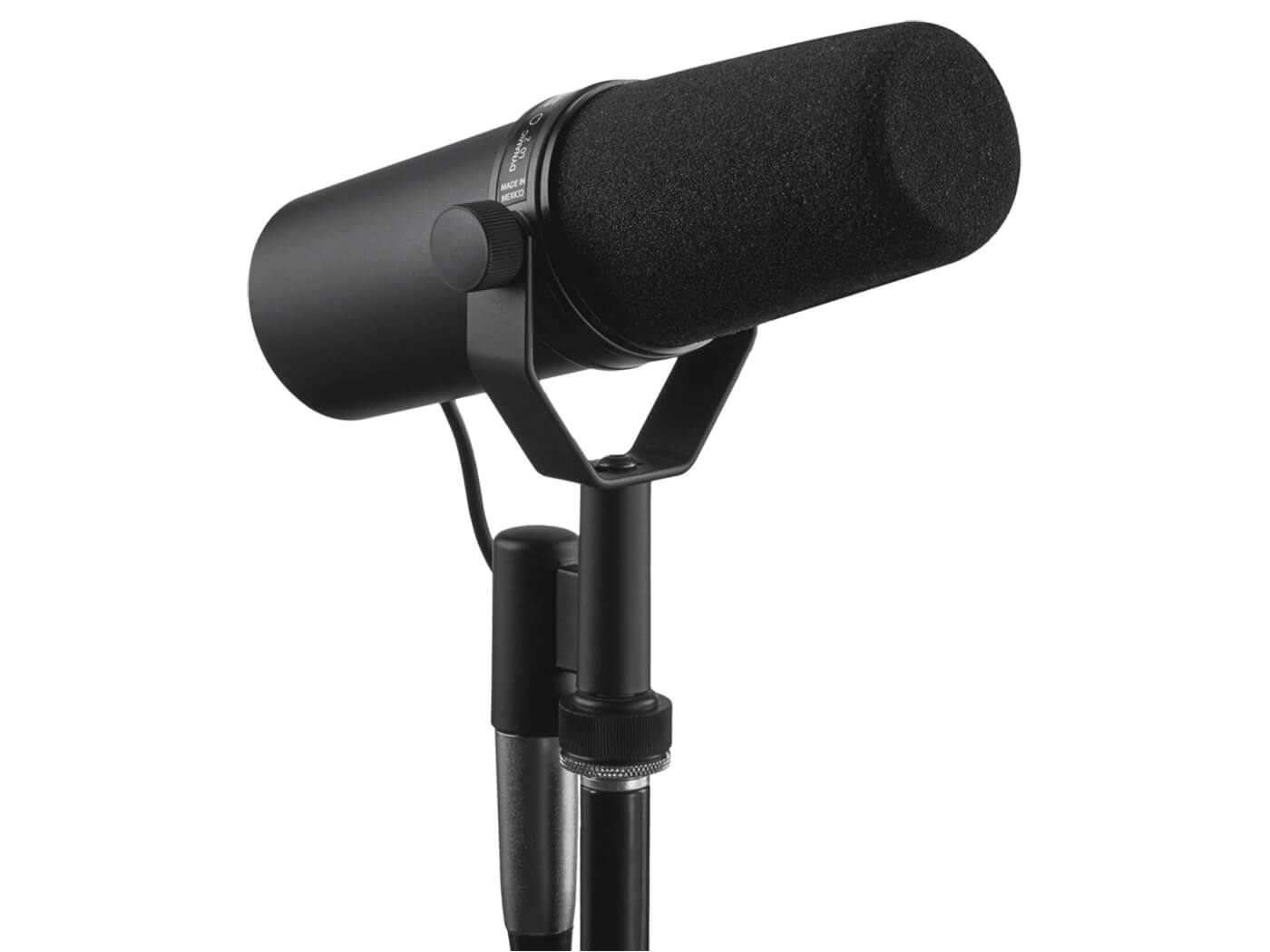 Image: Shure
The SM7 has been in production in one form or another since the 70s — and as far as dynamic mics go, it’s a popular one for vocal tracking. The SM7 (plus later SM7A and SM7B versions) has seen its share of famous users, including Michael Jackson and James Hetfield of Metallica, as well as many podcasters (ahem, Joe Rogan).
Its low sensitivity and built-in windscreen pair well with powerful vocalists and other loud sources where condensers might be overwhelmed. However, some cheaper audio interfaces may not supply enough mic input gain to get a workable level. A popular fix is to pair the SM7 with an external mic preamp such as a Cloudlifter or Monoprice SR Studio, or opt for the SM7dB version with integrated preamp.
- Price: $439 / £349 / €389
- Type: Dynamic
- Frequency response: 50Hz to 20kHz
- Polar pattern: Cardioid
Pros:
- Excellent for untreated rooms thanks to low sensitivity and tight polar pattern
- Handles loud vocals and instruments without distortion
- Built-in windscreen reduces plosives and sibilance
- Long and proven track record
Cons:
- Requires a lot of clean gain
- Less sensitive to subtle high-frequency detail
Aston Stealth – Best do-it-all dynamic microphone
This large-chassis dynamic could be the best vocal microphone for music makers who want more options in a single mic — so much so, we rated it 10/10 in our Aston Stealth microphone review.
It offers four switchable voices: two optimised for low and high vocal registers, one for tracking guitars (both acoustic and through a speaker cabinet), and a ‘dark’ voice that mimics the warming qualities associated with ribbon microphones.
The Stealth can be operated with or without phantom power, letting users decide between using the microphone’s built-in Class A mic preamp or an external one. Apart from that, the microphone also comes equipped with an internal Sorbothane shock mount system.
- Price: $269 / £262 / €298
- Type: Dynamic
- Frequency response: 20Hz to 20kHz
- Polar pattern: Cardioid
Pros:
- Four switchable voicings makes this mic highly versatility
- Built-in Class A preamp for clean gain powered by +48V
- Internal shock mount system reduces handling and mechanical noise
- Built in the UK, yet highly affordable
Cons:
- Larger chassis is rather bulky
- Lacks airiness compared to condensers
Neumann U87 Ai – Best classic studio condenser
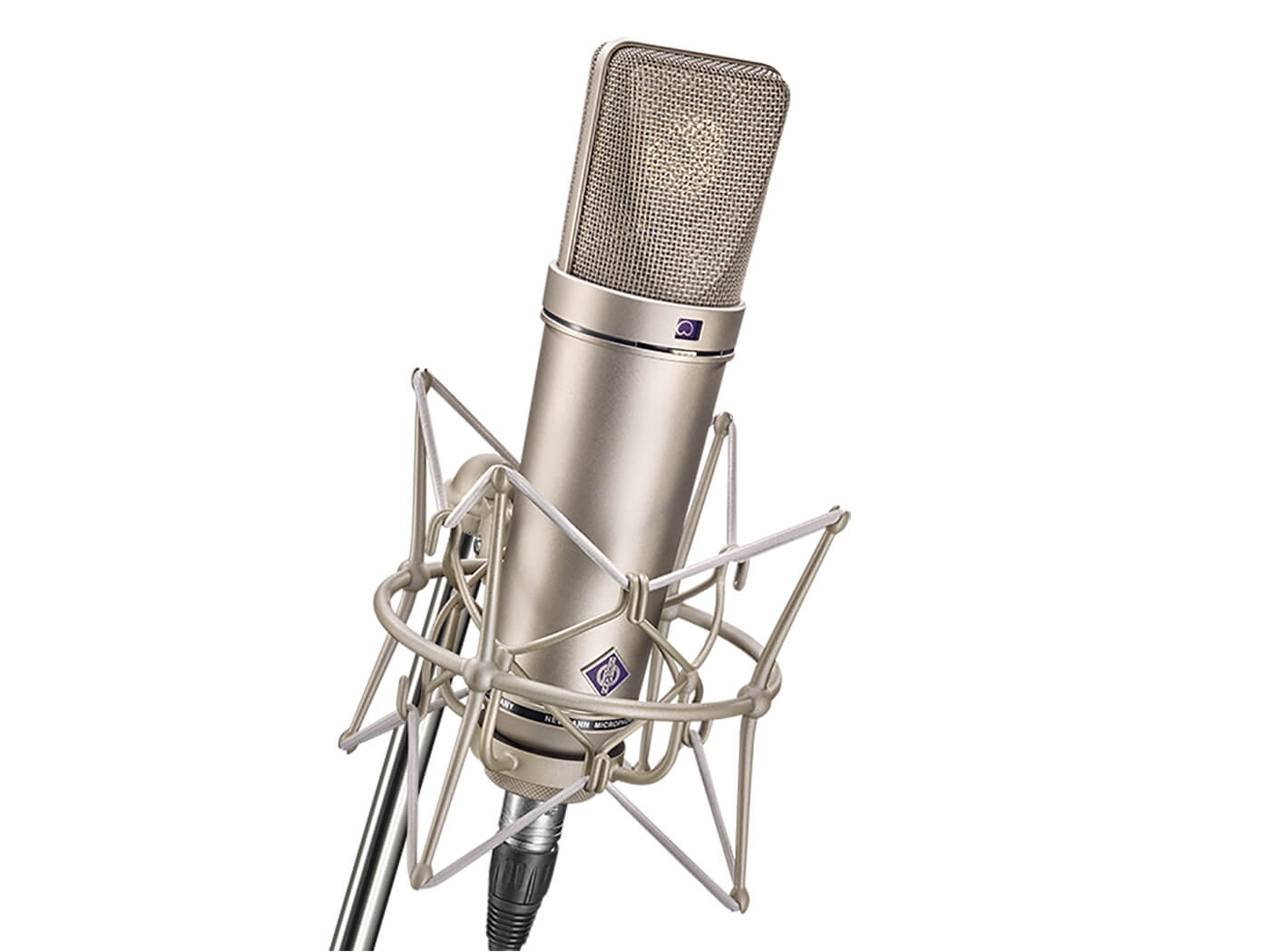 Image: Neumann
The Neumann U87 is so ubiquitous we couldn’t possibly leave it off this list. It’s been endearingly referred to as ‘every engineer’s second favourite microphone’ because it’s such an able all-rounder. No matter what you point the U87 at — singer, guitar, congas, even bassoon — it just seems to handle it beautifully. And for the price, it absolutely should.
This classic studio condenser is made even more versatile by a few extra tricks: three polar patterns (cardioid, omni and figure-eight); a -10dB pad for capturing louder sources; and a low-cut for curbing proximity-induced low-mid boost in cardioid and figure-eight modes.
- Price: $3,750 / £2,555 / €2,899
- Type: Large-diaphragm condenser
- Frequency response: 20Hz to 20kHz
- Polar patterns: Cardioid, omnidirectional, figure-eight
Pros:
- Exceptionally versatile, consistently handling a wide range of sources with impressive quality
- Three polar patterns for flexible recording scenarios
- High SPL handling thanks to the built-in pad
- High-pass filter reduces proximity effect and low-end rumble
Cons:
- Very expensive, beyond the budget of many home producers
- Highly detailed sound may expose flaws in untreated recording environments
AKG C414 XLII – Most flexible multi-pattern condenser
 Image: AKG
Launched in 1971, AKG’s C414 remains a true studio workhorse and comes in two modern editions. The C414 XLS provides a flatter frequency response and is suited to a wide range of sources. But for recording vocals, the C414 XLII’s capsule design — based on the esteemed AKG C12 — introduces a 3kHz presence boost that often flatters female performers.
The C414 makes it easy to capture clean audio on the way in. Both versions offer five polar patterns (nine if you include the blended options), and three pad settings at -6, -12, and -18 dB. There’s also a particularly handy high-pass filter for rolling off low-end rumble or mitigating environmental noise below 40Hz, 80Hz, or 160Hz.
Read our full AKG C414 XLII review.
- Price: $1,299 / £859 / €999
- Type: Multi-pattern FET condenser
- Frequency response: 20Hz to 20kHz
- Polar patterns: Omni, Wide cardioid, cardioid, hypercardioid, figure-eight, plus blended settings
Pros:
- Highly versatile — not just a vocal mic
- Blend between polar patterns for up to nine options
- Pleasant 3k boost in XLII model is ideal for vocals
- Built-in pads and high-pass filters
Cons:
- Bright tonal character may not flatter all vocalists
- Newer models reportedly less durable
Lewitt LCT 440 Pure – Best budget condenser
If you’re looking for an entrypoint to vocal recording, or the LCT 440 Pure is an affordable large-diaphragm condenser. Sporting a fixed cardioid pickup pattern, this mic excels at capturing vocals thanks to its rich, flattering sound that much surpasses its low cost.
What’s appreciated too is that the LCT 440 Pure comes with some handy accessories, including a shockmount, a magnetic pop filter and a leather carrying bag — another major boon for a mic in this price range. Read our Lewitt LCT 440 Pure review for the full lowdown, plus details on its even cheaper sibling, the LCT 240 Pro.
- Price: $299 / £235 / €269
- Type: Large-diaphragm condenser
- Frequency response: 20Hz to 20kHz
- Polar patterns: Cardioid
Pros:
- Rich, full-bodied sound with flattering highs
- Large-diaphragm capsule delivers excellent signal-to-noise
- Balanced tonality that’s easy to EQ
- Highly affordable, and includes premium accessories
Cons:
- Fixed cardioid pattern limits flexibility
- Lacks onboard pad or high pass
UA Sphere DLX – Best modelling microphone
The UA Sphere DLX — a near-identical successor to the Townsend Labs Sphere L22 — is a condenser mic that boasts unique modeling capabilities. Using its companion plugin, it mimics both the tonal and spatial characteristics of 38 legendary ribbon, condenser, and dynamic microphones including U87s and C414s.
Its dual-diaphragm design lets you record in stereo, while the Sphere software lets you make virtual adjustments to the axis or even change mic models after tracking. Of course, all this does come at a premium, but if your pockets are deep enough to plump for this in the first place, you may never need to buy another vocal microphone.
Read our review of the Sphere L22.
- Price: $1,499 / £1,290 / €1,464
- Type: Large-diaphragm modelling condenser
- Frequency response: 20Hz to 20kHz
- Polar patterns: Cardioid, omni, figure-of-eight
Pros:
- 38 iconic mics for the price of one
- Model, rotate, and change microphone even after recording
- High SPL handling and very low self-noise
- Dual capsule allows for stereo recording
Cons:
- Requires two audio interface inputs (one per capsule)
- Authenticity of emulations may vary
Austrian Audio OC18 – Best mid-price large diaphragm condenser
Founded by ex-AKG engineers, Austrian Audio launched its OC818 and OC18 microphones in 2019 in a bid to recapture the essence of early C414 models. How, exactly? Within these mics is the brand’s CKR-12 ceramic capsule, handmade in Vienna and based on the ‘brass ring’ version of the legendary CK-12 found in vintage AKG microphones.
The OC18 is the cardioid-only edition of the two microphones and is well-suited to tracking vocals and other acoustic instruments. In our OC18 and OC818 review, we found the OC18’s mid-high frequencies slightly more boosted than the OC818’s, which can work well with some vocalists. In any case, the significant discount compared to C414 prices makes the OC18 a compelling large-diaphragm alternative.
Buy the Austrian Audio OC18 at Sweetwater ($799) or Thomann (£579 / €659).
- Price: $799 / £579 / €659
- Type: Large-diaphragm condenser
- Frequency response: 20Hz to 20kHz
- Polar pattern: Cardioid
Pros:
- Impressive quality at a lower price than many legacy large-diaphragm condensers
- Ceramic capsule delivers bright, detailed presence
- Built-in pad and high-pass filters
- Also available as OC818 model with multiple polar patterns and dual output
Cons:
- Fixed cardioid only on OC18 model
- Brighter response may not suit all voices
Warm Audio WA-44 – Best ribbon mic for vocals
Inspired by the RCA 44BX from the 1930s, the WA-44 is Warm Audio’s faithful recreation of one of the most iconic ribbon microphones. Built around a 60mm aluminium ribbon and a custom CineMag transformer, it delivers a lush tone with a warm low end and smooth highs — ideal for intimate vocal takes or adding body to brighter sources.
The figure-eight polar pattern captures sound equally from the front and back, so strategic placement is important. On the plus side, this means side rejection is excellent. You’ll need a high-gain preamp too (Warm Audio’s own reasonably priced WarmLifter is a solid bet), but the payoff is a detailed vocal sound with a natural vintage flair.
Check out our Warm Audio WA-44 review for more details, or buy the WA-44 at Sweetwater ($1,199) or Thomann (£899 / €1,027).
- Price: $1,199 / £899 / €1,027
- Type: Ribbon microphone
- Frequency response: 20Hz to 20kHz
- Polar pattern: Figure-eight
Pros:
- Characterful vintage tone
- Handles high SPLs up to 140dB
- Figure-eight pattern with strong side rejection
- Smooths highs nicely
Cons:
- Rather heavy
- Suffers from strong proximity effect
Neumann TLM 102 – Most affordable Neumann microphone
Neumann’s venerable reputation dates back to the earliest days of the recording industry — and while not a vintage model from the brand’s golden years, the TLM-102 large-diaphragm condenser microphone still embodies the brand’s heritage both in quality and looks.
It’s an impressively versatile microphone, demonstrating a flat response with a flattering presence boost for vocals. And notably, the TLM-102 comes priced unnaturally low for a Neumann, giving even amateur producers the chance to say aloud to talents: “I figure we’ll use the Neumann on this one.” Got a bit more to spend? Try the TLM 107, or producer Finneas’ go-to mic, the TLM 103.
Buy the TLM 102 at Sweetwater ($799) or Thomann (£529 / €599).
- Price: $799 / £529 / €599
- Type: Large-diaphragm condenser
- Frequency response: 20Hz to 20kHz
- Polar pattern: Cardioid
Pros:
- Neumann quality on a budget
- Well-balanced response with vocal-flattering presence
- Impressive signal-to-noise ratio
- Versatile for other instruments
Cons:
- Tonal quality considered ‘boring’ by some
- No onboard pad or high pass
Warm Audio WA-CX12 – Best valve microphone under £1k
Warm Audio’s second entry on our list, this time the manufacturer wins for best valve microphone under £1,000 with the WA-CX12, a recreation of the AKG C12. Weighty low end, buttery midrange, sweet treble — it delivers across the spectrum, while nine polar patterns make it adaptable for a range of recording scenarios.
While it lacks onboard pads or filters, the WA-CX12 is perfect for adding polish and richness to all manner of sources, vocals included. And considering original C12s go for well over £5k, you’re getting that classic tube at a pretty decent price.
Read more in our Warm Audio WA-CX12 review, or buy the WA-CX12 at Sweetwater ($1,119) or Thomann (£984 / €1,111).
- Price: $1,199 / £984 / €1,111
- Type: Large-diaphragm valve condenser
- Frequency response: 30Hz to 20kHz
- Polar patterns: Omni, cardioid, figure-eight, plus six blended patterns
Pros:
- Warm, flattering sound with rich midrange
- Nine selectable polar patterns
- Premium build and internal components
- Excellent value for a tube mic
Cons:
- No onboard pad or high-pass filter
- Strong character may not suit all use cases
Why You Can Trust MusicTech
MusicTech reviews hundreds of new products every year, from powerful synthesizers, DAWs and pro plugins through to everyday headphones and portable speakers. Our expert reviewers are producers, engineers and enthusiasts with hundreds of years of collective experience, with a keen ear to the ground on new trends and technologies.
Every guide on MusicTech is created by a producer, musician and tech enthusiast just like you. We understand what you’re looking for when searching for a new vocal microphone, and we want to ensure you purchase genuinely useful products for your craft. So you can guarantee that every product MusicTech recommends to you is a product we’d be happy to have in our studios.
For more buyer’s guides, click here.

James is a freelance writer for MusicTech. You'll often find him pushing plugins to their limits, skimming through the latest sample packs, or obsessively watching Rig Rundowns. With a background in live music, he also loves finding elegant solutions to complex problems — especially when it comes to gear.